
OOBThaiAmulets
Por Sala Tan
Por Sala Tan
Couldn't load pickup availability
PST09
Mai Sak
Por Sala Tan
6 Inches
Mainstream Artifact
━━━━━━━━━━━━━━━━━━━━━━━━━━━━
Sacred Craftsmanship
The Mai Sak of Por Sala Tan is a specialised ritual inscription and empowerment tool, personally used by the master for the consecration of sacred objects associated with Saneh, Metta Maha Niyom and interpersonal attraction.
Each Mai Sak was individually carved and prepared from selected sacred materials, with natural variations in colour, texture, carving and ritual markings contributing to its unique character.
Exact piece will be given
━━━━━━━━━━━━━━━━━━━━━━━━━━━━
Personal Experiences Shared by Luksits
Among Por Sala Tan's followers, Saneh-related ritual objects are particularly valued by individuals whose livelihoods depend upon communication, personal relationships and customer acceptance.
Luksits involved in sales and business have traditionally sought Saneh blessings to encourage customers to approach them more comfortably, listen attentively and return for future dealings.
The Mai Sak holds additional significance because it was not merely consecrated for Saneh purposes; it was personally used by Por Sala Tan to empower other Saneh objects over many years.
According to Ac Lek, its accumulated ritual history allows it to serve as a central altar object for collectors who possess multiple Saneh amulets.
Rather than requiring further inscription work, the retired Mai Sak is traditionally regarded as supporting the attraction qualities of the sacred objects placed around it.
━━━━━━━━━━━━━━━━━━━━━━━━━━━━
Summary
The Mai Sak – Lersi Ser Ming Pai is a retired ritual implement personally used by Por Sala Tan for the inscription and consecration of Saneh-related sacred objects.
Carved from sacred relic material and fitted with a Yant Nip Takrut, it was dedicated exclusively to attraction, charm and favourable interpersonal relationships.
Its principal traditional associations include:
-
Saneh: Enhancing personal attraction, charm and interpersonal magnetism.
-
Metta Maha Niyom: Encouraging goodwill, popularity and acceptance.
-
Customer Attraction: Supporting favourable customer interactions and repeat business.
-
Business Prosperity: Encouraging sales opportunities through trust and personal relationships.
-
Saneh Amplification: Strengthening the traditional attraction qualities of other Saneh objects placed nearby.
Having completed its active ritual service, the Mai Sak is now regarded as an altar-grade sacred implement rather than a working inscription tool.
━━━━━━━━━━━━━━━━━━━━━━━━━━━━
Historical Background
Mai Sak in Traditional Wicha
The Mai Sak is a ritual stylus traditionally employed by Thai and Burmese practitioners for sacred inscription, ceremonial preparation and the empowerment of ritual objects.
Depending upon the master's lineage, a Mai Sak may be dedicated to protection, authority, attraction or other specialised branches of Wicha.
Within Por Sala Tan's practice, certain implements were reserved for a single ritual purpose rather than used interchangeably.
This particular Mai Sak belonged to his mature working period and was dedicated solely to Saneh consecrations.
Lersi Ser Ming Pai
Lersi Ser Ming Pai is associated within Por Sala Tan's tradition with attraction, persuasion, favourable relationships and the softening of interpersonal resistance.
The Lersi image served as a ritual intermediary through which prayers and intentions concerning Saneh and Metta Maha Niyom were directed.
After many years of use, the Mai Sak was retired and subsequently safeguarded by Ac Lek.
━━━━━━━━━━━━━━━━━━━━━━━━━━━━
Origins of the Materials
The Mai Sak was carved from sacred relic material, selected for its traditional suitability in Saneh Wicha.
Its compact construction allowed precise handling during ritual inscription and empowerment.
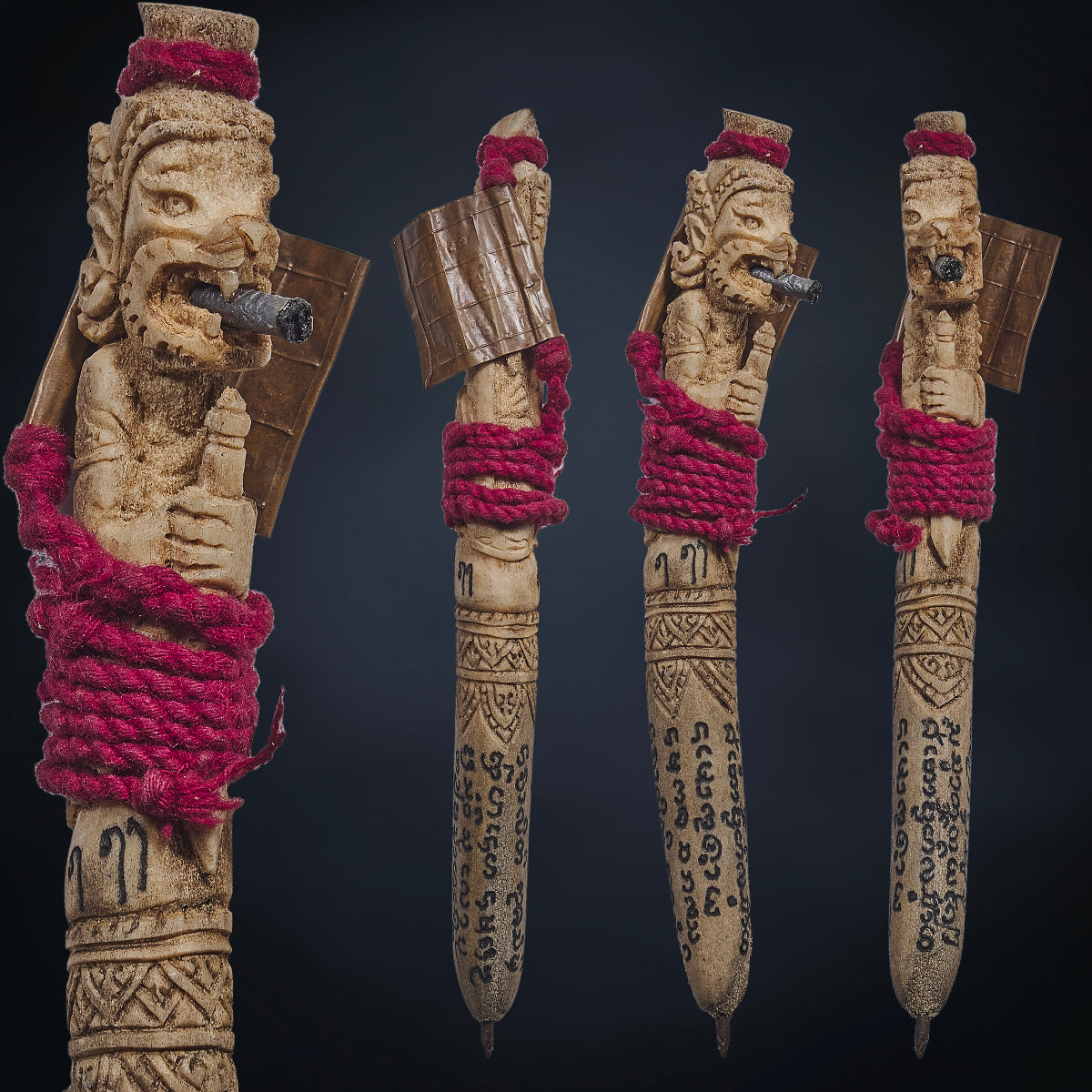
The upper section depicts Lersi Ser Ming Pai, while the lower portion carries sacred characters and decorative Yant markings.
Attached to the figure is a Yant Nip Takrut, traditionally regarded as a powerful supporting element in attraction-related Wicha.
Old red Sai Sin secures the Takrut and ritual components, while the carved surface retains patina and handling marks accumulated through ceremonial use.
━━━━━━━━━━━━━━━━━━━━━━━━━━━━
Ritual
The Mai Sak was personally used by Por Sala Tan during repeated Saneh consecration ceremonies, rather than being prepared solely through a single batch blessing.
Its principal purpose was to inscribe and empower sacred objects associated with attraction, goodwill and favourable relationships.
Saneh Consecration
During ritual work, the Mai Sak served as an instrument through which Por Sala Tan directed prayers, sacred inscriptions and Saneh-related intentions into the objects being prepared.
The Lersi Ser Ming Pai image represented the spiritual tradition associated with attraction and interpersonal harmony.
Yant Nip Takrut
The attached Yant Nip Takrut was intended to reinforce the attraction qualities of the ritual implement.
Within the lineage, it was regarded as an important component for maintaining the Mai Sak's dedicated Saneh function.
Retirement and Altar Use
Following years of ceremonial service, the Mai Sak was formally retired.
According to Ac Lek, its accumulated ritual significance remains valuable even though it is no longer used for active inscription.
When placed upon an altar alongside Saneh objects, it is traditionally believed to support and strengthen their attraction-related qualities.
No further inscription is required for its intended retired role.
━━━━━━━━━━━━━━━━━━━━━━━━━━━━
Blessings and Effects
1. Saneh – Attraction and Personal Charm
Traditionally associated with enhancing approachability, personal magnetism and favourable attention from others.
2. Metta Maha Niyom – Goodwill and Popularity
Encourages acceptance, kindness, harmonious relationships and positive interpersonal impressions.
3. Customer Attraction and Repeat Business
Associated with drawing customers, encouraging return visits and developing lasting commercial relationships.
4. Sales and Business Opportunities
Traditionally sought for smoother negotiations, customer trust and favourable sales interactions.
5. Amplification of Saneh Amulets
According to Ac Lek, the retired Mai Sak may serve as an altar-based amplifier for other Saneh-related sacred objects.
6. Harmonious Relationships
Supports the traditional intention of reducing interpersonal resistance and encouraging cooperation through goodwill rather than force.
━━━━━━━━━━━━━━━━━━━━━━━━━━━━
Modern Application
The retired Mai Sak is best preserved upon a dedicated altar alongside Saneh amulets, attraction relics or business-related sacred objects.
According to Ac Lek, it no longer requires active inscription or repeated consecration to fulfil its intended altar role.
Its traditional associations are particularly relevant to sales professionals, business owners, merchants and individuals whose work depends upon customer relationships.
Simple respectful acknowledgement, appropriate offerings or merit dedication may be incorporated according to the keeper's customary practice.
As an older ritual implement, it is best preserved rather than returned to active inscription work.
━━━━━━━━━━━━━━━━━━━━━━━━━━━━
Physical Details
The Mai Sak measures approximately 6 inches in length and is carved from aged sacred relic material. Its upper section depicts Lersi Ser Ming Pai with an expressive face, traditional headdress and detailed ornamental carving. The elongated lower section tapers to a pointed inscription tip and bears sacred characters and geometric Yant markings. A copper-coloured Yant Nip Takrut is secured behind the figure with old red Sai Sin, which is also wrapped around the central body. The surface retains natural discolouration, ritual patina and visible signs of prolonged use.
━━━━━━━━━━━━━━━━━━━━━━━━━━━━
Recommended Pairing
Saneh Amulets – The most appropriate pairing, as the Mai Sak was specifically dedicated to Saneh consecration and is traditionally regarded as an amplifier for such objects.
Yin Tong – Complements the Mai Sak through traditional associations with attraction, affection and harmonious relationships.
Metta Maha Niyom Takrut – Reinforces goodwill, popularity and favourable interpersonal communication.
The Mai Sak may also be kept independently as a historical ritual implement associated with Por Sala Tan's Saneh Wicha.
━━━━━━━━━━━━━━━━━━━━━━━━━━━━
Personal Notes
What makes this Mai Sak of Por Sala Tan particularly interesting is its history as a working ritual implement rather than an amulet created solely for personal carrying.
For many years, it was personally employed by Por Sala Tan in the preparation and consecration of Saneh-related sacred objects.
Its purpose was highly specialised. Unlike general-purpose Mai Sak, this piece was reserved exclusively for attraction, goodwill and interpersonal harmony.
The carved image of Lersi Ser Ming Pai reflects this intention, while the attached Yant Nip Takrut further distinguishes its association with Saneh Wicha.
Another important aspect is its retirement from active ceremonial use.
According to Ac Lek, the Mai Sak's value did not end when Por Sala Tan stopped using it for inscription. Instead, it came to be regarded as an altar-based sacred object capable of complementing other Saneh amulets.
This makes it particularly meaningful for collectors who already possess several attraction-related objects and wish to preserve them together within a dedicated devotional arrangement.
The aged surface, original bindings, handwritten sacred characters and signs of repeated handling also preserve the character of an implement genuinely associated with Por Sala Tan's working practice.
For collectors of his more specialised Wicha, this Mai Sak represents an uncommon connection with the master's personal methods of preparing Saneh amulets.
The Mai Sak – Lersi Ser Ming Pai represents a lifetime of specialised Saneh ritual practice, traditionally associated with attraction, goodwill, customer relationships and the continuing spiritual significance of a retired master's implement.
-
Free Shipping for Singapore| $15 Worldwide | $100 USA All products