
OOBThaiAmulets
Por Sala Tan
Por Sala Tan
Couldn't load pickup availability
PST09
Garuda Relic
Por Sala Tan
4 Inches
Barang Artifact
━━━━━━━━━━━━━━━━━━━━━━━━━━━━
Sacred Craftsmanship
The Garuda Relic of Por Sala Tan is an unusual sacred object recovered from a cave in Burma during one of his journeys in search of ancient ritual materials and places suitable for meditation.
Each sacred object of this nature bears individual characteristics arising from its original workmanship, age, natural material and subsequent ritual preparation. Variations in colour, texture, carving and surface wear contribute to its unique identity.
Exact piece will be given.
━━━━━━━━━━━━━━━━━━━━━━━━━━━━
Personal Experiences Shared by Luksits
Among Por Sala Tan's followers, relics containing both guardian symbolism and Jinn-related Wicha are regarded as particularly unusual.
Devotees familiar with such objects describe their principal attraction as the combination of protective authority and an active spiritual presence believed to remain attentive to the surrounding environment.
Some Luksits associate Garuda relics with a stronger sense of security when dealing with difficult individuals, hidden competition or situations where another person's intentions are uncertain.
Others value the traditional belief that a properly governed Jinn may assist its keeper through subtle guidance, increased awareness or favourable opportunities arising during difficult circumstances.
The presence of Garuda is regarded as particularly important in this arrangement. Rather than allowing the Jinn to act independently, the guardian image is believed to provide spiritual restraint and direction.
━━━━━━━━━━━━━━━━━━━━━━━━━━━━
Summary
The Garuda Relic of Por Sala Tan is a rare cave-discovered sacred carving associated with ancient Lersi materials, Garuda guardianship and a contained Jinn presence.
Recovered in Burma, the object was subsequently examined by Por Sala Tan and Ac Lek, who considered its workmanship and spiritual characteristics to be considerably older than those of modern ritual artifacts.
According to Ac Lek, the carving may be at least 200 years old, although its precise date and original maker remain unknown.
Por Sala Tan later performed additional rituals using Lersi Ta Fai scriptures, fire-based consecration, 108 sacred herbs, Burmese red wax and Takruts.
The relic is traditionally associated with four principal functions:
-
Garuda Baramee: Spiritual authority, protection and the restraint of harmful influences.
-
Jinn Guardianship: Active vigilance, guidance and assistance in difficult circumstances.
-
Wish Fulfilment: Support for requests concerning protection, stability and the overcoming of obstacles.
-
Spiritual Harmonisation: Maintaining balance between the relic's Yin characteristics and its protective guardian presence.
Its unusual combination of materials, spiritual traditions and ritual additions distinguishes it from conventional Garuda amulets.
━━━━━━━━━━━━━━━━━━━━━━━━━━━━
Historical Background
The Discovery in Burma
Por Sala Tan discovered the relic during one of his cave journeys in Burma, a region he visited for meditation and the collection of traditional sacred materials.
Upon examining the object, he reported sensing several distinct spiritual characteristics rather than a single, uniform presence.
The material itself was associated with strong Yin qualities, while the Garuda carving displayed the authority and Baramee traditionally connected with powerful guardian beings.
Ac Lek subsequently examined the relic and suggested that its carving style and underlying Wicha belonged to an older ritual tradition, possibly dating back at least two centuries.
This age assessment forms part of the object's traditional provenance rather than a scientifically established dating.
Garuda in Southeast Asian Sacred Traditions
Garuda, known in Thailand as Phra Khrut, occupies an important position in Hindu-Buddhist religious traditions.
Traditionally regarded as the mount of Vishnu, Garuda represents strength, sovereignty, spiritual authority and victory over harmful influences.
In Thai sacred Wicha, Garuda imagery is frequently associated with protection, the overcoming of enemies and the restraint of dangerous supernatural forces.
These qualities made the Garuda form particularly significant to Por Sala Tan when he identified the presence of a Jinn within the relic.
Ancient Lersi and Jinn Traditions
Within the Thai-Burmese borderlands, Lersi traditions encompass meditation, sacred material preparation, protective Wicha and beliefs concerning unseen entities.
Por Sala Tan's interpretation of this relic reflects that broader environment, where an object may be understood as containing several spiritual influences requiring careful ritual regulation.
━━━━━━━━━━━━━━━━━━━━━━━━━━━━
Origins of the Materials
The original carving material remains unidentified.
According to Ac Lek, its appearance and perceived characteristics bear similarities to ancient Lersi Graduk relic material, although no definitive identification was made.
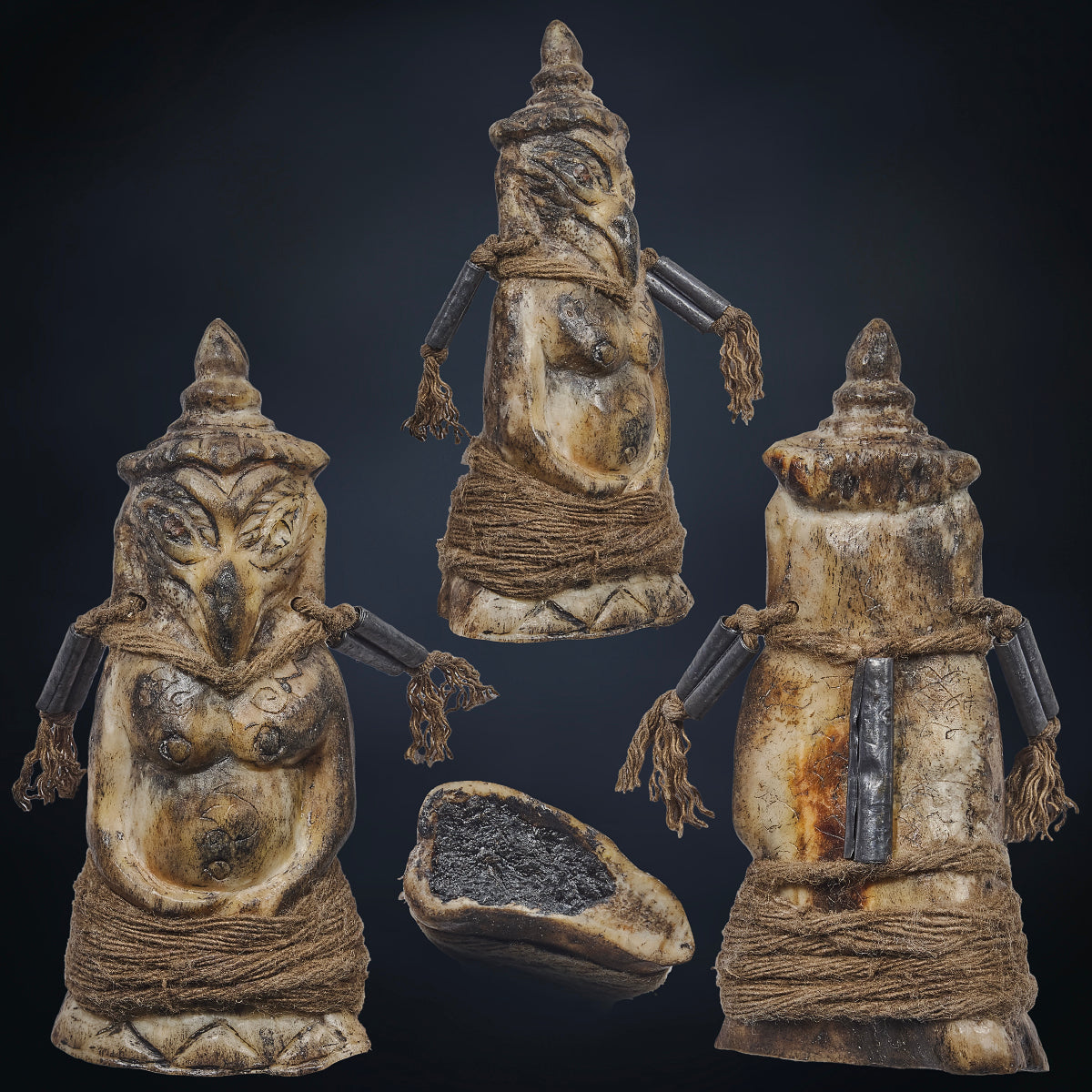
The surface displays aged cream, brown and darkened areas, with irregular markings consistent with long-term handling and exposure.
Por Sala Tan considered the material to possess strong Yin characteristics, possibly connected with its prolonged presence within a cave environment.
Despite this underlying Yin nature, he also identified a pronounced Baramee quality associated with the Garuda form.
Following its recovery, the original relic was supplemented with several ritual materials:
-
108 Sacred Herbs: Placed within the base cavity as part of the relic's subsequent empowerment.
-
Burmese Red Wax: Used to seal and support the ritual materials within the base.
-
Takruts: Added to reinforce protective functions and the regulation of spiritual activity.
-
Sai Sin: Bound around the figure to secure the ritual additions.
These materials were selected to complement the original carving rather than replace its existing spiritual character.
━━━━━━━━━━━━━━━━━━━━━━━━━━━━
Ritual
The ritual preparation of this Garuda relic was undertaken by Por Sala Tan after he had examined its unusual spiritual characteristics.
He believed the object contained three principal elements: a strong Yin foundation, the Baramee of Garuda and a dark Jinn essence.
The central concern was how these different influences could coexist without becoming spiritually unstable.
Fire Ritual and Lersi Ta Fai Wicha
Por Sala Tan conducted a fire-based ritual employing Lersi Ta Fai scriptures, a tradition associated with fire, purification and spiritual transformation.
The purpose was to regulate the Jinn presence and establish a balanced relationship between the entity and the protective authority represented by Garuda.
Within Por Sala Tan's understanding, the Garuda image functioned as a spiritual governor rather than simply a decorative representation.
The Jinn was not intended to be forcibly suppressed. Instead, the ritual sought to establish restraint, direction and an appropriate role for its continued presence.
The 108 Herbs and Burmese Red Wax
After the initial ritual, Por Sala Tan prepared the cavity beneath the relic.
He inserted 108 sacred herbs, a number traditionally associated with completeness and sacred ritual practice.
Burmese red wax was then used to secure the materials.
According to Por Sala Tan, the relic also possessed Deva-associated qualities, allowing the additional materials to support its guardian function.
Addition of Takruts
Takruts were subsequently attached to the figure.
Their purpose was to reinforce protection, regulate interaction with surrounding spiritual influences and assist in the liberation of troubled entities when appropriate.
The completed ritual brought together Garuda guardianship, Jinn-related Wicha and the traditional fire practices associated with Lersi Ta Fai.
━━━━━━━━━━━━━━━━━━━━━━━━━━━━
Blessings and Effects
1. Garuda Baramee – Spiritual Authority and Protection
The Garuda aspect is traditionally associated with strong guardianship, authority and protection against harmful spiritual influences.
2. Protection Against Hidden Hostility
The relic is believed to offer protection against concealed ill intentions, betrayal, backstabbing and hostility from individuals whose motives may not be immediately apparent.
3. Jinn Guardianship and Vigilance
The contained Jinn is traditionally understood as an active spiritual presence capable of remaining attentive to changes in the surrounding environment.
4. Protection Against Negative Spiritual Influences
The combination of Garuda authority and the stabilising rituals performed by Por Sala Tan is associated with protection against unwanted entities and harmful occult influences.
5. Wish Fulfilment and Spiritual Assistance
Within the lineage, the relic is associated with assistance in fulfilling requests, particularly those concerning protection, stability, personal authority and the resolution of obstacles.
6. Maha Amnat – Authority and Respect
Garuda's traditional association with sovereignty and commanding presence makes the relic relevant to individuals seeking confidence, dignity and respect in demanding environments.
7. Spiritual Balance
The ritual preparation was intended to harmonise the relic's Yin foundation with its stronger guardian characteristics.
8. Assistance in Spiritual Liberation
According to Por Sala Tan's ritual understanding, the Takruts and subsequent consecration could support appropriate interaction with troubled spiritual entities, including assistance in their liberation.
━━━━━━━━━━━━━━━━━━━━━━━━━━━━
Modern Application
The Garuda relic is particularly relevant to individuals seeking a traditional object associated with protection, authority and spiritual stability.
It may appeal to business owners, professionals and individuals working in competitive environments where discretion, personal confidence and awareness of others are important.
Within Por Sala Tan's tradition, the relic may also be kept in a home or workplace as a guardian object.
Because of its unusual combination of Yin, Jinn and Garuda characteristics, Por Sala Tan considered it suitable for use either independently or alongside other categories of amulets.
Its intended role is that of a protective and stabilising presence rather than an object requiring a particular companion amulet.
━━━━━━━━━━━━━━━━━━━━━━━━━━━━
Physical Details
The relic is an aged Garuda carving of unidentified material, displaying a cream-brown surface with darkened deposits and irregular natural markings. The figure has a pronounced beak, deeply carved eyes, rounded body and pointed ceremonial crown. Traditional Sai Sin is wrapped around its upper body and waist, with metal Takruts attached along the sides and reverse. The underside contains a recessed cavity filled with a dark ritual mixture incorporating 108 herbs and Burmese red wax. Its overall appearance reflects both the original older carving and the subsequent ritual modifications performed by Por Sala Tan.
━━━━━━━━━━━━━━━━━━━━━━━━━━━━
Recommended Pairing
No Specific Pairing Required
According to Por Sala Tan's understanding, this Garuda relic possesses an internally balanced spiritual structure, allowing it to function independently without requiring another amulet.
━━━━━━━━━━━━━━━━━━━━━━━━━━━━
Personal Notes
What makes this Garuda Relic of Por Sala Tan particularly unusual is not simply its age or the circumstances of its discovery, but the combination of spiritual characteristics attributed to it.
The original carving was discovered in a Burmese cave and was already regarded as an old ritual object before Por Sala Tan performed any additional ceremonies.
Ac Lek's assessment that the carving may be at least 200 years old adds historical interest, although the exact period and original practitioner remain unidentified.
Another important detail is the uncertainty surrounding the material itself.
Although Ac Lek observed similarities to ancient Lersi Graduk, he did not conclusively identify it. This distinction is worth preserving, particularly for collectors who value accurate descriptions of unusual relic materials.
The most distinctive feature, however, is the relationship between Garuda and the contained Jinn.
Within Por Sala Tan's interpretation, Garuda provided the authority necessary to govern the Jinn presence, while the Jinn contributed a more active form of vigilance and spiritual assistance.
The subsequent use of Lersi Ta Fai scriptures, fire rituals, 108 herbs, Burmese red wax and Takruts was intended to stabilise this arrangement rather than replace the relic's original character.
The physical object also reflects this layered history. Its aged carving remains visible beneath the later Sai Sin bindings and metal Takruts, while the filled base preserves evidence of Por Sala Tan's subsequent ritual preparation.
For collectors of Por Sala Tan's more unusual works, this is an example of an ancient object that was discovered, examined and ritually adapted rather than created entirely from new materials.
The Garuda Relic represents a rare meeting of ancient cave craftsmanship, Lersi-related traditions, Garuda Baramee and Jinn Wicha — an object valued for its traditional associations with guardianship, spiritual authority and the careful balance of different unseen influences.
-
Free Shipping for Singapore| $15 Worldwide | $100 USA All products