
OOBThaiAmulets
Por Sala Tan
Por Sala Tan
Couldn't load pickup availability
PST09
Meed Pet Yantong
Por Sala Tan
13.5 Inches ( Large)
Mainstream Artifact
━━━━━━━━━━━━━━━━━━━━━━━━━━━━
Sacred Craftsmanship
The Meed Pet Yantong is a traditional Meed Mor, or ritual blade, personally used by Por Sala Tan in ceremonies concerned with the regulation of personal energy, the softening of excessive aggression and the restoration of harmony in human relationships.
The blade was prepared through the Pet Yantong Wicha, a tradition associated with attraction, fertility, interpersonal harmony and the cultivation of goodwill.
Each ritual blade was individually prepared and inscribed, with natural variations in metal patina, Yant markings, wooden fittings and construction contributing to the character of every piece.
Exact piece will be given.
━━━━━━━━━━━━━━━━━━━━━━━━━━━━
Personal Experiences Shared by Luksits
Among Por Sala Tan's followers, the Meed Pet Yantong is remembered for its unusual application in situations involving difficult personal relationships and excessively commanding personalities.
Some individuals naturally possess a strong presence. Although they may be capable and confident, their manner can unintentionally create discomfort, particularly among colleagues, family members or customers.
Accounts associated with this Wicha describe individuals seeking assistance when repeated misunderstandings, resistance from others or unnecessary disagreements had become part of their everyday lives.
Following rituals intended to moderate this forceful presence, some devotees reported that conversations became less confrontational and that others appeared more willing to approach them.
In business environments, similar accounts concern improvements in customer interactions, with visitors appearing more comfortable asking questions, discussing purchases or returning for further dealings.
The traditional interpretation is that the ritual helps soften the outward expression of an individual's energy without weakening their underlying character.
━━━━━━━━━━━━━━━━━━━━━━━━━━━━
Summary
The Meed Pet Yantong of Por Sala Tan is a specialised ritual blade associated with the regulation of personal aura and the cultivation of harmonious relationships.
Hand-inscribed by Arjan Sek and consecrated through a ceremony involving Por Sala Tan and seven other masters, it represents an uncommon application of traditional Meed Mor Wicha.
Its principal purposes are traditionally understood as:
-
Moderation of Sha Qi: Softening an excessively aggressive or intimidating personal presence.
-
Metta Maha Niyom: Encouraging goodwill, acceptance and harmonious interactions.
-
Saneh: Supporting personal attraction, approachability and favourable relationships.
-
Interpersonal Harmony: Reducing unnecessary friction within homes, workplaces and businesses.
-
Balanced Authority: Maintaining confidence and personal strength without appearing overly confrontational.
Unlike a conventional protective blade, its emphasis lies upon the transformation of interpersonal energy rather than the direct confrontation of harmful spiritual forces.
━━━━━━━━━━━━━━━━━━━━━━━━━━━━
Historical Background
Meed Mor – The Ritual Blade Tradition
The Meed Mor occupies an established place within Thai sacred and folk ritual traditions.
Such blades are traditionally prepared with Yant inscriptions, sacred materials and consecration rites. Depending upon the lineage, they may be employed for spiritual protection, the removal of harmful influences, ceremonial purification or specialised ritual purposes.
The effectiveness attributed to a Meed Mor is traditionally understood to depend upon the Wicha employed, the inscriptions placed upon the blade and the consecration performed by its master.
Consequently, two blades of similar appearance may serve very different ritual functions.
Pet Yantong – Attraction and Harmonisation
Within the tradition associated with this blade, Pet Yantong is understood as a sacred current connected with attraction, fertility, acceptance and the harmonisation of relationships.
The lineage describes Pet Yantong as an avatar-like expression associated with Indra, emphasising relational harmony rather than forceful domination.
Related symbolism is also associated in the supplied tradition with Himalayan and East Asian devotional settings, including Bhutan and Japan, although a direct historical continuity between these traditions has not been independently established.
For Por Sala Tan, the importance of Pet Yantong lay in its application to situations where excessive personal force had become an obstacle to peaceful relationships.
Por Sala Tan and Arjan Sek
Por Sala Tan's practice incorporated various forms of traditional Wicha, including specialised ritual objects prepared for particular spiritual and practical intentions.
For this Meed Mor, the inscriptions were entrusted to Arjan Sek, or Por Tan Sek, whose reputation within the tradition was particularly associated with Pet Yantong blades.
The collaboration brought together Arjan Sek's specialised blade inscriptions and Por Sala Tan's ritual practice, with the subsequent participation of seven additional monks and masters.
━━━━━━━━━━━━━━━━━━━━━━━━━━━━
Origins of the Materials
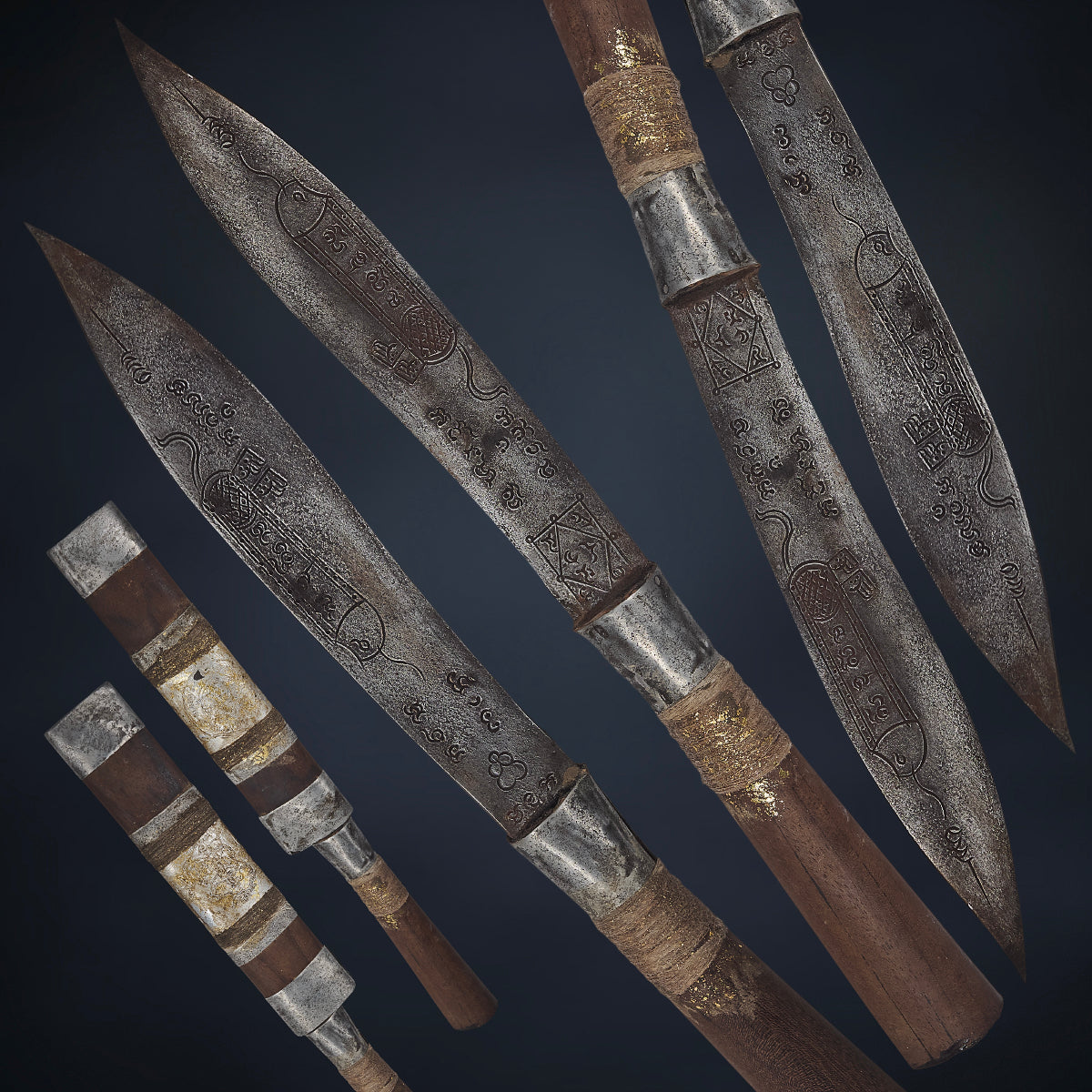
The Meed Pet Yantong consists of an elongated metal blade with a pointed tip, fitted to a traditional wooden handle.
The blade carries hand-inscribed Yant, sacred characters and geometric ritual markings. These inscriptions form the principal sacred component of the object, linking its physical construction with the Pet Yantong Wicha.
The metal displays an aged grey surface with darker patination, while the wooden handle retains a natural brown appearance. Metal fittings and traditional binding materials secure the junction between the blade and handle.
Traces of older wrapping and gold-coloured material are visible around sections of the fittings, reflecting the object's ritual preparation and age.
Within this tradition, the significance of the materials lies not simply in their physical composition but in their preparation, inscription and subsequent consecration.
━━━━━━━━━━━━━━━━━━━━━━━━━━━━
Ritual
The Meed Pet Yantong was prepared through a combination of specialised Yant inscription and collective consecration.
Arjan Sek was responsible for inscribing the blade according to the Pet Yantong tradition, while Por Sala Tan and seven additional monks and masters participated in its blessing.
The ritual intention centred upon the moderation of excessive personal force.
In traditional metaphysical language, an individual may possess an unusually strong or sharp energetic presence. This is not necessarily regarded as a negative personal quality, but it may create difficulties when dealing with others.
The Meed Mor was used symbolically to cut away, reduce or moderate this excess, allowing the person's natural authority to remain while encouraging greater approachability.
Rather than directing aggression towards another individual, the ritual was concerned with restoring balance within the person receiving the ceremony.
The Pet Yantong element introduced the complementary qualities of Metta, Saneh and harmonious attraction.
The collective consecration involving eight practitioners was regarded within the lineage as an important part of establishing the blade's intended ritual character.
━━━━━━━━━━━━━━━━━━━━━━━━━━━━
Blessings and Effects
1. Regulation of Excessive Sha Qi
The principal traditional function of this Meed Mor is the moderation of an excessively forceful personal aura, particularly when it creates discomfort or resistance among others.
2. Metta Maha Niyom – Goodwill and Acceptance
The Pet Yantong Wicha is associated with encouraging kindness, favourable impressions and a greater willingness among others to cooperate.
3. Saneh – Personal Attraction
The blade is traditionally connected with the softening of personal energy, allowing an individual's natural charm and approachability to become more apparent.
4. Harmony Within the Household
When employed in domestic rituals, the Meed Mor is associated with reducing tension, improving communication and encouraging peaceful relationships among occupants.
5. Business and Customer Relations
For merchants and business owners, the traditional intention concerns smoother interactions, more welcoming first impressions and the reduction of unnecessary disagreements.
6. Balanced Authority
The ritual seeks to preserve personal confidence and dignity while moderating an overly aggressive or intimidating outward presence.
7. Reduction of Interpersonal Conflict
The Meed Mor is associated with helping individuals move away from repeated confrontations, misunderstandings and strained relationships.
8. Harmonisation of Shared Spaces
Within the lineage, the blade may be placed in a home or workplace as a ritual object associated with a calmer and more cooperative environment.
━━━━━━━━━━━━━━━━━━━━━━━━━━━━
Modern Application
The Meed Pet Yantong is particularly relevant to individuals whose strong personalities may unintentionally create tension in their personal or professional relationships.
Within traditional practice, it may be used in ceremonies concerning household harmony, business relationships, customer interactions and the moderation of excessive personal aggression.
For business owners, the intended benefit is not the suppression of authority but the cultivation of a more welcoming presence, allowing confidence and approachability to coexist.
When retained in a residence or workplace, it serves as a ceremonial object associated with peaceful communication and balanced relationships.
As a genuine ritual blade, it should be stored securely and handled with appropriate care.
━━━━━━━━━━━━━━━━━━━━━━━━━━━━
Physical Details
The Meed Pet Yantong is a traditional pointed metal ritual blade fitted with a wooden handle and metal collar. Its aged blade surface bears numerous hand-inscribed Yant, sacred characters and geometric ritual diagrams, with markings visible across both faces. The wooden handle shows natural wear and older wrapping materials, while the metal fittings retain a weathered patina consistent with an established ceremonial object. The photographs illustrate the blade's inscriptions, pointed profile and traditional construction.
━━━━━━━━━━━━━━━━━━━━━━━━━━━━
Recommended Pairing
Metta Maha Niyom Takrut – Complements the Pet Yantong Wicha through traditional associations with goodwill, popularity and favourable interpersonal relationships.
Yin Tong – Particularly suitable for devotees seeking to strengthen personal attraction, emotional closeness and harmonious relationships.
Phra Sivali – Traditionally associated with favourable opportunities, assistance from others and smooth interactions in commercial environments.
Ganha-Chali – Complements the intention of Metta Maha Niyom, particularly in matters involving popularity, communication and acceptance.
Phra Pidta – Provides a complementary devotional association with restraint, inner composure and protection against unwanted influences.
━━━━━━━━━━━━━━━━━━━━━━━━━━━━
Personal Notes
What distinguishes this Meed Pet Yantong of Por Sala Tan from many conventional Meed Mor is its intended ritual function.
Most collectors associate Meed Mor with spiritual protection, the removal of black magic or the confrontation of harmful supernatural influences.
This particular blade represents a different aspect of traditional Wicha.
Its purpose was not to strengthen aggression but to moderate it.
The distinction is important. A naturally forceful individual may possess considerable confidence, leadership ability and determination, yet these same qualities can become obstacles when expressed too strongly.
Within Por Sala Tan's practice, the Pet Yantong Wicha was employed to bring these qualities into balance, allowing personal authority to coexist with goodwill and approachability.
Another significant feature is the involvement of Arjan Sek, who personally inscribed the blade according to his specialised Pet Yantong tradition.
The subsequent consecration involving Por Sala Tan and seven additional monks and masters further distinguishes the object from a blade prepared and blessed by a single practitioner.
Its aged metal surface, individually inscribed Yant and traditional wooden fittings also preserve the character of a working ritual instrument rather than a modern decorative reproduction.
For collectors interested in the lesser-known applications of traditional Thai Wicha, this Meed Mor offers an unusual example of sacred craftsmanship directed towards interpersonal harmony.
The Meed Pet Yantong represents an uncommon principle within traditional ritual practice: true authority need not be diminished to become approachable, and strength may be most effective when balanced with goodwill, restraint and harmony.
-
Free Shipping for Singapore| $15 Worldwide | $100 USA All products