OOBThaiAmulets
Por Sala Tan
Por Sala Tan
Couldn't load pickup availability
PST02
Por Sala Tan – Original Sakyant Rod Set
Por Sala Tan
~ B.E 2500
6 Inches
Mainstream Artifact
Sacred Craftsmanship
This original Sakyant Rod Set, dating to approximately B.E. 2500, belongs to an entirely different category from the amulets and Barang normally associated with Por Sala Tan.
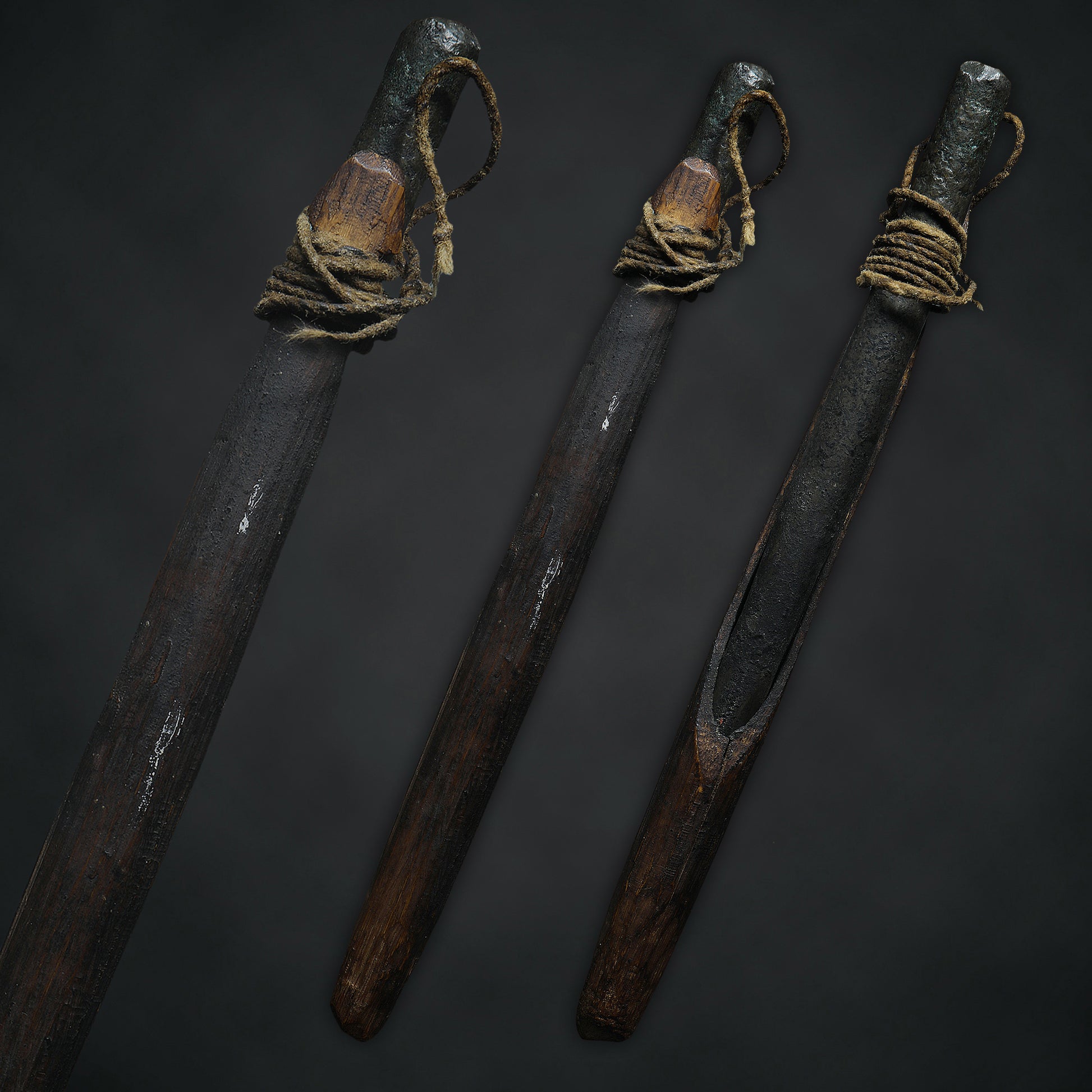
Decades of ritual handling, ink, ageing and use have left both pieces with the unmistakable surface of genuine working implements rather than objects created for display.
Personal Experiences Shared by Luksits
Personal ritual implements belonging directly to Por Sala Tan are rarely encountered outside established circles of his older followers.
A considerable number of such objects remained with close luksits in Thailand, either retained privately as Kru objects or passed quietly within families and groups connected with his practice.
Its age, long period of previous use and present condition make any attempt to pierce the skin with it inappropriate and potentially unsanitary.
For collectors, however, that does not diminish its significance.
The marks, oxidation, darkened timber and accumulated wear are precisely what connect the object to its history. This was not a reproduction of Por Sala Tan’s equipment. According to its provenance, it was part of the equipment through which he actually carried out Sakyant work.
For followers of Por Sala Tan, owning such a piece is therefore closer to preserving a personal historical effect of the master than acquiring another conventional amulet.
Summary
This Original Sakyant Rod Set, circa B.E. 2500, is primarily a collector's artifact and personal effect of Por Sala Tan.
Its significance lies in four elements:
Direct association with Por Sala Tan — a working implement personally used by him.
Early age — dating to approximately B.E. 2500 and representing an older generation of Sakyant equipment.
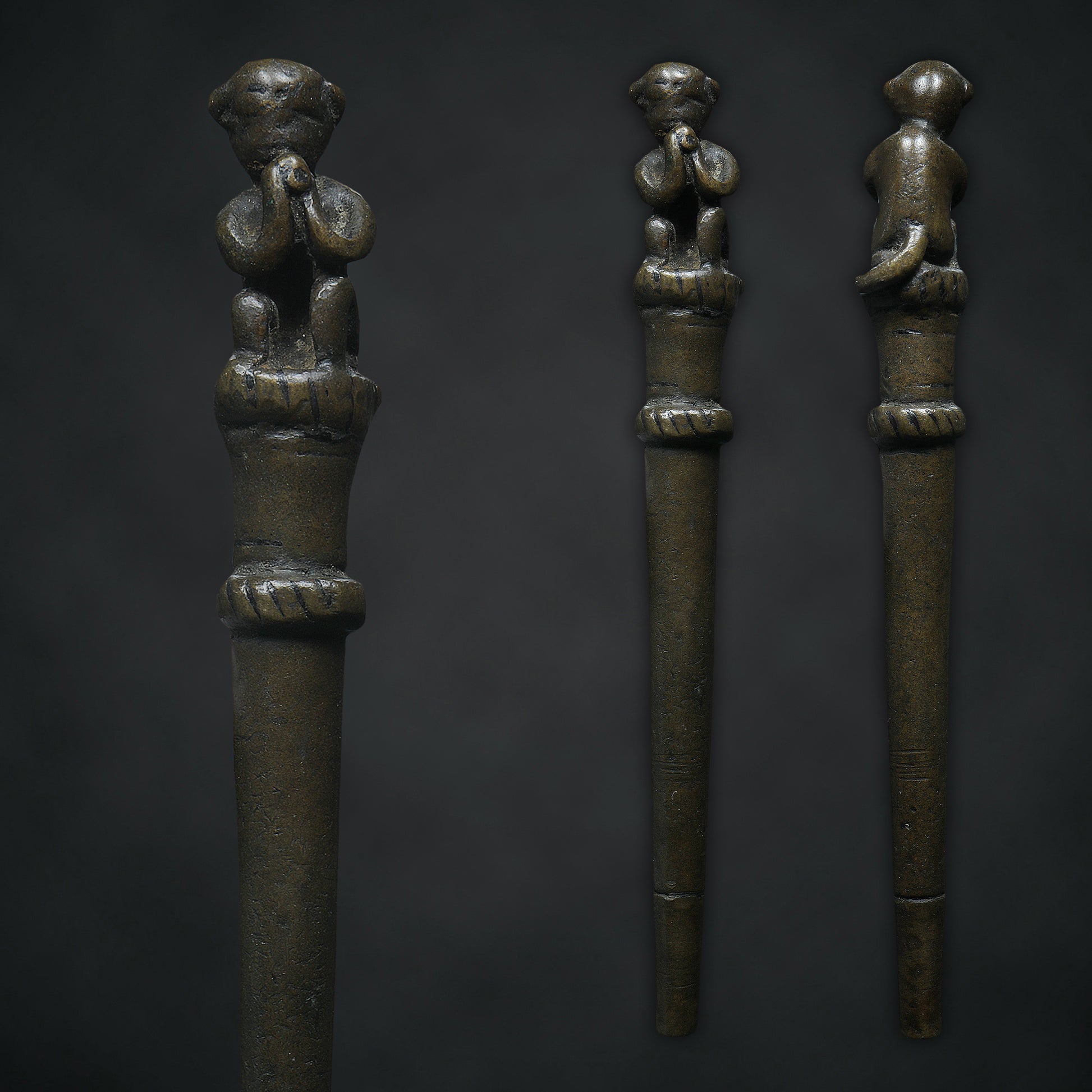
Traditional construction — cast-iron Yant rod, kneeling monkey finial and Burmese timber ink-holding shaft.
Ritual history — an object that participated directly in Sakyant ceremonies rather than being created later as a commemorative piece.
Today, the set should be preserved strictly as a historical and ritual collectible.
Its value is instead as a surviving piece of the working environment of Por Sala Tan — something rarely made available because many comparable personal objects remain with his close followers in Thailand.
Historical Background
Traditional Sakyant was never intended simply as decorative tattooing.
Within the older Thai and Lanna context in which masters such as Por Sala Tan worked, the physical Yantra formed only one part of a larger process involving the Kru, sacred ink, katha, ritual discipline and transmission between master and disciple.
The rod therefore occupied an important position.
It was the physical instrument through which the Yantra was transferred onto the recipient's body while the master performed the appropriate chanting and ritual work.
Por Sala Tan's Sakyant practice was associated with traditional objectives such as protection, Baramee, Klaew Klaad, authority and the redirection or strengthening of the recipient's spiritual condition.
The surviving rod dates to approximately B.E. 2500, placing it within an early period of his working life.
The construction itself reflects that age.
Rather than a polished modern steel implement, the rod possesses the heavier and more irregular character of an older cast object. The accompanying wooden component likewise reflects an earlier method in which the working equipment could be individually constructed and adapted by the practitioner.
This makes the set useful not merely for understanding Por Sala Tan, but for understanding the physical culture surrounding an older generation of Northern ritual practice.
Origins of the Materials
The principal Yant rod is made from cast iron.
According to the history accompanying the artifact, its casting is believed to include metal derived from old takruts, Yantra-related materials and other sacred remnants.
This follows a principle encountered in older sacred craftsmanship: ritually meaningful material was not necessarily discarded when its first purpose ended. It could be melted, combined and given another function.
The upper section terminates in a kneeling monkey with hands raised in wai.
Within the interpretation attached to the set, the monkey represents intelligence, adaptability and cleverness — the ability to respond appropriately when circumstances change.
The second principal component is fashioned from Burmese timber.
Its long working life is evident in the darkened and blackened surfaces. Repeated contact with sacred ink, handling, ritual substances and natural ageing has changed the appearance of the wood considerably.
These characteristics should be preserved rather than polished away.
Ritual
During its active period, the rod formed part of the actual Yantra transmission process.
Sacred ink was prepared and held within the working apparatus. The rod was then used to inscribe the appropriate design into the recipient's skin while Por Sala Tan recited the required katha and maintained concentration upon the intended wicha.
The weighted upper section helped provide control during this work.
A cord — and later, where appropriate, a rubber tube — could connect the rod with the ink component, providing a practical means of maintaining the flow of ink during the process.
Yet the physical action alone did not constitute Sakyant.
Within the traditional understanding, the completed Yantra required the master's ritual knowledge and consecration. The tool, ink, sacred geometry, chanting and recipient were therefore parts of the same ceremonial process.
This is what gives an original working rod particular historical significance.
It stood physically between the hand of the master and the body of the disciple.
Blessings and Effects
Unlike Por Sala Tan's wearable amulets, this artifact should not now be approached primarily according to a list of blessings.
Its original purpose was as the instrument through which different Sakyant wicha were applied.
Depending upon the Yantra being given, those workings could traditionally concern Baramee, protection, Klaew Klaad, courage, Metta, authority or other specialised purposes.
The rod itself was therefore a tool of transmission rather than a single-purpose amulet.
Today its significance is better understood through Kru Baramee and historical connection.
For a follower of Por Sala Tan, it represents the master's work in a particularly direct form: not an object he merely blessed, but a tool he handled and used while carrying out his practice.
Modern Application
The modern application of this set is preservation.
It should not be used for Sakyant, tattooing, acupuncture, piercing or any other procedure involving contact beneath the skin. After more than six decades, its age and unknown microbiological condition make such use inappropriate regardless of its ritual history.
For a serious Por Sala Tan collector, the set may instead be respectfully maintained alongside other Kru or personal artifacts.
It may be displayed in a protective case, kept within a dedicated collection cabinet or placed within an area reserved for objects connected directly with Por Sala Tan.
The existing patina, old residue, darkened surfaces and wear should generally be regarded as part of the artifact's provenance rather than imperfections requiring restoration.
Aggressive polishing or unnecessary alteration would remove precisely the physical evidence that distinguishes an old working tool from a newly manufactured object.
Physical Details
An original two-part Por Sala Tan Sakyant working set dating to approximately B.E. 2500, consisting of an aged cast-iron Yant rod with a kneeling monkey finial in wai posture and an elongated Burmese timber ink-holding shaft. Both components show substantial age and working wear, including oxidation, darkened surfaces, old binding material, ink staining and natural deterioration consistent with prolonged ritual use and storage. The set is now a historical collectible and is not suitable for further tattooing or skin contact.
Recommended Pairing
As a collector's artifact, the Sakyant Rod Set is best displayed with objects that document Por Sala Tan's life and practice, rather than being treated as another wearable combination.
A Yant Kru, Lersi artifact or another piece directly associated with his teaching lineage would provide an appropriate context, emphasising the relationship between Kru, wicha and transmission.
Old photographs, handwritten Yantra, original ritual equipment or other documented personal effects would likewise complement the set historically.
For a serious Por Sala Tan collection, however, the rod requires little additional explanation.
Amulets preserve the products of a master's practice.
A personal working tool preserves something different — evidence of how the master actually practised.
That is what makes this Sakyant Rod Set particularly unusual. Many of Por Sala Tan's personal effects remain closely held by older luksits in Thailand, and pieces of this nature seldom enter the collector market.
For followers of Por Sala Tan, it is therefore more than another sacred object. It is a surviving piece of his working history — a tool that witnessed the master, his disciples and the living practice of his wicha more than six decades ago.
-
Free Shipping for Singapore| $15 Worldwide | $100 USA All products