
OOBThaiAmulets
Por Sala Tan
Por Sala Tan
Couldn't load pickup availability
PST02
Naga Kiew
Por Sala Tan
3.5 Inches
Mainstream Artifact
Sacred Craftsmanship
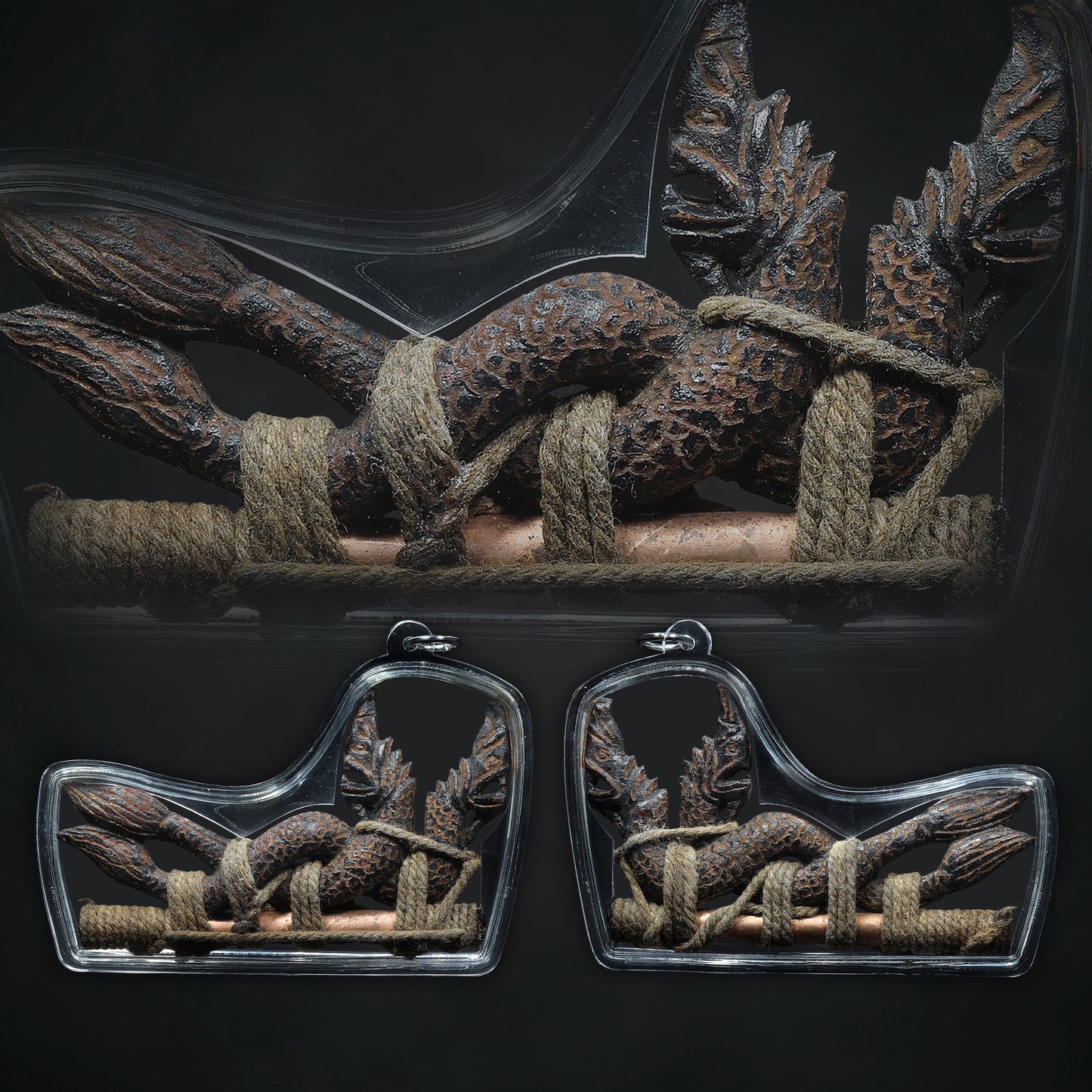
This Twin Naga Amulet, or Naga Kiew, is a distinctive hand-carved work by Por Sala Tan, created from old wood taken from a boat formerly used to ferry monks, holy men and ritual practitioners to the Mekong River.
Each Twin Naga was individually carved and assembled by hand from naturally aged wood. Differences in grain, colour, carving, surface wear, cord placement and overall form are therefore inherent to the workmanship, making every surviving example individually distinct.
Personal Experiences Shared by Luksits
Among Por Sala Tan's luksits, Naga pieces are often associated with people seeking a combination of prosperity, protection and smoother relationships with others.
Business owners and those involved in sales traditionally value the Naga's connection with wealth and abundance. Some describe carrying Naga objects when negotiating, meeting customers or attempting to establish greater stability in their livelihood.
The Twin Naga form adds another dimension.
Because the two Nagas are intertwined rather than represented separately, luksits also associate the piece with partnership, loyalty and maintaining harmony between people. This may concern romantic relationships, family relationships or business partnerships where cooperation is essential.
Others favour the piece during periods of significant change. The Naga's traditional connection with water, movement and renewal makes it meaningful to those beginning a new business, changing career direction or attempting to recover after a difficult period.
Summary
The Twin Naga – Naga Kiew combines an unusual sacred material with one of Southeast Asia's most enduring spiritual symbols.
Its body was carved from wood taken from a boat once used to transport monks and holy men to the Mekong River for ritual purposes. Por Sala Tan transformed this old working vessel into two intertwined Nagas and reinforced the carving with a substantial copper Takrut and extensive sacred-cord binding.
The resulting piece brings together the traditional Naga qualities of wealth, guardianship and spiritual protection with the symbolism of the intertwined pair: unity, attraction, loyalty, balance and harmonious relationships.
At approximately 3.5 inches, it is substantial enough to retain a commanding presence while remaining practical for carrying or enshrinement.
Historical Background
The Naga occupies a particularly important position in the religious and cultural traditions of mainland Southeast Asia.
In Buddhist tradition, Nagas appear as powerful serpent beings associated with water, subterranean realms, treasures and guardianship. One of the best-known accounts concerns Mucalinda, the Naga King who sheltered the Buddha from severe weather following his enlightenment.
Throughout Thailand and Laos, Naga imagery is also closely connected with rivers and waterways.
The Mekong River holds particular significance. Communities along its banks have preserved generations of stories concerning Nagas inhabiting or guarding its waters, and Naga imagery remains prominent within temples, ceremonies and regional folklore.
The Twin Naga, sometimes understood through the idea of Naga Kiew or intertwined Nagas, adds the symbolism of two forces meeting.
Rather than representing a solitary guardian, the paired form can signify complementary forces existing together — material and spiritual concerns, strength and compassion, masculine and feminine principles, or two individuals joined through loyalty and affection.
This explains why Twin Naga imagery can carry both protective and Seneh-related interpretations.
Origins of the Materials
The principal material is old boat wood.
According to the history preserved with the piece, the timber came from a vessel previously used to transport monks, holy men and ritual practitioners to the Mekong River.
Such journeys were undertaken in connection with water-based ceremonies, blessings and other sacred activities.
The significance of the material therefore comes from its previous function.
It was not merely wood that happened to come from an old boat. The vessel had repeatedly carried practitioners participating in religious and ritual activity, giving the timber an established history before Por Sala Tan ever began carving it.
The connection with the Mekong made the material particularly appropriate for a Naga image.
Por Sala Tan subsequently combined this old timber with a large copper Takrut and sacred cord, bringing together the original history of the boat with his own wicha and consecration.
Ritual
After selecting suitable sections of the old boat wood, Por Sala Tan carved the material into the intertwined Twin Naga form.
The detailed scales and raised heads established the Naga imagery, while the crossing bodies gave the object its characteristic Naga Kiew symbolism.
A large Takrut was then positioned beneath the Nagas.
The Takrut provided a ritual anchor for the completed construction, allowing Por Sala Tan's inscribed wicha to accompany the older sacred associations already attributed to the boat wood.
Sacred cord was wrapped repeatedly around the entire structure.
This physically secured the Takrut and Nagas while ritually binding the components into a single sacred object.
Por Sala Tan then performed chanting and consecration over the completed piece, directing its qualities towards prosperity, protection, harmony, authority and favourable development in life.
Blessings and Effects
The Twin Naga is traditionally associated with several complementary qualities.
Wealth and prosperity are among the most prominent. Nagas are traditionally connected with treasures, abundance and fertile waters, making the image particularly relevant to business owners and those seeking greater financial stability.
Protection forms another important aspect. As guardian beings, Nagas are associated with safeguarding sacred places and protecting against danger, misfortune and harmful spiritual influences.
The intertwined form introduces love and harmony. The two Nagas remaining connected represent loyalty, partnership and the strengthening of relationships. This can traditionally extend to romantic partners, family members and business partnerships.
Naga symbolism is also associated with wisdom and intuition, particularly the ability to recognise changing circumstances and choose an appropriate direction.
The serpent's traditional connection with renewal gives the piece an additional association with transformation and new beginnings — moving beyond an old difficulty and establishing a different path.
Finally, the raised Twin Naga form carries Baramee and authority, traditionally supporting presence, respect and recognition in professional or leadership environments.
Modern Application
The Twin Naga is particularly suited to those whose lives depend upon a combination of relationships, business and personal authority.
Business owners may carry it for prosperity, customer flow and stability.
Those working with partners may place greater importance upon the intertwined Nagas as symbols of cooperation and loyalty.
Couples may appreciate the traditional association with affection and maintaining harmony, while those entering a new stage of life may connect with the Naga's symbolism of renewal and transformation.
For managers or people working in competitive environments, the protective and Baramee aspects may be more relevant.
The piece can be worn, carried or respectfully placed upon an altar according to the preference of the owner.
Physical Details
This Twin Naga, or Naga Kiew, measures approximately 3 inches and was hand-carved by Por Sala Tan from old wood originating from a boat formerly used to ferry monks and holy men to the Mekong River for ritual activities. Two Nagas are carved with intertwined bodies, individually detailed scales and raised heads. A substantial copper Takrut runs beneath the figures, while sacred cord is wrapped extensively around the Nagas, Takrut and wooden base. Natural variations in the old timber, grain, colour, carving, surface wear and cord placement are inherent to each handmade piece. The amulet is presently preserved within a fitted clear protective casing.
Recommended Pairing
The Twin Naga already combines prosperity, protection, harmony and Baramee, making it suitable as a substantial standalone piece.
For business use, a Phra Sivali can complement the Naga's wealth symbolism with traditional associations of sustenance, abundance and favourable opportunities.
A Phra Somdej or another Buddha image provides a different balance, adding a stronger foundation of Buddhist merit, mindfulness and Baramee.
For relationship-oriented use, it can also be paired with a Metta Maha Niyom piece. In such a combination, the Metta amulet emphasises warmth and favourable human response, while the Twin Naga represents loyalty, stability and the preservation of harmonious bonds.
-
Free Shipping for Singapore| $15 Worldwide | $60 USA For Items Below $350