
OOBThaiAmulets
Por Sala Tan
Por Sala Tan
Couldn't load pickup availability
PST04
Jinn
Por Sala Tan
Barang artifact
4" height
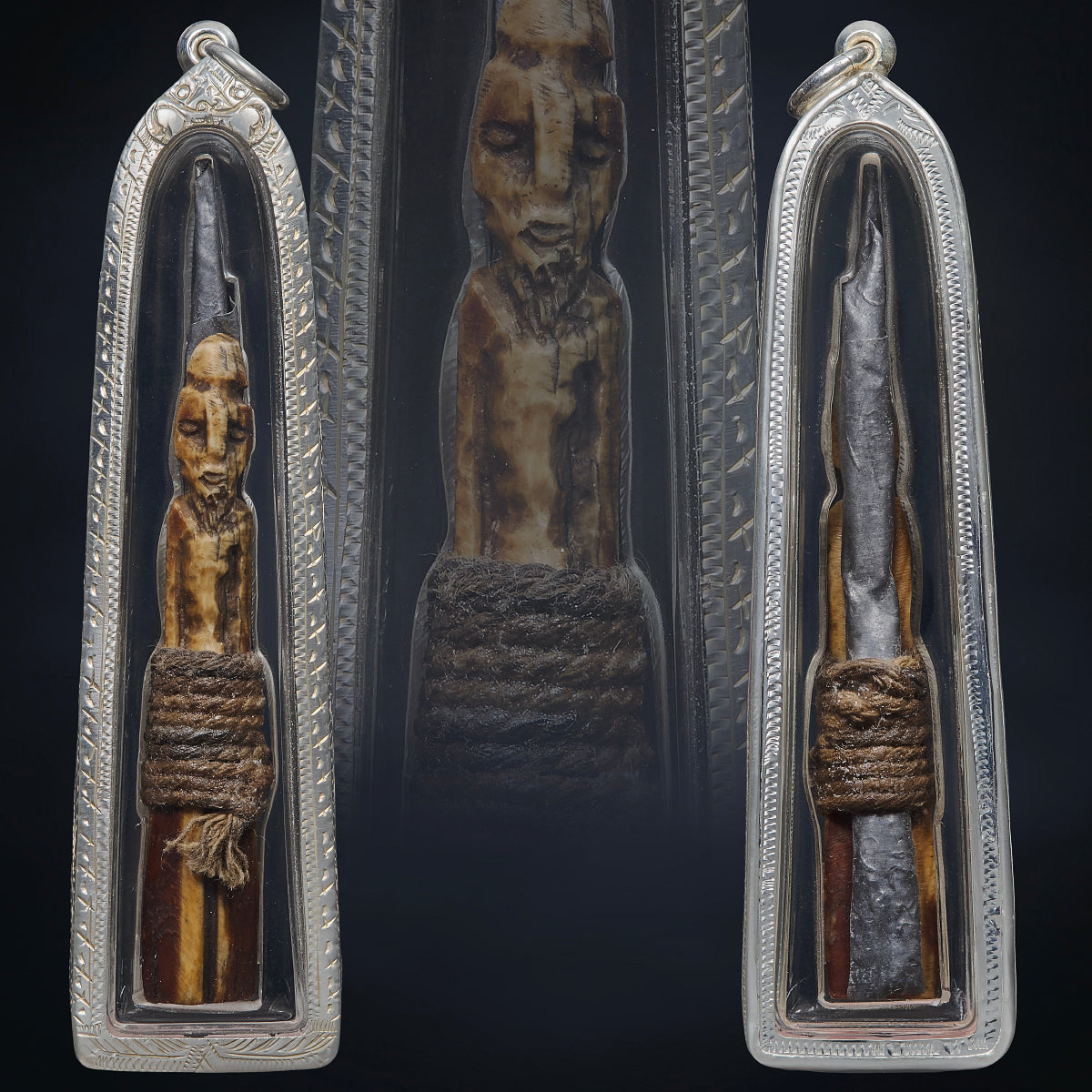
Each Jinn relic was individually handmade from naturally formed pieces of old Gaduk Chang and personally prepared by Por Sala Tan. Differences in the original relic, carving, patina, takrut and old binding cord mean that every completed piece possesses its own unique texture, colour and form.
Personal Experiences Shared by Luksits
Collectors and devotees who have kept Por Sala Tan's Jinn pieces have shared experiences particularly connected with intuition, heightened awareness and timely feelings of caution.
Some described occasions when a situation initially appeared normal, yet they suddenly developed an uncomfortable or unusual feeling that encouraged them to slow down, reconsider their decision or pay closer attention to what was happening around them.
The warning was not always specific. At times, it was simply a persistent sense that something was not quite right.
Rather than creating fear, devotees regarded these experiences as a form of heightened alertness — prompting them to observe more carefully before proceeding.
Others associated the Jinn with becoming more sensitive to their surroundings during travel, unfamiliar situations or important decisions. Over time, they felt this encouraged stronger judgement and greater confidence in recognising when caution was necessary.
Devotees also associate these pieces with Baramee building, particularly through greater self-awareness, discipline and the ability to remain composed when circumstances are uncertain.
For collectors familiar with Por Sala Tan's Jinn wicha, its character is therefore often described through guidance, awareness and timely caution rather than simple fortune.
Summary
This unusual Jinn by Por Sala Tan was individually created from an old piece of Gaduk Chang relic that had previously been kept by an elderly Lersi.
During one of Por Sala Tan's journeys through the mountains, he encountered the old Lersi and was given several pieces of these aged relics.
The Gaduk Chang had been bundled together with old cord, suggesting that the materials had already been preserved and treated as sacred objects for some time.
The old Lersi explained to Por Sala Tan that Jinn were associated with the relics.
After receiving them, Por Sala Tan retained their natural elongated forms and individually carved facial features into each piece, giving the Jinn a physical representation without excessively altering the original material.
He then prepared old lead alloy and Parod as takruts, positioning them alongside the relic before binding everything together with cord.
Only the natural form of each Gaduk Chang determined the final appearance, making every Jinn distinctly different.
The completed pieces are traditionally associated with guidance, intuition, heightened awareness, protection, Baramee and recognising unfavourable circumstances before acting.
Origin – The Old Mountain Lersi
The history of these pieces begins during one of Por Sala Tan's journeys through a mountainous region.
There, he encountered an elderly Lersi who had kept several old pieces of Gaduk Chang.
The relics were not loose materials. They had been bundled together using old cord and preserved by the Lersi, indicating their established place amongst his sacred belongings.
During their meeting, the Lersi gave some of these relics to Por Sala Tan.
More importantly, he explained that there were Jinn connected with the old materials.
This information determined how Por Sala Tan subsequently prepared the relics.
Rather than transforming them into an unrelated sacred image, he chose to preserve their connection with the Jinn already associated with them.
Gaduk Chang
Gaduk Chang forms the principal body of each piece.
Old elephant-related relic materials occupy a distinctive place within certain Southeast Asian sacred-object traditions. The elephant itself carries longstanding symbolism connected with strength, stability, endurance, authority and Baramee.
For this particular group, however, the significance of the Gaduk Chang comes especially from its provenance.
The relics had already been kept by an old Lersi and bound together with aged cord before reaching Por Sala Tan.
They therefore entered his possession as established sacred materials rather than newly acquired raw relics.
Por Sala Tan preserved much of their original form when creating the Jinn.
The Jinn Within the Relic
According to the old Lersi, the Gaduk Chang relics were associated with Jinn.
Jinn traditions appear in different forms throughout regions influenced by Islamic, Burmese and wider Southeast Asian folk beliefs. Within individual practitioner lineages, their roles can vary considerably.
The Jinn connected with these particular relics were understood principally through guardianship, awareness and guidance.
After receiving the materials, Por Sala Tan carved a simple human-like face into each relic, providing a visible representation for the presence associated with it.
The carving remains intentionally restrained.
The original relic is still clearly recognisable, while the facial features give each piece its individual identity.
Individually Hand-Carved Faces
No two pieces of Gaduk Chang possessed exactly the same natural shape.
Por Sala Tan therefore carved each Jinn according to the individual relic in front of him, following its existing proportions rather than forcing every piece into a standardised design.
The facial features are simple and direct, with a long nose, recessed eyes, mouth and lower facial details carved into the naturally aged surface.
This method resulted in substantial differences between individual examples.
Some faces would naturally appear broader or narrower, while differences in grain, age, colour and surface wear remained visible.
This individuality is an important characteristic of the group.
Lead-Alloy Takrut & Parod
Por Sala Tan prepared old lead alloy together with Parod for the takrut component of each Jinn relic.
The takrut runs alongside the elongated Gaduk Chang, forming a substantial secondary element to the piece.
Within Por Sala Tan's work, Parod is a specialised sacred material frequently incorporated where stronger ritual support and protective qualities are required.
Combined with the old lead alloy, the takrut reinforces the guardian character of the Jinn while complementing the stability of the Gaduk Chang.
The finished composition brings together old natural relic, Jinn presence and written wicha within one compact sacred object.
The Old Binding Cord
The use of cord is another distinctive feature of these Jinn pieces.
The original Gaduk Chang relics had already been bundled with old strings while in the possession of the Lersi.
Por Sala Tan retained this concept when completing the individual pieces.
The relic and takrut were firmly bound together, creating a simple construction that reflects the older practitioner tradition from which the materials originated.
The binding also gives each example a particularly handmade character, with natural differences in the thickness, position and ageing of the cord.
Guidance & Heightened Awareness
The character most frequently associated with these Jinn pieces is awareness.
Within traditional belief, guidance does not necessarily appear as a clear message or prediction.
It may instead take the form of a sudden feeling that causes the keeper to observe more carefully, delay an action or reconsider something that initially appeared acceptable.
This is why devotees often connect the Jinn with decision-making.
The intended quality is not fear of every situation, but greater sensitivity towards circumstances that deserve closer examination.
In practical terms, this translates naturally towards alertness, careful judgement and stronger situational awareness.
Baramee
The Gaduk Chang itself contributes an important Baramee aspect to the piece.
The elephant has traditionally represented strength and dignity, while the old Lersi provenance adds a connection with discipline and spiritual practice.
Within this Jinn composition, Baramee is expressed through steadiness, confidence and awareness.
A person who remains calm and observant during difficult circumstances is less easily influenced by pressure or confusion.
This gives the piece a character of quiet authority rather than aggression.
Traditional Blessings (Summary)
The principal quality associated with Por Sala Tan's Jinn is guidance and intuition, particularly when something requires greater caution.
It is traditionally kept for heightened awareness, helping the devotee remain attentive to surroundings, unfamiliar people and changing circumstances.
Its guardian character supports protection and timely warning, while the Gaduk Chang contributes qualities of strength, stability and Baramee.
The lead-alloy and Parod takrut further reinforce the protective and ritual character of the piece.
For important decisions, the Jinn is associated with the ability to slow down, observe carefully and recognise unfavourable circumstances before committing oneself.
Together, its traditional qualities centre upon guidance, awareness, protection, judgement, confidence and Baramee.
Modern Application
This Jinn is particularly relevant for those who regularly enter unfamiliar environments or situations requiring careful judgement.
Business owners and negotiators may value its symbolism when assessing new people, partnerships or opportunities.
Travellers may keep it for greater awareness of their surroundings and the traditional guardian aspect of the Jinn.
For those making important personal or financial decisions, its character encourages observation before commitment.
Spiritual practitioners may also appreciate the relationship between the Jinn, the old Lersi and the aged Gaduk Chang as a piece connected with older forest and mountain traditions.
Its principle is straightforward: remain aware of what surrounds you, recognise warning signs and act only when judgement is clear.
Physical Details
This piece retains the naturally long and narrow form of the original Gaduk Chang relic.
Por Sala Tan carved a distinctive Jinn face into the upper portion, with elongated facial features following the natural contours of the material. The aged cream, brown and darkened tones of the relic remain clearly visible.
A long lead-alloy and Parod takrut runs behind the carved figure, extending through much of the length of the piece.
The two components are secured together by a substantial section of old binding cord, preserving the simple construction associated with the original relics kept by the Lersi.
Viewed from the reverse, the takrut becomes the dominant feature while the natural profile of the Gaduk Chang remains visible beside it.
The complete artifact is presently protected within a custom casing.
Recommended Pairings
Lersi — particularly appropriate given the provenance of the relics, complementing the Jinn with wisdom, meditation and spiritual discipline.
Tao Wessuwan — suitable where the keeper wishes to strengthen the guardian and spiritual-protection aspect.
A Rare Jinn Relic of Por Sala Tan
These Jinn pieces are distinctive because their story began before the materials entered Por Sala Tan's possession.
The old Gaduk Chang had already been preserved and bundled by an elderly Lersi in the mountains, who explained that Jinn were connected with the relics before gifting several pieces to Por Sala Tan.
Por Sala Tan respected the existing character of the materials. He carved each relic individually, following its natural shape, and gave the Jinn a simple physical face. Old lead alloy and Parod were prepared into takruts and bound together with each relic using cord.
No two examples could therefore be identical.
Among collectors of Por Sala Tan's Jinn works, these pieces became particularly associated with timely feelings of caution, heightened awareness of one's surroundings, guidance during uncertain situations and the gradual strengthening of personal Baramee.
For Por Sala Tan collectors, it represents an uncommon meeting of old Lersi provenance, Gaduk Chang, Jinn tradition and individually prepared wicha — preserved in a simple but highly distinctive sacred form.
-
Free Shipping for Singapore| $15 Worldwide | $60 USA For Items Below $350