
OOBThaiAmulets
Por Sala Tan
Por Sala Tan
Couldn't load pickup availability
PST03
Paya Kao Kam
Por Sala Tan
Personal Experiences Shared by Luksits
Collectors of Paya Kao Kam traditionally seek this amulet for Maha Saneh, Metta Maha Niyom, favourable relationships and wealth opportunities. Many Luksits describe becoming easier to approach, enjoying warmer conversations, attracting returning customers and finding that negotiations progress more naturally.
Business owners and commission-based workers often carry it with the hope of strengthening customer relationships and encouraging repeat business. Others value it for the confidence it brings during social situations, presentations and important meetings, where a favourable first impression can be just as valuable as technical ability.
These are personal experiences shared among devotees and collectors and should be understood as traditional beliefs rather than guaranteed outcomes.
Summary
Among the specialised Maha Saneh creations of Por Sala Tan, Paya Kao Kam occupies a distinctive place within his Yin-oriented ritual lineage. Produced in relatively limited numbers, these amulets were generally prepared for close followers seeking blessings centred on attraction, favourable relationships and emotional influence.
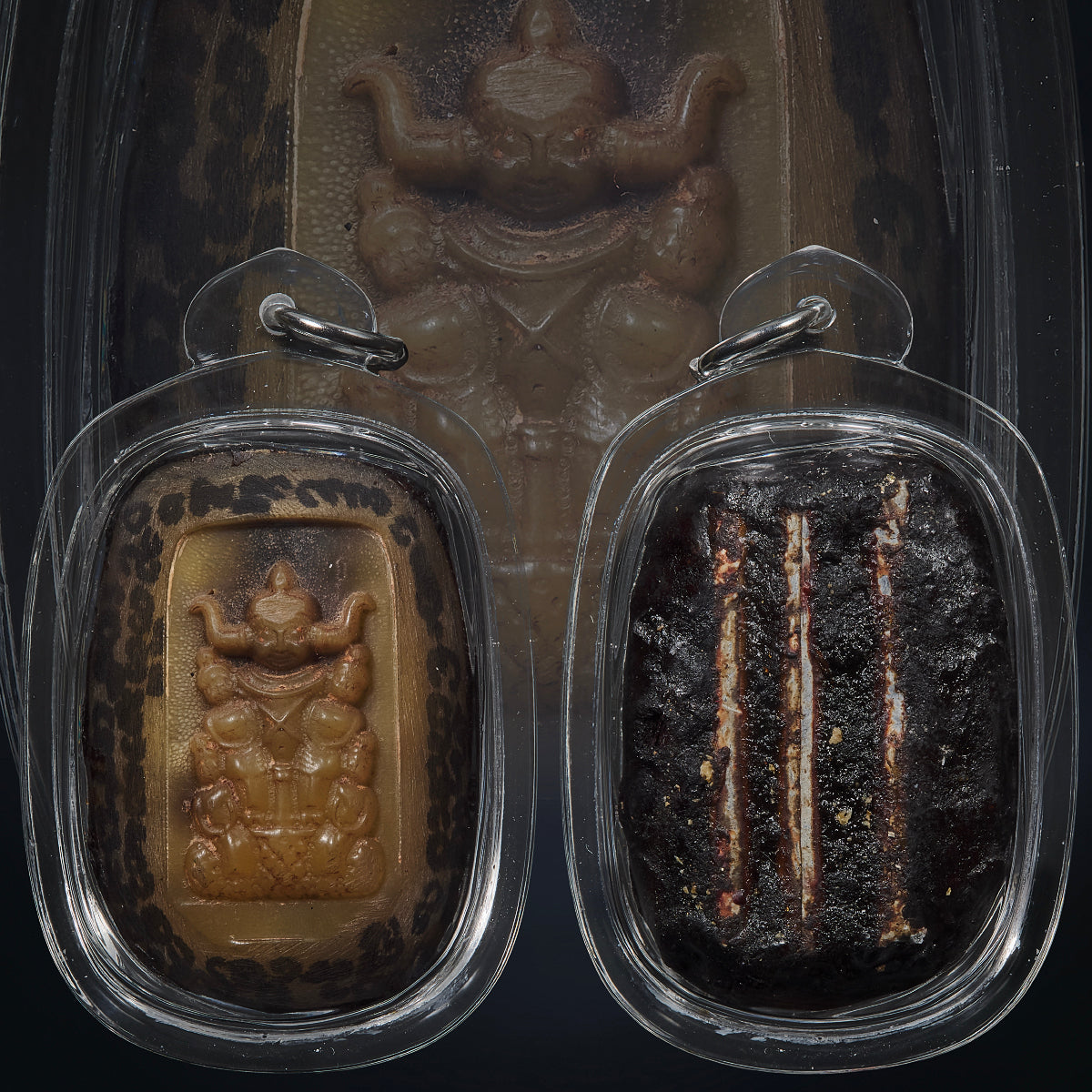
The front depicts Paya Kao Kam in a seated ceremonial posture, while the reverse contains three consecrated Takruts, individually prepared for Metta, Maha Niyom and wealth attraction. Together, they create a balanced ritual composition intended to encourage personal magnetism while supporting harmonious relationships and livelihood.
Rather than relying on elaborate appearance, the strength of this amulet lies in its carefully prepared ritual structure and the traditions behind its consecration.
Historical Background
Throughout his years of practice, Por Sala Tan developed different ritual methods according to their intended purpose. Some focused upon protection and authority, while others concentrated on attraction, emotional harmony and interpersonal influence.
Paya Kao Kam belongs to the latter category. Within older Northern Thai traditions, attraction-based wiccha extended beyond romance alone. It embraced friendship, goodwill, trust, social acceptance and the ability to leave a favourable impression on others.
These traditions recognised that many opportunities in life arise through human relationships. Business, career advancement and personal success often begin with positive interactions, making Metta and Maha Niyom important elements within Thai sacred-object traditions.
For this reason, pieces such as Paya Kao Kam have long been appreciated by collectors seeking balanced attraction rather than forceful influence.
Origins of the Materials
The front image of Paya Kao Kam was intentionally kept simple, allowing the ritual composition to remain the central focus of the amulet.
The reverse houses three individually consecrated Takruts, each prepared for a specific purpose:
- Metta – encouraging kindness and goodwill.
- Maha Niyom – promoting popularity and favourable treatment.
- Wealth Attraction – supporting opportunities for livelihood and prosperity.
These Takruts are embedded within a dense ritual compound, forming the spiritual foundation of the amulet. Rather than functioning independently, they are intended to complement one another, bringing together attraction, harmonious relationships and financial opportunity in a single sacred object.
Ritual
Paya Kao Kam underwent consecration through Buddhist chanting, meditation and lineage-specific mantra recitation according to Por Sala Tan's inherited wiccha.
The ritual focused on harmonising attraction with compassion and prosperity, ensuring that the blessings associated with each Takrut worked together rather than separately.
Within traditional understanding, the completed amulet represents a balanced form of Maha Saneh—encouraging favourable relationships while supporting positive opportunities in daily life.
Traditional Blessings
Paya Kao Kam is traditionally associated with:
- Maha Saneh – strengthening personal attraction and social presence.
- Metta Maha Niyom – encouraging goodwill, trust and favourable treatment.
- Wealth Opportunities – supporting business, sales and livelihood.
- Positive Relationships – promoting smoother communication and mutual understanding.
Collectors often value the combination of these blessings because many opportunities begin through positive human connections. Improved relationships may naturally lead to stronger business, career opportunities and lasting friendships.
As with all traditional Thai amulets, these blessings represent longstanding cultural beliefs rather than guaranteed outcomes.
Modern Application
Paya Kao Kam is especially suited to individuals whose work depends upon communication and personal relationships.
Business owners, sales professionals, consultants, presenters, entertainers and those working within hospitality often appreciate its traditional association with warmth, confidence and favourable first impressions.
Many collectors also carry the amulet during important meetings, negotiations or social occasions where trust and rapport are essential.
Physical Details
The front features the seated image of Paya Kao Kam, enclosed within a protective casing suitable for everyday wear.
The reverse contains three consecrated Takruts embedded within a dense black ritual compound. Each Takrut was individually prepared to represent Metta, Maha Niyom and wealth attraction, forming the central ritual composition of the amulet.
As each example is assembled and consecrated by hand, natural variations in the ritual compound and construction are expected, making every piece unique.
Recommended Pairing
Paya Kao Kam pairs particularly well with Phra Somdej for Baramee and general blessings, Phra Kring for protection and auspiciousness, or Hanuman for confidence and decisive action.
Collectors seeking stronger business attraction often combine it with Nang Kwak, creating a complementary balance between customer attraction, personal charm and prosperous trade.
Before reaching devotees, each Paya Kao Kam is individually assembled using carefully prepared ritual materials. The sacred components are hand-arranged and consecrated before the amulet is sealed, resulting in natural variations that make every example unique.
Personal Notes
Paya Kao Kam reflects Por Sala Tan's quieter approach to Maha Saneh practice, placing emphasis upon balanced attraction, goodwill and harmonious relationships rather than outward complexity. Its carefully prepared Takruts and traditional ritual composition continue to make it an interesting piece for collectors of his Yin-oriented lineage.
Its traditional purpose may be summarised simply: to encourage sincere relationships, favourable opportunities and prosperity that grows through trust, kindness and positive human connections.
-
Free Shipping for Singapore| $15 Worldwide | $60 USA For Items Below $350