
OOBThaiAmulets
Por Sala Tan
Por Sala Tan
Couldn't load pickup availability
PST02
Summary
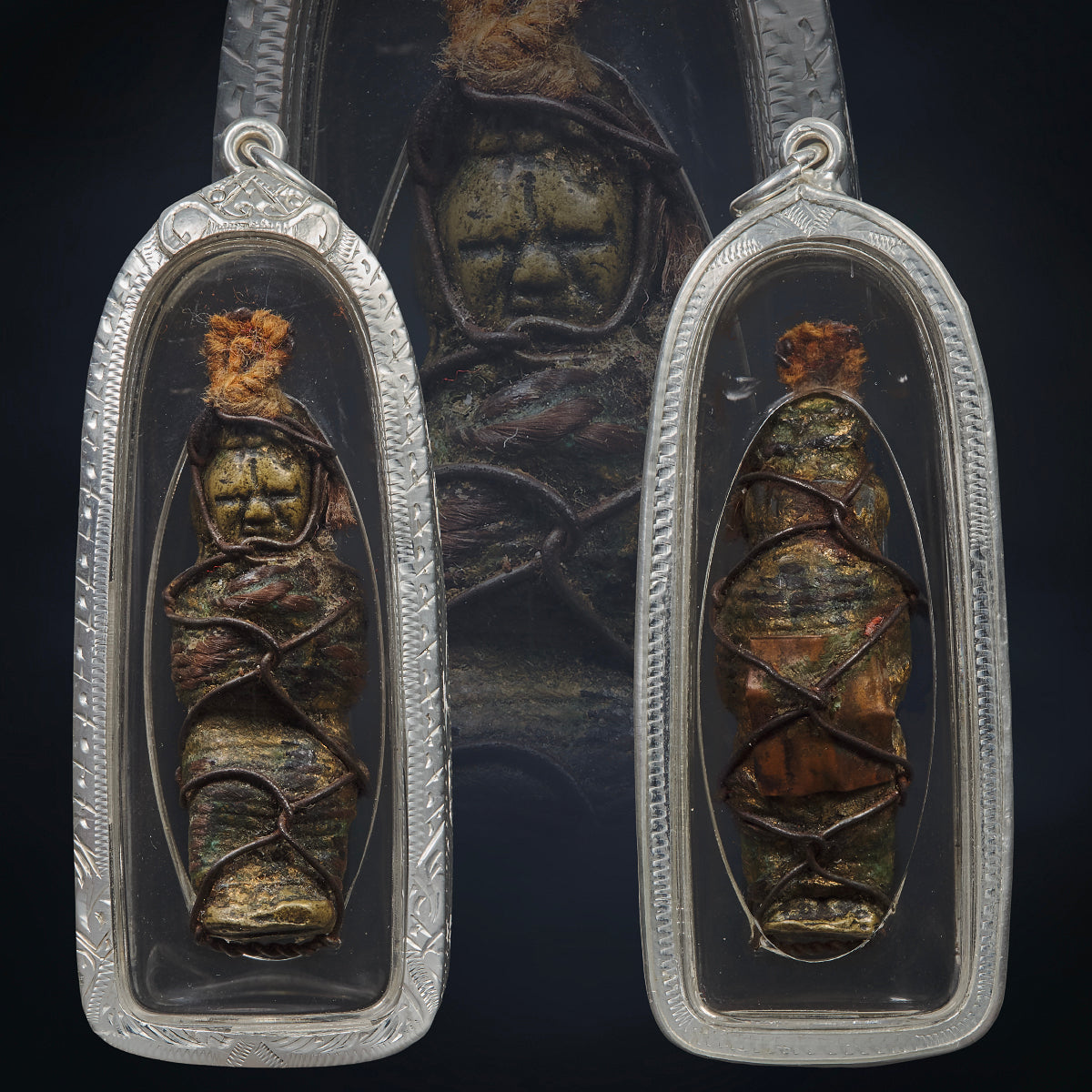
This Guman Keow is a rare village-made piece from the B.E. 2530 era, created jointly by Por Sala Tan and the abbot of Wat Duang Den during a period when traditional casting methods were still preserved in rural Northern Thailand. The piece represents what local villagers referred to as a "Dek Wat" or Temple Child—a guardian spirit believed to have accumulated sufficient merit and blessings to be elevated to a higher spiritual state.
Unlike later factory-produced castings, batches such as this could only be made when a temple held a full Lor Boran ceremony, where a traditional village blacksmith was invited to melt and cast sacred metals for ritual purposes. Surviving examples are uncommon today, especially those that still retain their original hand-wrapped village-style casing.
Historical Background
The origins of this batch are connected to a tragic landslide that struck a rural community during the early B.E. 2530s. The disaster damaged part of an old children's cemetery located on the outskirts of the village. Many burial markers disappeared beneath the earth, making identification difficult for surviving families.
Following the event, villagers reported years of poor harvests, financial difficulties, and an overall decline in village prosperity. Local elders believed the disturbance of the burial grounds had affected the spiritual balance of the area.
Por Sala Tan was invited to assist. Together with the abbot of Wat Duang Den, a plan was organised to restore merit and dignity to the forgotten resting place. Villagers gathered remains where possible, conducted proper cremation ceremonies, and returned merit to those whose resting places had been lost.
What remained from the old burial structures was collected and preserved for ritual use.
From this effort emerged a small batch of Guman Teap amulets intended to honour, elevate, and continue caring for the spirits connected to the site.
Origins of the Materials
The primary material came from coffin nails recovered from the damaged burial grounds.
After the merit-making and cremation rites were completed, the nails were gathered and brought to the temple. During a traditional metal-casting ceremony, they were melted together into a sacred alloy and recast into small guardian figures.
Within village magical traditions, reclaimed ritual metals carry the memory of the ceremonies and prayers connected to them. By transforming these materials into sacred images, the old energies of loss and disruption were redirected into protection, merit, and blessing.
The figure itself was then wrapped according to older village customs using sacred thread and cloth before being sealed.
The wrapping style seen on this piece reflects practical village craftsmanship. While plastic and modern casings were already common in larger towns by this period, rural communities often continued using traditional methods because they were familiar, affordable, and spiritually meaningful.
Ritual
The batch was created during a full Lor Boran casting ceremony involving temple monks, village elders, and a traditional iron smith.
Following the casting process, blessing rites were performed by Por Sala Tan together with the abbot of Wat Duang Den. The intention was not merely to create an amulet but to elevate the spiritual standing of the temple children connected to the cemetery.
Local practitioners described these guardians as Guman Teap—blessed child spirits who had received sufficient merit to serve as protectors and helpers of the temple.
For this reason, older villagers often referred to them affectionately as "Dek Wat," a term still occasionally heard among senior devotees today.
Blessings and Effects
Collectors traditionally seek this piece for windfall opportunities, fortunate encounters, and day-to-day luck.
Within local folklore, Temple Child guardians were believed to be particularly responsive to acts of generosity and merit-making. Many owners carried them when purchasing lottery tickets, attending markets, or conducting business negotiations.
The energy associated with this batch is generally described as friendly and approachable. Long-time devotees often report stronger Metta, smoother communication, and an increased ability to build rapport with customers and strangers.
Many salespeople and traders were known to keep such pieces close during business hours, believing they encouraged goodwill and repeat patronage.
Modern Application
Today, this Guman Keow is most often carried by individuals involved in sales, entrepreneurship, customer-facing professions, and commission-based work.
Collectors who enjoy lottery participation or occasional games of chance also value these older village-made Temple Child pieces due to their longstanding reputation for attracting unexpected opportunities.
Because the blessings are closely linked to merit and goodwill, many owners make a habit of dedicating merit regularly and maintaining a respectful relationship with the amulet.
Physical Details
The figure is cast from reclaimed ritual metal and retains the appearance of an older village-made piece.
Its hand-wrapped construction remains one of its most distinctive features. The sacred thread winding around the figure reflects older temple craftsmanship rarely encountered today.
The original village-style wrapping preserves much of the character that collectors associate with early Por Sala Tan-era ritual work.
Recommended Pairing
This Guman Keow pairs particularly well with authority and Baramee pieces.
Many older devotees combined Temple Child amulets with a Lersi image, Rahu, or protective tiger-related amulets. The combination was believed to unite opportunity, social goodwill, spiritual authority, and personal protection.
Within the Por Sala Tan tradition, this balance between attraction and Baramee was often considered more effective than relying on a single category of blessing alone.
Personal Notes
Among the many Guman-related pieces associated with Por Sala Tan, the older village-made examples are becoming increasingly difficult to encounter. What makes this particular batch interesting is not only the unusual origin story but also the fact that it emerged from a community effort to restore harmony after a difficult event.
The hand-wrapped appearance immediately reveals its village roots. When examined closely, it carries the atmosphere of a period when temple ceremonies still relied heavily on local craftsmen, village participation, and traditional casting methods. For collectors interested in older Northern ritual traditions, pieces such as this provide a glimpse into a style of amulet-making that is rarely seen today.
-
Free Shipping for Singapore| $15 Worldwide | $60 USA For Items Below $350