
OOBThaiAmulets
Por Sala Tan
Por Sala Tan
Couldn't load pickup availability
Box: PST10
Lersi Narai
Por Sala Tan
1.5 Inches x 1 Inch
Barang Artifact
Encased in silver casing
━━━━━━━━━━━━━━━━━━━━━━━━━━━━━━━━
Sacred Craftsmanship
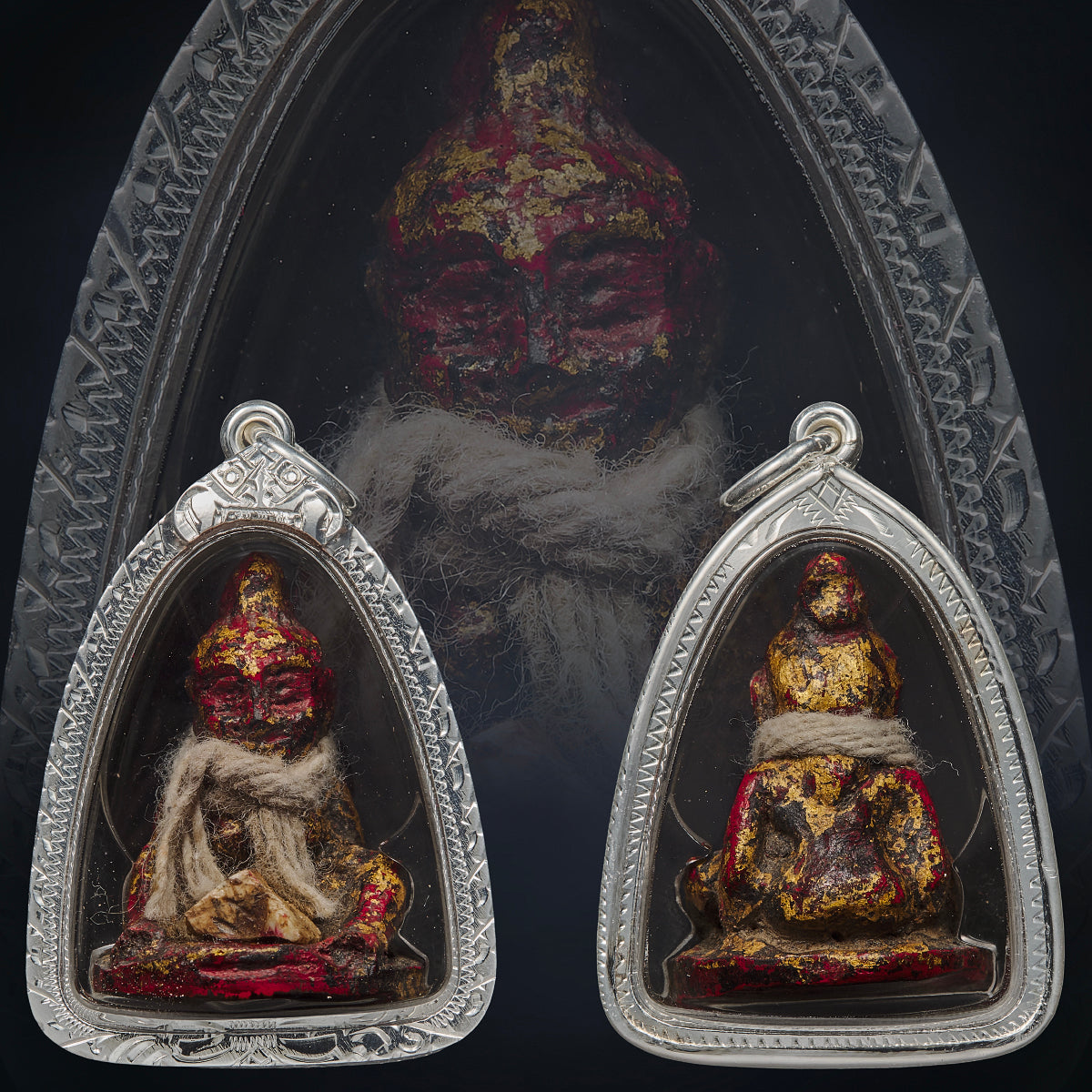
This Lersi Narai is an early hand-carved creation of Por Sala Tan, fashioned from Mai Rak wood originating from the mountainous regions of Burma (Myanmar).
Each artifact was individually handmade from carefully prepared sacred materials. Natural variations in wood grain, carving, lacquer, gold-leaf coverage and form make every piece unique.
Exact piece to be given
━━━━━━━━━━━━━━━━━━━━━━━━━━━━━━━━
Personal Experiences Shared by Luksits
Among followers familiar with Por Sala Tan's Lersi creations, these artifacts are traditionally valued for their association with clearer judgement, confidence and the ability to handle difficult situations calmly.
Devotees seeking guidance in business or professional matters particularly appreciate the combination of Lersi Baramee and Mai Rak, believing it supports both personal authority and favourable relationships.
The traditional appeal of such pieces extends beyond attraction alone. Collectors also associate them with greater respect from others, improved communication and the wisdom to recognise opportunities or avoid unnecessary conflict.
This particular Lersi Narai has additional collecting significance because it was retained on Por Sala Tan's son's altar. No individual wearing experience has been documented for this exact piece; these observations reflect the wider beliefs surrounding similar Lersi artifacts.
━━━━━━━━━━━━━━━━━━━━━━━━━━━━━━━━
Summary
An early Lersi Narai creation by Por Sala Tan, hand-carved from Burma Mai Rak wood and finished with Ya Daeng and gold leaf.
The figure incorporates a sacred relic attached to the front and Sai Sin tied around its body, forming part of its ritual preparation.
Unlike Mai Rak artifacts focused primarily on attraction, this piece was created with particular emphasis on the Baramee, wisdom and spiritual authority of Lersi Narai.
Its provenance is especially meaningful, having been one of the few Mai Rak Metta creations kept on the altar of Por Sala Tan's son.
━━━━━━━━━━━━━━━━━━━━━━━━━━━━━━━━
Historical Background
Lersi Narai and the Lersi Tradition
Lersi, also known as Ruesi, refers to the ascetic sages and spiritual practitioners found throughout Thai, Khmer and wider Southeast Asian religious traditions.
These figures are traditionally associated with meditation, sacred knowledge, healing practices, protective Wicha and the transmission of spiritual teachings.
Within this broader tradition, Lersi Narai is associated with the qualities of Narai, the Thai name for the Hindu deity Vishnu, particularly preservation, wisdom, order and protective authority.
Specific interpretations of Lersi Narai differ between teachers and spiritual lineages.
For practitioners who work with Lersi Wicha, the figure represents not merely an image of an ascetic but a connection to the wisdom, discipline and Baramee of the spiritual tradition.
Por Sala Tan's Lersi Creations
Por Sala Tan incorporated Lersi practices into various aspects of his sacred craftsmanship.
His creations frequently combined traditional spiritual symbolism, carefully selected materials and individual ritual preparation.
In this Lersi Narai, he brought together the traditional Metta associations of Mai Rak wood with the more authoritative qualities of Lersi Baramee, producing an artifact intended to support both personal relationships and spiritual development.
━━━━━━━━━━━━━━━━━━━━━━━━━━━━━━━━
Origins of the Materials
Mai Rak Wood – Burma
The principal body was carved from Mai Rak wood collected from the mountainous regions of Burma.
In Thai tradition, Rak is associated with love and affection. Mai Rak is therefore valued in certain forms of Wicha concerned with attachment, attraction, harmonious relationships and goodwill.
For this creation, the wood was selected to complement the Baramee and wisdom of Lersi Narai, rather than serving only as a material for Maha Saneh.
Ya Daeng – Sacred Red Preparation
The carved figure was coated with Ya Daeng, a traditional red preparation associated with Thai-Yai and Northern Thai esoteric practices.
Ya Daeng is traditionally believed to support Metta Maha Niyom, personal attraction, business opportunities, protection and authority.
Its exact ingredients and preparation methods vary between practitioners.
Gold Leaf
Aged gold foil remains visible across the figure.
Gold leaf is traditionally applied to sacred objects as an expression of reverence and as part of their ritual preparation.
The surviving gold, together with the red coating, contributes to the distinctive appearance of this early creation.
Sacred Relic
A small piece of sacred relic was attached to the front of the figure.
Its inclusion was intended to strengthen the spiritual significance of the artifact and form part of the consecrated composition.
Sai Sin
Traditional sacred thread was tied around the upper body of Lersi Narai.
Within Thai ritual practice, Sai Sin is associated with blessings, protection and the symbolic connection between an artifact and its consecration.
━━━━━━━━━━━━━━━━━━━━━━━━━━━━━━━━
Ritual
Por Sala Tan began by carving the figure of Lersi Narai from the selected piece of Burma Mai Rak wood.
The carved image was subsequently coated with Ya Daeng and decorated with gold leaf.
A sacred relic was attached to the front, while Sai Sin was tied around the figure, completing its physical preparation.
The consecration centred on the Baramee and wisdom of Lersi Narai, drawing upon the traditional qualities of spiritual knowledge, authority, protection and disciplined judgement.
The Mai Rak wood and Ya Daeng provided the additional Metta aspect, traditionally associated with attracting goodwill and encouraging favourable relationships.
The completed artifact was retained on Por Sala Tan's son's altar, where it formed part of the family's personal collection of sacred objects.
━━━━━━━━━━━━━━━━━━━━━━━━━━━━━━━━
Blessings and Effects
-
Baramee and Authority: Traditionally associated with strengthening personal standing, confidence and respect from others.
-
Wisdom and Clear Judgement: Sought for better decision-making, understanding difficult situations and recognising opportunities.
-
Metta Maha Niyom: Associated with goodwill, favourable treatment and harmonious relationships.
-
Business and Career Advancement: Traditionally valued for supporting negotiations, professional relationships and personal progress.
-
Protection: Associated with spiritual safeguarding and overcoming obstacles.
-
Wealth and Opportunities: The combination of Mai Rak and Ya Daeng is traditionally connected with attracting favourable circumstances and prosperity.
━━━━━━━━━━━━━━━━━━━━━━━━━━━━━━━━
Modern Application
This Lersi Narai is particularly relevant to individuals whose responsibilities require sound judgement, leadership and the ability to maintain positive relationships.
Business owners, managers and professionals may appreciate its traditional association with authority, wisdom and Metta, especially when dealing with negotiations, workplace responsibilities or important decisions.
For devotees of Lersi Wicha, the figure also serves as a reminder of the importance of discipline, patience, knowledge and spiritual development.
Beyond its intended spiritual purpose, the artifact holds collecting interest as an early Mai Rak creation of Por Sala Tan, particularly because of its connection to his son's personal altar.
━━━━━━━━━━━━━━━━━━━━━━━━━━━━━━━━
Physical Details
This Lersi Narai is a small, three-dimensional seated figure hand-carved from Burma Mai Rak wood. The front features a distinctive elongated headdress, pronounced facial features and a compact seated body resting upon a raised base. The surface retains substantial traces of red Ya Daeng lacquer and aged gold leaf, particularly around the head, shoulders and torso. A small sacred relic is attached to the front, with Sai Sin wrapped around the upper body and extending downwards. The reverse shows the continuation of the seated figure, with further remnants of gold leaf and red lacquer. The artifact is housed within an engraved silver-coloured protective casing, fitted with transparent covers and a suspension loop.
━━━━━━━━━━━━━━━━━━━━━━━━━━━━━━━━
Recommended Pairing
Phra Somdej: Traditionally associated with Baramee, spiritual stability and Buddhist protection, providing a balanced foundation alongside specialised Lersi Wicha.
LP Derm Roop Lor: Recommended for authority, leadership, protection and personal standing, complementing the wisdom and Baramee qualities of Lersi Narai.
Phra Kring: Associated with well-being, protection and stability, offering a complementary focus to the artifact's traditional properties.
━━━━━━━━━━━━━━━━━━━━━━━━━━━━━━━━
Personal Notes
What makes this Lersi Narai particularly meaningful is its combination of Burma Mai Rak wood, traditional Ya Daeng preparation and the Baramee of Lersi Narai.
Mai Rak is commonly associated with Metta and attraction, but this creation carries a broader purpose.
By incorporating Lersi Narai Wicha, Por Sala Tan intended the artifact to support not only favourable relationships but also wisdom, authority and the ability to make sound decisions.
I consider this distinction important. Attraction may help open doors, but wisdom and Baramee are equally necessary to recognise which opportunities are worth pursuing and how to manage them responsibly.
Its provenance adds another layer of significance. This was one of the few Mai Rak Metta artifacts found on the altar of Por Sala Tan's son, rather than a piece commonly encountered through ordinary distribution.
The surviving Ya Daeng, aged gold leaf, sacred relic and Sai Sin also preserve the character of Por Sala Tan's earlier handmade creations.
For collectors interested in his Lersi works, this is a particularly interesting example of how he combined traditional sacred materials with specialised spiritual intentions.
As with other specialised artifacts, I recommend pairing Lersi Narai with a mainstream Buddha amulet, maintaining a balanced foundation of Baramee, protection and Buddhist practice.
━━━━━━━━━━━━━━━━━━━━━━━━━━━━━━━━
-
SG: Free | Worldwide except USA: $20 Registered | USA: $25 Registered / $100 Courier (SGD)