
OOBThaiAmulets
Por Sala Tan
Por Sala Tan
Couldn't load pickup availability
Box: PST10
Pong Ngan
Por Sala Tan
1.5 Inches x 1 Inch
Barang Artifact
Encased in silver casing
━━━━━━━━━━━━━━━━━━━━━━━━━━━━━━━━
Sacred Craftsmanship
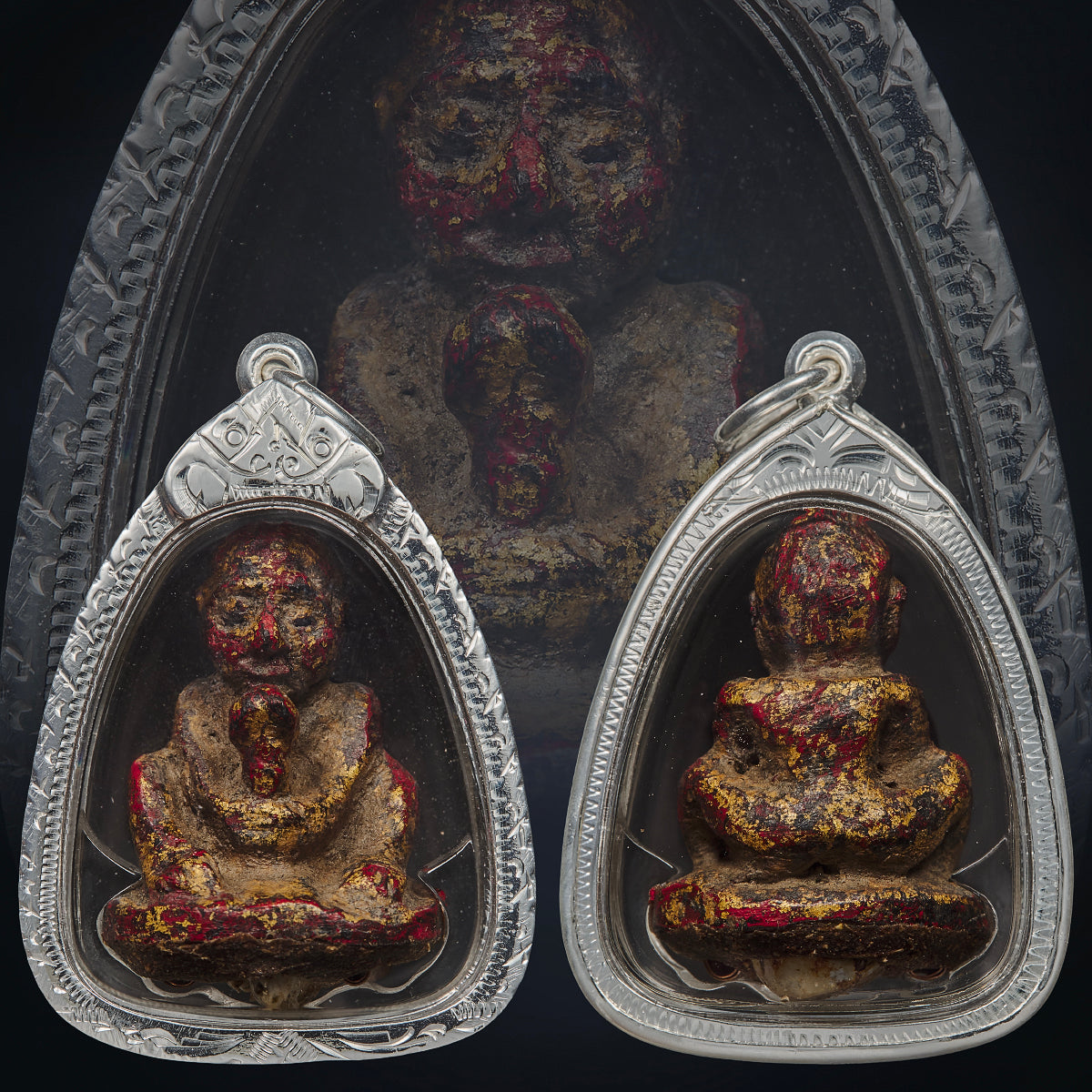
This Pong Ngan is an early creation of Por Sala Tan, hand-carved from a piece of Mai Rak wood originating from the mountainous regions of Burma (Myanmar).
Mai Rak is traditionally associated with attachment, affection and attraction, making it a particularly meaningful material for sacred objects intended for Metta Maha Niyom and Maha Saneh.
Each artifact was individually handmade from carefully prepared sacred materials. Natural variations in wood grain, carving, lacquer, gold-leaf coverage and form make every piece unique.
Exact piece to be given
━━━━━━━━━━━━━━━━━━━━━━━━━━━━━━━━
Personal Experiences Shared by Luksits
Among followers familiar with Por Sala Tan's Phra Ngan and Metta Wicha, these artifacts are traditionally valued for their association with personal attraction, persuasive speech and favourable treatment from others.
Collectors and devotees often describe the intended benefits in everyday situations, such as finding conversations easier to initiate, receiving greater cooperation during negotiations or developing better relationships with customers and acquaintances.
Those involved in business and sales particularly value the combination of Mai Rak and Ya Daeng, which is traditionally associated with encouraging goodwill and attracting opportunities.
This particular Pong Ngan has a more personal collecting history, having been retained on Por Sala Tan's son's altar. Its significance lies not only in the traditional properties attributed to the artifact but also in its direct connection to the family.
━━━━━━━━━━━━━━━━━━━━━━━━━━━━━━━━
Summary
An early Pong Ngan creation by Por Sala Tan, carved from Burma Mai Rak wood and finished with Ya Daeng and gold leaf.
The artifact was consecrated using Phra Ngan Wicha learnt from Cambodian masters, incorporating traditions of attraction, personal influence and spiritual protection.
Its underside contains cemetery soil, Takruts and a sacred relic, prepared to consolidate the ritual properties of the figure.
Of particular importance is its provenance: one of the few Mai Rak Metta artifacts kept on the altar of Por Sala Tan's son.
The piece represents a distinctive combination of Burmese sacred materials, Cambodian Phra Ngan Wicha and Por Sala Tan's individual craftsmanship.
━━━━━━━━━━━━━━━━━━━━━━━━━━━━━━━━
Historical Background
Pong Ngan and the Phra Ngan Tradition
Pong Ngan, closely associated with the broader Phra Ngan tradition, belongs to a group of sacred figures found within Thai and Cambodian esoteric practices.
Unlike conventional Buddha images, Phra Ngan figures are generally associated with specialised forms of Wicha involving attraction, spiritual influence, protection and the management of personal fortune.
Their forms vary considerably according to the practitioner, regional tradition and intended ritual purpose.
Some are cast from metal, while others are formed from sacred powders, carved from wood or prepared using old ritual materials.
Within Cambodian-influenced practices, particular importance is placed on the relationship between the figure, its material composition and the consecration performed by the master.
Por Sala Tan's Cambodian Wicha
Por Sala Tan acquired knowledge of Phra Ngan Wicha through his association with several Cambodian masters.
Rather than reproducing a single established formula, he incorporated the teachings he had received into his own methods of preparing sacred artifacts.
His Phra Ngan creations therefore reflect a combination of traditional Khmer influences, locally sourced sacred materials and his individual ritual practices.
This early Mai Rak example is particularly representative of his approach, bringing together a carefully selected wooden figure, sacred surface preparations and a separately empowered ritual base.
━━━━━━━━━━━━━━━━━━━━━━━━━━━━━━━━
Origins of the Materials
Mai Rak Wood
The principal body was carved from Mai Rak wood obtained from the mountainous regions of Burma.
The word Rak is associated with love or affection in Thai, and Mai Rak has consequently acquired a traditional reputation in certain spiritual practices for attachment, attraction and harmonious relationships.
Its use in this Pong Ngan was intended to support the artifact's Metta and Maha Saneh properties.
Ya Daeng – Red Sacred Preparation
The carved figure was coated with Ya Daeng, also described in certain regional traditions as a form of sacred red medicine or ritual lacquer.
Within Thai-Yai and Northern Thai esoteric practices, Ya Daeng is traditionally associated with opening fortune, attracting goodwill, improving personal charm and providing protection.
Its precise composition varies between practitioners and lineages.
Aged Gold Leaf
Traces of gold foil remain visible across the figure.
Gold leaf is traditionally applied to sacred objects as an act of reverence and as part of their ritual preparation.
The surviving gold, together with the aged red coating, contributes to the artifact's distinctive appearance.
Cemetery Soil
Soil collected from cemetery grounds was incorporated into the underside.
Within certain Phra Ngan practices, such soil is associated with the spiritual and transformative aspects of the Wicha.
Takruts and Sacred Relic
The underside also contains Takruts and a piece of sacred relic, incorporated as part of Por Sala Tan's preparation.
These additions were intended to strengthen the ritual structure of the artifact and secure its combined spiritual properties.
━━━━━━━━━━━━━━━━━━━━━━━━━━━━━━━━
Ritual
After carving the figure from Burma Mai Rak wood, Por Sala Tan applied Ya Daeng and gold leaf to its surface.
He then performed consecration using Phra Ngan Wicha acquired through his studies with Cambodian masters.
The ritual focused on the traditional qualities associated with Metta, Maha Saneh, personal influence and protection.
Particular attention was given to the underside of the figure.
Por Sala Tan prepared a combination of cemetery soil, Takruts and a sacred relic, placing these materials within the base.
According to the accompanying account, this preparation was intended to secure the spiritual properties of the artifact as a unified whole, rather than leaving the carved figure and its additional sacred materials as separate ritual elements.
The completed Pong Ngan was subsequently retained among the sacred objects associated with Por Sala Tan's family.
The exact consecration date and duration have not been recorded, although the piece is described as belonging to his earlier period of creation.
━━━━━━━━━━━━━━━━━━━━━━━━━━━━━━━━
Blessings and Effects
-
Metta Maha Niyom: Traditionally associated with attracting goodwill, kindness and favourable treatment.
-
Maha Saneh: Sought for personal charm, attraction and stronger interpersonal relationships.
-
Business and Sales: Associated with drawing customers, encouraging cooperation and improving commercial opportunities.
-
Persuasion and Influence: Traditionally valued for supporting communication, negotiations and personal presence.
-
Wealth and Fortune: Ya Daeng is associated with opening opportunities and attracting favourable financial circumstances.
-
Protection: The Phra Ngan consecration, Takruts and sacred relic are traditionally associated with spiritual safeguarding.
━━━━━━━━━━━━━━━━━━━━━━━━━━━━━━━━
Modern Application
This Pong Ngan is particularly suited to collectors and devotees interested in the traditional Metta and Maha Saneh aspects of Phra Ngan Wicha.
For those working in sales, customer-facing businesses or relationship-based professions, its traditional purpose centres on encouraging favourable interactions and strengthening personal influence.
The combination of Mai Rak wood and Ya Daeng is also relevant to individuals seeking greater harmony in their personal relationships and improved cooperation from others.
Beyond its intended spiritual properties, the artifact holds considerable interest as an early hand-carved creation of Por Sala Tan, particularly because of its connection to his son's personal altar.
━━━━━━━━━━━━━━━━━━━━━━━━━━━━━━━━
Physical Details
This Pong Ngan is a small, three-dimensional seated figure hand-carved from Burma Mai Rak wood. The front displays a rounded head, broad shoulders, a prominent central projection and a compact seated body resting upon a raised base. The surface has darkened considerably with age, retaining visible patches of red Ya Daeng lacquer and gold leaf across the head, shoulders, torso and base. The reverse shows the continuation of the carved seated form, with similarly aged lacquer and gold-leaf remnants. The underside contains the additional sacred preparations described in its provenance. The artifact is housed within an engraved silver-coloured protective casing, fitted with transparent covers and a suspension loop.
━━━━━━━━━━━━━━━━━━━━━━━━━━━━━━━━
Recommended Pairing
Phra Somdej: Traditionally associated with Baramee, spiritual stability and Buddhist protection, providing a balanced foundation alongside specialised Phra Ngan Wicha.
LP Derm Roop Lor: Recommended for authority, personal standing and protection, complementing the attraction-oriented properties of Pong Ngan.
Phra Kring: Associated with well-being, protection and stability, offering a complementary focus to the artifact's Metta and Maha Saneh purposes.
━━━━━━━━━━━━━━━━━━━━━━━━━━━━━━━━
Personal Notes
What makes this Pong Ngan particularly interesting is not simply its early creation or the use of Burma Mai Rak wood, but its personal connection to Por Sala Tan's family.
This was one of the few Mai Rak Metta artifacts found on Por Sala Tan's son's altar.
Such provenance is meaningful because many of Por Sala Tan's creations were distributed among his luksits, while certain pieces remained within the family.
The combination of Mai Rak, Ya Daeng and Cambodian Phra Ngan Wicha also reflects an important aspect of Por Sala Tan's craftsmanship.
He did not rely solely on the physical form of an artifact. The selection of materials, application of sacred preparations and inclusion of additional ritual components were all intended to work together.
In this example, the cemetery soil, Takruts and sacred relic beneath the figure were incorporated specifically to consolidate the artifact's spiritual preparation.
For collectors who appreciate Por Sala Tan's earlier works, this Pong Ngan represents an interesting intersection of traditional Khmer Wicha, Burmese sacred materials and the master's own methods of consecration.
As with other specialised Metta and Phra Ngan artifacts, I recommend pairing it with a mainstream Buddha amulet to maintain a balanced spiritual foundation centred on Baramee and Buddhist practice.
━━━━━━━━━━━━━━━━━━━━━━━━━━━━━━━━
-
SG: Free | Worldwide except USA: $20 Registered | USA: $25 Registered / $100 Courier (SGD)