
OOBThaiAmulets
Por Sala Tan
Por Sala Tan
Couldn't load pickup availability
Summary
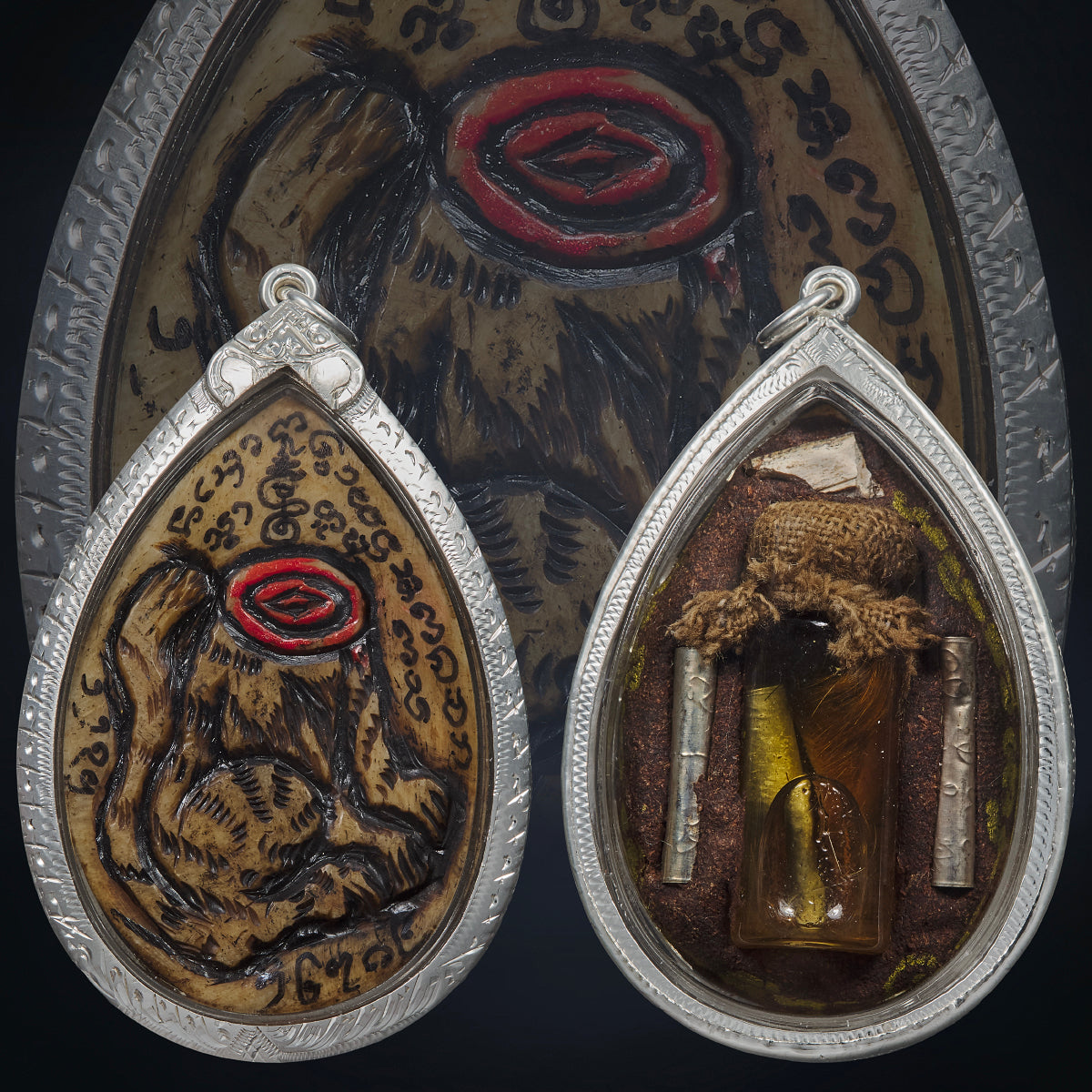
The Suea Hua Khad of Por Sala Tan belongs to an older class of tiger wiccha associated with survival mentality, battlefield courage, spiritual intimidation, and controlled aggression. Unlike common tiger amulets focused mainly on authority or metta, the Headless Tiger tradition carries symbolism connected to instinct beyond fear — a state where hesitation is removed and only decisive action remains.
This particular batch was prepared during a period when several Thai soldiers and border personnel were being deployed toward the Thai–Burmese border regions. According to close students, Por Sala Tan believed that men operating in isolated terrain, conflict zones, and psychologically stressful environments required more than ordinary blessings. The amulets therefore focused heavily on inner courage, spiritual protection, and maintaining mental firmness under pressure.
Only a small number were completed and not all pieces were released publicly. Several remained stored away with Ac Lek for many years and were never previously owned or worn.
Historical Background
The “Headless Tiger” tradition has long existed quietly within older Thai occult circles. Older sak yant masters viewed the tiger not simply as an animal, but as a projection of human willpower, territorial dominance, and survival instinct.
In older oral teachings, the original form of the Headless Tiger carried no restraints. The tiger was shown without a head to symbolise action beyond fear and beyond emotional hesitation. Older practitioners believed this represented a state where instinct overtook doubt. Because of this, the yantra became associated with dangerous men, gamblers, fighters, transporters, and those constantly exposed to violence or uncertainty.
Stories from Chonburi decades ago spoke of several feared criminals carrying the same Headless Tiger tattoo lineage. Old accounts claimed these men displayed unusual fearlessness during violent confrontations and were difficult to intimidate. Over time the lineage became controversial and many masters stopped openly transmitting the original form.
Later versions evolved into what many practitioners now recognise as the “restrained tiger.” The symbolism shifted from uncontrolled aggression into disciplined force. The tiger remained powerful, but spiritually chained and anchored. The philosophy became simple:
The tiger does not seek conflict, but once threatened, it responds completely.
Por Sala Tan belonged to a generation of Northern practitioners who viewed tiger wiccha less as violence and more as controlled dominance — the ability to remain calm, mentally sharp, and spiritually unshaken during pressure.
Origins of the Materials
The primary material used for these pieces came from old gaduk suer boran that Por Sala Tan had kept stored away for many years. According to close students, these materials were not casually used and were only brought out when a specific need arose.
For this batch, the intention was protection for men entering uncertain environments and physically isolated terrain. The tiger essence therefore became the central spiritual anchor of the amulet.
The internal oil used was Namman Suea, prepared in the older ritual style associated with tiger-force wiccha. Together with the sacred inserts and yantra work, the amulet was designed to project firmness, authority, instinctive awareness, and spiritual resistance during periods of danger or psychological pressure.
The body of the amulet was embedded with 108 herbs prepared according to older Northern methods. In many traditional systems, these herbal combinations were believed to stabilise the energy of stronger occult materials while also helping the wearer maintain clarity and composure.
Ritual and Consecration
Por Sala Tan approached tiger rituals with seriousness because older tiger wiccha was traditionally linked to battlefield mentality and territorial force. Before consecration, the materials were reportedly sealed away and only opened during the proper ritual timing.
The Headless Tiger yantra itself was treated as a discipline-based wiccha. The tiger represented force under control. Older practitioners believed that without mental discipline, strong tiger energy could create recklessness or emotional instability. Because of this, the blessing work focused heavily on anchoring and restraint.
Several older students later mentioned that Por Sala Tan preferred these pieces to be carried by people who understood pressure, responsibility, and confrontation rather than casual collectors seeking appearance alone.
Blessings and Effects
The primary strength of the Suea Hua Khad lies in protection, courage, command presence, and psychological steadiness.
Many older tiger practitioners believed that strong tiger energy causes hesitation in opponents and strengthens the wearer’s internal state during conflict or stress. This does not only apply to physical danger. In modern life, intimidation often comes through social pressure, business politics, leadership burdens, hostile environments, or repeated psychological stress.
The energy of the Headless Tiger is traditionally associated with remaining composed under pressure, making decisive choices quickly, and refusing to mentally collapse during difficult periods.
Older transport operators, fighters, underground figures, businessmen, and security personnel were historically drawn toward tiger wiccha because they believed it strengthened “presence.” In Thai mystical understanding, presence is the invisible pressure or authority a person projects before even speaking.
Some practitioners also use tiger-related pieces for negotiation environments, high-pressure sales work, leadership roles, or situations where they constantly deal with strong personalities.
Modern Application
Today, pieces like this are often appreciated by people working in demanding environments where mental pressure is constant.
Business owners, salespeople, gym trainers, nightlife workers, traders, transport operators, and individuals dealing with competitive social environments are often naturally drawn toward tiger wiccha because of the mindset it cultivates. The focus is not aggression. The focus is composure, decisiveness, and controlled force.
Personally, I find older tiger pieces very different from ordinary protection amulets. The feeling is usually more “grounding” than emotional. There is a certain firmness that becomes noticeable during stressful conversations, confrontations, or environments where weaker personalities normally become pressured easily.
Over the years I have also noticed that people carrying strong tiger pieces often become calmer under stress instead of more reactive. That is something many older masters believed was the real sign of mature tiger energy.
Physical Details
This piece measures approximately 2 inches in size and contains the Headless Tiger yantra on the front together with sacred inscriptions surrounding the tiger form.
The reverse contains ritual inserts together with Namman Suea sealed within the central chamber. The surrounding herbal embedding was prepared using a traditional 108-herb formula.
Several examples from this group remained stored with Ac Lek after the original consecration period and were never distributed publicly. Because of this, some surviving examples remained untouched for many years before entering collections.
This particular piece was later custom wrapped by me in Bangkok for personal use and preservation.
Recommended Pairing
Tiger-based pieces are traditionally paired with baramee-oriented amulets or authority-focused takruts.
Many experienced practitioners combine tiger wiccha with Phra Kring, Somdej, or older metta pieces to balance force with composure and stability. Within older Northern practice, strong tiger energy was always expected to be guided by discipline, clarity, and personal control.
-
Free Shipping for Singapore| $15 Worldwide | $100 USA All products