
OOBThaiAmulets
Por Sala Tan
Por Sala Tan
Couldn't load pickup availability
PST01
Summary
The Pong/Mae Ngan X Lup Yong pieces associated with Por Sala Tan were among the more quietly circulated relationship-oriented ritual items that moved heavily among younger Northern and North-Eastern devotees during the late 2540 to early 2550 period. Measuring around 2 inches, these compact figurines were commonly carried discreetly in pockets, waist pouches, or placed near personal altars for matters connected to attraction, social influence, companionship, nightlife interaction, and wish cultivation.
Among older village practitioners, the Por and Mae Ngan pair represented complementary masculine and feminine energies working together to strengthen human connection, emotional pull, and interpersonal magnetism. Pieces like this became especially popular among male luksits involved in sales, entertainment, trading, hospitality, and occupations requiring repeated face-to-face interaction.
Historical Background
Por Sala Tan maintained close links with practitioners from the North-East where older Khmer wiccha traditions remained active among certain village ajarns and household lineages. During that era, many ritual items were still handmade in very small numbers using traditional casting methods, hand-inscribed yantra, and individually assembled ritual components.
The Por/Mae Ngan forms were already well known within Khmer occult circles long before they became familiar to outside collectors. Older practitioners believed these figurines carried energies connected to companionship, attraction, emotional attachment, and fulfillment of heartfelt desires. Some used them for relationship matters, while others approached them as spiritual companions assisting in confidence, communication, and social ease.
Por Sala Tan’s interpretation leaned more toward practical human interaction. He often mentioned that strong seneh was not simply about romance. In his view, true attraction came from making people feel comfortable, welcomed, and naturally drawn toward one’s presence. This was why many of his male devotees working in nightlife, sales, or people-oriented businesses quietly kept these types of pieces close to them.
Origins of the Materials
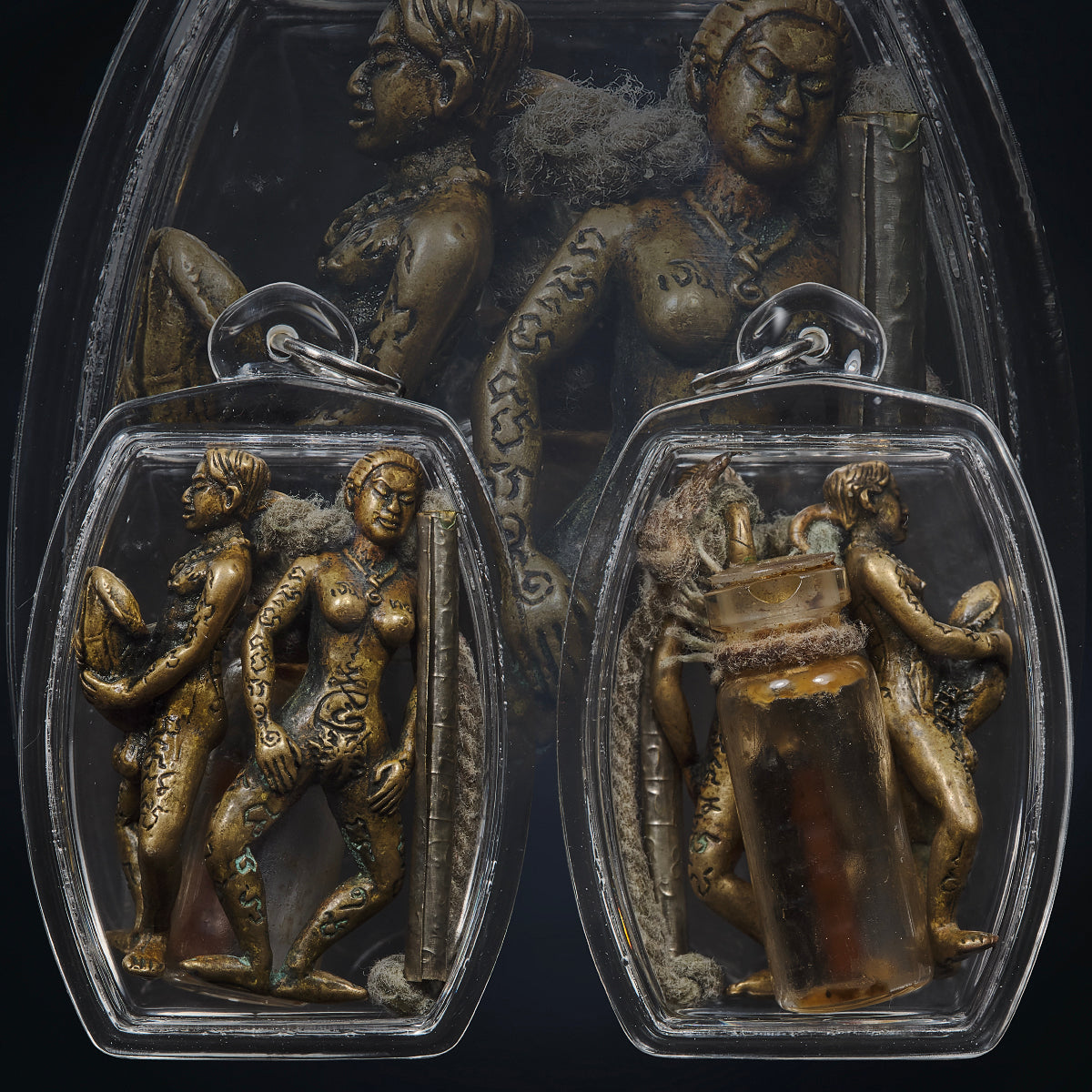
This particular piece carries the older Northern handmade style with individually formed figurines and hand-inscribed body yantra. The casing itself shows signs of long ritual handling and age, including the ritual cloth fibers and inserted bottle component often associated with older Khmer-inspired attraction workings.
The ritual bottle carried behind the figures was traditionally believed to “store” or anchor the cultivated energy of the piece over long periods of use. In older village belief, this acted almost like a spiritual reservoir continuously feeding the figurine pair during invocation and daily carry.
The yantra markings across the bodies were intended to strengthen emotional influence, attraction, communication, and memorability. In many old-school Khmer-oriented practices, the body itself was viewed as the “living scripture” of the ritual.
Ritual
Pieces of this category were usually empowered through nighttime chanting sessions involving attraction mantras, candle flame invocation, incense offerings, and repetitive kata recitation over multiple evenings. Por Sala Tan’s approach often blended Northern metta methods with North-Eastern Khmer influence learned through exchanges with travelling practitioners and visiting ajarns.
Older devotees would commonly offer scented oils, flowers, tobacco smoke, or personal prayer requests before carrying the item. Some practitioners also quietly spoke their wishes directly toward the figurines before major meetings, negotiations, dates, or nightlife work.
Among experienced users, the relationship between owner and amulet was considered important. The more regularly the piece was spoken to, carried, and respected, the stronger the connection was believed to become over time.
Blessings and Effects
The strongest reputation surrounding these pieces was Maha Saneh and social attraction. Many users believed the energy helped make conversations flow more naturally, reduced social awkwardness, and increased emotional warmth from people nearby.
Within sales environments, the effect was often described less as “forcing attraction” and more as helping people remain open, comfortable, and receptive during interaction. Older businessmen liked these pieces because customers tended to return repeatedly or maintain longer-term relationships.
In nightlife environments, these figurines became especially popular because they were believed to increase familiarity very quickly. Some users felt strangers behaved as though they had known them for a much longer period of time.
Wish cultivation was another major aspect. Many older luksits prayed toward these pieces during emotionally difficult periods, relationship issues, financial struggles, or periods of loneliness. The figurines became deeply personal spiritual companions for some owners.
Modern Application
Today, pieces like this still appeal strongly to individuals whose lives revolve around direct human interaction. Salespeople, nightlife workers, business owners, livestream hosts, negotiators, and highly social individuals tend to understand these older styles of seneh items immediately.
I personally noticed that older Por Sala Tan attraction pieces tend to work strongest in environments with repeated exposure to people. It is rarely an instant dramatic effect. Instead, interactions slowly become warmer, easier, and strangely familiar. Conversations extend longer, people remember you more easily, and follow-up interactions happen more naturally.
Chiang Mai was always one of the easier places to observe this. Carrying older seneh pieces during market visits, coffee meetings, or nightlife settings often created situations where conversations continued effortlessly with complete strangers.
Physical Details
The piece measures approximately 2 inches in height and remains compact enough for daily carry or altar placement. The dual figurine composition, hand-inscribed yantra, ritual bottle insert, and aged ritual fibers all reflect the older handmade village style commonly associated with privately circulated Khmer-influenced pieces from that period.
Its smaller size made it practical for younger devotees and working adults who preferred discreet ritual items that could be carried daily without drawing attention.
Recommended Pairing
Many experienced users pair pieces like this with stronger baramee-oriented amulets to stabilize emotional energy and strengthen personal presence. Within Por Sala Tan’s circles, attraction pieces were often combined with authority-oriented items so the wearer projected both warmth and credibility simultaneously.
For users involved in sales or nightlife work, this combination was traditionally believed to create stronger long-term relationship building instead of short-lived interaction.
-
Free Shipping for Singapore| $15 Worldwide | $60 USA For Items Below $350