
OOBThaiAmulets
Por Sala Tan
Por Sala Tan
Couldn't load pickup availability
PST10
Suer Hua Kad Yant Duang
Por Sala Tan
7cm x 6cm
Barang Artifact
Encased in silver casing
━━━━━━━━━━━━━━━━━━━━━━━━━━━━━━━━
Sacred Craftsmanship
This Suer Hua Kad Yant Duang is an uncommon protective artifact created by Por Sala Tan, combining the traditional Headless Tiger Wicha with a sacred Yant Duang, associated with destiny, fortune and protection.
Each artifact was individually handmade from carefully prepared sacred materials. Natural variations in texture, colour, carving and form make every piece unique.
Exact piece to be given
━━━━━━━━━━━━━━━━━━━━━━━━━━━━━━━━
Personal Experiences Shared by Luksits
Among followers familiar with Suer Hua Kad Wicha, this form of tiger guardian is particularly valued during periods of uncertainty, personal conflict and difficult life circumstances.
Devotees traditionally associate the Headless Tiger with the determination to continue moving forward despite opposition, setbacks or unfavourable circumstances.
Some collectors describe carrying such artifacts when facing workplace politics, challenging business negotiations or situations where their authority is being questioned. They regard the tiger as a reminder to remain firm, composed and unwilling to surrender unnecessarily.
The addition of Yant Duang gives this piece another dimension. Followers who seek destiny-related blessings often associate it with overcoming prolonged obstacles, improving opportunities and restoring stability when circumstances have become unfavourable.
For business owners, the eight directional Takruts are especially meaningful, symbolising the invitation of customers, financial opportunities and prosperity from all directions.
━━━━━━━━━━━━━━━━━━━━━━━━━━━━━━━━
Summary
This Suer Hua Kad Yant Duang is a limited-creation artifact by Por Sala Tan, combining several distinct elements of traditional Thai sacred Wicha.
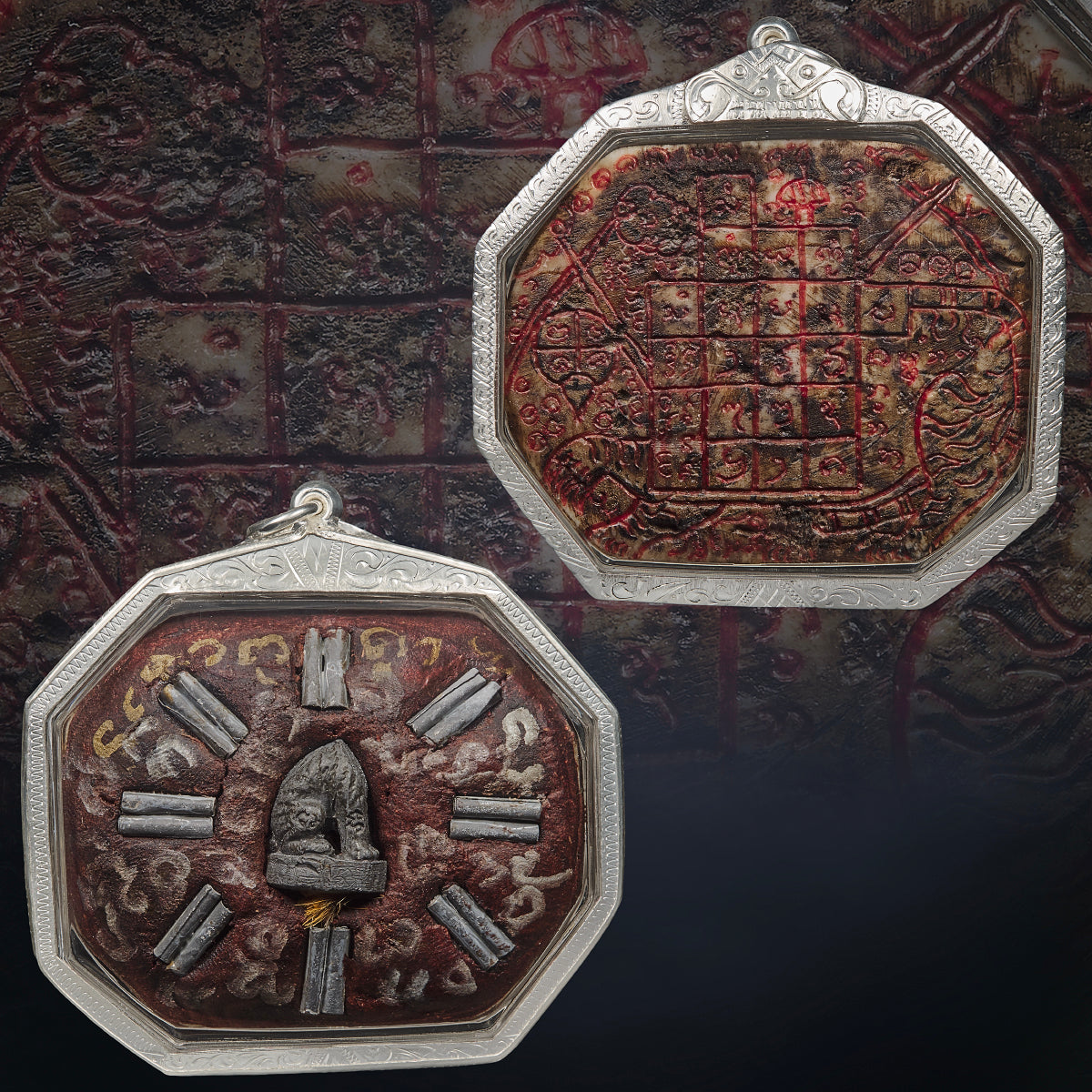
The front features a carved Headless Tiger Yantra, while the reverse incorporates soil from seven auspicious locations, eight directional Takrut positions, a Suer Hua Kad Roop and Fang Suer.
Consecration was performed through Suer Hua Kad Wicha, with the invocation of Lersi Serming Pai.
Its principal traditional associations are protection, Maha Amnaj, Baramee, overcoming opposition, destiny improvement, Klaew Klaad and prosperity from eight directions.
The example is particularly notable for its larger size and direct provenance from Por Sala Tan's son.
━━━━━━━━━━━━━━━━━━━━━━━━━━━━━━━━
Historical Background
Suer Hua Kad, literally meaning Headless Tiger, belongs to a specialised branch of traditional Thai tiger-related Wicha.
Unlike conventional Suer imagery, which emphasises the animal's physical strength, commanding presence and territorial authority, the Headless Tiger carries an additional symbolic meaning.
Within interpretations of this Wicha, the tiger represents determination that continues even after suffering an apparently overwhelming defeat.
The image of a tiger that refuses to surrender despite losing its head symbolises an extraordinary degree of courage, endurance and resistance to opposition.
This symbolism has made Suer Hua Kad particularly associated with Maha Amnaj, Kong Krapan, Klaew Klaad and overcoming hostile influences.
The Significance of Yant Duang
Yant Duang refers to a class of sacred diagrams associated with destiny, fortune and astrological influences.
Traditional examples may incorporate geometric grids, sacred characters, numerical arrangements and planetary symbolism.
Their purpose varies according to the practitioner and the particular Wicha employed.
Within certain traditions, Yant Duang is prepared to strengthen favourable influences, reduce the perceived effects of misfortune and support the wearer's personal destiny.
In this artifact, Por Sala Tan combined the Headless Tiger with Yant Duang, bringing together two complementary concepts:
Suer Hua Kad represents the strength to confront and overcome adversity.
Yant Duang represents the aspiration to improve one's circumstances and restore favourable opportunities.
Together, they form a guardian intended not only for protection, but also for resilience and the improvement of personal fortune.
━━━━━━━━━━━━━━━━━━━━━━━━━━━━━━━━
Origins of the Materials
Old Sacred Relic
The front was carved from a piece of old sacred relic material, selected for the creation of the Yant Suer Hua Kad.
The carved surface contains a central grid of sacred characters, surrounded by additional symbolic arrangements.
Soil from Seven Auspicious Locations
The reverse was prepared using sacred soil gathered from seven auspicious sites.
Within Thai ritual traditions, soil from spiritually significant locations may be incorporated into artifacts to symbolically unite the blessings associated with those places.
Eight Directional Takruts
The reverse incorporates eight directional Takrut positions, arranged around the central guardian.
Their purpose is associated with the traditional concept of attracting fortune, opportunities and prosperity from all eight directions.
Suer Hua Kad Roop
A miniature Headless Tiger Roop occupies the centre of the reverse.
This serves as a focal point for the artifact's Suer Hua Kad Wicha, reinforcing its association with authority, endurance and protective strength.
Fang Suer
A piece of Fang Suer (tiger fang) was incorporated beneath the central tiger figure.
Within traditional tiger guardian Wicha, Fang Suer is associated with courage, strength, authority and protection.
━━━━━━━━━━━━━━━━━━━━━━━━━━━━━━━━
Ritual
Por Sala Tan prepared this artifact according to his knowledge of Suer Hua Kad Wicha, combining traditional tiger-related spiritual practices with destiny and prosperity symbolism.
The front relic was carved with the Yant Suer Hua Kad, forming the principal protective diagram.
The reverse was prepared with soil from seven auspicious locations, creating a foundation for the additional sacred components.
Takruts were arranged across eight directional positions, representing the invitation of fortune and opportunities from every direction.
A miniature Suer Hua Kad Roop was positioned at the centre, with Fang Suer placed beneath it.
Following assembly, Por Sala Tan consecrated the artifact through Suer Hua Kad Wicha.
During the blessing, Lersi Serming Pai was invoked to participate in the ritual, reinforcing the tiger-related qualities of authority, protective strength and determination.
The completed artifact was intended to unite three principal purposes:
Protection against adversity, strengthening of personal destiny and the attraction of favourable opportunities.
Only a limited number were prepared, in several sizes.
━━━━━━━━━━━━━━━━━━━━━━━━━━━━━━━━
Blessings and Effects
-
Suer Hua Kad Protection: Traditionally associated with resisting harmful influences, hostility and misfortune.
-
Maha Amnaj and Baramee: Supporting authority, confidence, leadership and personal standing.
-
Serm Duang – Destiny Improvement: Believed to help strengthen favourable circumstances and overcome periods of poor fortune.
-
Overcoming Opposition: Symbolising determination, resilience and the ability to continue despite setbacks.
-
Klaew Klaad and Kong Krapan: Traditional protective blessings associated with avoiding danger and enduring difficult circumstances.
-
Eight-Directional Prosperity: The Takruts symbolise attracting financial opportunities, customers and fortune from all directions.
-
Protection Against Negative Intentions: Traditionally sought to guard against hostility, spiritual disturbances and harmful influences.
━━━━━━━━━━━━━━━━━━━━━━━━━━━━━━━━
Modern Application
The Suer Hua Kad Yant Duang is particularly relevant to devotees seeking a combination of personal authority, protection and improvement of fortune.
For business owners, the eight directional Takruts represent the aspiration to attract customers, commercial opportunities and financial movement from different sources.
Individuals working in management or competitive environments may value the Headless Tiger's association with courage, determination and resistance to intimidation.
Those experiencing prolonged obstacles or unfavourable circumstances may also be drawn to the Yant Duang, traditionally associated with strengthening destiny and restoring favourable opportunities.
Its symbolism is especially appropriate for those who must remain resilient through business challenges, professional competition or major life transitions.
━━━━━━━━━━━━━━━━━━━━━━━━━━━━━━━━
Physical Details
This is a relatively large, octagonal sacred artifact featuring a deeply detailed Yant Suer Hua Kad on the front, with a central geometric grid, sacred characters and surrounding tiger-related motifs highlighted by red pigment. The reverse consists of a reddish-brown sacred soil foundation bearing handwritten ritual markings, with eight directional Takrut positions surrounding a central Suer Hua Kad Roop and Fang Suer incorporated beneath it. The surface displays natural variations in texture, colour and age. The piece is enclosed in an engraved silver-coloured protective casing with transparent covers on both sides and a suspension loop for wearing.
━━━━━━━━━━━━━━━━━━━━━━━━━━━━━━━━
Recommended Pairing
LP Derm Roop Lor: Traditionally associated with Baramee, authority and personal standing, complementing the Headless Tiger's emphasis on Maha Amnaj.
Phra Kring: Associated with protection, well-being and spiritual stability, providing a balanced complement to the stronger guardian qualities of Suer Hua Kad.
Phra Pikanet: Traditionally sought for wisdom, overcoming obstacles and favourable opportunities, complementing the destiny-related intentions of Yant Duang.
━━━━━━━━━━━━━━━━━━━━━━━━━━━━━━━━
Personal Notes
This particular Suer Hua Kad Yant Duang is especially meaningful because it was collected directly from Por Sala Tan's son.
Among the examples in his possession, this was one of the larger pieces, distinguished by its elaborate construction and the number of sacred components incorporated into the reverse.
The combination of Yant Suer Hua Kad, seven auspicious soils, eight directional Takruts, a central Headless Tiger Roop and Fang Suer reflects the considerable attention given to its preparation.
Rather than focusing solely on tiger-related protection, Por Sala Tan incorporated Yant Duang and eight-directional prosperity Wicha, giving the artifact a broader purpose.
The Headless Tiger represents the determination to continue despite adversity, while the Yant Duang reflects the traditional aspiration to improve one's destiny.
Together with the invocation of Lersi Serming Pai, the artifact represents a distinctive combination of Maha Amnaj, protection, resilience and prosperity within Por Sala Tan's sacred work.
Its limited creation, larger format and direct connection to Por Sala Tan's family collection further distinguish this example.
━━━━━━━━━━━━━━━━━━━━━━━━━━━━━━━━
-
SG: Free | Worldwide except USA: $20 Registered | USA: $25 Registered / $100 Courier (SGD)