
OOBThaiAmulets
Por Sala Tan
Por Sala Tan
Couldn't load pickup availability
PST10
Utt Ding
Por Sala Tan
3cm x 2.5cm
Mainstream Artifact
Encased in silver
━━━━━━━━━━━━━━━━━━━━━━━━━━━━━━━━
Sacred Craftsmanship
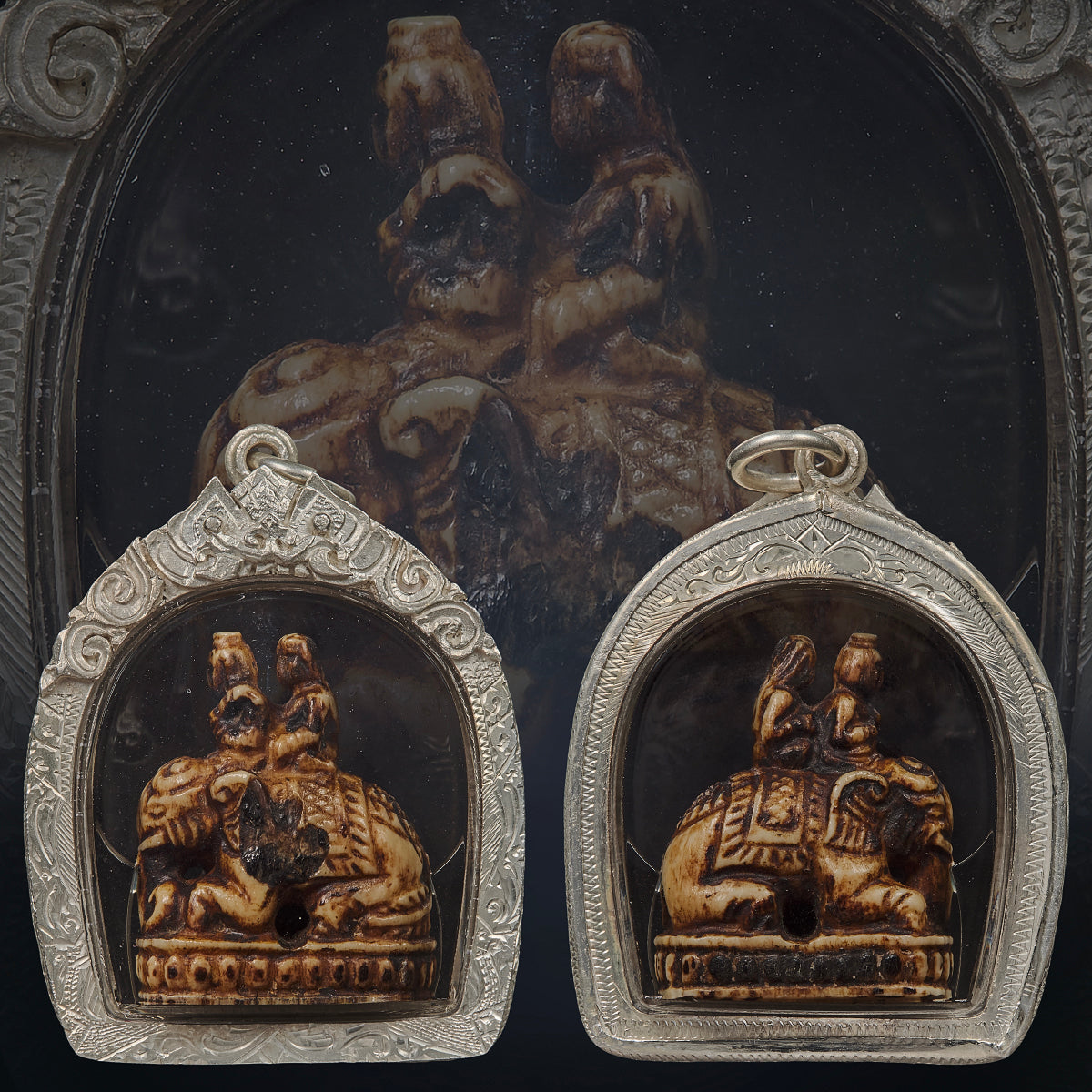
This Utt Ding is an unusual hand-carved artifact associated with Por Sala Tan, depicting a male and female rider seated together upon an elephant. Its form follows an old Lanna–Tai Yai tradition in which the elephant represents strength, safe passage and authority, while the two riders symbolise companionship, attraction and mutual support.
Each artifact was individually handmade from carefully prepared sacred materials. Natural variations in texture, colour, carving and form make every piece unique.
Exact piece will be given
━━━━━━━━━━━━━━━━━━━━━━━━━━━━━━━━
Personal Experiences Shared by Luksits
Among collectors familiar with traditional Utt Ding, the two-rider form is especially appreciated for attraction, harmonious relationships and receiving assistance from others.
Devotees commonly associate carrying Utt Ding with smoother conversations, greater goodwill and improved relationships with customers, colleagues and people in positions of authority.
Others favour the two-rider form for romantic relationships, believing it encourages affection, companionship and reconciliation rather than attraction alone.
Older collectors also speak of its usefulness during travel and business dealings, particularly when meeting unfamiliar people or seeking opportunities away from home.
━━━━━━━━━━━━━━━━━━━━━━━━━━━━━━━━
Summary
Utt Ding, also known as U Teng, is a traditional Lanna–Tai Yai talisman associated with Metta Maha Niyom, Maha Saneh, prosperity, safe travel and personal authority.
Its origins are closely connected with Tai Yai (Shan) spiritual culture, which influenced many forms of northern Thai Wicha.
This particular example depicts two riders, male and female, seated together upon an elephant, a form traditionally associated with partnership, attraction, support from others and the successful pursuit of opportunities.
The use of Nga Chang and its reported provenance from an older collector of Por Sala Tan's works add further interest to the artifact.
━━━━━━━━━━━━━━━━━━━━━━━━━━━━━━━━
Historical Background
Utt Ding belongs to an old talismanic tradition shared between the Tai Yai communities and the Lanna region of Northern Thailand.
Historically, these charms appeared in several forms, including a single rider, two riders, a musician playing a stringed instrument upon an elephant, and sacred figures seated upon elephants.
Each variation carried a somewhat different emphasis.
The musician form was particularly associated with merchants, pleasant communication and successful trading. Single-rider forms were commonly linked with travel and the pursuit of fortune.
The two-rider Utt Ding combined the symbolism of partnership, romantic attraction, prosperity and assistance from others.
One traditional narrative connects Utt Ding with King Uthen Racha, whose mastery of a magical three-stringed instrument supposedly enabled him to gain influence, win affection and overcome opposition without unnecessary violence.
Another tells of a travelling merchant whose music attracted friendship, hospitality and prosperous trade wherever he travelled.
These legends established Utt Ding as a symbol of winning goodwill rather than forcing submission, an important distinction within its traditional Wicha.
━━━━━━━━━━━━━━━━━━━━━━━━━━━━━━━━
Origins of the Materials
This example was carved from Nga Chang, traditionally valued in Lanna and Tai Yai sacred craftsmanship for its durability, fine carving qualities and symbolic associations with the elephant.
Within older talismanic traditions, Nga Chang was regarded as an auspicious material connected with strength, authority, endurance and protection.
According to the elderly collector, the original Nga Chang was presented to Por Sala Tan by a villager. Several different sacred artifacts were subsequently carved from the same material, including this Utt Ding.
The two-rider composition required careful carving to distinguish the figures, elephant and ornamental details within a relatively small piece.
The surface has developed warm cream, brown and darker tones, giving the carving the appearance of an older, handled artifact.
━━━━━━━━━━━━━━━━━━━━━━━━━━━━━━━━
Ritual
The Utt Ding tradition incorporates elements of Lanna and Tai Yai Wicha concerning Metta, attraction, prosperity and favourable relationships.
The two-rider form is traditionally associated with the image known as Utt Ding Yok Kon Nang Weluwati Mintami, representing a male and female travelling together upon an elephant.
An old Lanna text, reportedly translated by the deputy abbot of Wat Lantong in Chiang Mai, describes several methods of working with this form.
These include carrying it during travel, keeping it within the household and employing water-based rituals for commerce or meetings with influential people.
Two traditional applications are particularly distinctive:
For commerce: The text describes placing the Utt Ding in water and sprinkling that water over merchandise, symbolically encouraging customer attraction and successful trade.
For assistance from superiors: A preparation involving water and seven pods of Som Poi is described before important meetings, traditionally intended to encourage kindness, acceptance and assistance.
Such practices belong to the historical ritual tradition and should not be interpreted as guaranteed results. For an older Nga Chang artifact, direct soaking is also best avoided to preserve the material.
A traditional Utt Ding katha is recorded as:
Om Tin-na Tin-na Hatti Hatti Sattang Jinang Jinang Kab-sa-ya Kab, Om Sawa Hum Hum.
━━━━━━━━━━━━━━━━━━━━━━━━━━━━━━━━
Blessings and Effects
The two-rider Utt Ding is traditionally associated with six principal qualities:
-
Metta Maha Niyom: Encouraging affection, goodwill and assistance from people and benevolent devas.
-
Maha Saneh: Supporting romantic attraction, companionship and harmonious relationships.
-
Baramee and Authority: Gaining respect, recognition and favourable treatment from influential people.
-
Commerce and Prosperity: Encouraging smoother negotiations, customer attraction and financial opportunities.
-
Klaew Klad: Safe travel, avoidance of obstacles and favourable journeys.
-
Household Abundance: Supporting livelihood, financial stability and family well-being.
A traditional expression associated with Utt Ding is:
“Go out as one, return as two.”
Beyond its romantic meaning, the saying also represents returning with something gained — companionship, assistance, opportunity or prosperity.
━━━━━━━━━━━━━━━━━━━━━━━━━━━━━━━━
Modern Application
The two-rider Utt Ding is particularly suited to individuals whose daily lives involve relationships, communication, business and travel.
Business owners, sales professionals and those regularly negotiating with customers may appreciate its traditional associations with goodwill and smoother dealings.
For people working within organisations, its Baramee and Metta qualities are relevant to maintaining positive relationships with colleagues, managers and influential contacts.
The two-rider form also carries particular significance for those seeking to strengthen romantic relationships, encourage reconciliation or develop meaningful companionship.
As a personal artifact, it can be carried discreetly during daily activities, meetings and journeys.
━━━━━━━━━━━━━━━━━━━━━━━━━━━━━━━━
Physical Details
This Utt Ding is a small, three-dimensional carving fashioned from Nga Chang, depicting a male and female rider seated together upon an elephant. The elephant is shown in a resting posture with its trunk curved forward, while ornamental details are carved across its body and saddle covering. The two figures rise prominently above the elephant's back, forming the distinctive silhouette of the traditional two-rider Utt Ding. The material displays natural cream and brown colouration, with darker deposits concentrated within the recessed areas of the carving. The artifact is presently housed in a custom engraved silver casing with transparent panels, allowing both sides of the carving to remain visible.
━━━━━━━━━━━━━━━━━━━━━━━━━━━━━━━━
Recommended Pairing
Phra Khun Pean: Complements the Utt Ding's traditional Maha Saneh and Metta associations, particularly for relationships, popularity and social interactions.
Nang Kwak: A natural pairing for business owners and traders, emphasising customer attraction, commerce and financial opportunities.
Phra Kring or Phra Somdej: Provides a traditional Buddhist pairing centred on baramee, protection and spiritual balance.
The Utt Ding may also be carried independently, as the two-rider form already encompasses a broad range of auspicious qualities.
━━━━━━━━━━━━━━━━━━━━━━━━━━━━━━━━
Personal Notes
During my recent visit to Chiang Mai, I had the opportunity to reconnect with several older collectors who had been familiar with Por Sala Tan and his artifacts for many years.
Through these acquaintances, I managed to collect several older Nga Chang carvings, including this particular Utt Ding.
What makes this piece interesting is the account of its origin. According to the collector, the Nga Chang was originally presented to Por Sala Tan by a villager, after which several different sacred forms were carved from the same material.
The two-rider Utt Ding is especially meaningful because it represents a traditional Lanna–Tai Yai form that is less commonly encountered than conventional Buddha images or protective animal talismans.
Its symbolism is also unusually broad. Rather than concentrating solely on romantic attraction, the two riders represent companionship, mutual assistance, prosperity and the ability to move through life with the support of others.
The traditional Utt Ding saying, “Go out as one, return as two,” captures this character particularly well.
For me, the appeal of this piece lies in its combination of older Nga Chang craftsmanship, its reported connection with Por Sala Tan and the longstanding cultural significance of Utt Ding within northern Thai Wicha.
It is an interesting example of a traditional talisman in which Metta, Maha Saneh, baramee and prosperity are brought together within a single carved image.
━━━━━━━━━━━━━━━━━━━━━━━━━━━━━━━━
-
SG: Free | Worldwide except USA: $20 Registered | USA: $25 Registered / $100 Courier (SGD)