
OOBThaiAmulets
Por Sala Tan
Por Sala Tan
Couldn't load pickup availability
PST01
Summary
This 2-inch Prah Khun Pean by Por Sala Tan was carved from nga chang pen din, a material long associated within older Northern Thai traditions with attraction, affection, relationship harmony, and emotional influence. Among older Fang practitioners, pieces made from this material were often reserved for Seneh work because the energy was believed to carry both warmth and grounding qualities simultaneously. The texture and age within the material allowed it to absorb ritual intention exceptionally well, especially during ceremonies connected to human emotion.
The origin of this particular piece is tied directly to a real love ritual conducted by Por Sala Tan for a young village girl who had approached him seeking help in relationships and emotional fulfillment. After the ceremony concluded, Por Sala Tan reportedly noticed the remaining ritual materials still carried unusually active energy. Instead of storing them away, he immediately decided the materials were suitable for creating a dedicated Seneh amulet.
According to local accounts, the carving itself had already been started the night before. Normally, Por Sala Tan would leave partially completed carvings untouched until a later ceremony or until suitable ritual components naturally appeared. The following day’s ritual unexpectedly provided exactly the type of energetic balance he preferred for Khun Pean work, causing the piece to be completed almost immediately after the ceremony.
Historical Background
Khun Pean has remained one of the most recognised attraction archetypes within Thai amulet culture for generations. The image itself originates from the legendary warrior Khun Pean of old Ayutthaya folklore, a figure associated with charm, persuasion, confidence, romantic influence, strategic intelligence, and favour from both men and women. Over time, Khun Pean imagery evolved beyond warfare and entered the sphere of Seneh ritualism throughout Central and Northern Thailand.
Within the Fang region, older masters viewed Khun Pean not simply as a “love amulet,” but as a human-relations talisman. The purpose extended into business negotiations, reconciliation, networking, social influence, hospitality work, nightlife environments, sales, and the ability to create emotional softness between individuals.
Por Sala Tan belonged to a generation of Northern practitioners who approached Seneh work through balance. Strong attraction energy alone was considered unstable if not harmonised properly with grounding elements, protective forces, and human karmic compatibility. This explains why many of his pieces combine attraction materials with cemetery earth, Takruts, yantra insertions, herbal waxes, and human-linked ritual remnants from real ceremonies.
This piece reflects exactly that older Northern approach.
Origins of the Materials
The main carving material is nga chang pen din, chosen specifically for Seneh-oriented ritual work. Older practitioners believed aged organic relic materials retained emotional resonance exceptionally well once awakened through mantra.
The rear cavity contains cemetery soil collected for grounding and spirit-linking purposes. In Northern ritual understanding, cemetery earth was not used purely for fear or ghost association. It represented impermanence, longing, memory, attachment, and the unseen emotional currents that bind human relationships together. When used correctly in Seneh work, it was believed to strengthen emotional fixation and remembrance.
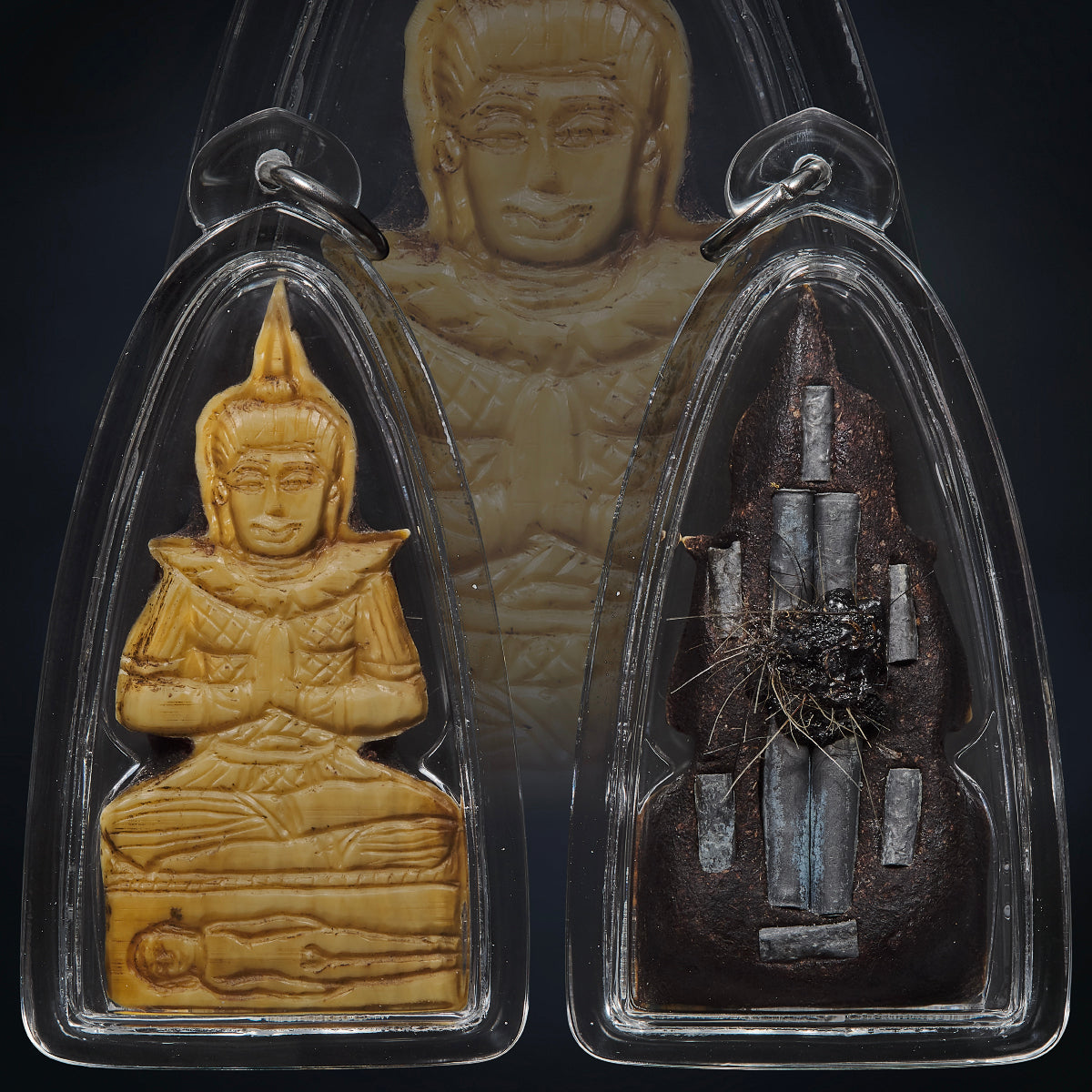
Several Seneh Takruts were inserted into the rear of the piece together with Hua Jai yantra formulae. “Hua Jai” in this context refers to condensed heart-mantras used to direct attraction energy toward emotional response, communication, affection, and interpersonal magnetism.
One of the most significant inclusions is the ritual wax fused from a Tid Jai Mae Prai ceremony. The wax acted as the binding medium for the internal components and was believed to harmonise yin and yang qualities within the amulet itself.
Visible within the rear is bleached hair originating from the young woman involved in the original ritual. According to local villagers, she was fashionable and modern in appearance, which explains the lightened hair colour. In older Thai ritual systems, personal remnants from active emotional ceremonies were believed to anchor the intention of the ritual into physical form. Por Sala Tan considered the balance of emotional softness, desire, and living human connection within the materials suitable for Khun Pean work.
Ritual
The ritual foundation of this piece originates from an actual relationship ceremony conducted for a village devotee seeking companionship and emotional luck. After the completion of the ceremony, Por Sala Tan reportedly felt the remaining ritual mass remained unusually “alive,” carrying residual emotional force strong enough to continue being used.
The carving was then completed and sealed using the leftover empowered materials from the ceremony itself. This gave the amulet a direct link to an active human ritual instead of a purely symbolic blessing.
Years later, the piece surfaced again during one of my sourcing trips through Northern Thailand. It had been kept inside a neighboring villager’s home by a local luksit of Por Sala Tan. Interestingly, the owner respected the piece deeply but rarely wore it. Among older villagers, strong Seneh items were sometimes stored away carefully because they believed the effects could become overwhelming if worn casually.
Before I finally encased the piece and brought it back, it was re-blessed by Ac Muerk of Fang, a current-generation Seneh practitioner respected locally for relationship and attraction ritual work. This additional blessing further reinforced the emotional and interpersonal focus already present within the original piece.
Blessings and Effects
The primary strength of this Khun Pean lies in human attraction and emotional magnetism. The energy leans heavily toward interpersonal warmth, emotional softness, increased attention, and stronger social favour.
Many older Northern practitioners believed true Seneh does not merely attract romance. It changes the atmosphere around the wearer. Conversations become smoother. People become more receptive. Anger softens faster. Opportunities for connection appear more naturally. In business environments, this can manifest as improved client relations, stronger networking opportunities, repeat customers, or increased favour from decision-makers.
The balance of yin and yang within this piece also gives it a calmer emotional character compared to more aggressive attraction items. Instead of creating chaotic attention, the energy feels more immersive and emotionally adhesive.
The cemetery components and Hua Jai Takruts also contribute to emotional remembrance. Wearers often describe people “thinking about them again” after meetings or reconnecting unexpectedly after long periods of silence.
Modern Application
This is the type of piece that suits people whose lives depend heavily on human interaction.
Sales professionals, nightlife workers, entrepreneurs, live sellers, relationship-focused individuals, hospitality workers, content creators, and those constantly meeting new people often appreciate this style of Khun Pean because the effects tend to manifest through emotional atmosphere rather than forceful authority.
I have personally noticed many older villagers in Fang rarely separated strong Seneh pieces from daily life once they became accustomed to them. Some kept them near sleeping areas, carried them during travel, or placed them beside business counters instead of openly displaying them.
The energy of this piece also pairs particularly well with strong Baramee items because elevated personal presence helps stabilise and amplify attraction-oriented workings over long periods.
Physical Details
The piece measures approximately 2 inches in height.
The front depicts Prah Khun Pean seated in meditative posture with crossed arms, carved entirely from aged nga chang pen din material. Fine hand-carved detailing can still be observed across the robes, facial structure, and seated platform.
The rear contains multiple inserted Seneh Takruts arranged around a central ritual mass sealed with wax and ritual remnants. Visible strands of bleached hair remain preserved within the rear cavity together with cemetery soil and Hua Jai insertions.
The amulet is housed in a custom transparent casing for preservation and daily wear.
Recommended Pairing
This piece pairs exceptionally well with strong Baramee-oriented amulets such as Somdej, Prah Kring, or respected monk images associated with stability, authority, and mental clarity.
The combination helps create balance between attraction energy and long-term personal momentum. Many older practitioners believed Seneh works best when supported by strong internal presence and stable life direction.
-
Free Shipping for Singapore| $15 Worldwide | $60 USA For Items Below $350