
OOBThaiAmulets
Por Sala Tan
Por Sala Tan
Couldn't load pickup availability
PST01
Summary
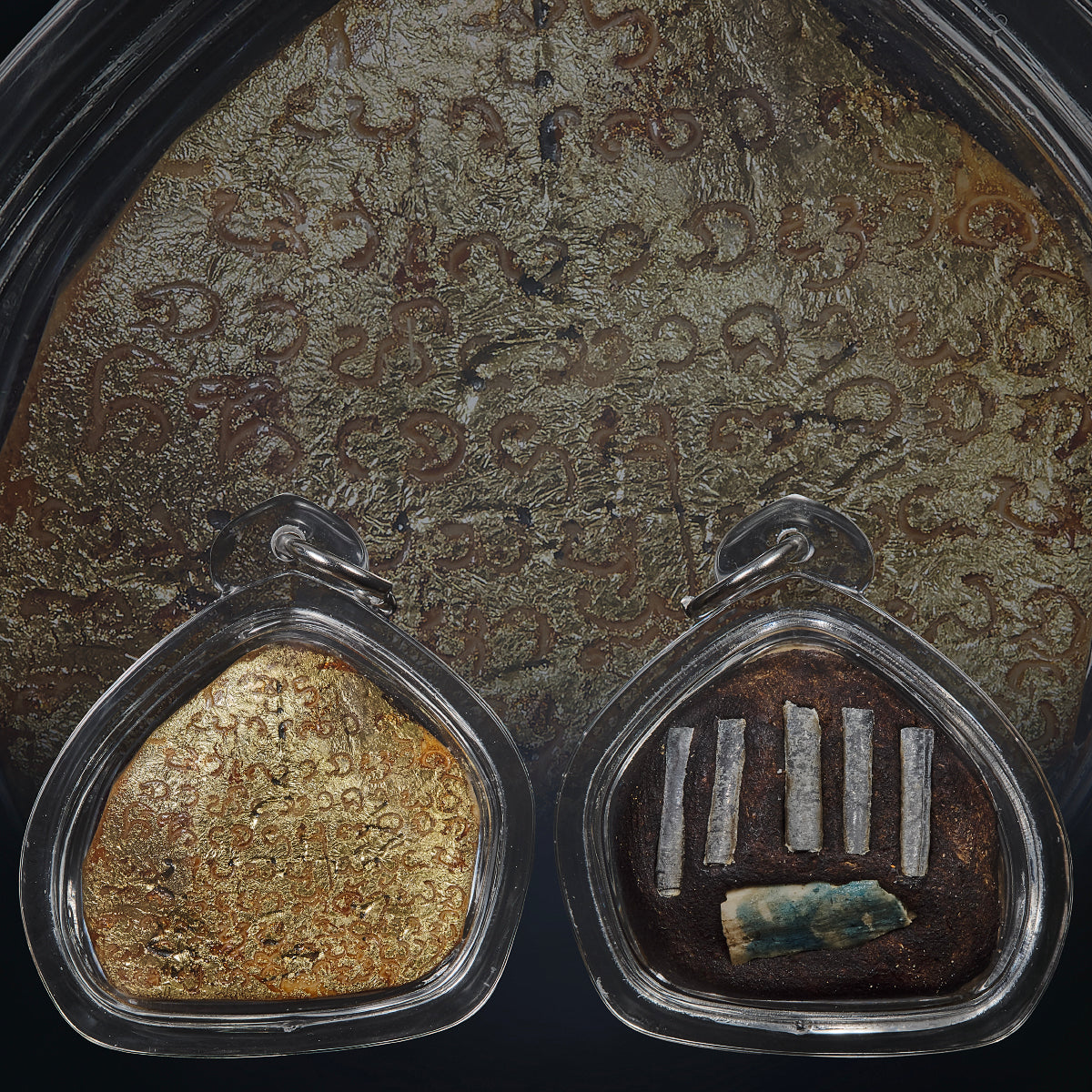
This small 1-inch Paneang piece by Por Sala Tan carries the appearance of something simple and portable, almost like an ordinary keychain charm. Yet within older Northern ritual understanding, small pieces were sometimes treated with even greater caution than larger shrine objects. Masters believed that when spiritually reactive materials were compressed into miniature form, the force inside became more concentrated. Because the piece would remain constantly close to the wearer — in pockets, bags, vehicles, keys, or directly against the body throughout daily life — the front was heavily covered with Yants and mantra layers to continuously stabilise and regulate the energy within.
The dense wall of sacred script was therefore not created for appearance alone. It functioned as spiritual containment, directional control, concealment, and ongoing invocation surrounding the Paneang relic sealed inside the piece.
Por Sala Tan often viewed certain materials as carrying what older practitioners called “living atmosphere.” Cave-found relics, meditation-ground remnants, forest ritual substances, and spiritually awakened materials were believed to absorb the force of the environments they originated from. Once activated through ceremony, such materials could not simply be worn openly without preparation. They first needed to be restrained, instructed, harmonised, and continuously governed through sacred formula.
That is why the entire front appears flooded with mantra.
The Yants were acting as locks.
Historical Background
Among older Lanna practitioners, there existed a belief that certain sacred objects became spiritually “open” after consecration. Once opened, they no longer remained passive. They interacted continuously with the emotional condition, intentions, and karmic state of the wearer.
Forest masters especially feared uncontrolled spiritual exposure. If the force inside a relic became unstable or improperly directed, the wearer could become emotionally restless, impulsive, overly aggressive, mentally distracted, or spiritually exhausted over long periods.
For this reason, some masters developed what collectors quietly refer to as “sealed surfaces” or “locking Yants.”
Instead of using one central Yantra alone, the master would completely flood the surface with repeating sacred syllables, looping mantra currents, directional seals, and overlapping invocations until the entire object resembled compressed script. The more spiritually active the material, the denser the inscription work became.
Older Northern practitioners sometimes explained this concept simply:
“When the material already carries force, the master must place walls around it.”
This style became especially associated with smaller carry pieces involving Paneang relics, cave-found materials, wandering-spirit ceremonies, and compact amulets intended to stay with the wearer constantly throughout daily movement.
Origins of the Mantra Surface
According to oral accounts connected to Por Sala Tan’s ritual methods, the front of this piece serves multiple mystical functions simultaneously.
The first is containment.
A Paneang relic was believed to continue radiating subtle influence long after consecration. The Yants regulate this movement in the same way channels guide flowing water. Without layered script, the energy was believed to become inconsistent during periods of stress, anger, intoxication, fear, grief, or emotional instability.
The second is concealment.
Older masters believed spiritually awakened objects attracted attention from both humans and unseen beings. By saturating the surface with dense mantra, the true “core” of the amulet becomes hidden beneath layers of sacred instruction. Some practitioners believed this prevented interference from hostile occult practitioners or wandering entities.
The third is continuous activation.
Many old mantra traditions believed sacred syllables never become spiritually silent once awakened properly through ritual. Every line continues reciting itself endlessly. In this understanding, the entire surface becomes an ongoing field of prayer surrounding the relic day and night.
This is one reason heavily-scripted pieces are often described by older collectors as feeling unusually “alive,” mentally calming, or internally warm over time.
The fourth purpose is obedience.
Por Sala Tan reportedly treated certain ritual materials almost like untamed natural forces. The Yants were not simply blessings placed on top of the piece. They were instructions, restraints, agreements, and directional commands layered repeatedly over the relic until harmony between material, spirit, and wearer was achieved.
Ritual
Pieces of this nature were traditionally activated through repetitive mantra recitation over extended periods instead of a single short blessing session. Older Northern methods emphasised accumulation.
A small carry piece needed stability because it travelled constantly with the wearer through crowded places, arguments, business dealings, emotional situations, temples, hospitals, funerals, and daily environments filled with shifting human energies.
For this reason, masters often treated miniature pieces seriously despite their size. Some believed smaller objects absorbed environmental influence faster because they remained continuously close to the owner’s body and personal field.
The fully-covered mantra surface therefore acted almost like a permanent ritual layer protecting and regulating the relic every moment it was carried.
Blessings and Effects
The energy associated with pieces of this style is traditionally connected to inner stabilisation, protection from chaotic influences, emotional grounding, intuition, spiritual awareness, and gradual strengthening of personal Baramee.
Older collectors also associated heavily-scripted Paneang pieces with mental clarity during periods of pressure. Some believed the continuous mantra field helped calm excessive thinking, sharpen instinct, and reduce emotional interference during important decisions.
Because the piece is compact enough to function almost like a ritual keychain, many practitioners preferred carrying it daily instead of storing it permanently on an altar. Within older belief systems, constant proximity allowed the relationship between wearer and piece to strengthen naturally over time.
Modern Application
Despite measuring only around 1 inch, pieces like this were often viewed as “travel companions” within Northern mystical culture. They were easy to carry discreetly in vehicles, attached to keys, work bags, office drawers, or worn casually without attracting attention.
Some business owners liked smaller pieces because they remained physically close throughout negotiations, travel, meetings, and financial dealings without requiring elaborate casing or ceremonial handling.
Personally, many of the older small-format Northern pieces I have encountered often carried surprisingly dense ritual work compared to larger commercial amulets. Masters seemed to understand that objects carried every single day eventually become extensions of the wearer’s own atmosphere. Because of this, the spiritual regulation built into such pieces was sometimes extremely extensive despite the miniature size.
That is what gives pieces like this their deeper fascination. The outside appears small and ordinary. The internal ritual structure is anything but simple.
Physical Details
Small 1-inch Paneang carry piece by Por Sala Tan.
The front surface is completely covered with layered Yants and mantra inscriptions forming a dense sealing field associated with spiritual containment and continuous activation.
The rear contains embedded ritual components sealed into a compact structure intended for daily carry use. Its size allows it to function comfortably as a wearable piece or ritual keychain companion.
Recommended Pairing
This type of Paneang piece pairs well with Baramee-oriented amulets such as Somdej, Prah Kring, or older meditation-lineage pieces associated with grounding and mental clarity.
Within older Northern practice, stabilising pieces were often carried together with attraction, wealth, or authority amulets to harmonise emotional balance and strengthen overall energetic consistency in daily life.
-
Free Shipping for Singapore| $15 Worldwide | $100 USA All products