
OOBThaiAmulets
Por Sala Tan
Por Sala Tan
Couldn't load pickup availability
PST01
Summary
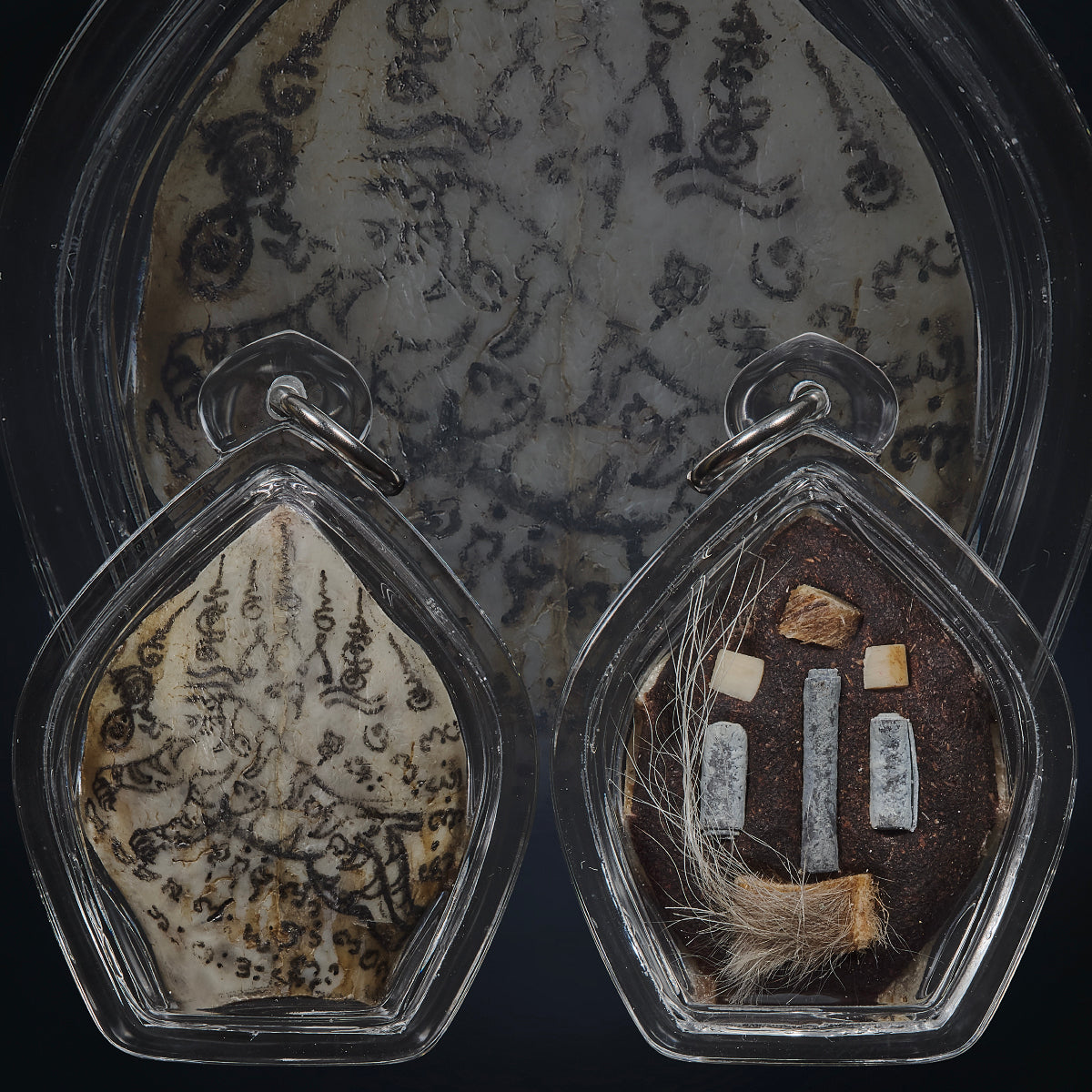
This miniature “Suer Hua Kad” (Headless Tiger) piece by Por Sala Tan carries one of the older and more feared tiger wiccha traditions associated with survival instinct, authority, psychological dominance, and protection against direct enemies. While larger Headless Tiger pieces were traditionally made for altar placement, belt carry, or heavy personal wear, smaller versions such as this were rarely produced due to the difficulty of balancing the energy profile within a compact frame.
At approximately 1”, this piece was intentionally made for practical daily carry. Many older practitioners preferred smaller tiger pieces attached to keychains, bags, vehicle keys, or hidden close to the body because tiger wiccha was traditionally believed to work best when constantly carried through movement, negotiation, travel, conflict, and daily interaction with people.
The symbolism behind the Headless Tiger lineage is deeply tied to the removal of fear and hesitation. Older sak yant circles viewed the tiger without a head as representing pure instinct and unstoppable force. Later lineages softened and controlled this symbolism through restraint methods and harmonising rituals so the wearer would carry firmness and authority without becoming reckless or emotionally unstable.
This piece follows that later philosophy of controlled tiger force.
Historical Background
The “Headless Tiger” is considered one of the lesser-seen branches of older tiger yantra traditions found among wandering fighters, nak leng circles, transporters, gamblers, underground figures, and practitioners of protective wiccha throughout Thailand. Unlike standard tiger imagery associated purely with charisma or intimidation, the Headless Tiger became feared because it symbolised force stripped of hesitation.
Older oral accounts from Chonburi and Central Thai tattoo circles spoke of individuals carrying this exact style of tiger yantra who allegedly became unusually difficult to intimidate or suppress during violent confrontation. Stories surrounding the lineage spread heavily through underground communities decades ago after several dangerous criminals were reportedly discovered bearing identical tiger markings.
Over time, masters began adjusting the symbolism behind the Headless Tiger tradition. The purpose shifted away from uncontrolled aggression and became focused on restraint, discipline, and controlled response. This transformed the tiger into a guardian force associated with territorial protection, defence against enemies, and maintaining psychological strength during periods of pressure or conflict.
In Northern Thailand, tiger wiccha evolved differently from Central Thai interpretations. Many Northern masters viewed tiger force as connected to inner state of mind. A person carrying strong tiger energy was expected to remain calm under pressure, decisive during danger, mentally sharp, and difficult to manipulate socially or spiritually.
Por Sala Tan’s tiger-related works generally followed this Northern interpretation. The emphasis was often on controlled dominance, spiritual firmness, protection against hidden hostility, and maintaining baramee during difficult environments.
Origins of the Materials
The main body of this piece was made from Paneang Chamut material combined with older tiger-lineage ritual substances traditionally reserved for Suer Hua Kad creations.
The rear chamber contains Pong Suer, Nang Suer relics, and Fang Suer relics gathered and prepared specifically for tiger authority and protective wiccha. Within older tiger traditions, these materials were believed to strengthen the projection of intimidation resistance, territorial authority, instinctive awareness, and defensive spiritual force.
The Takruts embedded into the rear were added to harmonise and stabilise the overall energy flow of the piece. In many older Northern Thai ritual systems, tiger-based items could become spiritually “hot” if left unbalanced. Takruts were therefore used to regulate and anchor the force so the wearer could carry the energy safely over long periods.
The inclusion of layered tiger materials within such a compact frame is uncommon. Most pieces made using this category of ritual ingredients were traditionally produced in larger 3–4” formats due to the intensity and density of the materials involved.
Ritual
This batch was blessed during a single dedicated ceremony and only approximately 10–15 pieces were produced.
According to older tiger wiccha traditions, ceremonies involving Suer Hua Kad material were often conducted with emphasis on territorial authority, spiritual vigilance, and psychological strengthening. The objective was not simply aggression, but the cultivation of inner steadiness under pressure.
Tiger rituals in Northern Thailand were commonly linked to night blessings, fire element invocations, and protective recitations focused on maintaining firmness against hostile intent, jealousy, betrayal, and confrontation. The tiger was treated as an embodiment of survival instinct guided through discipline.
The Takruts within this piece serve an important ritual purpose because they act as balancing pillars for the heavier tiger-force components sealed into the rear chamber.
Blessings and Effects
The blessings associated with this piece revolve heavily around protection against enemies, rivals, hidden hostility, betrayal, intimidation, and social pressure. Older practitioners believed tiger wiccha sharpened instinct and allowed the wearer to remain mentally composed in situations where others would panic or lose confidence.
Many people are drawn to tiger-related pieces during periods involving office politics, business competition, strained relationships, jealousy from peers, or emotionally aggressive environments. The energy associated with the Headless Tiger is traditionally believed to make the wearer psychologically firmer and harder to suppress.
This piece is also connected strongly to territorial authority. In older understanding, tiger force was believed to project an invisible warning presence that discouraged disrespect, manipulation, and opportunistic behaviour from others.
Among experienced practitioners, tiger wiccha is often linked closely with mindset. The calmer and more disciplined the wearer becomes internally, the stronger the protective expression of the tiger manifests externally.
Modern Application
Because of its smaller size, this piece is highly practical for modern daily carry. It can easily be attached to vehicle keys, work bags, travel pouches, or kept discreetly close to the body without attracting attention.
Many businessmen, salespeople, negotiators, transport operators, gym owners, nightlife workers, and individuals operating in competitive industries are naturally drawn toward tiger-based protection pieces due to the mental firmness and confidence they are believed to cultivate.
This piece is especially suited for those dealing with rivalry, backstabbers, manipulative environments, emotional pressure, or situations where one constantly needs to defend personal boundaries and authority.
Personally, many long-time collectors often mention that tiger pieces do not always feel “loud.” The effects are usually noticed through changes in mental composure, sharper instinct, stronger presence during confrontation, and reduced hesitation during stressful situations. Over time, people around the wearer also tend to respond differently when that internal state becomes stronger and steadier.
Physical Details
This miniature Suer Hua Kad piece measures approximately 1”.
The front carries the Headless Tiger yantra design executed in traditional inked style associated with older tiger-lineage wiccha. The rear chamber contains Pong Suer, Nang Suer relics, Fang Suer relics, and embedded Takruts used for harmonisation and energetic regulation.
The compact casing format makes it highly suitable for daily carry or use as a protective keychain piece.
Only approximately 10–15 pieces from this single ceremony were produced.
Recommended Pairing
This piece pairs exceptionally well with baramee-oriented items such as Somdej, Prah Kring, or strong authority-based amulets that stabilise and elevate personal presence.
It also combines naturally with Rahu, Lersi, or Kongkrapan-oriented pieces for individuals seeking stronger protection during travel, business competition, or high-pressure working environments.
For those already carrying strong metta or seneh items, the tiger energy helps add firmness, decisiveness, and psychological grounding to the overall combination.
-
Free Shipping for Singapore| $15 Worldwide | $60 USA For Items Below $350