
OOBThaiAmulets
Por Sala Tan
Por Sala Tan
Couldn't load pickup availability
PST01
Summary
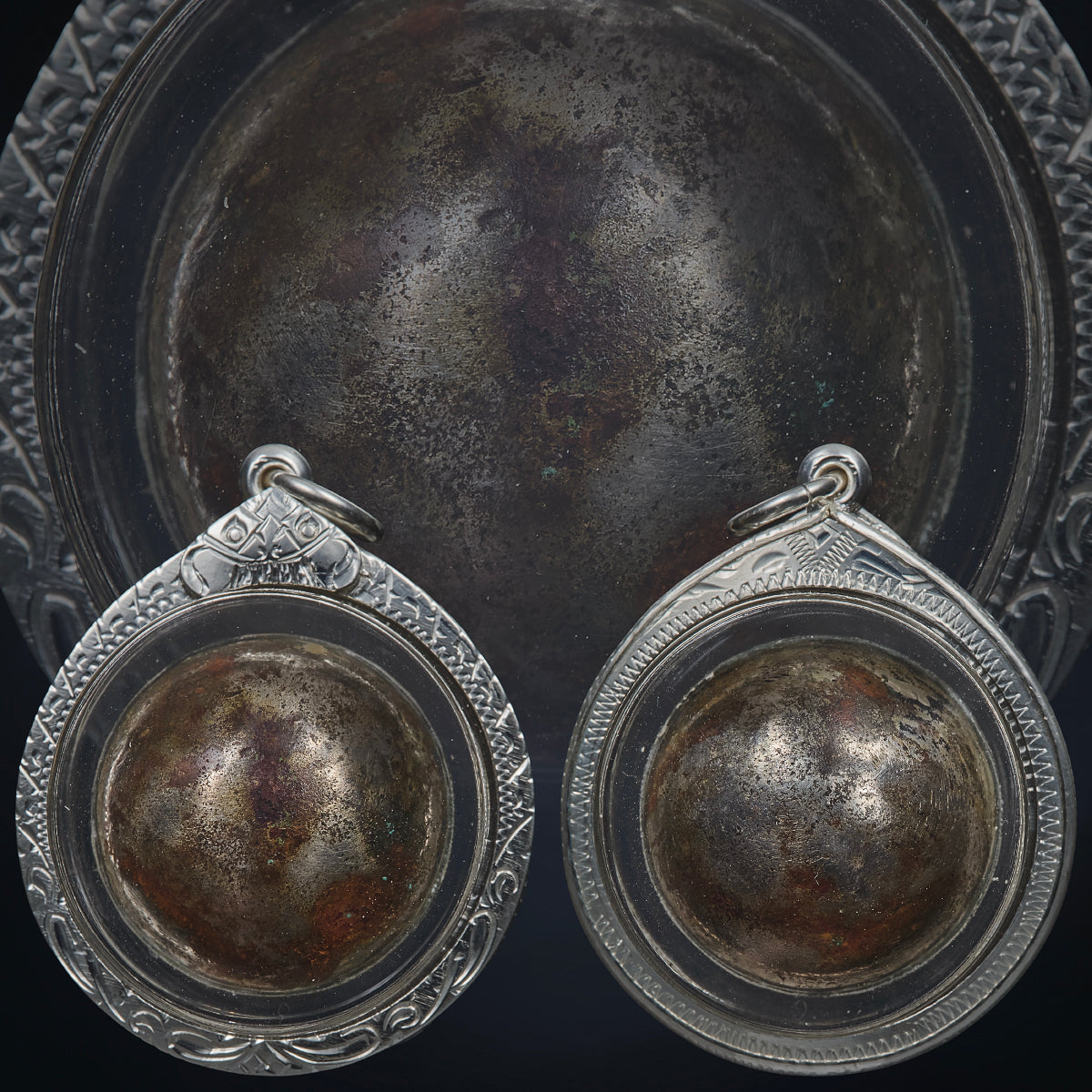
The Pilod from Por Sala Tan is an old Northern protective object tied to Burmese-Lanna wiccha passed down through generations from the era associated with Bo Bo Aung lineage practitioners. Small in size but extremely heavy in presence, these mystical metal harmony balls were traditionally carried by cave monks, wandering forest practitioners, and occult masters during long meditation retreats in isolated mountains and deep jungle environments.
The sound produced by the Pilod is its defining feature. Within old Lanna understanding, sound itself is a form of force. The metallic resonance is believed to disturb stagnant energies, break hostile influences, and create movement within spaces that feel spiritually “heavy.” Many older practitioners viewed the sound similarly to temple bells or ritual chimes used during ceremonies — not merely as noise, but as vibration carrying intention, mindfulness, and protective authority.
This particular piece came from Por Sala Tan’s own collection and traces back to Burmese holymen connected to older meditation and protective lineages. Pieces of this age and form were typically preserved within practitioner circles and passed from teacher to disciple over long periods of time.
Historical Background
Among older Burmese and Lanna practitioners, there existed a category of mystical objects designed specifically for wandering monks, cave meditators, and occult adepts who practiced in remote areas. The Pilod belongs to this category.
In the past, many forest practitioners traveled deep into caves and mountainous regions where isolation, darkness, and unstable spiritual environments were considered part of meditation training itself. Protective objects were therefore not treated as decorations or status symbols. They functioned as practical spiritual tools.
The Pilod was valued because of both its metal composition and its sound. When shaken lightly, the internal resonance produced a sharp metallic vibration believed to “wake” awareness and clear oppressive atmospheres. Older practitioners often associated this sound with thunder — sudden, penetrating, and capable of cutting through unseen disturbances.
Within Thai and Burmese folklore, thunder has long symbolized heavenly force and divine intervention. In older Lanna thought, storms represented the movement of celestial energies that reset imbalance in nature. Because of this, objects carrying thunder-like resonance were seen as powerful tools for protection, cleansing, and spiritual authority.
Por Sala Tan held deep respect for older Burmese wiccha and preserved many ritual objects connected to these traditions. This Pilod came from that personal collection and reflects the older style of practitioner-based protective tools rarely encountered today.
Origins of the Materials
The body of the Pilod is made from an old mystical metal alloy traditionally associated with protective and meditative ritual objects. The exact composition varies between lineages and was often kept secret within teacher-disciple circles.
Older masters believed that certain metals carried stronger energetic conductivity when repeatedly used during ceremonies, meditation, chanting, and cave practice. Over generations, these objects absorbed both ritual use and spiritual intent.
Inside the hollow structure sits the internal striking mechanism responsible for the metallic chime. This internal resonance is central to the Pilod’s identity. The sound is crisp, heavy, and unusually penetrating despite the small size of the piece.
In old Lanna understanding, sound carried movement. Just as temple bells marked sacred space and ritual transitions, the Pilod’s resonance was believed to disturb stagnant energies and reinforce alertness during meditation or travel.
Ritual
Objects of this category were traditionally empowered through repeated chanting, meditation retreats, and exposure to isolated spiritual environments rather than large public ceremonies.
Many older cave practitioners carried them during long periods of meditation where the sound would occasionally be used to maintain awareness and focus. Some lineages also believed the resonance helped stabilize the mind during encounters with fear, uncertainty, or oppressive spiritual environments.
Por Sala Tan himself respected many Burmese protective methods and often collected ritual objects directly from practitioners who still maintained older forest and mountain traditions. According to his close students, items from his personal collection were rarely ordinary market objects. Most had already undergone years — sometimes generations — of ritual use before reaching him.
Blessings and Effects
The Pilod is primarily regarded as a protective and stabilizing object.
The metallic resonance is traditionally associated with cleansing negative atmospheres, dispersing hostile energies, and reinforcing spiritual resilience. Many practitioners also associate it with Baramee because of the strong “presence” these older objects carry.
For business owners and householders, the Pilod is commonly used to create a more stable environment. Some keep it near entrances, work desks, meditation areas, or altars. Others carry it in pockets or bags so the sound accompanies movement throughout the day.
Older Feng Shui practitioners often use metal sound to weaken negative earth energies linked to illness or stagnation. Within this understanding, the Pilod serves a similar function while carrying the additional spiritual weight of ritual blessing and long-term practitioner use.
Its energy is usually described as grounding, alert, and protective. Many users report that simply hearing the sound during stressful moments helps reset focus and composure.
Modern Application
In modern life, the Pilod works exceptionally well for people exposed to high-pressure or unstable environments.
Business owners, investors, salespeople, frequent travelers, and practitioners who regularly enter crowded or energetically heavy spaces often appreciate this type of object because of its calming yet commanding presence.
Some owners lightly shake the Pilod before meetings, meditation, travel, or while entering new spaces. Others keep it near the center of the home as a form of protective metal energy aligned with traditional Feng Shui principles.
I personally find older pieces like this carry a very distinct atmosphere compared to newer ritual items. The sound has depth to it. It feels aged, settled, and unusually calming despite the sharp metallic tone. Many old-school practitioners from Northern Thailand and Burma viewed sound-based ritual objects as tools that helped maintain awareness and mental stability during long periods of isolation or spiritual work, and after handling enough older pieces over the years, it becomes easier to understand why.
Physical Details
Small 1-inch Pilod harmony ball form.
Constructed from old mystical metal alloy with internal resonance chamber.
Over 400 years old according to lineage history associated with Burmese-Lanna practitioner transmission.
Originally sourced from Burmese holymen and later preserved within Por Sala Tan’s personal collection.
Portable size suitable for pocket carry, altar placement, meditation spaces, office tables, or household Feng Shui positioning.
Recommended Pairing
The Pilod pairs exceptionally well with Baramee-oriented pieces, meditation-based amulets, cave monk items, and mainstream protective Buddha images.
It also combines naturally with authority-based or stabilizing amulets for people working in stressful business environments, leadership positions, or spiritually heavy professions where maintaining clarity and composure is important.
-
Free Shipping for Singapore| $15 Worldwide | $100 USA All products