
OOBThaiAmulets
Por Sala Tan
Por Sala Tan
Couldn't load pickup availability
PST01
Summary
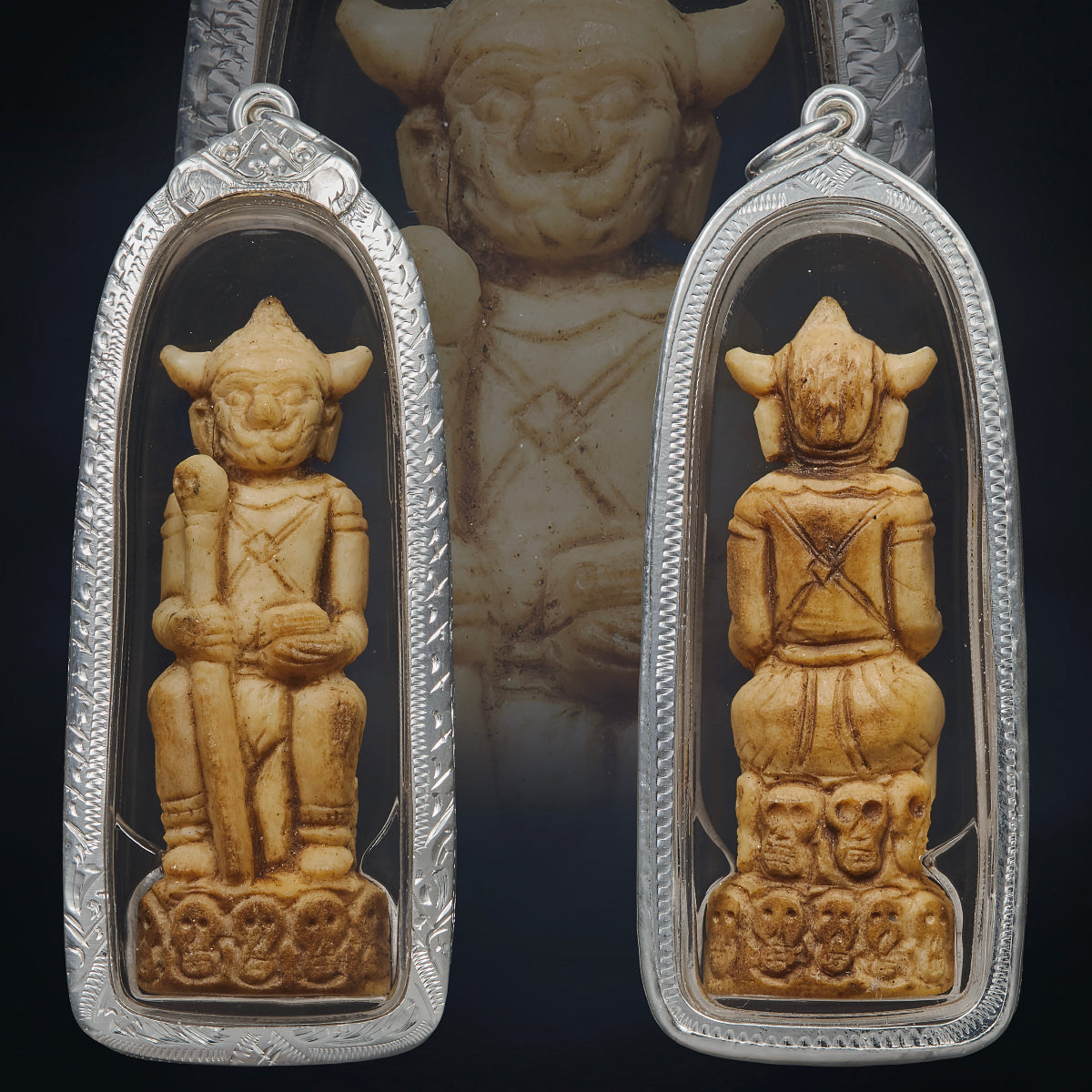
Among the more unusual deity-based pieces associated with Por Sala Tan, this 2.5" Prah Yama carved from gaduk chang relic material stands apart due to both its ritual origin and intended usage. The batch was never created for the general public initially. According to those close to the lineage, these pieces were made specifically for a small group of lersis and practitioners exploring the deeper cave systems around Fang in Northern Thailand.
Only 19 pieces were produced.
The purpose of the batch was tied directly to spiritual protection and karmic authority. During one of the cave expeditions, it was discovered through meditation and ritual communication that the resident deity governing a particular cave system was Lord Yama himself. The local jinns and wandering entities within the cave were said to operate under his authority.
For practitioners unfamiliar with the cave lineage or correct invocations, entering such places carelessly could result in spiritual suppression, confusion, energetic imbalance, or even regression in one’s cultivation and meditative progress. Because of this, Por Sala Tan prepared this batch as a form of spiritual passport and protection for those entering territories governed by heavier karmic forces.
For lay practitioners today, the function of the piece evolved into something broader and highly practical. Many collectors and businessmen value this Prah Yama for protection during travel, guidance in major life decisions, authority over wealth matters, and the ability to attract unseen spiritual assistance and protection.
Several owners of this batch specifically keep it with them during overseas travel or high-risk business dealings. The energy profile of the piece is calm but commanding. It carries a strong sense of order, direction, and spiritual discipline.
Historical Background
Lord Yama is one of the oldest and most important deities within the Dharmic traditions of India. In the Vedic and later Hindu traditions, he is known as the ruler of death, the guardian of Dharma, and the divine judge who oversees the karmic consequences of all beings. He is often referred to as Dharmaraja, meaning “King of Righteousness” or “Lord of Dharma.”
In early Vedic literature, Yama is described as the first mortal being who experienced death and subsequently became the ruler of the realm beyond life. Because of this, he is viewed not as an evil force, but as the divine guardian who maintains cosmic balance and ensures the orderly transition between life, death, and rebirth.
Across Hindu, Buddhist, and certain regional Southeast Asian traditions, Yama’s role evolved into that of an impartial judge who examines karma fairly and without emotion. His imagery commonly includes dark robes, a buffalo mount, a staff or noose, and symbols associated with judgment and inevitability.
Despite popular fear surrounding death deities, traditional practitioners often regard Yama with deep respect. Within older esoteric traditions, Yama represents karmic law, accountability, spiritual order, and protection from chaotic forces.
Within texts such as the Katha Upanishad, Yama is portrayed as a profound spiritual teacher. His dialogue with the young seeker Nachiketa became one of the foundational teachings on impermanence, the soul, and liberation. In this context, Yama represents wisdom, discipline, truth, and the courage to face reality directly.
In many Asian traditions, including folk Hinduism and Buddhist-influenced practices, prayers and offerings to Yama are performed to seek protection from untimely calamities, guidance toward righteous living, peaceful ancestral transitions, and clarity regarding one’s karmic path.
Origins of the Material
The figure itself was carved from gaduk chang relic material chosen specifically for its stable and commanding energetic properties. Within older Northern lineages, materials of this nature were often reserved for pieces involving authority, territorial protection, spirit command, and guardian-class deities.
The seated form of Prah Yama rests above rows of carved skull imagery representing dominion over wandering spirits, karmic judgment, and the transitional realms between the physical and spiritual worlds. The front-facing expression carries a calm but watchful appearance, reflecting Yama’s role as both judge and protector.
According to oral accounts surrounding this batch, the material was ritually prepared before carving and later empowered through cave-based ceremonies connected to the Fang region.
Ritual
The empowerment of this batch was deeply tied to cave lineage practices and spirit-governed territories.
Por Sala Tan created these pieces after learning through meditation that a particular cave system explored by the lersis fell under the jurisdiction of Lord Yama. The entities dwelling within that environment reportedly answered directly to him. Entering such places without proper understanding, correct katha, or permission could disrupt a practitioner’s spiritual balance.
The ritual focus of the batch was therefore centered around alignment, karmic permission, spiritual authority, and safe passage through unseen territories.
Owners of the piece often describe a strong feeling of calm awareness when carrying it during travel, meditation, forest retreats, or periods of major life transition.
Blessings and Effects
The blessings associated with Lord Yama are traditionally connected to protection, karmic authority, longevity, justice, spiritual discipline, controlled wealth, and the fulfillment of sincere wishes aligned with Dharma.
Protection from untimely death is one of the strongest attributes connected to Yama. Devotees believe his blessings shield the wearer from sudden accidents, severe calamities, unseen dangers, and spiritually harmful environments.
The piece is also associated with longevity, endurance, and stability during difficult karmic periods. Many practitioners seek Yama’s protection when facing unstable business conditions, legal pressure, dangerous travel, or spiritually heavy environments.
Another major aspect of this Prah Yama is authority over wealth and resources. In older tantric and folk traditions, Yama is linked to karmic control over assets, inheritance, financial order, and material stability. Owners of the piece often pray for stronger financial discipline, business direction, debt resolution, and long-term stability.
Lottery luck and wish fulfillment are also commonly associated with this batch, especially when prayers are made sincerely and with proper merit dedication. The energy of the piece is believed to support wishes connected to rightful opportunities, business growth, protection of one’s family, and clearer life direction.
For those on a spiritual path, this Prah Yama is believed to guide the wearer toward the correct teacher, environment, career path, or cultivation route. Several practitioners describe periods of unexpected clarity after obtaining the piece, particularly during times of confusion or major life transitions.
One of the more unusual aspects attributed to this batch is its ability to gather wandering spirits under protective alignment. Within the oral traditions surrounding the piece, these spirits are believed to gradually become part of the wearer’s unseen spiritual protection network, helping guard, guide, and assist the owner while traveling or conducting important work.
This is one reason many businessmen and collectors prefer carrying the piece during overseas trips or negotiations. The energy is often described as protective, commanding, and quietly stabilizing.
Modern Application
This is a highly suitable piece for businessmen, frequent travelers, spiritual practitioners, meditators, and individuals navigating uncertain periods of life.
Many owners use the piece during overseas travel, jungle retreats, cave exploration, business expansion phases, or periods requiring stronger decision-making and spiritual grounding.
It is also valued by practitioners seeking stronger karmic alignment, discipline, and spiritual clarity. Those involved in meditation, ritual work, or spirit-related practices often appreciate the stabilizing and authoritative energy associated with Prah Yama.
For wealth-focused users, the piece is commonly carried during important negotiations, lottery prayers, investments, and periods requiring financial restructuring or long-term planning.
Physical Details
2.5" Prah Yama figure carved from gaduk chang relic material.
Hand-carved seated form holding a staff with crossed yantric markings across the chest and back. The base contains multiple carved skull motifs representing karmic authority and dominion over wandering entities.
Only 19 pieces were reportedly produced for the original cave-practitioner batch linked to the Fang lineage.
Recommended Pairing
This Prah Yama pairs especially well with strong baramee-based Buddha or Kring pieces that strengthen authority, karmic stability, and spiritual command.
For businessmen, pairing with wealth and authority-focused items creates a balanced combination of protection, guidance, and financial discipline.
For spiritual practitioners, pairing with cave lersi or meditation-oriented pieces helps strengthen focus, grounding, and directional clarity during cultivation work.
-
Free Shipping for Singapore| $15 Worldwide | $100 USA All products