
OOBThaiAmulets
Por Sala Tan
Por Sala Tan
Couldn't load pickup availability
PST01
Summary
Among the many specialised Seneh pieces associated with Por Sala Tan, Paya Kao Kam images occupy a very distinct position within his Yin-oriented ceremonial work. Pieces of this category were usually made in very limited numbers and circulated quietly among close devotees who specifically sought attraction energies tied to emotional influence, social pull, and interpersonal persuasion.
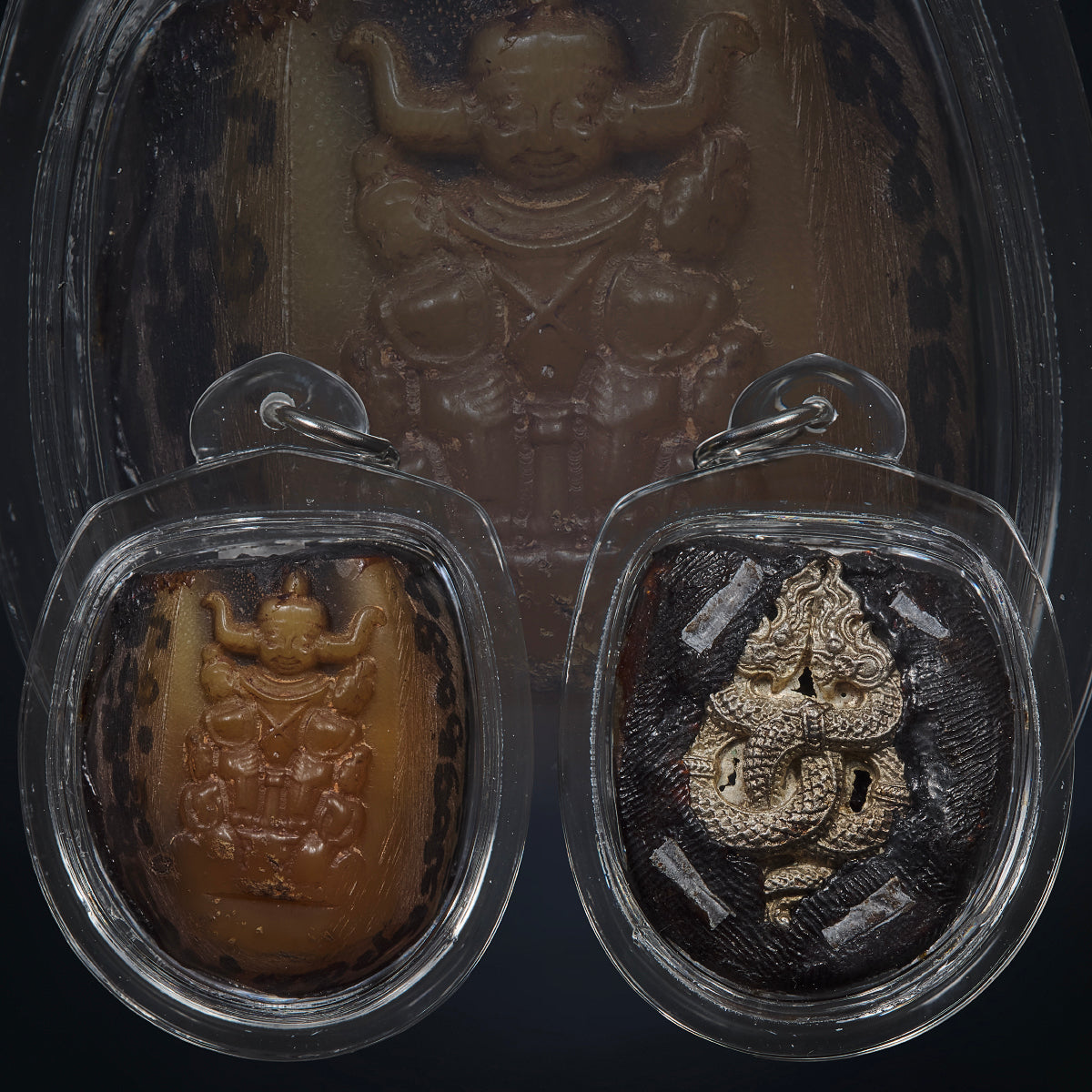
This particular piece carries a very concentrated Yin profile centred around Maha Seneh applications. The front bears the image of Paya Kao Kam seated in ceremonial posture, while the rear contains a sacred serpent emblem embedded within a dense ritual compound alongside Takruts and layered relic materials. The overall structure was designed to create a harmonised flow between attraction energy, emotional influence, and stabilising ritual anchors.
Collectors familiar with Por Sala Tan’s older work would immediately recognise the dense energetic feel of pieces from this category. The energy is heavy, direct, and extremely focused toward social magnetism.
Historical Background
Por Sala Tan separated many of his ritual creations according to elemental and energetic purpose. Some ceremonies focused on protection and Maha Amnaj through fire-element rites. Others revolved around cave energies, forest entities, and defensive spiritual work. Pieces such as this Paya Kao Kam belonged to his water-element ceremonial lineage associated with emotional attraction and Yin amplification.
Within older Northern Thai ritual culture, attraction-based wiccha formed an entire branch of specialised spiritual practice. The objective extended beyond physical attraction alone. Emotional remembrance, interpersonal influence, lingering presence, and social warmth were considered equally important aspects of Seneh work.
Masters who specialised in these methods often selected materials believed to carry strong emotional imprint and unresolved attachment energies. Over time, these ritual systems became deeply connected with cemetery-lineage methods and water-element ceremonies designed to amplify emotional resonance.
Over the years, I have only encountered a small number of Por Sala Tan pieces from this category that carried this level of concentrated Yin force. Most were quietly retained by practitioners who understood how specialised these pieces were.
Origins of the Materials
The core ritual structure of this Paya Kao Kam originates from a strong Yin-based lineage associated with older Pii Tai Hong ceremonial traditions. Within traditional Seneh practice, materials from these lineages were viewed as highly effective carriers of emotional Yin resonance.
The front image of Paya Kao Kam was intentionally kept simple in appearance because the emphasis of the piece was always directed toward energetic function and ritual composition. The rear contains a serpent emblem symbolising emotional binding, attraction flow, and lingering interpersonal influence. In older ceremonial symbolism, serpent imagery was frequently linked to water-element energies and emotional persuasion.
Embedded within the rear structure are Takruts together with layered relic compounds sealed inside the dense black ritual base. Additional Ngan components and Yin-oriented materials were inserted to harmonise and stabilise the attraction energies contained within the amulet.
When held in hand, the piece carries a very dense and heavy energetic feel compared to ordinary Seneh items.
Ritual
This piece underwent a water-element consecration ceremony, one of the ritual categories Por Sala Tan occasionally reserved for Yin-oriented creations tied to emotional influence and attraction work.
Water rites were traditionally associated with longing, emotional remembrance, attachment, and receptiveness. Ceremonies of this nature were often conducted during periods chosen for stronger lunar influence. Chanting focused heavily on emotional connection, attraction resonance, and energetic remembrance.
The Takruts inserted into the rear structure functioned as stabilising anchors during the final ritual stages. Strong Yin-based pieces require balancing methods so the attraction energies remain directed and harmonised over prolonged use.
From personal experience, some of the strongest social-response pieces I have encountered from Por Sala Tan came from his quieter Yin categories such as this. Many owners who obtained results from them kept them privately for years without releasing them back into circulation.
Blessings and Effects
The energy of this piece centres primarily around Maha Seneh and emotional influence.
Traditionally, pieces of this category were used to increase attraction, improve social warmth, strengthen interpersonal pull, and create stronger emotional remembrance during interactions. In social environments, sales settings, nightlife industries, and emotionally driven business roles, these pieces were valued for creating a stronger energetic presence around the wearer.
The influence from heavier Yin pieces is usually experienced gradually but persistently. Conversations tend to linger longer in memory, interactions feel warmer, and people often become naturally inclined to continue engagement with the wearer.
This piece also carries a noticeable “presence” quality. Even in quieter settings, the wearer may feel more socially visible and more easily remembered.
Modern Application
In modern use, this Paya Kao Kam is especially suited for individuals whose success depends heavily on emotional connection and social interaction. Nightlife operators, entertainers, livestreamers, relationship-driven sales professionals, hosts, and business owners dealing directly with people are typical users of pieces from this category.
The function of this piece remains highly specialised toward attraction and emotional influence.
Because the Yin energy is very concentrated, experienced practitioners would commonly pair pieces of this nature with strong Baramee-oriented amulets for greater energetic stability. Forest-tradition Buddha pieces, Kring lineages, and authority-focused amulets pair particularly well alongside heavy Yin-oriented Seneh items.
Personally, many long-time collectors who moved deeply into Por Sala Tan’s lineage eventually realised that some of the strongest Seneh pieces were never the most visually elaborate ones. The quieter pieces often carried the heaviest response in actual day-to-day use.
Physical Details
The amulet is housed within a clear waterproof casing suitable for daily carry.
The front bears the seated Paya Kao Kam image while the rear reveals a serpent emblem embedded within the black ritual compound together with Takruts and layered ceremonial materials.
The energetic profile of the piece feels exceptionally dense compared to standard Seneh-oriented amulets from the same lineage.
Recommended Pairing
This piece pairs especially well with strong Baramee and protective amulets to maintain energetic balance during long-term use.
Forest-tradition Buddha amulets, Kring lineages, and authority-oriented Baramee pieces complement the attraction energies of heavy Yin-based Seneh items particularly well.
-
Free Shipping for Singapore| $15 Worldwide | $60 USA For Items Below $350