
OOBThaiAmulets
Por Sala Tan
Por Sala Tan
Couldn't load pickup availability
PST10
Yant Na Setthi
Por Sala Tan
6cm
Mainstream Artifact
Encased in silver
━━━━━━━━━━━━━━━━━━━━━━━━━━━━━━━━
Sacred Craftsmanship
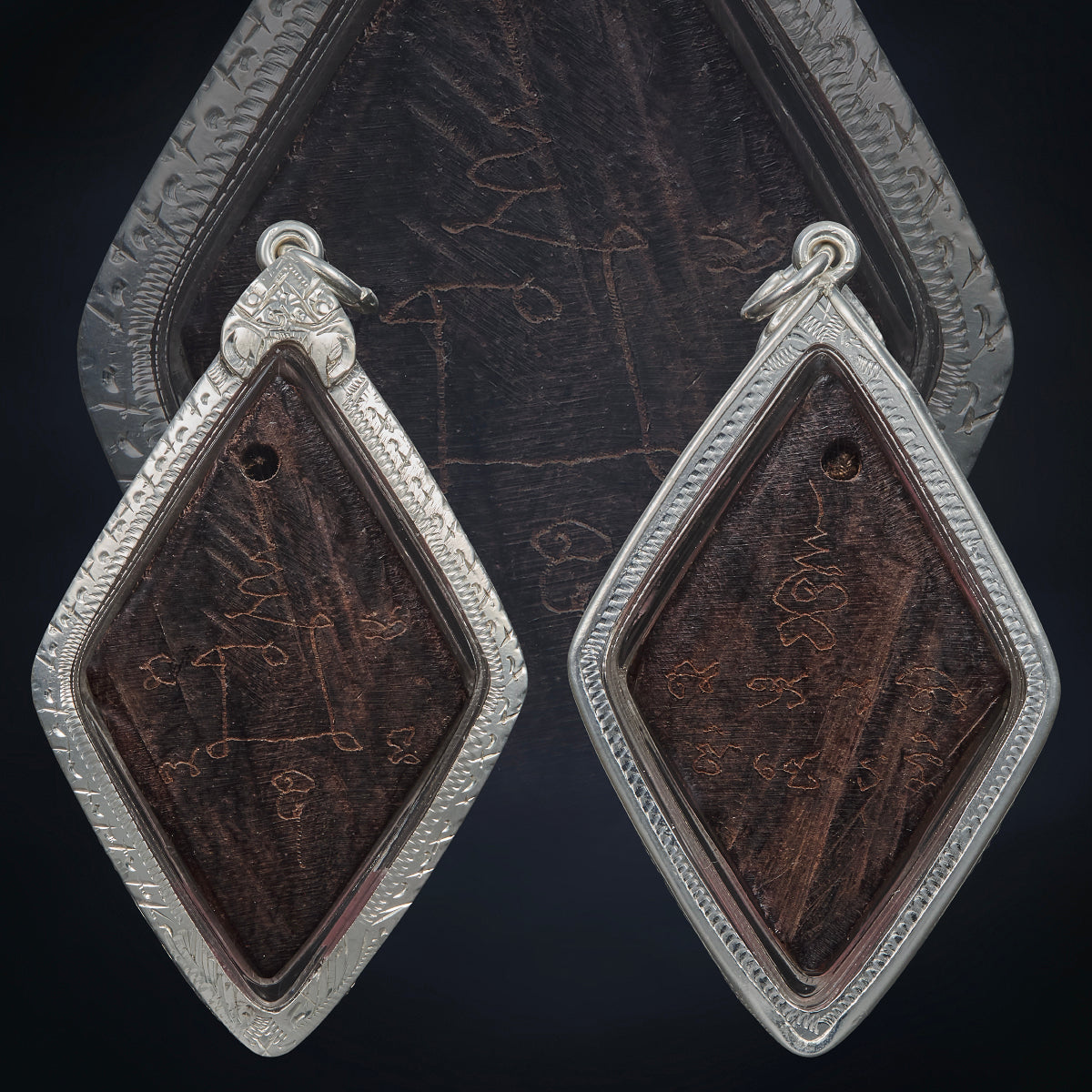
This traditional two-sided sacred Yant was individually prepared by Por Sala Tan, using carefully selected Mai Payung (Rosewood), a hardwood valued in Thai sacred traditions for its associations with stability, prosperity and protection.
The wood was shaped into a distinctive diamond form, symbolically associated with Kro Phet — the Diamond Armour Yantra.
Each artifact is individually handmade from carefully selected sacred wood, with natural variations in grain, colour, shape and handwritten inscriptions making every piece unique.
exact piece to be given
━━━━━━━━━━━━━━━━━━━━━━━━━━━━━━━━
Personal Experiences Shared by Luksits
During my visits to Por Sala Tan's village, I personally noticed that hand-inscribed wooden Yant were commonly kept by local villagers and small business owners.
Several shops displayed these sacred pieces near their entrances, while others hung them at the front of their homes.
Many had been personally prepared by Por Sala Tan.
For these villagers, such artifacts were not merely decorative. They represented blessings for steady livelihood, household protection, favourable business and general prosperity.
This particular example was obtained from a fellow villager who had collected several hand-inscribed Yant directly from Por Sala Tan.
The villager had retained these pieces as personal sacred possessions, reflecting the longstanding practice of keeping a master's handwritten blessings within the household.
What makes these artifacts particularly meaningful is their simplicity.
Rather than elaborate carvings or complicated constructions, the keeper receives a piece of sacred wood bearing Yant personally inscribed and blessed by the master.
━━━━━━━━━━━━━━━━━━━━━━━━━━━━━━━━
Summary
Yant Na Setthi – Kro Phet is a two-sided wooden talisman by Por Sala Tan, combining three traditional elements:
-
Yant Na Setthi: Wealth, prosperity, financial stability and favourable business opportunities.
-
Victory and Success Yant: Overcoming obstacles, achieving objectives and progressing through difficult circumstances.
-
Kro Phet — Diamond Armour: Protective symbolism associated with the diamond-shaped wooden foundation.
The use of Mai Payung further reinforces the traditional meaning of support, stability and sustained fortune.
Together, these elements create an artifact traditionally associated with wealth preservation, prosperity, success and protection.
━━━━━━━━━━━━━━━━━━━━━━━━━━━━━━━━
Historical Background
Handwritten Yant have long occupied an important place within Thai sacred traditions.
Before the widespread production of cast and moulded amulets, practitioners frequently prepared sacred inscriptions upon wood, metal, cloth and other suitable materials.
Such artifacts could be carried personally, placed within homes or displayed at business premises.
Within Northern Thai Wicha traditions, the selection of wood was particularly important. Different species were chosen according to their names, traditional associations and intended ritual purposes.
Por Sala Tan continued this practice by personally preparing wooden Yant for devotees seeking blessings connected with livelihood, protection and favourable circumstances.
The relatively simple construction made these artifacts practical for everyday use while preserving the personal connection between the master and recipient.
━━━━━━━━━━━━━━━━━━━━━━━━━━━━━━━━
Origins of the Materials
Mai Payung – The Wood of Support
Mai Payung (Rosewood) is traditionally valued for its auspicious name.
In Thai, Payung carries the meaning of supporting, sustaining or lifting upwards.
Within sacred wood traditions, this association is interpreted as supporting a person's position, livelihood and financial stability.
It is consequently used in certain protective and prosperity-oriented artifacts, particularly those intended for maintaining established success.
Kro Phet – The Diamond Shape
The diamond-shaped wooden foundation is symbolically associated with Kro Phet — the Diamond Armour Yantra.
Kro Phet traditionally represents a protective shield against danger, hostility and harmful influences.
In this particular artifact, the association comes from the diamond shape of the wood, rather than a complete Kro Phet diagram being visibly inscribed upon its surface.
This distinction is important.
The physical form contributes protective symbolism, while the handwritten Yant on both sides provide the specific wealth and success intentions.
━━━━━━━━━━━━━━━━━━━━━━━━━━━━━━━━
Ritual
Por Sala Tan personally inscribed the sacred Yant upon the prepared Mai Payung wood.
The front was dedicated to Yant Na Setthi, while the reverse carried a separate inscription associated with victory and success.
Within traditional Wicha practice, the writing of sacred characters is itself considered part of the ritual process.
The practitioner concentrates upon the intended blessings while forming the inscriptions, followed by mantra recitation and consecration.
The completed artifact therefore brings together three aspects of traditional preparation:
Sacred material, handwritten Yant and the master's blessing.
The diamond-shaped foundation further contributes the protective symbolism of Kro Phet.
━━━━━━━━━━━━━━━━━━━━━━━━━━━━━━━━
Blessings and Effects
Within traditional belief, this artifact is associated with several complementary blessings.
Wealth and Prosperity
Yant Na Setthi is traditionally connected with financial opportunities, attracting customers, supporting business activity and maintaining financial stability.
Victory and Success
The reverse Yant represents determination, overcoming obstacles and achieving favourable outcomes in work, business and personal undertakings.
Protection and Stability
The Kro Phet diamond-shaped foundation symbolises protection against harmful influences, jealousy and unfavourable circumstances.
Sustained Fortune
Mai Payung carries the traditional meaning of support and stability, particularly in maintaining livelihood and preventing setbacks.
━━━━━━━━━━━━━━━━━━━━━━━━━━━━━━━━
Modern Application
The compact construction makes this wooden Yant suitable for both personal carrying and placement within a home or business.
It may be:
-
Carried personally for confidence, prosperity and protection.
-
Hung near a shop entrance as a traditional blessing for customers and business stability.
-
Placed near a home entrance for household protection and harmony.
-
Kept at a workplace as a reminder of success, perseverance and financial responsibility.
Its combination of wealth, victory and protective symbolism makes it particularly relevant to business owners, traders and working professionals.
━━━━━━━━━━━━━━━━━━━━━━━━━━━━━━━━
Physical Details
This artifact consists of a dark, naturally grained piece of Mai Payung (Rosewood) shaped into a distinctive diamond form. Both surfaces carry handwritten sacred inscriptions attributed to Por Sala Tan, with Yant Na Setthi on the front and a victory and success Yant on the reverse. The wood displays natural grain patterns and an aged appearance, while the piece is preserved within a decorative silver-coloured casing.
━━━━━━━━━━━━━━━━━━━━━━━━━━━━━━━━
Recommended Pairing
This wooden Yant may be paired with Phra Somdej, Phra Rahu or Salika amulets, depending upon the keeper's intentions.
Phra Somdej complements its traditional associations with Baramee and general protection, while Phra Rahu is often selected for overcoming unfavourable circumstances.
Salika may be considered for those seeking additional Metta Maha Niyom, communication and customer attraction.
The combination is traditionally intended to balance prosperity, personal influence, success and protection.
━━━━━━━━━━━━━━━━━━━━━━━━━━━━━━━━
Personal Notes
What I find particularly interesting about Por Sala Tan's handwritten wooden Yant is how commonly they appeared amongst villagers who knew him personally.
During my visits, I saw such pieces hanging at shopfronts and household entrances. Many were not elaborate creations but simple wooden artifacts bearing sacred inscriptions prepared by Por Sala Tan himself.
This particular example came from a fellow villager who had obtained several pieces directly from him.
Its significance lies not only in the combination of Yant Na Setthi, victory and success inscriptions, and Kro Phet symbolism, but also in its connection with the everyday devotional practices of the community surrounding Por Sala Tan.
It represents a traditional form of Wicha in which carefully selected wood, handwritten sacred characters and personal blessings were brought together for practical use in daily life.
━━━━━━━━━━━━━━━━━━━━━━━━━━━━━━━━
-
Free Shipping for Singapore| $15 Worldwide | $100 USA All products