
OOBThaiAmulets
Por Sala Tan
Por Sala Tan
Couldn't load pickup availability
PST01
Summary
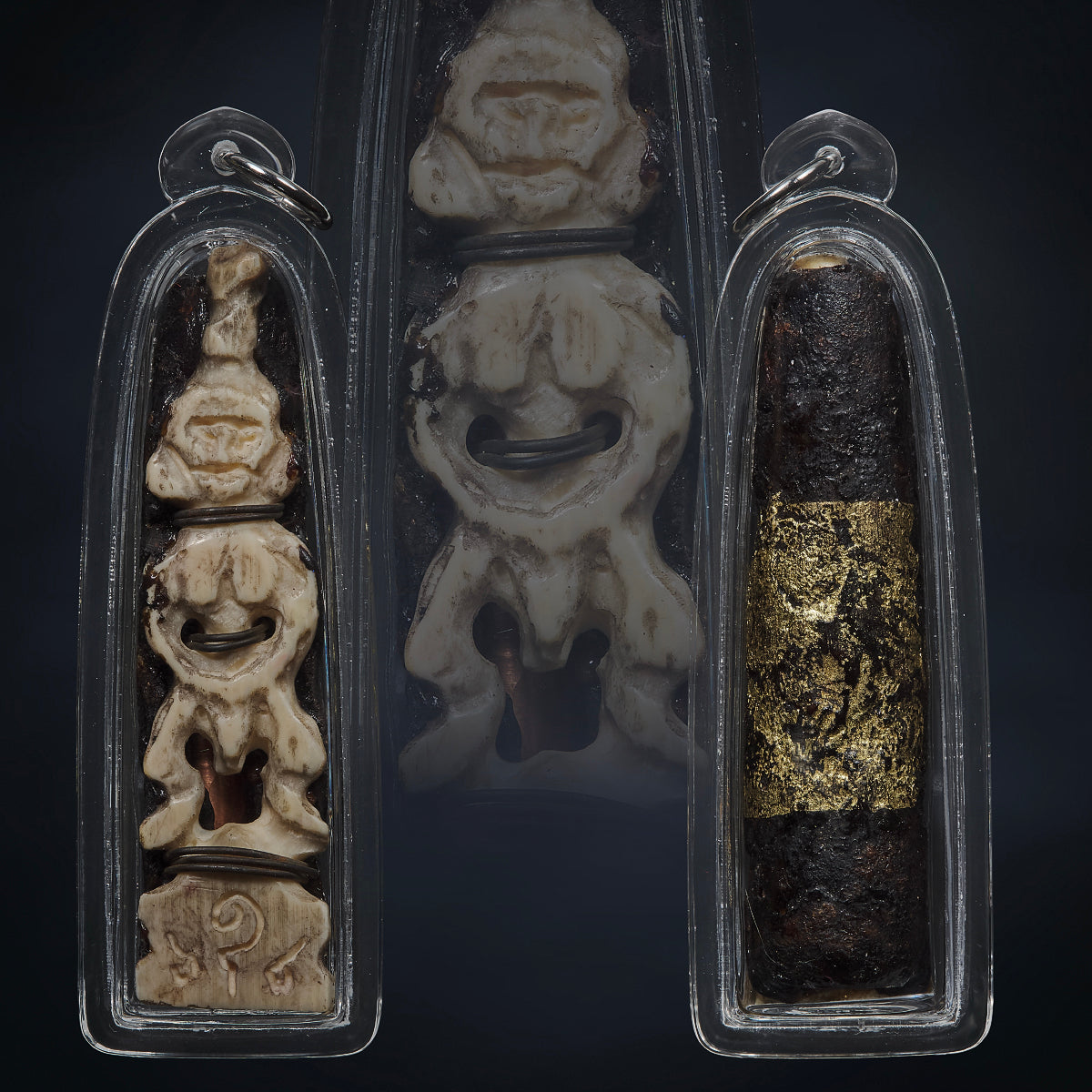
The Pong Ngan Jinn Tarkrut of Por Sala Tan is one of the more unusual Northern Burmese-influenced creations connected to old animist and Weizza traditions surrounding spirit liberation and companionship. Within these older wiccha systems, certain entities are not invoked for destruction or fear, but instead harmonised and housed within sacred mediums so their energies may continue to interact with the human world through attraction, persuasion, companionship, and worldly assistance.
This particular piece was created in the avatar of “Pong Ngan,” a flirtatious jinn spirit associated with maha sanaeh, social magnetism, emotional longing, and interpersonal pull. The piece combines gaduk chang graden carving work together with a relic-based copper tarkrut wrapped using tidjai relics and old sacred binding methods. The resulting energy expression is highly barang in nature — intimate, socially responsive, and especially suited for those seeking stronger personal presence in modern life.
Historical Background
Por Sala Tan was deeply exposed to Burmese borderland practices throughout his life in the North. During the earlier decades when movement between Fang, Tachilek, Shan territories, and surrounding mountain regions remained fluid, many local mystics exchanged ritual methods freely between Lanna, Burmese Weizza practitioners, hill tribe shamans, and older Austronesian animist traditions.
Among these practices was the concept of spirit liberation through containment mediums. Similar forms can still be observed today across parts of Malaysia, Indonesia, and the Philippines, where wandering entities or wandering energies are invited into ritual objects through mantra, smoke offerings, oils, relic wrapping, and yantra binding. The intention was not domination, but symbiosis — allowing the spirit to continue accumulating merit and interaction through assisting a living keeper.
Por Sala Tan rarely spoke openly about these rites to outsiders. Most were taught privately and only performed in extremely small numbers for close students, businessmen, traders, or individuals seeking assistance in social and emotional matters.
The Pong Ngan lineage specifically was associated with attraction, flirtation, emotional recall, and interpersonal fascination. Older practitioners believed that certain entities naturally possessed stronger understanding of human desire and attachment, making them highly effective in matters of romance, negotiation, nightlife, sales, and entertainment environments.
Origins of the Material
The body of this piece was carved from gaduk chang graden, a material long respected within Northern and Burmese systems for attraction-oriented wiccha. Pieces created from such materials were traditionally reserved for maha sanaeh and social magnetism due to the naturally “warm” and responsive energetic character believed to reside within the relic.
The attached tarkrut was hand-rolled in copper and inscribed with advanced sanaeh yantra associated with longing, emotional fixation, and repeated remembrance. Por Sala Tan viewed copper as particularly responsive for attraction-based rites because of its conductive and “living” energetic nature during mantra charging.
Wrapped within the tarkrut are tidjai relic components gathered and prepared through older barang methods. These materials were selected specifically to harmonise with the Pong Ngan entity expression, allowing the piece to carry a softer but deeply lingering social influence.
The final binding was completed through smoke, oils, mantra recitation, and breath empowerment before sealing the piece into wearable form.
Ritual
The empowerment ritual followed a Burmese-style liberation process adapted into Por Sala Tan’s own Northern framework. The spirit avatar of Pong Ngan was invoked through repetitive sanaeh chanting while the tarkrut was continuously heated over incense smoke and herbal resins.
Por Sala Tan would often meditate upon the emotional nature of human attachment during these ceremonies. He believed true sanaeh did not come from outward beauty alone, but from becoming emotionally unforgettable to others.
The mantra work focused heavily on “returning thought.” In older language, this referred to causing others to repeatedly think about, remember, or desire interaction with the wearer even after separation.
The tidjai relic wrapping was then added last, functioning as the emotional anchor for the entire piece.
Blessings and Effects
The primary strength of this Pong Ngan Jinn Tarkrut lies in unmistakable maha sanaeh. Wearers often describe situations where conversations continue naturally, people become unusually warm or attentive, or individuals unexpectedly reappear wanting further interaction.
A key aspect of this wiccha is emotional recall. The energy focuses less on brief attraction and more on lingering presence — where after meeting the wearer, others continue thinking about them long after the interaction ends.
This makes the piece especially suited for:
Business owners dealing with repeat clientele.
Sales environments where rapport determines closing ability.
Nightlife and hospitality industries.
Individuals seeking stronger romantic magnetism.
People who naturally appear too quiet, emotionally unreadable, or socially forgettable.
Por Sala Tan also believed Pong Ngan energy worked strongly through eye contact, speech rhythm, and physical presence. Over time, wearers often become more socially fluid and naturally engaging without forcing behaviour.
Modern Application
In modern settings, this piece performs exceptionally well in client-facing environments. Many businessmen in Thailand quietly carried similar sanaeh pieces during negotiations, dinners, karaoke sessions, nightlife meetings, and trading environments where relationships mattered more than formal presentations.
I personally noticed with Por Sala Tan’s sanaeh pieces that interactions tend to become unusually “sticky.” Conversations extend longer than expected, follow-up messages appear more frequently, and people often display stronger emotional curiosity after only brief encounters.
In sales environments especially, clients may become significantly easier to retain because the wearer leaves a stronger emotional impression. In social life, the energy creates familiarity very quickly, making interactions feel less distant or guarded.
This is also one of the reasons many older traders and brokers preferred barang-oriented sanaeh items over purely wealth-focused pieces. They understood that relationships themselves often become the source of opportunities.
Physical Details
The piece measures approximately 2–3 inches and is suitable for bag carry, pocket use, or altar placement.
The main body is carved from gaduk chang graden with openwork ritual carving intended to allow freer energetic movement throughout the medium. The attached copper tarkrut contains hand-inscribed sanaeh yantra and is wrapped with tidjai relic material before final sealing.
The overall structure reflects older Northern barang aesthetics — compact, personal, and highly ritualistic in construction.
Recommended Pairing
This Pong Ngan Jinn Tarkrut pairs especially well with baramee-oriented items. While the Pong Ngan energy amplifies attraction, familiarity, and emotional pull, pairing it with strong authority or status-based amulets creates a more complete social presence.
Por Sala Tan himself often balanced sanaeh items with baramee pieces so the wearer would not only attract attention, but also command lasting respect and influence once interactions began.
-
Free Shipping for Singapore| $15 Worldwide | $100 USA All products