
OOBThaiAmulets
Por Sala Tan
Por Sala Tan
Couldn't load pickup availability
PST01
Summary
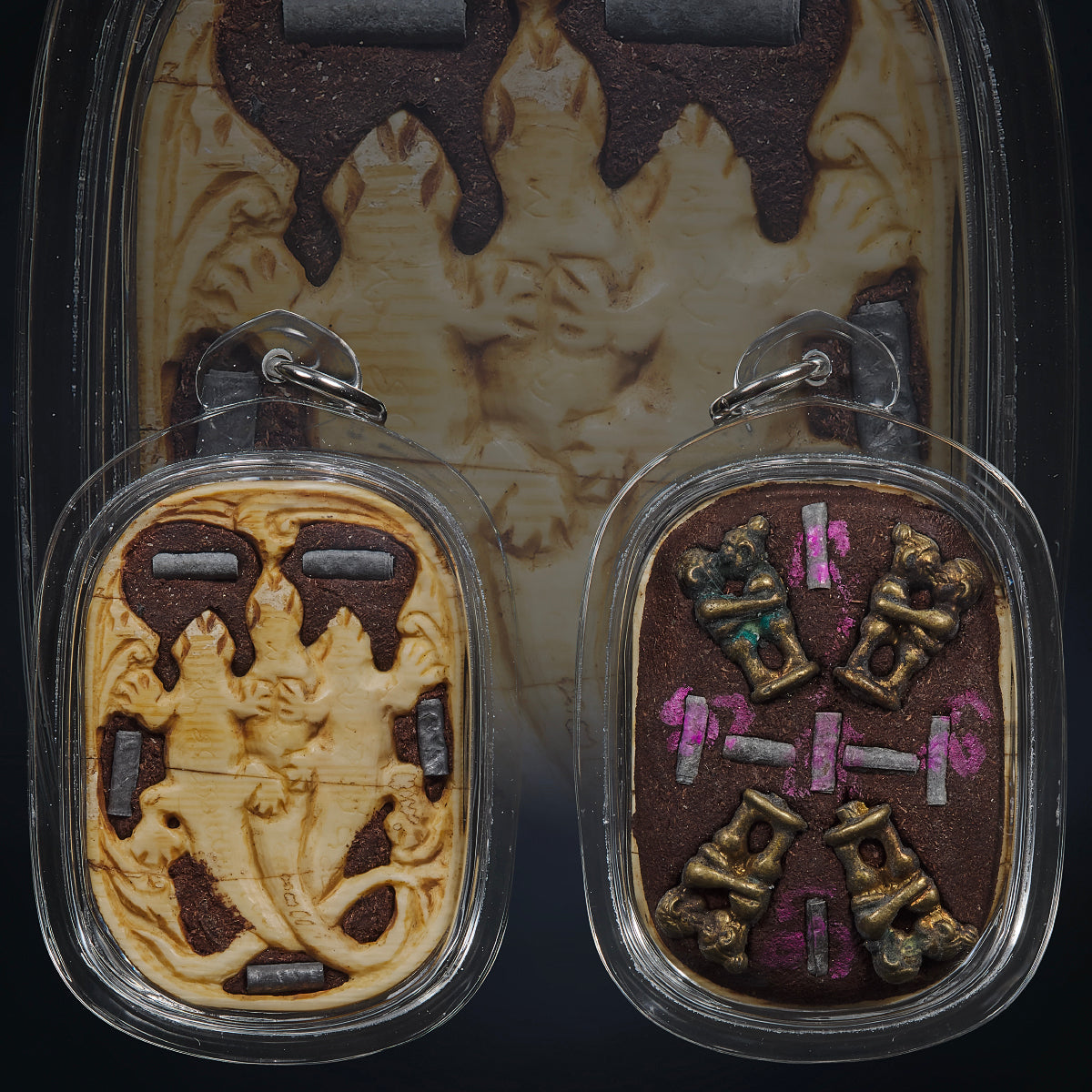
Among the many creature-based wiccha found across Thailand, the Jing Jok remains one of the most culturally recognised and actively used forms of maha sanaeh and fortune-attracting sorcery. The gecko is deeply tied to old village animism, omens, household spirits, and the unseen movements of luck. Long before formal temple systems became dominant, villagers already viewed the call of the jing jok as a direct sign from the spirit world. Its voice was believed to announce opportunity, danger, visitors, romance, money, or shifts in fate depending on the timing and direction of the call.
Por Sala Tan’s jing jok pieces followed this older local village-style current of wiccha. These were not ceremonial temple-market amulets made for mass release, but functional charms rooted in the practical folk beliefs of Northern Thailand. The focus was always real-world usage — attraction, social favour, gambling luck, customer flow, negotiation, and protection from hostile intentions or spiritual disturbances.
Historical Background
The jing jok occupies a unique place in Thai mystical culture because it exists both inside daily life and spiritual belief simultaneously. Unlike larger mythical creatures such as nagas or singhas which belong more to ceremonial Buddhism or royal symbolism, the gecko was something villagers encountered constantly inside homes, farms, forests, and shops. Its presence became associated with messages from the unseen world.
In older Thai households, the call of the jing jok was rarely ignored. Elders would immediately pause conversations to interpret the direction and timing of its cry. A call heard when leaving home was viewed as especially important. If the sound came from the front or right side, the journey ahead was believed to carry smooth dealings, successful negotiations, profitable trades, or romantic encounters. Calls from behind or the left side were often treated as warnings to remain cautious.
Over generations these beliefs became integrated into local sorcery systems. Masters began invoking the energetic nature of the jing jok into charms and yantras focused on attraction, social manipulation, fortune recovery, and business success. In many regions, especially among gamblers and travelling traders, jing jok charms became pocket items carried quietly for confidence and luck.
Origins of the Wiccha
Por Sala Tan learned many local village methods from older Northern practitioners, travelling mystics, and border-region teachers during a period where folk sorcery still survived openly in mountain communities. The jing jok wiccha belonged to this category of practical household magic.
The foundation of the wiccha is based on the gecko’s natural behaviour. The creature survives through stealth, timing, patience, and attraction. It clings onto surfaces effortlessly, appears suddenly, and moves with unusual calmness even in dangerous situations. Old masters interpreted these traits spiritually. The jing jok became symbolic of someone who could “stick” to opportunities, draw attention naturally, survive hostile environments, and move unseen through conflict.
Por Sala Tan often focused heavily on practical blessings tied to human interaction. His jing jok pieces were commonly made for those involved in sales, nightlife businesses, entertainment, gambling environments, travelling work, or careers dependent on social favour and persuasion. The wiccha was considered especially useful for people whose fortunes fluctuated heavily or whose personal charm was weak despite capability.
Some pieces also carried anti-black magic functions. In village belief, the jing jok was naturally resistant to hostile sorcery because of its sensitivity to spiritual disturbances. Its sudden cries at night were often believed to signal unseen entities or incoming negative energy around the home.
Ritual and Consecration
The consecration methods for Por Sala Tan’s jing jok items followed local Thai folk ritual systems rather than large formal Buddhist ceremonies. Chanting was typically performed in quieter settings with repeated invocation focused on attraction, luck replenishment, and social influence.
Certain pieces were empowered alongside gambling oils, metta powders, or small tarkruts used for negotiation and customer attraction. The intention was never purely romantic. In Thai metaphysics, maha sanaeh extends beyond physical attraction into influence, memorability, persuasion, and the ability to soften human interaction.
Older practitioners believed the jing jok spirit current worked especially well for environments involving frequent human traffic — shops, trading spaces, nightlife venues, entertainment businesses, markets, and social gatherings.
Blessings and Effects
The strongest reputation of jing jok wiccha remains maha sanaeh and metta maha niyom. Wearers often seek these charms to improve how others respond to them naturally. Conversations become smoother, people become more approachable, negotiations soften, and opportunities appear with less resistance.
Business owners frequently carried jing jok charms to attract customer flow and repeat buyers. Gamblers and traders historically favoured them for timing and intuition. The belief was that the jing jok helped the wearer “sense” opportunities before others noticed them.
Another commonly discussed aspect is fortune recovery. In Thai folk belief, some people naturally leak luck through bad timing, poor encounters, or hostile spiritual influence. Jing jok wiccha was used to reverse stagnation and restore movement to one’s fate.
Protective aspects also exist within the lineage. The gecko’s alertness and sensitivity became associated with warning functions against danger, deceit, jealousy, and sorcery. Some villagers believed repeated gecko calls around the home indicated spiritual disturbances before they fully manifested.
Modern Application
In modern settings, jing jok wiccha remains surprisingly relevant because its functions align closely with social and business environments. Salespeople, entrepreneurs, nightlife workers, influencers, property agents, and business owners often gravitate toward these blessings because success today still depends heavily on attraction, memorability, timing, and human interaction.
I personally noticed many older Thai businessmen keeping jing jok-related items quietly inside sling bags, drawers, or below waist level instead of openly displaying them. The belief was that these charms worked best when carried naturally as part of daily movement.
During my years operating at Golden Mile, I also noticed many customers involved in nightlife, entertainment, and sales environments specifically asking for jing jok items because they felt the energy helped with customer interactions and social confidence. The effects people described were rarely dramatic overnight stories. More commonly, they spoke about smoother conversations, easier networking, increased invitations, stronger customer retention, and periods where luck seemed to “flow” again after stagnation.
Folklore and Omens
Thai folklore surrounding the jing jok remains deeply embedded even today. Hearing the gecko call before leaving home is still considered auspicious by many older Thais. Multiple consecutive calls are traditionally viewed as confirmation that positive news, visitors, or opportunities are approaching.
The direction of the sound matters greatly in village interpretation. Calls from the front suggest progress and success. Calls from behind encourage caution and patience. A gecko falling onto the body is also interpreted differently depending on location, with the right hand traditionally linked to gains and opportunities.
These beliefs may sound simple on the surface, but in Thai culture they reflect an older worldview where nature, spirits, timing, and daily life were all interconnected.
Usage
Por Sala Tan advised that jing jok items are best carried below the waist, usually inside a pocket, pouch, sling bag, or placed discreetly inside a shop or office. Daily offerings were generally unnecessary. The relationship with the wiccha was intended to remain practical and integrated naturally into everyday life.
Many older practitioners believed consistency mattered more than ritual complexity. The charm becomes part of the wearer’s daily movement, gradually harmonising with their personal fortune, speech, social interactions, and opportunities over time.
-
Free Shipping for Singapore| $15 Worldwide | $60 USA For Items Below $350