PST03
Summary
Tiger-on-the-hill amulets by Por Sala Tan were traditionally created for amnaj, authority, decisiveness, and strengthening personal presence. Within the Northern wiccha traditions of Fang, the tiger was never viewed purely as a symbol of aggression. It represented command, territorial confidence, leadership, and the ability to stand firm without hesitation.
These pieces became especially popular among individuals who naturally spoke softly, avoided confrontation, struggled to close deals, or found themselves constantly overshadowed in business or relationships. Many owners sought these amulets not because they lacked kindness, but because they needed stronger projection, sharper presence, and the confidence to push forward at important moments in life.
Por Sala Tan often explained that metta alone is not always enough. In many real-world situations, success also depends on timing, decisiveness, and the ability to hold psychological weight in front of others.
Historical Background
The tiger-on-the-hill format emerged from older Northern mountain traditions connected to hunters, traders, caravan leaders, and village protectors operating along the Thailand–Burma border regions. Within these communities, the image of a tiger seated above elevated ground symbolized dominance over territory, command over fear, and control over surrounding influences.
Por Sala Tan adapted this symbolism into wearable amulets intended for modern life.
Instead of creating pieces purely for kongkrapan or protection, he focused heavily on authority cultivation. Many of his followers during the later years were businessmen, transport operators, salespeople, market traders, and individuals working in highly competitive environments. Over time, these tiger pieces became known among close disciples as practical “confidence amplifiers.”
I personally noticed this pattern repeatedly among older collectors from Fang. Many were not naturally loud or intimidating people. Yet when wearing these tiger pieces, their speech became firmer, negotiations became smoother, and people listened more attentively when they spoke.
The effect was subtle but noticeable.
Origins of the Materials
Most tiger-on-the-hill carvings by Por Sala Tan were hand-carved from gaduk chamut or gaduk suer materials collected and preserved through older ritual networks tied to Northern Thailand and nearby border regions.
These materials were selected specifically for their energetic associations with survival instinct, territorial authority, instinctive dominance, and anti-backstabber properties. Within older mountain traditions, such energies were highly valued by individuals working in uncertain environments where betrayal, hidden jealousy, or social manipulation were common.
The rear section of many pieces contains mountain soil combined with takruts inserted beneath the carving. The mountain soil acted as a grounding medium, stabilizing the fiercer energetic qualities of the tiger while harmonizing the amulet with the owner’s personal energy field.
Por Sala Tan believed grounding was extremely important for authority-based items. Without proper balance, stronger energies could become unstable or overly aggressive in expression.
Ritual
The consecration process followed a fire ritual lineage transmitted through Lersi Ser Ming Pai.
Fire rituals within this wiccha system were used to awaken dormant qualities within the materials while amplifying courage, decisiveness, and active energy projection. During carving sessions, Por Sala Tan would continuously chant mantras while shaping the tiger by hand, embedding intention directly into the physical formation of the piece itself.
This was one of the defining characteristics of his work.
The carving process was never treated as separate from the blessing process. Every cut, every shaping movement, and every insertion formed part of the ritual activation. Followers who watched him work often described the atmosphere becoming unusually silent and focused during these sessions.
Many of the older tiger pieces carry extremely strong hand-energy because of this direct carving method.
Blessings and Effects
These tiger-on-the-hill pieces are strongly associated with amnaj, leadership projection, courage, anti-backstabber protection, and social authority.
For timid individuals, the effects are often experienced as increased decisiveness and reduced hesitation. Owners commonly report becoming more direct in speech, more comfortable asserting boundaries, and more willing to take initiative during important moments.
In business settings, this can translate into stronger closing ability.
Sometimes a sale only requires one final push, one confident recommendation, or one moment of certainty. Many people lose opportunities not because the product or service is weak, but because hesitation is felt by the other party. These tiger pieces were traditionally worn to strengthen that psychological edge.
The same applies socially.
Por Sala Tan frequently observed that overly soft energy could sometimes cause others to overlook or underestimate a person. In attraction dynamics, confidence and grounded presence often shape interaction more strongly than appearance alone. Owners of these pieces often sought stronger masculine projection, firmer communication, and more noticeable personal gravity.
For female wearers, the effect was usually described differently. Instead of aggression, it manifested as stronger presence, clearer boundaries, and greater confidence when dealing with demanding personalities or competitive environments.
Modern Application
Today, these pieces remain especially suitable for entrepreneurs, salespeople, managers, negotiators, performers, traders, content creators, and individuals working in high-pressure environments where confidence directly affects outcomes.
The smaller sizing also makes them practical for modern daily wear. Most pieces range from approximately 2 cm to 1 inch and can easily be kept in the pocket, bag, or carried discreetly close to the body.
Many owners prefer carrying them during important meetings, negotiations, presentations, or emotionally difficult conversations where calm authority is needed.
I personally find that these pieces pair especially well with situations requiring initiative. The energy tends to feel immediate and active, particularly during periods where motivation, assertiveness, or confidence have become stagnant.
Physical Details
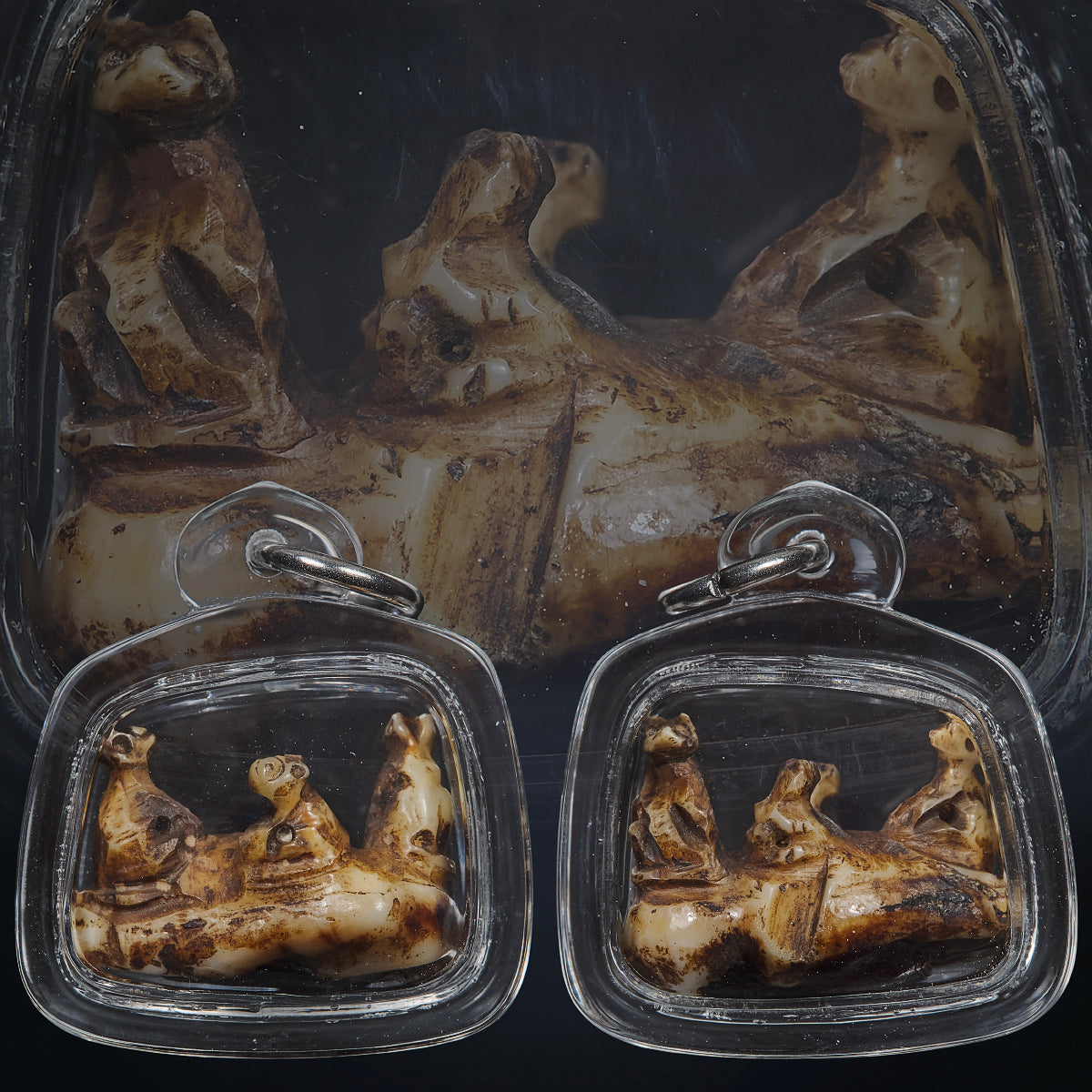
These tiger-on-the-hill amulets are individually hand-carved by Por Sala Tan and typically measure between 2 cm and 1 inch in size.
Most examples contain carved tiger imagery positioned above elevated terrain symbolism representing territorial command and psychological dominance. Internally, the pieces are commonly reinforced with mountain soil and takruts inserted beneath the carving structure to stabilize and harmonize the energy flow.
Because every piece was hand-carved while mantras were continuously recited, no two examples are ever fully identical.
Each carving carries its own expression, energy profile, and ritual character.
Recommended Pairing
These tiger pieces pair extremely well with metta items, salika pieces, or baramee-oriented Somdej amulets. The tiger provides assertiveness and command presence, while supporting pieces soften and refine the social projection around the wearer.
Among older disciples, this combination was commonly used for business, leadership roles, negotiations, and relationship dynamics where both authority and receptiveness were needed simultaneously.