
OOBThaiAmulets
Por Sala Tan
Por Sala Tan
Couldn't load pickup availability
PST10
Bo Min Gaung
Por Sala Tan
2 Inches
Mainstream Artifact
Encased in silver casing
━━━━━━━━━━━━━━━━━━━━━━━━━━━━━━━━
Sacred Craftsmanship
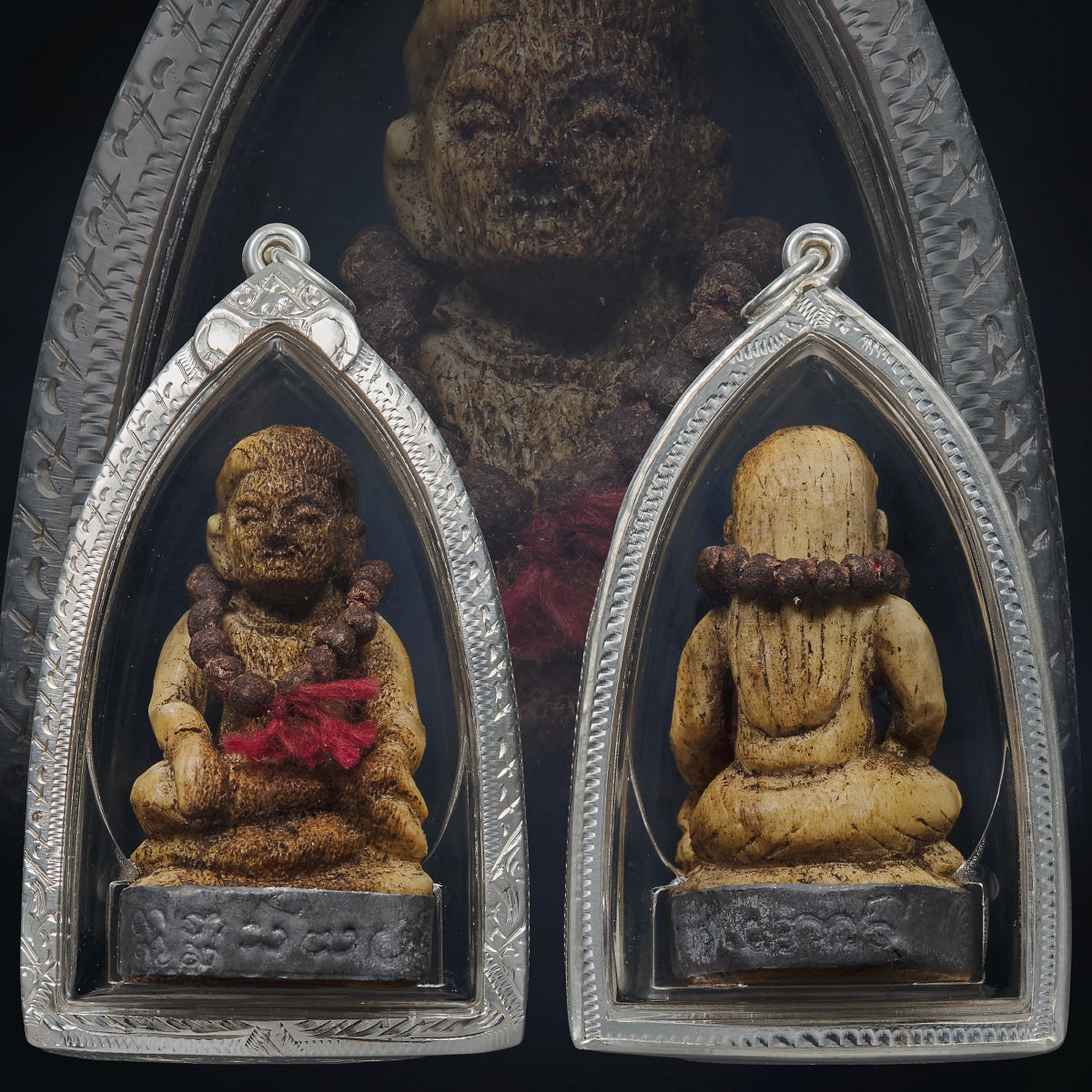
This unusual Bo Min Gaung was individually hand-carved from Graduk Wa Tanoo struck by Far Par (lightning), a material particularly valued by Por Sala Tan for specialised sacred creations.
The figure represents Bo Min Gaung, one of Myanmar's most revered Weizza masters, closely associated with Mount Popa, spiritual protection, wish-fulfilment and the preservation of Buddhist teachings.
Each artifact is individually handmade from carefully prepared sacred materials, so natural variations in texture, colour and form make every piece unique.
Exact piece to be given
━━━━━━━━━━━━━━━━━━━━━━━━━━━━━━━━
Personal Experiences Shared by Luksits
This particular Bo Min Gaung was obtained directly from Ac Lek, the son and disciple of Por Sala Tan, who continues to practise within his father's Northern Thai esoteric tradition.
Among followers familiar with Burmese Weizza practice, Bo Min Gaung is particularly respected for guidance when making important requests, protection during difficult circumstances and assistance in overcoming obstacles affecting livelihood.
Some devotees describe making sincere requests before Bo Min Gaung and subsequently encountering unexpected opportunities, useful introductions or solutions to longstanding difficulties.
Others associate their devotion with greater confidence, clearer judgement and reassurance when facing uncertain circumstances.
For practitioners of Wicha, the combination of Bo Min Gaung, Jindamanee and Mount Popa soil carries additional significance, representing the pursuit of sacred knowledge and the gradual cultivation of Baramee.
For collectors familiar with Por Sala Tan's work, the direct provenance through Ac Lek further strengthens the piece's connection with Por Sala Tan's family and practitioner lineage.
━━━━━━━━━━━━━━━━━━━━━━━━━━━━━━━━
Summary
An uncommon Bo Min Gaung carved from lightning-struck Graduk Wa Tanoo, incorporating Jindamanee beads, sacred Burmese soil, embedded Takruts and handwritten Yant.
The inclusion of soil personally collected by Por Sala Tan from Mount Popa and other auspicious Burmese locations is particularly meaningful, as Mount Popa is closely associated with Bo Min Gaung's life and spiritual reputation.
The artifact reflects the relationship between Burmese Weizza practice and Northern Thai Wicha, combining traditional materials with the ritual methods of Por Sala Tan.
Its principal traditional qualities centre upon wish-fulfilment, opening opportunities, protection, livelihood, wisdom and cultivation of Baramee.
━━━━━━━━━━━━━━━━━━━━━━━━━━━━━━━━
Historical Background
Bo Min Gaung – The Burmese Weizza Master
Bo Min Gaung (c. 1880–1952) is among the most widely revered Weizza figures of modern Myanmar.
Closely associated with Mount Popa, he is remembered as an accomplished spiritual practitioner devoted to meditation, esoteric knowledge and the protection of Buddhism.
Within Burmese devotional tradition, a Weizza is a practitioner believed to have developed extraordinary spiritual accomplishments through meditation, mantra, alchemy and disciplined religious practice.
Bo Min Gaung became particularly respected for his reputation as a protector of the Buddhist Sāsana, the teachings and religious tradition of Buddhism.
Devotional accounts attribute numerous extraordinary experiences to him, including appearances in dreams, spiritual guidance and assistance during difficult circumstances. These accounts belong primarily to Burmese religious tradition rather than independently established historical events.
His image remains an important devotional presence in Myanmar, particularly among followers seeking protection, wisdom and favourable circumstances.
The Connection Between Bo Min Gaung and Bobo Aung
Bo Min Gaung and Bobo Aung are two of the most recognised figures within Burmese Weizza tradition.
Although they belong to different historical periods, both are revered for their association with sacred knowledge, extraordinary spiritual attainment and the protection of Buddhism.
Bobo Aung is remembered as an earlier Weizza master, strongly associated with alchemical knowledge, spiritual accomplishment and wish-fulfilment.
Bo Min Gaung, belonging to a much later period, became especially prominent through his association with Mount Popa and his reputation as a compassionate spiritual protector.
Within Burmese devotional culture, the two are frequently regarded as belonging to the same broader spiritual tradition, with Bo Min Gaung sometimes described as a later successor to the Weizza path represented by Bobo Aung.
Their connection is primarily one of shared spiritual tradition.
Both figures occupy an important place within Myanmar's esoteric religious world, where meditation, mantra, sacred diagrams and spiritual discipline are practised alongside Buddhist devotion.
For practitioners, their images represent more than miraculous assistance. They symbolise the pursuit of wisdom, spiritual accomplishment, protection of the Sāsana and the responsible cultivation of sacred knowledge.
Mount Popa and Burmese Esoteric Tradition
Mount Popa occupies an important position within Burmese religious and folk tradition.
The mountain and surrounding region have long been associated with meditation practitioners, hermits, nat traditions and Burmese esoteric practice.
Its particular association with Bo Min Gaung makes the soil collected by Por Sala Tan especially meaningful within the construction of this artifact.
By incorporating soil from Mount Popa, Por Sala Tan established a symbolic and ritual connection between the carved figure and the Burmese spiritual landscape associated with Bo Min Gaung.
━━━━━━━━━━━━━━━━━━━━━━━━━━━━━━━━
Origins of the Materials
The foundation of this artifact is Graduk Wa Tanoo struck by Far Par, or lightning.
Within traditional Southeast Asian esoteric belief, materials affected by lightning are regarded as having encountered an extraordinary natural force and are consequently valued for their associations with protection, authority and ritual strength.
Por Sala Tan retained suitable examples of such materials for specialised sacred creations.
The additional components include:
-
Jindamanee Beads: Traditionally associated with wisdom, auspicious fortune and spiritual accomplishment.
-
Mount Popa Soil: Collected during Por Sala Tan's travels to Burma, connecting the artifact with a location closely associated with Bo Min Gaung.
-
Auspicious Burmese Soil: Gathered from spiritually significant grounds during his journeys.
-
Embedded Takruts: Incorporated beneath the figure as part of the ritual preparation.
-
Handwritten Yant on Lead: Personally inscribed by Por Sala Tan and wrapped around the base to seal the sacred composition.
Together, these materials represent the combination of natural elemental force, Burmese Weizza symbolism and Northern Thai ritual craftsmanship.
━━━━━━━━━━━━━━━━━━━━━━━━━━━━━━━━
Ritual
Following the carving of Bo Min Gaung, the figure underwent additional ceremonial preparation involving a Lersi practitioner closely associated with Por Sala Tan.
The involvement of the Lersi practitioner brought together two traditions concerned with sacred knowledge and spiritual discipline.
Within Thai esoteric culture, the Lersi represents the teacher and transmitter of Wicha.
Within Burmese tradition, the Weizza represents the accomplished practitioner who pursues spiritual development through meditation and specialised religious practices.
Por Sala Tan subsequently prepared the base using soil collected from Mount Popa and other auspicious Burmese locations.
Takruts were embedded beneath the figure, while a sheet of lead bearing his handwritten Yant was wrapped around the bottom.
This served as a ritual seal intended to unify the sacred components.
The completed artifact underwent mantra invocation and consecration dedicated to Bo Min Gaung, establishing the figure as a devotional focus for prayers, protection and personal intentions.
━━━━━━━━━━━━━━━━━━━━━━━━━━━━━━━━
Blessings and Effects
Within Burmese Weizza tradition, Bo Min Gaung is associated with several principal qualities.
Wish-Fulfilment and Opening Opportunities
Devotees traditionally seek his assistance when making sincere requests, particularly concerning important objectives, difficult circumstances and opportunities for progress.
Wealth and Livelihood
Associated with favourable business circumstances, useful connections, career development and the gradual improvement of financial stability.
Protection and Klaew Klaad
Bo Min Gaung is revered as a spiritual protector, while lightning-struck Graduk Wa Tanoo is traditionally valued for its association with resistance against harmful influences.
Wisdom and Baramee
The Jindamanee necklace and Weizza symbolism emphasise sacred knowledge, clearer judgement, spiritual discipline and the cultivation of personal Baramee.
━━━━━━━━━━━━━━━━━━━━━━━━━━━━━━━━
Modern Application
This Bo Min Gaung may be carried by individuals seeking guidance, improved opportunities and reassurance during important decisions.
For business owners and working professionals, its traditional symbolism is particularly relevant during career transitions, negotiations or periods when progress appears stagnant.
For practitioners of meditation and Wicha, the combination of Bo Min Gaung, Jindamanee and Mount Popa soil provides a meaningful connection with Burmese Weizza traditions and the pursuit of sacred knowledge.
Its symbolism encourages the keeper to combine sincere intention with awareness, discipline and practical action.
━━━━━━━━━━━━━━━━━━━━━━━━━━━━━━━━
Physical Details
An individually hand-carved seated Bo Min Gaung figure made from lightning-struck Graduk Wa Tanoo, displaying natural cream, amber and aged brown tones. The figure wears a distinctive necklace of dark Jindamanee beads secured with red Sai Sin. The reverse shows the seated posture and carved robe details. Beneath the figure is a lead base bearing handwritten sacred Yant, enclosing the prepared Burmese soil and embedded Takruts. The artifact measures approximately 2 inches in height and is protected within a decorative silver-coloured casing.
━━━━━━━━━━━━━━━━━━━━━━━━━━━━━━━━
Recommended Pairing
Bo Min Gaung pairs particularly well with Phra Somdej, Phra Kring or other Baramee-oriented artifacts.
Phra Somdej provides a complementary Buddhist devotional focus, while Phra Kring is traditionally associated with well-being, protection and auspicious circumstances.
For practitioners of Wicha, Lersi or Jindamanee artifacts may be paired with Bo Min Gaung to emphasise wisdom, spiritual discipline and the transmission of sacred knowledge.
A Bobo Aung artifact is another meaningful pairing, bringing together two of Myanmar's most respected Weizza figures.
Within Burmese devotional tradition, their combined symbolism represents wish-fulfilment, protection, spiritual accomplishment and the preservation of Buddhist teachings.
━━━━━━━━━━━━━━━━━━━━━━━━━━━━━━━━
-
Free Shipping for Singapore| $15 Worldwide | $100 USA All products