
OOBThaiAmulets
Por Sala Tan 🔥Hot Deal🔥
Por Sala Tan 🔥Hot Deal🔥
Couldn't load pickup availability
PST10
Phaya Burisat
Por Sala Tan
1.5 Inches
Barang Artifact
━━━━━━━━━━━━━━━━━━━━━━━━━━━━━━━━
Sacred Craftsmanship
The Phaya Burisat is an unusual guardian artifact associated with Por Sala Tan, created from old sacred relics originating near the Thailand–Laos border.
Each artifact is individually handmade from carefully prepared sacred materials, so natural variations in texture, colour and form make every piece unique.
Exact piece to be given
━━━━━━━━━━━━━━━━━━━━━━━━━━━━━━━━
Personal Experiences Shared by Luksits
A Night Security Guard's Experience
One account associated with Phaya Burisat came from a night security guard whose duties involved patrolling a large building compound after dark.
Some corridors were poorly lit, and he often felt uneasy when inspecting the quieter floors alone.
An older colleague eventually passed him a Phaya Burisat to wear during his shifts.
Over time, he described feeling noticeably calmer and more confident while making his rounds.
The building and his responsibilities remained unchanged, but he found himself less troubled by the fear that previously accompanied his night patrols.
━━━━━━━━━━━━━━━━━━━━━━━━━━━━━━━━
Summary
The Phaya Burisat is a distinctive guardian artifact combining old sacred relics from the Thailand–Laos border with Por Sala Tan's traditional Wicha.
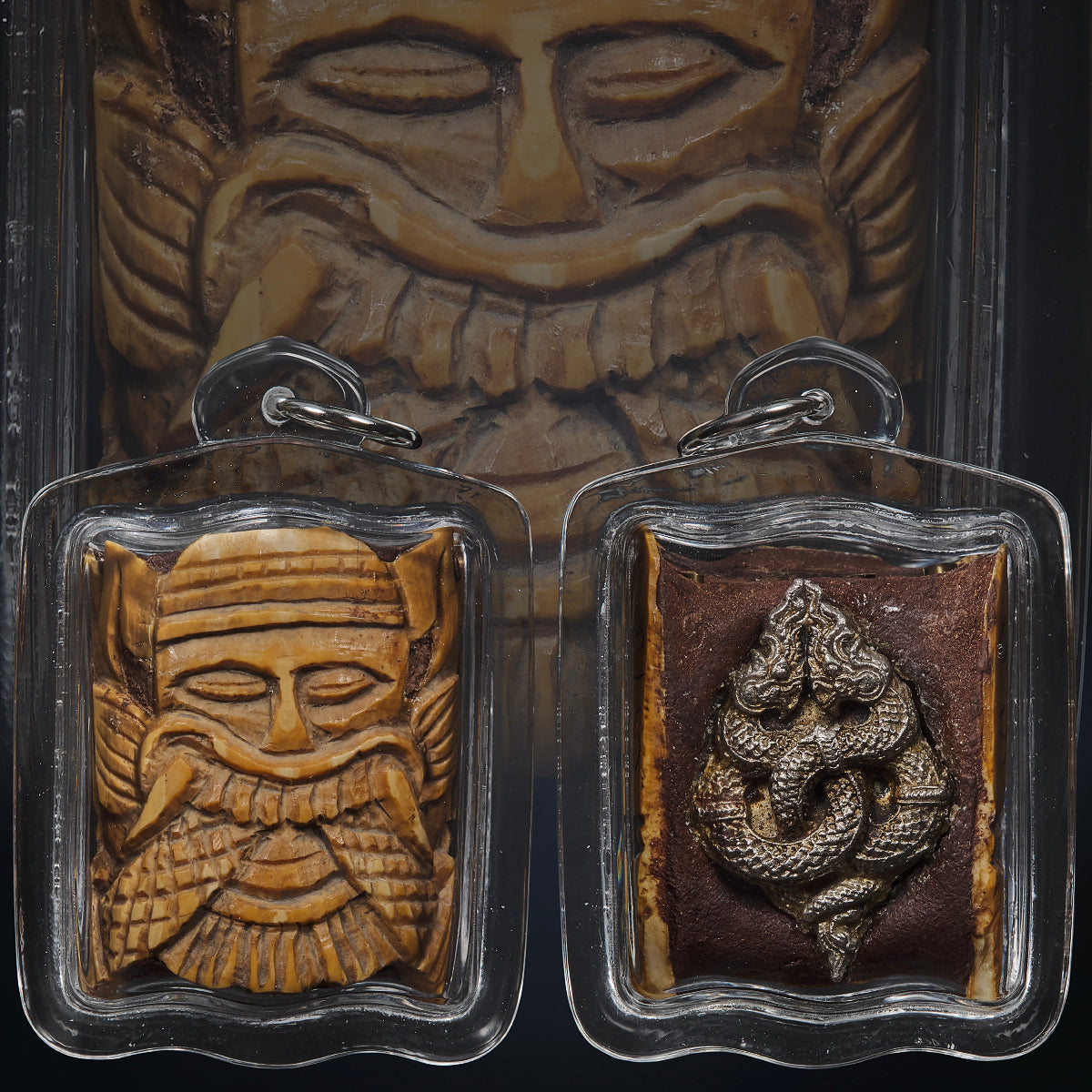
Its most important features are the hand-carved Phaya Burisat image, side inscriptions, embedded Takruts and Buang Nak Giaw on the reverse.
Unlike conventional Metta-oriented artifacts, Phaya Burisat is primarily associated with spiritual protection, authority, courage and the suppression of harmful influences.
The addition of the intertwined Nagas introduces a complementary association with harmony, stability and the safeguarding of favourable circumstances.
Its unusual origins and collaboration between two practitioners make it a particularly interesting example of Por Sala Tan's guardian-oriented work.
━━━━━━━━━━━━━━━━━━━━━━━━━━━━━━━━
Historical Background
Phaya Burisat is a fierce guardian figure found in Thai and regional occult traditions, particularly within beliefs associated with Yak and spirit protection.
In modern Thai devotional accounts, Phaya Burisat is commonly described as a powerful attendant or enforcer serving Tao Wessuwan, the guardian king associated with the northern direction, spiritual authority and wealth.
Phaya Burisat is sometimes referred to as the Ghost Eater, reflecting the traditional belief that he subdues or consumes harmful spirits that disturb people or sacred places.
His fierce appearance symbolises discipline, courage and the ability to confront threatening influences.
Although these descriptions are prominent in modern guardian traditions, the precise relationship between Phaya Burisat and Tao Wessuwan is not uniformly established in classical Buddhist scripture.
Within Por Sala Tan's work, the guardian imagery was adapted through older border-region practices involving sacred relics, Yant and ritual consecration.
━━━━━━━━━━━━━━━━━━━━━━━━━━━━━━━━
Origins of the Materials
The principal material originated from old sacred relics preserved by a practitioner living near the Thailand–Laos border.
The practitioner regarded these relics as spiritually significant after repeatedly experiencing Yak-related imagery during meditation.
Rather than leaving the materials in their original form, he carved them into Phaya Burisat images.
Por Sala Tan subsequently incorporated additional ritual components:
-
Old Sacred Relics: The original materials supplied by the border-region practitioner.
-
Hand-Carved Phaya Burisat: Representing spiritual authority and the suppression of harmful influences.
-
Sacred Yant: Inscribed along the sides by Por Sala Tan.
-
Prepared Sacred Composition: Applied as part of his traditional ritual preparation.
-
Embedded Takruts: Intended to reinforce the artifact's protective qualities.
-
Buang Nak Giaw: The intertwined Naga design attached to the reverse.
━━━━━━━━━━━━━━━━━━━━━━━━━━━━━━━━
Ritual
The preparation of this Phaya Burisat involved two practitioners working through their respective traditions.
The original practitioner first prepared and carved the old relics after associating them with recurring Yak imagery experienced during meditation.
Upon receiving the carvings, Por Sala Tan added his own sacred inscriptions and ritual materials.
The Yant inscriptions and embedded Takruts were intended to strengthen the guardian's protective purpose.
Particular attention was given to the Buang Nak Giaw on the reverse.
Within traditional Thai and Lanna symbolism, the two intertwined Nagas represent connection, protection and the holding together of favourable circumstances.
The final consecration was intended to unite the protective character of Phaya Burisat with the original relics and the complementary symbolism of the Nagas.
This completed the artifact as a guardian piece associated with both Maha Prap (subduing harmful influences) and the preservation of stability.
━━━━━━━━━━━━━━━━━━━━━━━━━━━━━━━━
Blessings and Effects
Phaya Burisat is traditionally associated with the following qualities:
-
Maha Prap: Subduing harmful spiritual influences and perceived hostile forces.
-
Klaew Klaad: Spiritual protection against danger and misfortune.
-
Amnaj: Authority, courage and commanding personal presence.
-
Anti-Khun Sai: Traditionally believed to provide protection against harmful occult practices.
-
Baramee: Confidence, personal dignity and spiritual strength.
-
Khum Sap: Safeguarding wealth, property and livelihood.
-
Buang Nak Giaw: Harmony, connection and the preservation of favourable circumstances.
The combination of Phaya Burisat and the intertwined Nagas is traditionally understood as balancing strong protective authority with stability and harmony.
━━━━━━━━━━━━━━━━━━━━━━━━━━━━━━━━
Modern Application
Phaya Burisat is traditionally carried by individuals seeking reassurance and confidence when working in unfamiliar or demanding environments.
It may appeal particularly to security personnel, night-shift workers, business owners and individuals who frequently travel alone.
The guardian's symbolism also makes it meaningful for those who value courage, personal boundaries and protection.
The Buang Nak Giaw on the reverse adds a traditional association with maintaining harmonious relationships and safeguarding existing opportunities.
━━━━━━━━━━━━━━━━━━━━━━━━━━━━━━━━
Physical Details
A rectangular, hand-carved Phaya Burisat featuring a prominent guardian face with closed eyes, an elaborate headdress, pronounced moustache and detailed facial ornamentation. The carving displays warm amber-brown tones with darker natural markings and individually worked details. The reverse is covered with a dark sacred composition and carries a raised metallic Buang Nak Giaw, depicting two intertwined Nagas. Additional Yant inscriptions and Takruts are associated with its ritual preparation. The artifact is protected within a clear casing with a metal suspension ring, allowing both sides to remain visible.
━━━━━━━━━━━━━━━━━━━━━━━━━━━━━━━━
Recommended Pairing
Phaya Burisat pairs particularly well with Buddhist Baramee and Metta-oriented artifacts.
For those who prefer Por Sala Tan's creations, a Salika or other Metta Maha Niyom artifact may provide a complementary association with goodwill, communication and harmonious relationships.
Alternatively, Tao Wessuwan may be paired with Phaya Burisat because of their traditional connection within Thai guardian beliefs.
This combination is particularly meaningful to followers who appreciate the symbolism of spiritual authority, protection and the safeguarding of livelihood.
━━━━━━━━━━━━━━━━━━━━━━━━━━━━━━━━
-
Free Shipping for Singapore| $15 Worldwide | $100 USA All products