
OOBThaiAmulets
Por Sala Tan
Por Sala Tan
Couldn't load pickup availability
PST10
Phaya Burisat
Por Sala Tan
1.5 Inches
Mainstream Artifact
Encased in silver
━━━━━━━━━━━━━━━━━━━━━━━━━━━━━━━━
Sacred Craftsmanship
This distinctive Phaya Burisat, also known as the Ghost Eater, was individually handcrafted by Por Sala Tan using sacred Graduk Chang Graden, a material traditionally respected within his ritual lineage.
Each artifact is individually handmade from carefully prepared sacred materials. Natural variations in carving, texture, colour and ritual arrangement make every piece unique.
Exact piece given
━━━━━━━━━━━━━━━━━━━━━━━━━━━━━━━━
Personal Experiences Shared by Luksits
Among followers of guardian-related Wicha, Phaya Burisat is traditionally respected for strong spiritual protection, authority and the ability to suppress hostile influences.
Collectors of Por Sala Tan's protective artifacts often describe feeling more composed and confident when facing difficult situations, particularly those involving workplace rivalry, personal disputes or challenging environments.
Some devotees associate guardian amulets with a greater sense of security when travelling, visiting unfamiliar places or working in locations traditionally regarded as spiritually unsettled.
Business owners also value Phaya Burisat for its connection with Tao Wessuwan, believing the guardian helps safeguard property, preserve financial stability and discourage harmful intentions.
━━━━━━━━━━━━━━━━━━━━━━━━━━━━━━━━
Summary
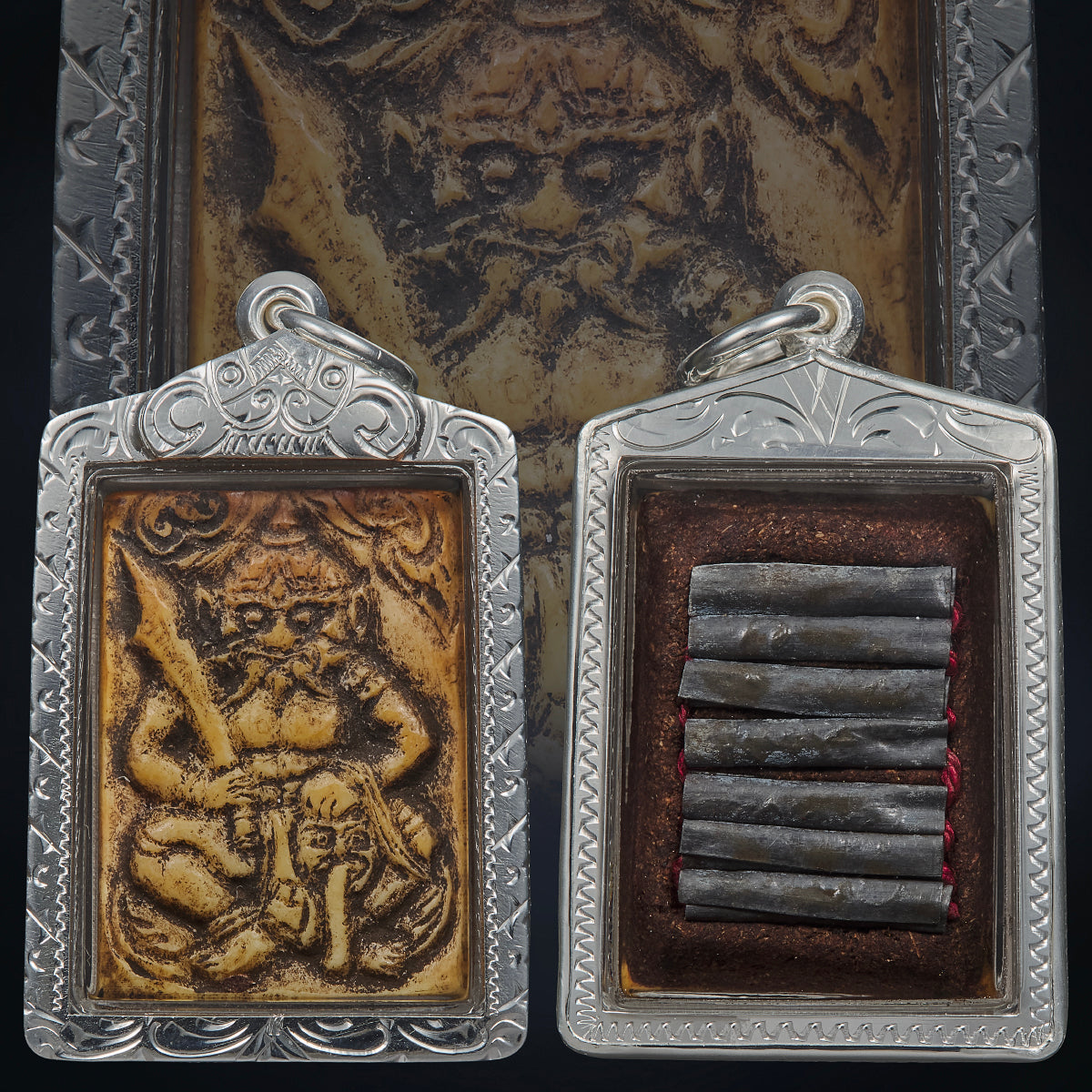
This Phaya Burisat by Por Sala Tan is individually hand-carved from sacred Graduk Chang Graden, depicting the fierce guardian traditionally associated with Tao Wessuwan.
The reverse incorporates seven handwritten takruts bound with red saisin, embedded within a consecrated cemetery soil backing.
Within Lanna and broader Thai occult traditions, Phaya Burisat is regarded as a powerful spiritual enforcer responsible for subduing harmful spirits and maintaining order among supernatural beings.
Its principal associations are protection against black magic, suppression of hostile influences, Maha Amnaj, safeguarding wealth and overcoming obstacles.
━━━━━━━━━━━━━━━━━━━━━━━━━━━━━━━━
Historical Background
Phaya Burisat occupies a distinctive position within Thai guardian folklore, particularly in traditions associated with Tao Wessuwan, one of the Four Great Heavenly Kings.
According to regional occult beliefs, Phaya Burisat serves as a fierce subordinate responsible for controlling unruly spirits and protecting people from supernatural disturbances.
He is commonly known as the Ghost Eater, reflecting the traditional belief that he can capture or consume harmful spirits that threaten the living.
Unlike benevolent figures associated primarily with attraction or prosperity, Phaya Burisat represents discipline, enforcement and protective authority.
His association with Tao Wessuwan also connects him with safeguarding wealth, maintaining household stability and defending sacred places.
━━━━━━━━━━━━━━━━━━━━━━━━━━━━━━━━
Origins of the Materials
The principal image is carved from Graduk Chang Graden, carefully selected and prepared by Por Sala Tan.
This sacred material forms the foundation of the guardian image, preserving its natural grain, colour and distinctive surface characteristics.
The reverse contains seven individually handwritten takruts, secured together with red saisin ceremonial thread.
A backing of consecrated cemetery soil completes the construction, following traditional practices in which sacred earth is incorporated into protective ritual artifacts.
The combination reflects the intended purpose of Phaya Burisat as a guardian associated with spiritual authority and the suppression of harmful influences.
━━━━━━━━━━━━━━━━━━━━━━━━━━━━━━━━
Ritual
Por Sala Tan prepared the sacred material before carving the principal image of Phaya Burisat.
The seven handwritten takruts were subsequently arranged and secured with red saisin, symbolising the unification of their protective intentions.
The consecrated cemetery soil was incorporated into the reverse before the completed artifact underwent blessing according to Por Sala Tan's inherited Wicha.
The ritual preparation centred on Maha Prap, the subduing of hostile forces, together with Maha Amnaj, spiritual protection and the safeguarding of personal fortune.
Within traditional belief, Phaya Burisat's association with Tao Wessuwan reinforces his authority over harmful spirits and negative supernatural influences.
━━━━━━━━━━━━━━━━━━━━━━━━━━━━━━━━
Blessings and Effects
Traditionally, Phaya Burisat is associated with:
-
Maha Prap: Subduing hostile spirits and negative influences.
-
Protection Against Black Magic: Traditionally sought against curses and harmful occult practices.
-
Maha Amnaj: Authority, confidence and commanding presence.
-
Spiritual Protection: Guarding against wandering spirits and perceived supernatural disturbances.
-
Klaew Klaad: Protection from danger and misfortune.
-
Wealth Protection: Safeguarding property, livelihood and financial stability.
-
Obstacle Removal: Encouraging stability during challenging circumstances.
The central emphasis of Phaya Burisat is protection through authority, rather than attraction or personal charm.
━━━━━━━━━━━━━━━━━━━━━━━━━━━━━━━━
Modern Application
Phaya Burisat is particularly suited to individuals seeking a traditional guardian amulet associated with protection and personal authority.
It is commonly carried by business owners, managers, security personnel and individuals working in demanding or competitive environments.
Collectors may also keep the amulet within their homes, offices or vehicles as a symbolic guardian against negative influences and unwanted disturbances.
━━━━━━━━━━━━━━━━━━━━━━━━━━━━━━━━
Physical Details
This rectangular amulet features a hand-carved image of Phaya Burisat seated in a commanding posture, with a fierce expression and distinctive guardian features. The image is carved from Graduk Chang Graden, displaying natural variations in colour and texture. The reverse contains seven handwritten takruts arranged horizontally, bound with red saisin and embedded within a dark backing of consecrated cemetery soil. The completed artifact is enclosed within a decorative silver-coloured protective casing with a metal suspension ring, allowing both sides to remain visible.
━━━━━━━━━━━━━━━━━━━━━━━━━━━━━━━━
Recommended Pairing
Tao Wessuwan: A natural pairing that complements Phaya Burisat's traditional role in spiritual protection, authority and safeguarding wealth.
Phra Rahu: Traditionally associated with overcoming misfortune, neutralising negative influences and navigating difficult periods.
━━━━━━━━━━━━━━━━━━━━━━━━━━━━━━━━
Personal Notes
What distinguishes this Phaya Burisat is its combination of a fierce guardian image with seven handwritten takruts and consecrated cemetery soil.
The principal image reflects the traditional symbolism of Phaya Burisat as a spiritual enforcer, while the seven takruts reinforce the protective intentions of the completed artifact.
Its association with Tao Wessuwan is particularly significant. Within regional belief, Phaya Burisat is not merely a guardian against harmful spirits but also an enforcer responsible for maintaining spiritual order.
Unlike Maha Saneh artifacts intended primarily for attraction and favourable relationships, Phaya Burisat belongs to a protective tradition emphasising Maha Prap, Maha Amnaj and the suppression of hostile influences.
For collectors of Por Sala Tan's creations, this piece represents his approach to guardian-related Wicha, combining sacred carving, handwritten takruts and traditional ritual materials within a single protective artifact.
━━━━━━━━━━━━━━━━━━━━━━━━━━━━━━━━
-
Free Shipping for Singapore| $15 Worldwide | $100 USA All products