
OOBThaiAmulets
Por Sala Tan
Por Sala Tan
Couldn't load pickup availability
PST08
Phra Pirab Mala
Por Sala Tan
Barang Artifact
Sacred Craftsmanship
Each mala was individually handmade from prepared sacred materials. Natural differences in the Graduk Chang beads, inherited relic, carving, patina and surface ageing mean that every surviving example carries its own character.
Personal Experiences Shared by Luksits
These malas were principally made for Por Sala Tan's own luksits, some of whom used them during meditation in forests, mountains and other remote locations.
Practitioners explained that meditation away from the samnak brought a very different set of distractions. Sounds from the forest, unfamiliar surroundings, darkness and the possibility of encounters with wild animals could easily disturb concentration.
Several luksits said that carrying the Phra Pirab Mala gave them a stronger sense of protection and composure, particularly when meditating alone or travelling after dark. Rather than constantly reacting to the surrounding environment, they felt better able to settle their attention and continue their practice.
Outside meditation, other followers spoke of feeling safer when travelling or working at night. Some involved in performance or creative work reported receiving greater recognition.
Rather than being principally a wealth-fetching artifact, prosperity is understood indirectly. When obstacles are reduced, judgement becomes clearer and authority strengthens, followers believe that career and financial opportunities may consequently move more smoothly.
In local context, devotees felt that periods of persistent bad luck or negative influence gradually became less severe.
Summary
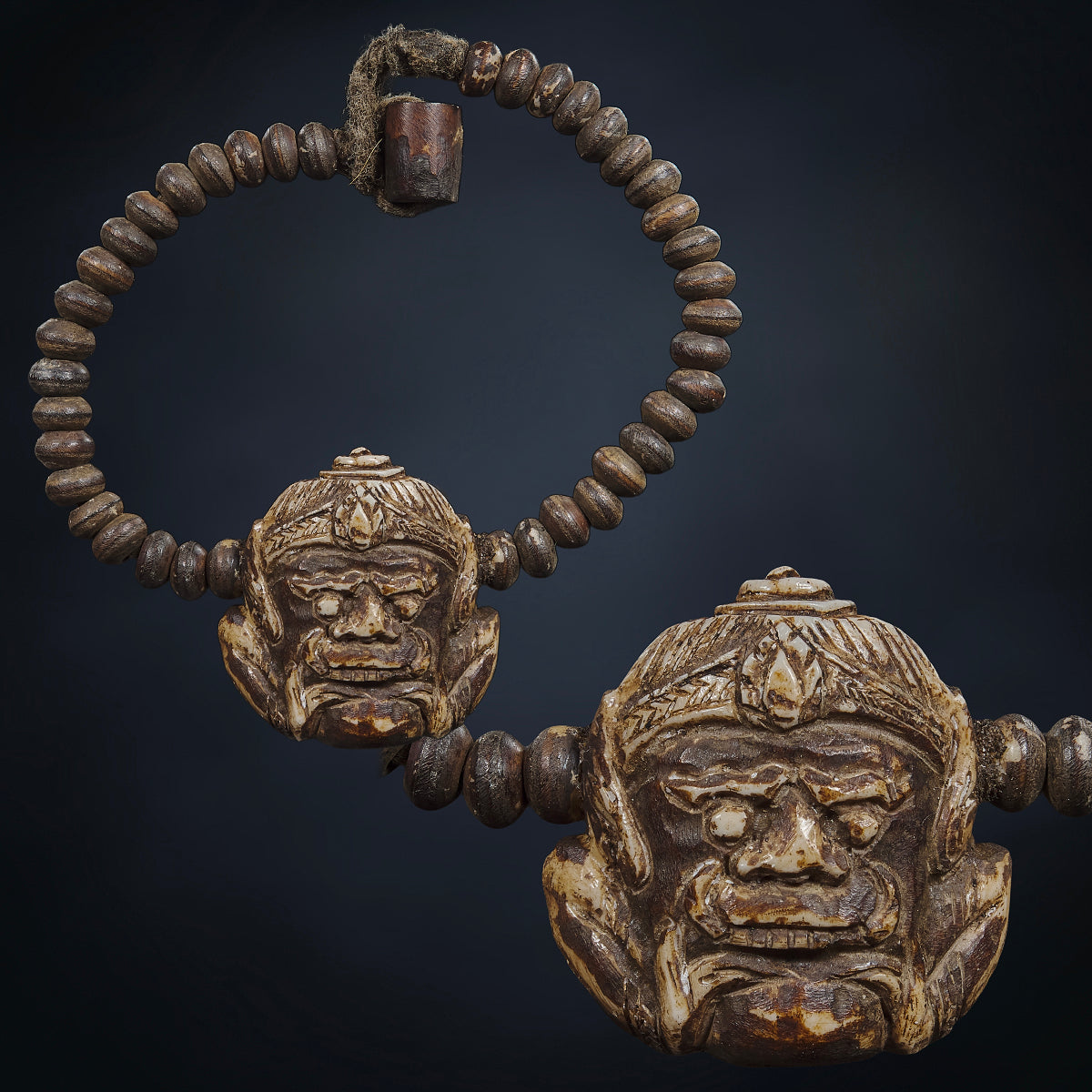
The Phra Pirab Mala combines Graduk Chang, an inherited relic from an Ascended Lersi and the protective symbolism of Phra Pirab within a compact wrist mala originally intended for close luksits.
Its principal traditional qualities concern protection, removal of obstacles, Maha Amnaj, spiritual discipline and Baramee.
For practitioners, its purpose was particularly suited to meditation in isolated surroundings, where calmness, concentration and a sense of protection were important.
In everyday life, the same qualities were applied towards travel, professional authority, creative work and circumstances in which the keeper wished to overcome persistent obstruction or harmful influences.
Historical Background
Phra Pirab occupies an important position within Thai sacred and performing-arts traditions. He is revered as a powerful Kroo, particularly within classical dance, music and ritual performance.
Within the religious interpretation preserved in Thai tradition, Phra Pirab is associated with Bhairava, the fierce manifestation of Shiva. His formidable appearance expresses the power to confront disorder, harmful spirits, danger and destructive forces.
This identity should be distinguished from the similarly named giant figure encountered in traditions surrounding the Ramakien. Similarities in names and visual forms have sometimes caused the two traditions to become confused.
As a sacred teacher, Phra Pirab represents something considerably deeper than ferocity. He embodies discipline, mastery, authority and the ability to bring chaotic forces under control.
For this reason, his presence within a meditation mala is particularly appropriate. The image acts as the commanding centre of the piece, while the continuous strand represents disciplined repetition and uninterrupted practice.
Origins of the Materials
The mala itself is constructed from Graduk Chang, a material traditionally valued by Por Sala Tan for its association with strength, endurance, stability and Baramee.
More significant is the material used for the central Phra Pirab.
According to the lineage history of the piece, the carving was made from an old relic belonging to a highly revered Lersi who had Ascended. Por Sala Tan subsequently carved sacred images from portions of these inherited relics rather than allowing such material to remain unused.
The choice of Phra Pirab reflects the nature of the mala itself: a sacred teacher placed upon material connected with an earlier spiritual practitioner, creating a direct relationship between Kroo, lineage and meditation practice.
Ritual
The mala was prepared as a functional practitioner's object rather than simply an ornamental necklace.
Its Graduk Chang beads provided the repetitive physical structure required for meditation, while the Phra Pirab relic carving established the principal protective and authoritative current.
Within Por Sala Tan's tradition, malas made for close luksits could accompany practitioners into isolated places where ordinary temple surroundings and familiar protections were absent.
Handling the beads during meditation helped establish rhythm and concentration. Phra Pirab served symbolically as the Kroo and guardian at the centre of that practice, particularly against disturbances believed to arise from the surrounding environment or unseen influences.
Blessings and Effects
The principal traditional qualities associated with this Phra Pirab Mala are protection, Maha Amnaj, removal of obstacles and strengthening of spiritual discipline.
Phra Pirab is traditionally approached as a fierce guardian capable of suppressing harmful or inauspicious influences. Within occult belief, this includes disturbances attributed to spirits, hostile workings and persistent negative conditions.
Maha Amnaj concerns authority and commanding presence. For the modern keeper, this may be understood through leadership, professional respect, confidence and the ability to remain composed when dealing with difficult people.
The mala's meditation function adds another dimension: concentration, steadiness and control over distraction.
Rather than being principally a wealth-fetching artifact, prosperity is understood indirectly. When obstacles are reduced, judgement becomes clearer and authority strengthens, followers believe that career and financial opportunities may consequently move more smoothly.
Modern Application
Although originally made with meditation practice in mind, the Phra Pirab Mala translates naturally into modern circumstances.
It may be carried by those travelling frequently, working late at night or entering unfamiliar environments. Executives, business owners and those responsible for others may appreciate its traditional association with Maha Amnaj and disciplined authority.
Artists, musicians, performers and others working within creative disciplines may find particular meaning in Phra Pirab's longstanding position as a revered Kroo of the performing arts.
For meditation practitioners, however, its original purpose remains especially relevant. The mala provides something physical to return the attention towards when external sounds, movement or unease begin to disturb concentration.
It is therefore simultaneously a meditation implement, lineage artifact and protective mala.
Physical Details
A compact wrist mala individually assembled from aged Graduk Chang beads, centred upon a hand-carved Phra Pirab image made from an old relic associated with a revered Ascended Lersi. The materials show natural differences in tone, grain, patina and surface wear arising from their age and handmade preparation. Its scale and circular construction allow the mala to be carried easily or handled directly during meditation.
Recommended Pairing
The Phra Pirab Mala is already structurally complete as a protection, Baramee and authority piece, and no additional artifact is necessary for its principal function.
Where a keeper wishes to develop a more specialised combination, it may be paired with a Metta Maha Niyom or Maha Saneh piece. Phra Pirab provides the firmer foundation of authority and protection, while the accompanying artifact concentrates upon goodwill, attraction and interpersonal response.
For meditation and remote practice, however, the mala may be used on its own, preserving the simplicity and purpose for which Por Sala Tan originally made it.
-
Free Shipping for Singapore| $15 Worldwide | $100 USA All products