
OOBThaiAmulets
Por Sala Tan
Por Sala Tan
Couldn't load pickup availability
PST08
Yoni Tid Jai
Por Sala Tan
B.E. 254x (1997–2006)
3.5cm
Barang Artifact
Sacred Craftsmanship
An exceptionally uncommon Yoni amulet created by Por Sala Tan, combining two highly regarded Barang materials: sacred brass coffin nails and Tid Jai (Sticky Heart) relics.
Each piece was individually prepared using sacred materials, with natural variations in texture, colour and form making every example unique.
The photographs are representative only. A piece will be selected at random, and the item supplied may differ slightly from the exact piece shown in the images.
Personal Experiences Shared by Luksits
Among collectors familiar with Por Sala Tan's early creations, the Yoni Tid Jai has long been regarded as one of his more difficult Barang pieces to encounter.
I personally came across this particular creation only once, during my visit to Por Sala Tan's village in 2014. Even then, examples were rarely seen, with most remaining in the possession of longstanding collectors.
Unlike the Yoni amulets of Ac Bed, which appear more frequently in collecting circles, Por Sala Tan's Yoni Tid Jai was produced in an extremely limited quantity of just 15 pieces.
During that visit, the village was still associated with Por Sala Tan's old spiritual practices and the collectors who had followed his teachings.
For me, this piece represents more than its traditional Saneh properties. It preserves a connection to Por Sala Tan's early Barang practices and a village whose history is gradually disappearing.
Summary
The Yoni Tid Jai is an exceptionally limited Barang amulet created by Por Sala Tan during B.E. 254x, with only 15 pieces reportedly produced.
Its construction combines brass collected from the principal nails of more than 20 coffins, sacred Tid Jai heart relics and three Ma Aa Uu takruts.
Consecrated during the same period as Ac Bed's Yoni amulets, this creation belongs to a particularly specialised branch of Saneh Wicha.
Its principal purpose is Maha Saneh, Metta Maha Niyom, emotional attraction and the strengthening of personal relationships, with the Tid Jai materials traditionally associated with lasting affection and attachment.
Historical Background
Within Thai-Burmese Barang traditions, the Yoni represents feminine attraction, fertility and the spiritual force associated with desire and human relationships.
Por Sala Tan was known for incorporating unusual relics and cemetery-related materials into his creations, particularly those intended for Saneh and spiritual attraction.
The Yoni Tid Jai reflects this older approach, combining coffin-related brass with heart relics associated with the Sticky Heart tradition.
Created during the same period as Ac Bed's Yoni, it remains considerably less common, with only 15 examples reportedly made.
Origins of the Materials
The significance of this amulet rests upon three principal components.
Sacred Brass Coffin Nails
The brass was collected from the principal fastening of traditional coffins, with only one such piece obtained from each coffin. Materials from more than 20 coffins were gathered for this limited batch.
Within Barang Wicha, such materials are traditionally associated with spiritual transition, binding and the transformation of existing energies.
Tid Jai – Sticky Heart Relics
The reverse incorporates heart relic materials from the Tid Jai series.
Tid Jai, meaning Sticky Heart, is associated with emotional attachment, affection and the strengthening of bonds between individuals.
Three Ma Aa Uu Takruts
Three sacred takruts were incorporated into the reverse, carrying the Ma Aa Uu formula associated with the strengthening of Saneh Wicha.
Together, these materials form a specialised ritual composition focused on attraction and lasting emotional connection.
Ritual
Por Sala Tan prepared and consecrated the Yoni Tid Jai during the same period as Ac Bed's Yoni creations.
The coffin brass formed the principal body, while Tid Jai relics were incorporated into the reverse and secured with three Ma Aa Uu takruts.
Through chanting and traditional Barang consecration, the materials were ritually combined to strengthen their intended Saneh properties.
The Ma Aa Uu formula was particularly important, serving as the spiritual foundation for enhancing attraction, affection and emotional attachment.
The result was a limited creation intended to unite the properties of the Yoni, Tid Jai relics and sacred takruts within a single amulet.
Blessings and Effects
The Yoni Tid Jai is traditionally associated with Maha Saneh and the strengthening of emotional attraction.
Its principal reputed properties include:
- Maha Saneh: Enhancing personal attraction, charm and romantic appeal.
- Tid Jai – Sticky Heart: Encouraging lasting affection, emotional closeness and stronger personal bonds.
- Metta Maha Niyom: Attracting goodwill, kindness and favourable treatment from others.
- Relationship Harmony: Supporting understanding, reconciliation and warmth between individuals.
- Personal Magnetism: Improving social confidence and the ability to leave a favourable impression.
The combination of Yoni symbolism, Tid Jai relics and Ma Aa Uu takruts is traditionally regarded as particularly significant for Saneh Wicha.
Modern Application
The Yoni Tid Jai is traditionally carried by individuals seeking stronger personal attraction, harmonious relationships and improved social interactions.
Its Saneh qualities may also appeal to those whose livelihoods depend upon interpersonal connections, including sales professionals, business owners and people working closely with customers.
Beyond romantic attraction, the Tid Jai concept emphasises maintaining goodwill and strengthening existing relationships, making it relevant to both personal and professional life.
For collectors, its greatest distinction remains the unusual combination of Barang materials and the extremely limited production of 15 pieces.
Physical Details
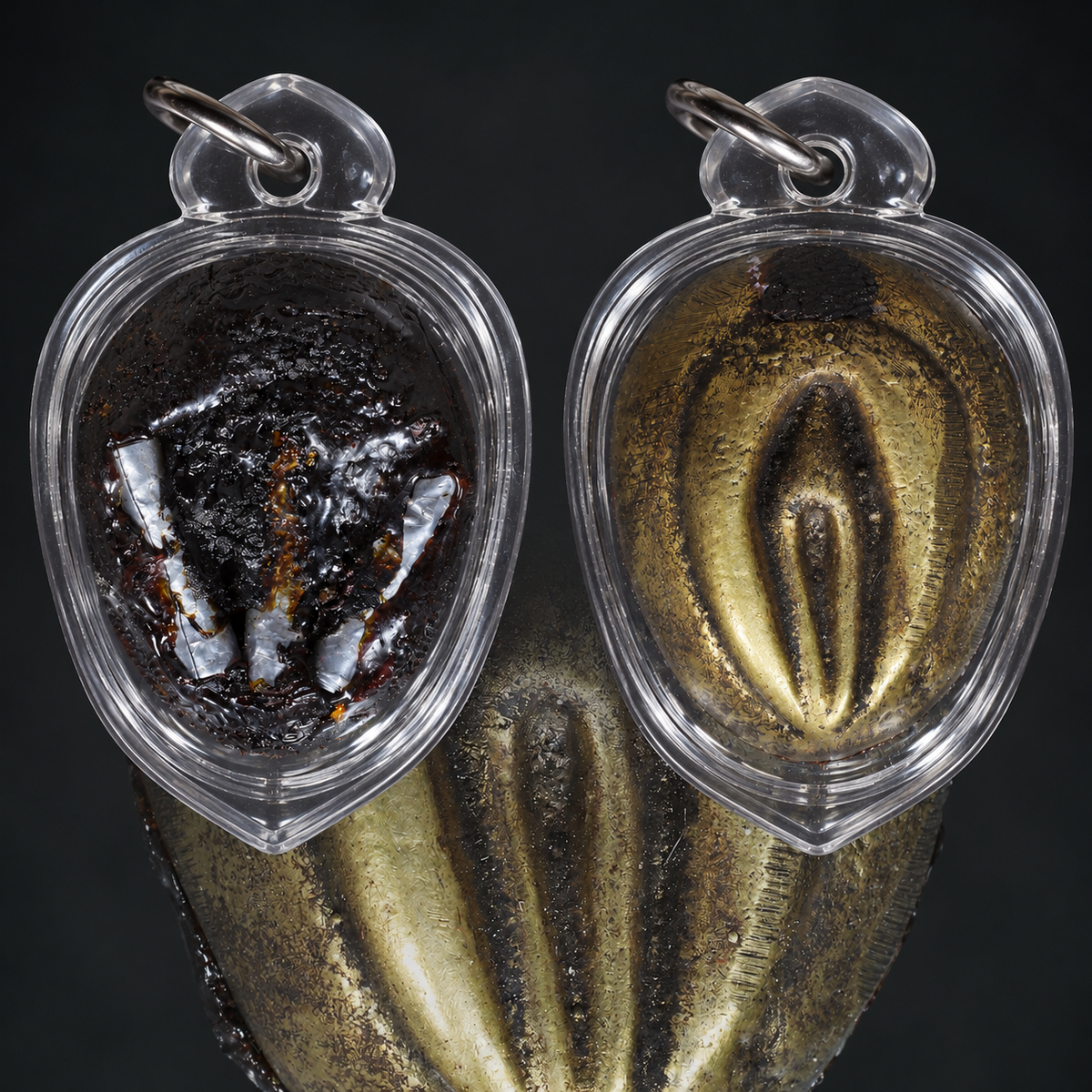
The amulet features a compact, rounded brass body with a raised Yoni symbol on the front. Its aged golden surface displays natural darkening and irregularities associated with its material and preparation.
The reverse is covered with dark ritual substances containing Tid Jai heart relics and three visible Ma Aa Uu takruts. The piece is housed within a transparent protective casing, preserving both its brass surface and the sacred materials behind it.
Recommended Pairing
The Yoni Tid Jai may be paired with other sacred objects according to the intended purpose.
Salika Ling Thong complements its Saneh properties by emphasising persuasive speech, social charm and favourable communication.
Khun Paen is traditionally associated with Metta Maha Niyom, attraction and confidence in personal relationships.
Phra Ngan may be considered by collectors seeking a stronger emphasis on personal magnetism and traditional Barang Saneh practices.
However, the Yoni Tid Jai is already a complete ritual composition, combining three distinct sacred elements. It does not require additional amulets to fulfil its traditional purpose.
Personal Notes
This is one of the Por Sala Tan creations that has remained particularly memorable to me.
Only 15 pieces were reportedly produced, using brass collected from more than 20 coffins. The effort involved in gathering these materials alone distinguishes it from more commonly encountered Yoni amulets.
Having personally encountered this creation during my 2014 visit to Por Sala Tan's village, I regard it as an important example of his early Barang craftsmanship.
With the village now largely abandoned and so few examples known, opportunities to encounter an original Yoni Tid Jai have become increasingly uncommon.
Its significance lies not merely in its reputation for Saneh, but in the unusual materials, limited production and direct connection to Por Sala Tan's traditional Wicha.
-
Free Shipping for Singapore| $15 Worldwide | $100 USA All products