
OOBThaiAmulets
Por Sala Tan
Por Sala Tan
Couldn't load pickup availability
Summary
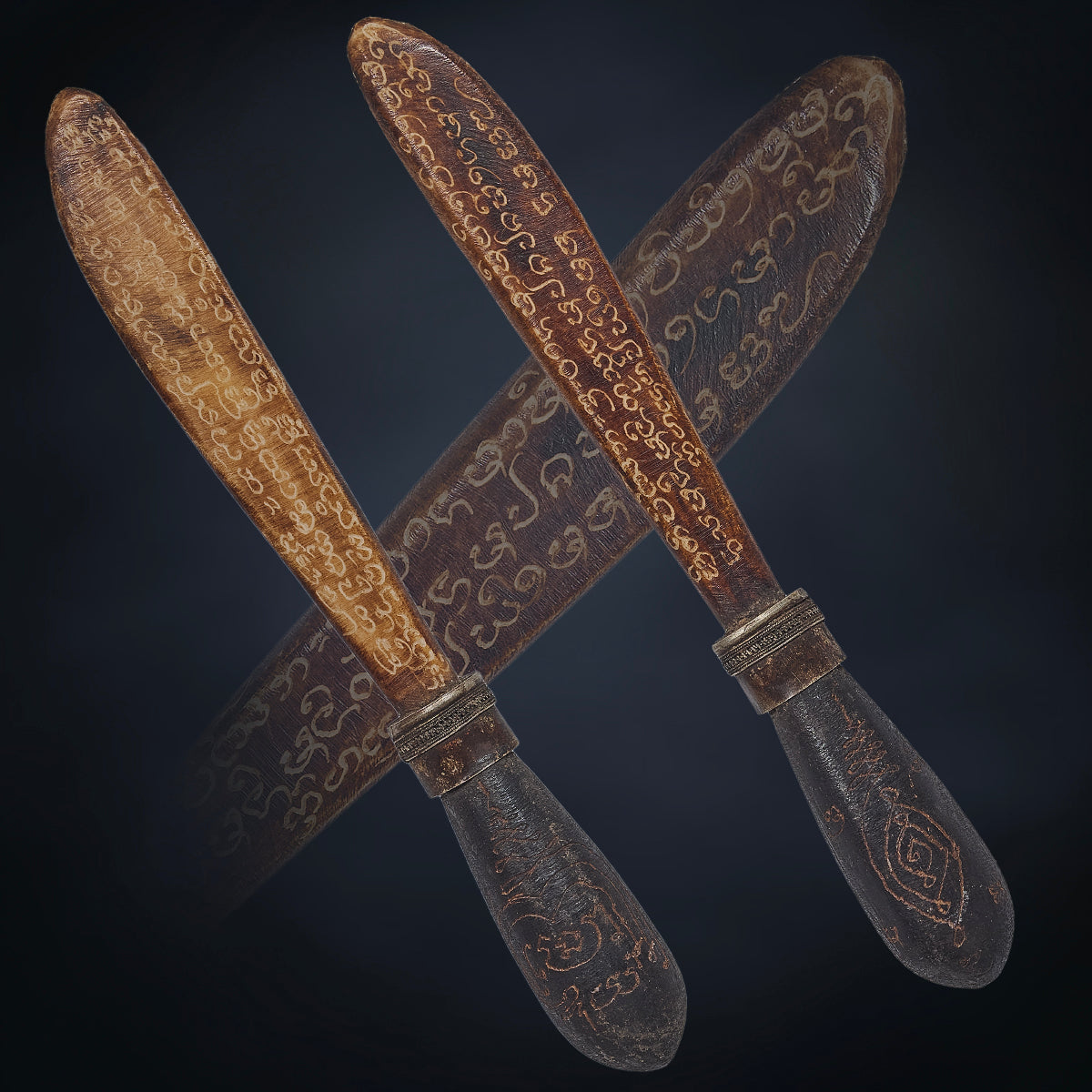
This ritual blade originates from the early 2500-era period, a time marked by economic hardship across the region. It was created as part of a broader spiritual movement in the North, where senior masters focused on generating baramee-based objects intended to stabilise livelihood, trade, and collective prosperity. The blade was structured as a functional spiritual tool for removing accumulated misfortune and restoring momentum for households and businesses.
Historical Background
During this period, many guru monks and advanced practitioners shifted their focus away from personal talismans toward items meant to benefit families, communities, and the wider economy. Rather than individual protection alone, these objects were intended to circulate merit outward—supporting commerce, trade routes, and household stability. This blade belongs to that era of merit-distribution practice, where ritual implements were deliberately designed to “clear the path” for material and karmic flow.
Origins of the Material
The blade itself is formed from gaduk chang kraden boran, an old-generation material passed down through multiple custodians before being shaped into a ritual form. Traditionally, this material was reserved for tools associated with removal and correction—used to scrape away persistent bad luck, stagnant conditions, or repeated obstacles affecting one’s work and household.
The handle is crafted from mai payoom, a wood long associated with wealth continuity and resource stability. Its use here anchors the blade’s function, ensuring that what is removed is replaced with sustainable gain rather than temporary relief.
Ritual and Inscription
The blade portion was fully inscribed by Por Sala Tan, with yantra work focused on removal, correction, and forward movement. The handle bears additional inscriptions by a Lersi from the Isan region, written in classical Khmer script. This dual-inscription structure reflects a deliberate pairing: monk-based merit transmission combined with ascetic command symbolism.
Rather than a single consecration, the piece reflects layered ritual intent—designed for repeated application over time, whether through ritual use or static placement.
Blessings and Effects
The core function of this blade is the cutting through of obstacles—both visible and unseen. It is associated with clearing repeated delays, stalled negotiations, and lingering bad cycles affecting work or income. For business owners and professionals, it supports smoother deal flow, contract closure, and decision clarity. On a household level, it is used to stabilise fortune and prevent recurring disruptions.
Modern Application
In contemporary use, the blade may be placed on a home altar, business altar, or discreetly within a workspace. Some practitioners carry it in a small pouch when attending important negotiations or meetings. Its role is not aggressive; it functions as a corrective instrument—removing friction so effort can translate into results.
Physical Details
The blade measures approximately 5 inches in total length. Its compact size allows for portability without diminishing ritual presence. The balance between blade and handle reflects its intended dual use: ritual application and long-term placement.
Recommended Pairing
This piece pairs well with items focused on baramee elevation or authority stabilisation, such as seated Buddha forms or elder-monk consecrated objects. Together, they reinforce both removal of obstacles and consolidation of gains, aligning effort with outcome.
-
Free Shipping for Singapore| $15 Worldwide | $60 USA For Items Below $350