
OOBThaiAmulets
Por Sala Tan
Por Sala Tan
Couldn't load pickup availability
PST05
Yin Tong
Por Sala Tan
Mainstream artifact
3cm
Sacred Craftsmanship
Every example was individually prepared by hand. Natural differences in the Nang, hand-drawn Yin Tong, sacred inscriptions, powders, Paneang fragments and finishing therefore make each piece unique.
Personal Experiences Shared by Luksits
Many people who have carried Yin Tong artifacts prepared by Por Sala Tan speak highly of their experiences, and these accounts come from people from very different walks of life.
One particularly interesting case concerned an older bachelor who had been living alone for many years.
Despite being accustomed to an independent lifestyle, after carrying Por Sala Tan's Yin Tong he began noticing that people were increasingly willing to approach and assist him without being asked.
What stood out to him was that much of this attention came particularly from the opposite gender.
Women would offer assistance with everyday matters, show concern for his wellbeing or simply make an effort to speak with him and keep him company. Some interactions were small and seemingly ordinary, yet the frequency with which people voluntarily extended warmth and assistance became noticeable to him.
For someone who had spent much of his life alone, it was not simply romantic attraction that impressed him. It was the broader feeling that people were more willing to notice him, approach him and care about his circumstances.
Other luksits describe the Yin Tong in similar ways. Those involved in sales and business speak of easier conversations, warmer customers and people becoming more receptive. Others associate it with increased social attention, helpful encounters and greater interest from the opposite sex.
These experiences help illustrate the wider character of Yin Tong wiccha. Attraction is not necessarily expressed only through romance. It may also appear as kindness, assistance, companionship, goodwill and a natural willingness from others to become involved in the keeper's life.
Summary
Por Sala Tan's Yin Tong is a specialised attraction artifact combining the traditional Yin Tong principle with his own Metta and Maha Saneh wiccha.
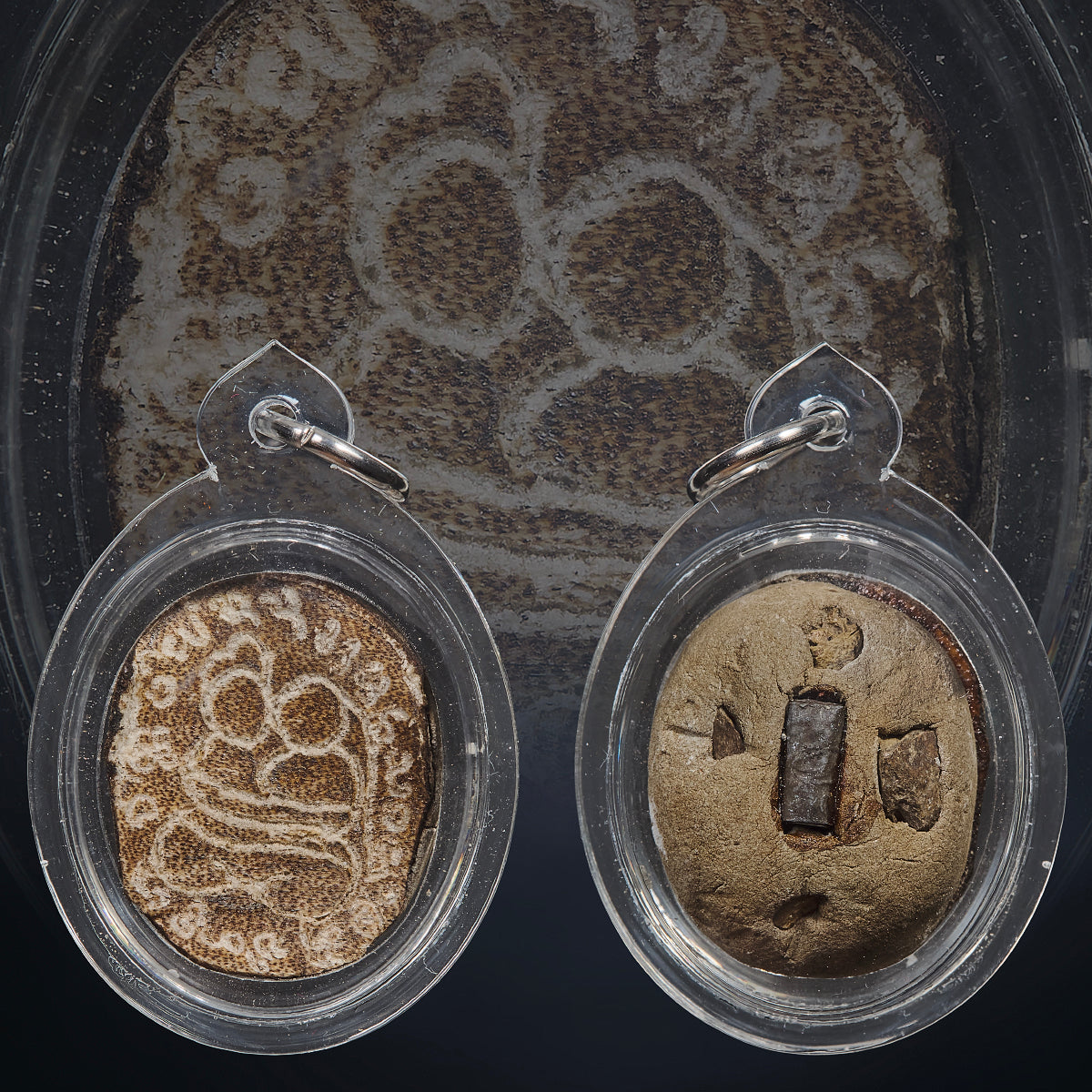
The front is prepared from Nang Tua Ngern Tua Thong, with the Yin Tong and surrounding sacred yant personally drawn by Por Sala Tan.
The reverse contains his own specially prepared sacred powders together with a takrut and fragments of Paneang, creating a construction focused closely upon attraction and favourable interpersonal relationships.
Its principal traditional intentions are:
-
Metta Maha Niyom — goodwill, kindness, acceptance and favourable treatment.
-
Maha Saneh — personal charm, magnetism and attraction.
-
Opposite Attraction — traditionally associated with increased attention from the opposite gender.
-
Interpersonal Harmony — encouraging smoother communication and warmer relationships.
-
Assistance & Support — encouraging others to feel naturally inclined to help or support the keeper.
-
Business Metta — supporting favourable customer relationships and easier professional interaction.
Although Yin Tong is strongly connected with attraction between men and women, its practical application extends much further into everyday human relationships.
Historical Background
Yin Tong belongs to an old stream of Thai attraction wiccha based upon the complementary nature of masculine and feminine principles.
The paired figures traditionally represent two energies being naturally drawn towards one another. For this reason, Yin Tong became associated with attraction, affection, companionship, reconciliation and harmony between people.
Within folk-wiccha traditions, the principle gradually developed beyond purely romantic use.
A person who is well received by others may find conversation easier. Someone working in trade may find customers more comfortable dealing with them. A person living or travelling alone may encounter greater assistance from strangers. Relationships that have become distant may become easier to repair.
Different masters developed their own approaches to Yin Tong, incorporating sacred powders, handwritten yants, takruts, oils and specialised Saneh materials.
Por Sala Tan's version reflects his own Barang practice, combining handwritten ritual work with Nang Tua Ngern Tua Thong, sacred powders and Paneang.
Origins of the Materials
Nang Tua Ngern Tua Thong
The front was prepared from Nang of the Tua Ngern Tua Thong.
The Thai name Tua Ngern Tua Thong carries the literal imagery of “silver and gold”, giving the material a natural linguistic association with auspiciousness and prosperity.
For Por Sala Tan, however, the importance of the material came from the specific wiccha applied to it, rather than from claiming that all Tua Ngern Tua Thong material inherently possesses identical sacred qualities.
The Nang provided the physical surface upon which Por Sala Tan personally drew the Yin Tong and wrote the surrounding sacred inscriptions.
Its natural texture remains visible beneath the handwritten work, preserving the organic character of the original material.
Sacred Powders
The reverse contains a specially prepared mixture of Por Sala Tan's own sacred powders.
These powders were blended specifically with the intention of strengthening Metta, Maha Saneh and opposite attraction.
They also provide the physical foundation into which the remaining ritual components were inserted, binding the reverse into a single sacred construction.
Takrut
A takrut is embedded prominently into the sacred-powder body.
The takrut serves as a concentrated carrier of sacred inscriptions and kata, complementing the larger handwritten yant appearing across the front.
Paneang Fragments
Fragments of Paneang were inserted alongside the takrut.
Within Por Sala Tan's Barang practice, Paneang is particularly connected with Metta and Maha Saneh, reinforcing the attraction character already established through the Yin Tong imagery and sacred powders.
The Paneang therefore does not stand apart from the construction. It strengthens the same central wiccha carried throughout the artifact.
Ritual
Preparation involved several stages rather than simply producing the physical artifact and blessing it afterwards.
Por Sala Tan first prepared the Nang Tua Ngern Tua Thong and the other sacred materials according to his lineage.
The Yin Tong and surrounding sacred yant were then drawn and written directly by hand, transforming the Nang into the principal ritual face of the piece.
His specially prepared sacred powders formed the reverse. The takrut and Paneang fragments were subsequently embedded within this body before the complete construction underwent further kata and consecration.
The ritual focus centred upon Metta Maha Niyom, Maha Saneh, opposite attraction and favourable interpersonal relationships.
Each component therefore performs a complementary role: the Yin Tong establishes the symbolic attraction between complementary energies; the handwritten yant carries the ritual formula; the sacred powders establish the Metta and Saneh foundation; the takrut concentrates additional inscriptions; and the Paneang reinforces the attraction wiccha.
Blessings and Effects
The principal traditional quality of Yin Tong is human attraction — encouraging people to notice, approach and respond favourably towards the keeper.
Maha Saneh represents magnetism and personal charm, while Metta Maha Niyom encourages warmth, goodwill and favourable treatment.
The opposite-attraction aspect is particularly associated with increased attention and interest from the opposite gender.
Yet the experiences surrounding Por Sala Tan's Yin Tong demonstrate that this need not manifest solely as romantic interest.
Traditional applications include:
-
Increased personal attraction and social presence
-
Greater attention from the opposite gender
-
Metta and favourable treatment
-
People becoming more willing to offer assistance
-
Easier conversations with strangers
-
Improved customer rapport
-
Greater receptiveness during sales and negotiations
-
Warmer personal relationships
-
Companionship and social connection
-
Helpful introductions and benefactors
The central principle is therefore not simply to make another person romantically attracted to the keeper. It is to create a stronger atmosphere of approachability, connection and favourable human response.
Modern Application
The Yin Tong is particularly suited to circumstances where relationships with people directly influence everyday life.
For salespeople, business owners, agents, consultants and negotiators, its Metta aspect corresponds with easier communication and favourable customer relationships, while Maha Saneh strengthens presence and memorability.
For those seeking companionship or relationships, its traditional opposite-attraction character makes it naturally relevant.
It may also appeal to people who live independently or regularly deal with unfamiliar people. The experience of the older bachelor is a good example: the perceived benefit was not simply romance, but having people become more willing to approach, communicate and voluntarily offer assistance.
Within disciplined practice, Saneh is best approached as the strengthening of one's own presence and interpersonal magnetism while respecting another person's choices and boundaries.
Physical Details
This Yin Tong is an individually handmade Barang artifact by Por Sala Tan. The front is formed from Nang Tua Ngern Tua Thong, retaining its natural brown and cream texture beneath a personally hand-drawn Yin Tong surrounded by sacred yant and inscriptions. The reverse consists of Por Sala Tan's specially prepared aged sacred powder, with a visible takrut and embedded fragments of Paneang. Natural irregularities, ageing, surface variation and differences in the handwritten work reflect its handmade construction. The complete artifact is preserved within a fitted clear protective casing.
Recommended Pairing
For professional or commercial use, Yin Tong pairs naturally with a wealth or Chok Lap amulet.
Yin Tong provides the human element — attraction, goodwill and interpersonal rapport — while the wealth piece supports financial opportunity and prosperity.
A Khun Paen may complement it where personal charisma, opposite attraction and Maha Saneh are the principal intentions.
For balanced everyday wear, it may instead be accompanied by a respected mainstream Buddha-form amulet. In such an arrangement, the Buddha image provides the foundation of baramee while Yin Tong retains its specialised role in Metta and attraction.
Personal Notes
What makes Por Sala Tan's Yin Tong particularly interesting is how consistently its materials point towards the same purpose.
The Nang Tua Ngern Tua Thong, hand-drawn Yin Tong, handwritten sacred yant, specially prepared powders, takrut and Paneang fragments were not assembled simply to make the piece more elaborate. Each contributes towards the same central attraction wiccha.
The experience of the older bachelor is particularly meaningful in understanding this broader character.
After years of living independently, what he noticed was not simply increased romantic attention. People — especially women — appeared more willing to approach him, assist him and show concern for him.
For this reason, I regard Por Sala Tan's Yin Tong as more than a conventional Saneh artifact.
It concerns the broader power of human connection: being noticed, approached, welcomed, assisted and remembered favourably by the people one encounters.
-
Free Shipping for Singapore| $15 Worldwide | $60 USA For Items Below $350