
OOBThaiAmulets
Por Sala Tan
Por Sala Tan
Couldn't load pickup availability
PST08
Si Peng Prai
Por Sala Tan
1 Inch oval
Barang Artifact
Sacred Craftsmanship
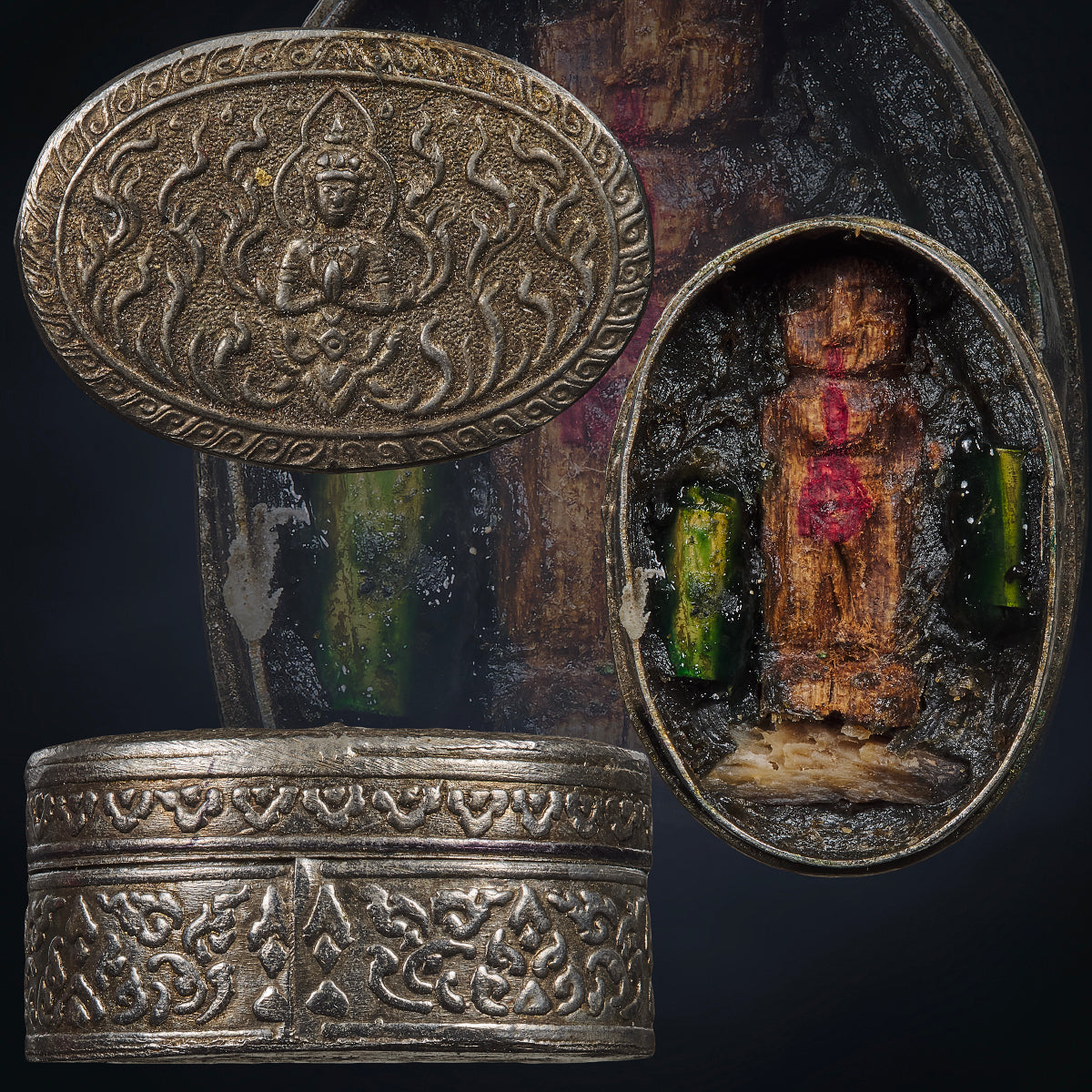
Each artifact was individually assembled from prepared wood, Si Peng, relic material and hand-prepared ritual components. Natural differences in the wood, carving, Si Peng surface, relic placement and ritual finish make every surviving piece individually distinct.
Personal Experiences Shared by Luksits
Among Por Sala Tan's luksits, this form of Si Peng was regarded differently from his more herbal-based Metta Maha Niyom preparations.
Because the wood, Nam Man Prai and relic components were connected to one Mae, followers regarded the artifact as carrying a more concentrated Prai-based Saneh current.
Luksits traditionally associated it particularly with situations involving personal attraction, attention and direct interaction. Rather than simply making an environment pleasant, the emphasis was upon the keeper being noticed, remembered and responded to favourably.
Some would use only a very small amount of the Si Peng when required — particularly before meeting customers, approaching someone important, conducting negotiations or entering situations where favourable attention could influence the outcome.
Others deliberately chose not to disturb the Si Peng at all. They preferred to preserve the preparation in its complete original state and simply carry or keep the entire artifact, regarding the carved Mae, relic, Nam Man Prai and takruts as one complete working.
Summary
The Si Peng Prai is a spirit-based Saneh artifact created by Por Sala Tan around the presence of a particular Mae associated with an unusual tree that had ceased normal growth without dying.
Wood from that tree was carved into the Mae's image. Nam Man Prai belonging to the Mae was incorporated into the Si Peng, together with a piece of relic material, while additional takruts were used to strengthen spiritual sensitivity and the connection between keeper and Prai.
Its traditional emphasis is Saneh, attraction, favourable attention, interpersonal influence and spiritual companionship.
Unlike Por Sala Tan's more herbal Si Peng preparations, this piece is fundamentally built around the relationship between one Mae, her original material anchor and the keeper of the artifact.
Historical Background
Trees occupy an important position within Southeast Asian animist traditions. Certain old or unusual trees may be understood as dwelling places for unseen presences, particularly when their physical condition departs significantly from ordinary natural patterns.
The tree connected with this artifact was remembered precisely because of such an anomaly.
It was not actively growing, yet it was not dying.
Within the tradition surrounding the piece, this prolonged state was interpreted not simply as botanical decline but as evidence that a spiritual presence had become strongly anchored to the tree.
Por Sala Tan subsequently worked with the Mae associated with it. Pieces of the wood were taken and transformed into small carved images, providing a new physical vessel through which the Mae could remain present.
The intention was not merely to preserve the spirit. The Mae was invited into the prepared artifact so that her presence could be directed towards assisting the future keeper.
Origins of the Materials
The central material is wood taken from the Mae's original tree. This is significant because the carving and the spirit presence originate from the same source rather than from unrelated ritual materials assembled afterwards.
The carved Mae forms the physical centre.
Around it is the prepared Si Peng, mixed with Nam Man Prai associated with the Mae herself. A fragment of relic material was included within the composition, further strengthening the physical continuity of the working.
Takruts were positioned alongside the central figure. Their purpose was directed towards sixth sense and spiritual connection, reinforcing communication and familiarity between the Prai and keeper.
The finished artifact therefore brings together the Mae's tree, her carved representation, Nam Man Prai, relic material, Si Peng and takruts within a single contained construction.
Ritual
After the wood was acquired, Por Sala Tan carved the Mae into a recognisable human form, creating a physical representation through which the presence could be established.
The Mae spirit was then invited into the wooden image.
The Si Peng preparation containing her associated Nam Man Prai and relic material was arranged around the carving. This maintained continuity between the original spirit presence and its newly prepared vessel.
The takruts provided an additional ritual structure, particularly for strengthening the keeper's sensitivity towards the Prai and establishing a closer spiritual bond over time.
The completed piece was therefore conceived not simply as Si Peng stored beside an effigy, but as an integrated Prai artifact in which image, material and preparation belong to the same working.
Blessings and Effects
The principal quality of this piece is Maha Saneh — personal attraction and the ability to draw favourable attention.
Its traditional applications include strengthening personal presence, encouraging others to notice the keeper, supporting favourable interaction and creating greater receptiveness during conversations.
It may therefore be associated with customer-facing work, sales, negotiation and circumstances where the keeper needs to make a stronger personal impression.
The takruts introduce another dimension: sixth sense and connection with the Prai. Within the tradition of the artifact, this is intended to deepen familiarity between the keeper and Mae rather than leaving the spirit presence distant or impersonal.
For this reason, the Si Peng Prai was regarded as both an attraction working and a more personal spirit-linked artifact.
Modern Application
The piece is particularly relevant to people whose results depend heavily upon human interaction — business owners, sales professionals, negotiators and those regularly meeting new clients or customers.
Traditionally, a small amount of Si Peng may be used when needed before an important interaction.
However, removing or applying the preparation is not necessary. Collectors who wish to preserve the original construction may simply keep or carry the complete artifact intact.
For those approaching the piece primarily as an old Por Sala Tan artifact, retaining the Si Peng, relic, carving and takruts in their original arrangement also preserves the integrity of the working.
Physical Details
An oval spirit-based Si Peng artifact centred upon a hand-carved wooden image of the Mae, made from wood associated with her original tree. The surrounding preparation incorporates Si Peng mixed with the Mae's Nam Man Prai and relic material. Takruts positioned alongside the figure were included for sixth sense and strengthening the keeper-Prai connection. Natural ageing, oil saturation, surface deposits and differences in the hand-prepared materials form part of the character of the piece.
Recommended Pairing
The Si Peng Prai may be kept independently, particularly by an experienced keeper comfortable with Prai-based artifacts.
For a more balanced everyday combination, it may be paired with a Baramee-based Buddha, Lersi or protective amulet. The Si Peng Prai provides the Saneh and attention-drawing aspect, while the Baramee piece supplies a steadier foundation of authority and spiritual stability.
This is particularly suitable when the piece is used for business or professional interaction, where attraction is most useful when accompanied by respect and personal authority.
-
Free Shipping for Singapore| $15 Worldwide | $100 USA All products