
OOBThaiAmulets
Por Sala Tan
Por Sala Tan
Couldn't load pickup availability
PST04
Mah Sek Nang
Por Sala Tan
2 Inches
Barang Artifact
Sacred Craftsmanship
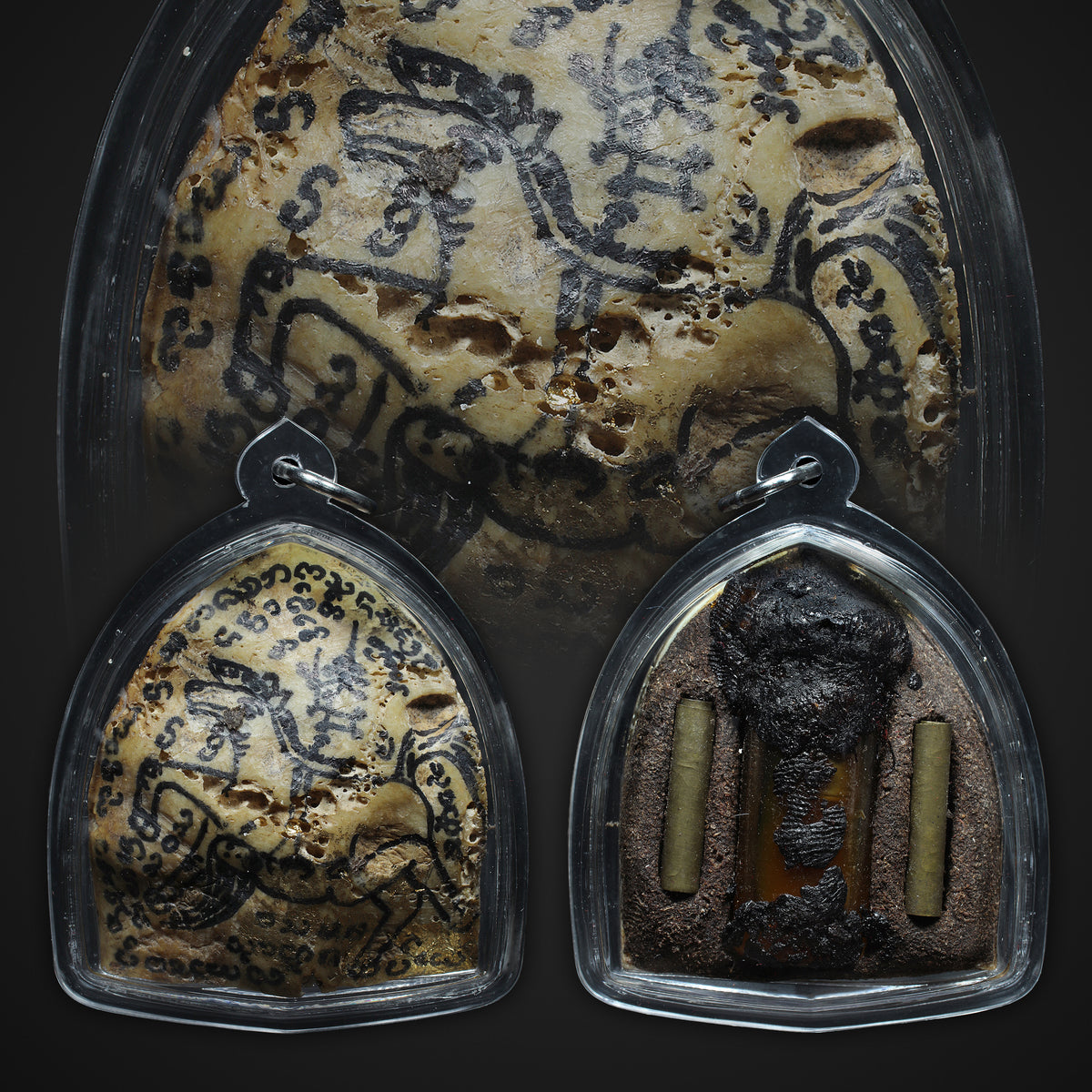
This Mah Sek Nang is a specialised Maha Saneh artifact prepared by Por Sala Tan, combining an old Paneang relic with traditional attraction Wicha, sacred herbs, Nam Man Prai and ritual substances associated with personal charm and charisma.
Each artifact is individually handmade from carefully selected relics and sacred materials. Natural variations in texture, colour, handwritten Yants and the arrangement of ritual substances reflect the individual craftsmanship of each piece.
Exact piece as per photo will be given.
Personal Experiences Shared by Luksits
Among followers of Por Sala Tan, Mah Sek Nang is particularly associated with experiences involving unexpected attention, personal attraction and favourable responses from others.
One of the more frequently discussed characteristics of his Maha Saneh artifacts is the feeling that people become more willing to initiate contact without the wearer having to make the first approach.
Some Luksits describe situations where individuals who previously showed little interest suddenly became more approachable, initiating conversations or finding reasons to remain in contact.
Others associate their experiences with a noticeable change in the way people respond during ordinary social interactions.
Conversations that would normally remain brief sometimes develop into longer exchanges, while acquaintances appear more willing to share personal matters or establish closer relationships.
A recurring observation among devotees is that attention seems to arrive naturally, without excessive effort or deliberate pursuit.
This is particularly relevant to Mah Sek Nang, whose traditional Wicha is directed towards attracting attention and encouraging favourable interpersonal responses.
Followers involved in sales and customer-facing occupations also associate Maha Saneh artifacts with improved communication.
Some describe customers becoming more receptive during discussions, returning for further enquiries or showing greater willingness to consider their recommendations.
In personal relationships, devotees commonly seek Mah Sek Nang for its traditional association with romantic attention and the development of closer connections.
The emphasis is not simply upon physical attraction, but also upon being remembered, receiving attention and encouraging others to approach voluntarily.
Summary
This Mah Sek Nang is an individually prepared Maha Saneh artifact by Por Sala Tan, constructed from an old Paneang relic associated with a former Burmese village chief.
According to the lineage account, the chief was exceptionally charismatic, widely admired and known for having several wives.
Por Sala Tan selected the relic specifically for its traditional association with attraction and personal influence.
The front carries handwritten Mah Sek Nang Yants, while the reverse incorporates sacred soil, Metta herbs, Tid Jai Si Peng, two Takruts and a bottle of Nam Man Prai.
These materials were combined to create a comprehensive Maha Saneh artifact associated with:
- Maha Saneh – Romantic attraction and personal magnetism.
- Metta Maha Niyom – Popularity, goodwill and favourable treatment.
- Saneh Maha Niyom – Charisma and interpersonal influence.
- Kaa Khaay – Customer attraction and business relationships.
- Personal Presence – Confidence and the ability to leave a favourable impression.
Por Sala Tan is particularly remembered among his followers for his specialised Saneh creations, and Mah Sek Nang remains one of the forms appreciated by devotees seeking attraction and personal popularity.
Historical Background
Mah Sek Nang and Traditional Attraction Wicha
Mah Sek Nang belongs to the broader tradition of Southeast Asian Maha Saneh practices, where sacred inscriptions and carefully selected materials are employed for attraction, popularity and interpersonal influence.
Within traditional Thai and Burmese occult practices, certain relics were valued not merely for their age but also for their association with the individuals to whom they once belonged.
Materials connected with people remembered for exceptional charisma, authority or popularity were sometimes incorporated into sacred objects intended to reflect those qualities.
The history of this particular Mah Sek Nang follows that tradition.
The Burmese Village Chief
According to Por Sala Tan's account, the relic originated from a deceased village chief in the Burmese region.
The chief was remembered as a man possessing considerable personal charm and influence.
He reportedly maintained relationships with several wives and was widely regarded as charismatic and popular.
Following his death, certain relics associated with him were collected by a practitioner living deep within the northern jungle.
The practitioner subsequently passed several of these relics to Por Sala Tan.
Rather than treating them as ordinary old materials, Por Sala Tan recognised their traditional associations with personal magnetism and selected a suitable Paneang fragment for the preparation of Mah Sek Nang.
The relic's history became an important part of the artifact's intended Saneh character.
Origins of the Materials
Paneang – Relic of the Burmese Village Chief
The principal material is an old Paneang relic reportedly originating from a deceased Burmese village chief.
Within traditional Barang practices, Paneang materials are sometimes associated with the spiritual qualities attributed to their former owners.
In this instance, the chief's reputation for charisma, popularity and romantic attraction was central to Por Sala Tan's selection of the material.
Mah Sek Nang Yants
The front was personally inscribed by Por Sala Tan with Mah Sek Nang Yants.
These sacred inscriptions were prepared to direct the artifact towards Maha Saneh, romantic attraction and favourable interpersonal relationships.
Metta Herbs and Sacred Soil
The reverse contains a prepared mixture of sacred soil and traditional Metta herbs.
These materials were selected for their associations with goodwill, attraction and the encouragement of favourable responses from others.
Tid Jai Si Peng
The sacred mixture was coated with Tid Jai Si Peng.
Within Por Sala Tan's traditional Wicha, this preparation is associated with strengthening Saneh, personal magnetism and attraction-related ritual work.
Nam Man Prai
A small bottle of Nam Man Prai occupies the central position on the reverse.
Nam Man Prai is traditionally associated with spirit-related attraction practices and forms an important component of certain Barang Maha Saneh constructions.
Its inclusion reinforces the specialised attraction-oriented character of this artifact.
Two Takruts
Two Takruts were embedded beside the central bottle.
These were incorporated as part of the completed ritual arrangement, complementing the Mah Sek Nang Yants and the surrounding sacred materials.
Ritual
Por Sala Tan's preparation of this Mah Sek Nang began with the selection of the old Paneang relic.
The material was chosen because of its reported connection with the Burmese village chief and his reputation for exceptional personal charm.
Por Sala Tan subsequently inscribed the front with Mah Sek Nang Yants, establishing the principal attraction-related purpose of the artifact.
The reverse was prepared using sacred soil mixed with Metta herbs.
This mixture formed the foundation for the additional ritual substances.
Tid Jai Si Peng was then applied to the prepared surface, incorporating another traditional Saneh component.
A bottle of Nam Man Prai was positioned centrally, accompanied by two Takruts.
The completed arrangement brought together the symbolic qualities of the original relic with the attraction-related properties traditionally attributed to the added materials.
Through consecration, Por Sala Tan intended to harmonise these components into a single Maha Saneh artifact directed towards attraction, popularity and favourable interpersonal influence.
The completed piece represents his practice of combining relic-based Wicha with sacred inscriptions, herbal preparations and spirit-related ritual materials.
Blessings and Effects
1. Maha Saneh – Romantic Attraction
Traditionally associated with increasing personal magnetism, attracting romantic attention and encouraging closer interpersonal connections.
2. Metta Maha Niyom – Popularity and Goodwill
Believed to encourage favourable treatment, kindness and positive responses from people encountered in daily life.
3. Saneh Maha Niyom – Personal Charisma
Associated with strengthening one's presence, making a favourable impression and becoming more memorable to others.
4. Attraction Without Excessive Pursuit
Mah Sek Nang is particularly sought for its traditional association with encouraging others to initiate conversations, express interest or approach the wearer voluntarily.
5. Kaa Khaay – Customer Attraction
The Metta and Saneh components are traditionally appreciated by business owners and sales professionals seeking better customer relationships and more favourable interactions.
6. Interpersonal Harmony
Associated with softening difficult conversations, encouraging cooperation and improving communication in social and professional environments.
7. Confidence and Social Presence
Traditionally believed to support confidence, approachability and a stronger personal presence when meeting new people.
Modern Application
Mah Sek Nang is particularly suited to individuals who place importance upon personal relationships, communication and social interaction.
Romance and Relationships: Traditionally sought by those wishing to improve personal attraction, meet potential partners and develop closer relationships.
Sales and Customer Service: Associated with favourable customer responses, smoother communication and stronger interpersonal rapport.
Business Owners: The Metta Maha Niyom qualities are appreciated for encouraging customer goodwill, repeat business and positive relationships.
Public-Facing Professionals: Suitable for individuals working in hospitality, entertainment, marketing and other occupations requiring personal charisma.
Social and Networking Environments: Traditionally valued for approachability, favourable first impressions and attracting new connections.
The artifact may be worn around the neck or carried discreetly, according to the keeper's preference.
Physical Details
An individually prepared Paneang relic with a naturally aged, porous surface and handwritten Mah Sek Nang Yants across the front. The reverse contains a dark sacred mixture of soil, Metta herbs and Tid Jai Si Peng, with a centrally positioned bottle of Nam Man Prai and two embedded Takruts. The completed artifact is housed within a clear protective casing.
Recommended Pairing
Phra Khun Paen – Complements the Maha Saneh qualities through traditional associations with personal attraction, charm and popularity.
Nang Kwak – Particularly suitable for extending Metta Maha Niyom towards customer attraction and business relationships.
Inn Tong – Complements the romantic attraction and interpersonal harmony associated with Mah Sek Nang.
Lersi Artifacts – Suitable for collectors wishing to combine specialised Saneh Wicha with traditional spiritual guidance and Baramee.
Personal Notes
What makes this Mah Sek Nang particularly interesting is the history of the original Paneang relic and the completeness of its ritual construction.
The relic was not selected simply because it was old.
According to Por Sala Tan, it belonged to a Burmese village chief remembered for his exceptional charisma, popularity and numerous romantic relationships.
This association was central to the decision to prepare the relic specifically as Mah Sek Nang.
Another significant aspect is the source of the material.
The relic passed from a practitioner living deep within the northern jungle to Por Sala Tan, reflecting the relationships and exchanges of sacred materials that formed part of his traditional Wicha practice.
The reverse is equally noteworthy.
Rather than relying solely upon the original relic and handwritten Yants, Por Sala Tan incorporated Metta herbs, sacred soil, Tid Jai Si Peng, Nam Man Prai and two Takruts.
Each component contributes a different aspect of the traditional Maha Saneh arrangement.
The original relic represents the charisma attributed to its former owner.
The Mah Sek Nang Yants establish the intended attraction-related direction.
The Metta herbs and Tid Jai Si Peng complement the qualities of popularity and goodwill.
The Nam Man Prai introduces another element associated with traditional Barang attraction practices, while the Takruts complete the ritual composition.
It is this combination of materials that distinguishes the artifact from simpler Saneh carvings.
Por Sala Tan remains particularly well regarded among his followers for his Maha Saneh works, and Mah Sek Nang is one of the forms associated with his specialised approach to attraction Wicha.
For collectors, the significance of this piece lies in the relationship between the Burmese village chief's relic, Por Sala Tan's handwritten Mah Sek Nang Yants and the carefully arranged Saneh materials on the reverse.
Together, they preserve an example of his traditional Barang craftsmanship, centred upon personal attraction, popularity and the cultivation of favourable human relationships.
-
Free Shipping for Singapore| $15 Worldwide | $100 USA All products