
OOBThaiAmulets
Por Sala Tan
Por Sala Tan
Couldn't load pickup availability
PST03
Mae Nak
Por Sala Tan
3 Inches
Barang Artifact
Sacred Craftsmanship
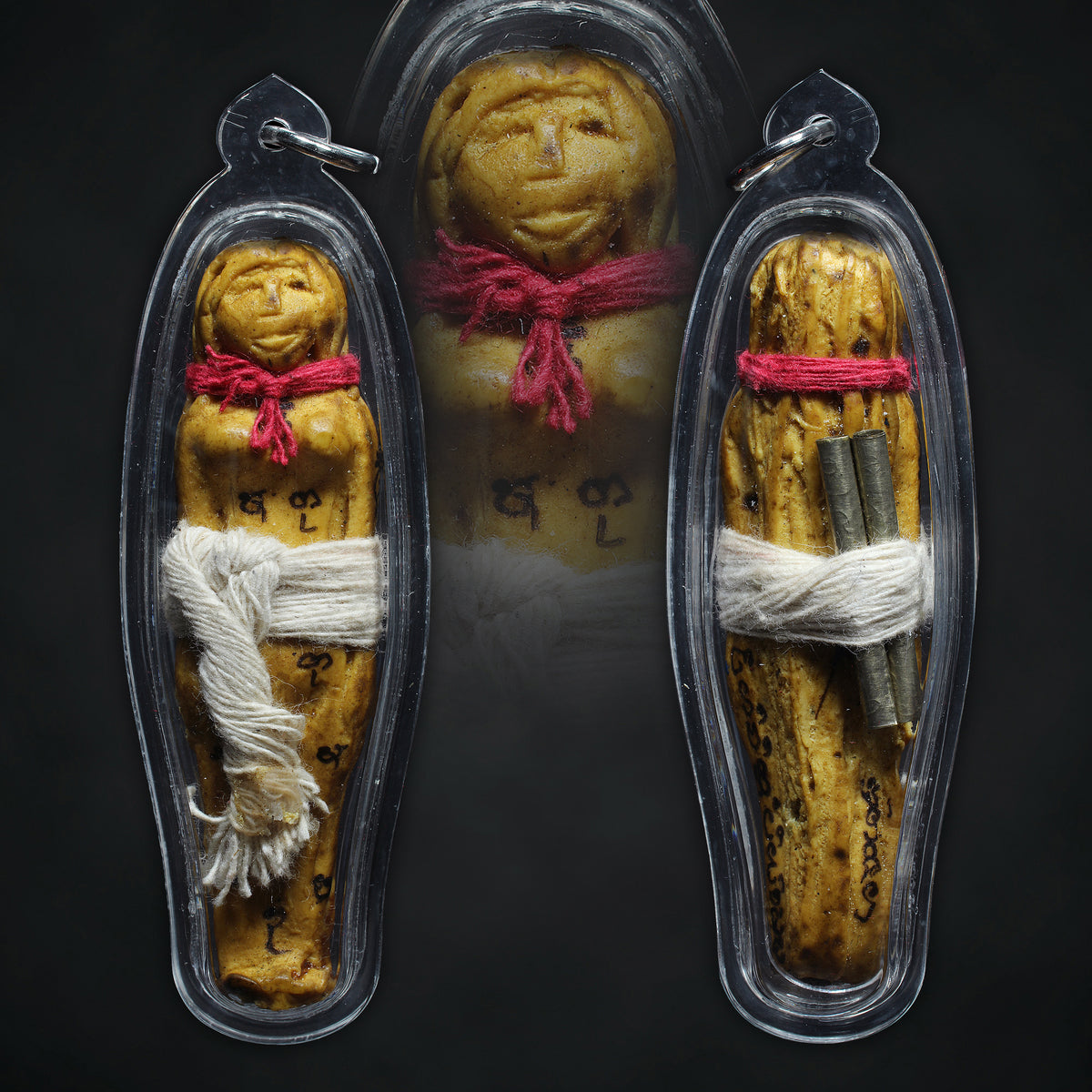
This Mae Nak is an unusual Barang artifact individually carved by Por Sala Tan from the hip relic of a female spirit whose presence had reportedly been encountered by villagers gathering herbs in a remote mountain region.
Each artifact is individually handmade from old natural relic materials. Variations in carving, colour, texture, sacred markings and the arrangement of ritual components reflect the individual character of each piece.
Exact piece as per photo will be given.
Personal Experiences Shared by Luksits
Among villagers and Luksits who received these Mae Nak artifacts, several interesting experiences have been shared concerning spiritual guidance, sixth sense, protection and wish granting.
One of the more commonly mentioned experiences involves an unusual sense of uneasiness before an unfavourable situation develops.
Some devotees described suddenly feeling uncomfortable about travelling to a particular location, meeting someone or proceeding with an arrangement. Although there was no apparent reason for concern, they decided to delay or reconsider their plans.
Other Luksits spoke of developing a stronger sixth sense, particularly when dealing with unfamiliar people or situations. Some reported an instinctive feeling that certain individuals could not be trusted, while others experienced vivid dreams that they believed carried messages or guidance.
There have also been accounts associated with wish granting and unexpected assistance.
Certain devotees shared that after respectfully communicating their wishes to Mae Nak, difficulties that had troubled them for some time gradually began to resolve. Some experienced unexpected help from acquaintances, while others found opportunities appearing when they were most needed.
Another interesting observation concerns the feeling of spiritual companionship.
Some Luksits mentioned occasionally sensing a feminine presence nearby, particularly during quiet moments or when facing personal difficulties. Rather than experiencing fear, they gradually came to regard this presence as reassuring and protective.
For those who maintain regular merit dedication, the relationship with Mae Nak is often described as one of mutual respect rather than simply requesting favours.
Summary
This Mae Nak is a specialised spirit-related Barang artifact carved from the hip relic of a female spirit reportedly encountered in a remote mountain region.
According to the lineage account, Por Sala Tan conducted ceremonies to assist the wandering spirit, subsequently preparing several artifacts through which she could receive merit while helping devotees.
The carving incorporates original ceremony Sai Sin, red binding Sai Sin, two Takruts, Din Chet Pa Cha and soil collected from the spirit's original location.
Its principal traditional associations are wish granting, spiritual companionship, intuitive warnings, protection and assistance in daily life.
The artifact is particularly meaningful because of the circumstances surrounding its creation and its connection with the villagers who originally reported the encounters.
Historical Background
Mae Nak and Female Spirit Traditions
Mae Nak is a familiar name within Thai spiritual folklore, commonly associated with female spirits whose attachments to people or places continue after death.
Beyond the well-known Mae Nak legends, regional animist traditions also recognise female spirits connected with forests, burial grounds and isolated locations.
Such spirits are sometimes believed to remain near their former resting places because of unresolved attachments or the absence of merit dedication.
The Mountain Spirit Encounter
According to the account surrounding this artifact, villagers gathering herbs repeatedly encountered an unexplained female presence.
Por Sala Tan was subsequently invited to investigate.
The spirit reportedly expressed a desire to receive merit and assistance in moving beyond her circumstances.
Rather than treating her solely as a harmful presence, Por Sala Tan conducted ceremonies intended to establish a beneficial relationship between the spirit and living devotees.
Origins of the Materials
Hip Relic
The principal carving material reportedly came from the female spirit's remains. It forms the central connection between the artifact and its origin story.
Din Chet Pa Cha
Din Chet Pa Cha refers to soil collected from seven burial grounds. Within traditional Prai Wicha, it is valued for its associations with cemetery spirits and spiritual communication.
Soil from the Mountain
Earth collected from the original location was incorporated to preserve a symbolic connection with the spirit's former resting place.
Original Ceremony Sai Sin
White Sai Sin used during the ceremony was retained and tied around the carving, symbolising the connection between the spirit and devotee.
Red Sai Sin and Takruts
The red thread was intended to anchor the spiritual presence, while the two Takruts were prepared for wish granting and communication.
Ritual
Por Sala Tan reportedly travelled to the mountain after receiving requests for assistance from concerned villagers.
Following spiritual communication with the female presence, he conducted ceremonies intended to help her receive merit and establish a more peaceful relationship with the living.
Relic materials associated with the spirit were subsequently used to create several Mae Nak carvings.
Each piece was prepared with sacred Yant, original ceremony Sai Sin and red binding Sai Sin.
The base was filled with Din Chet Pa Cha and soil from the original mountain location.
Two Takruts were attached to support the traditional functions of wish granting and spiritual communication.
According to the accompanying account, the spirit was invited to assist devotees through these artifacts, while receiving merit dedicated through their religious practices.
Several completed pieces were subsequently distributed among villagers.
Blessings and Effects
1. Athitthan – Wish Granting
Traditionally associated with receiving spiritual assistance in fulfilling sincere wishes and overcoming personal difficulties.
2. Sixth Sense – Intuitive Awareness
Believed to encourage sensitivity towards unusual circumstances, particularly through uneasy feelings or sudden hesitation before potentially unfavourable situations.
3. Spiritual Protection
Associated with warnings against harmful influences, unfavourable encounters and unexpected dangers.
4. Metta Maha Niyom – Goodwill
Traditionally sought for favourable relationships, helpful individuals and harmonious social interactions.
5. Chok Larp – Opportunities and Fortune
Some devotees associate Mae Nak with unexpected assistance, favourable opportunities and improvements in daily circumstances.
6. Spiritual Companionship
The artifact represents a traditional relationship between the devotee and a spirit believed to offer guidance and assistance.
7. Merit Dedication
An important aspect of this Mae Nak is the belief that the spirit may benefit from merit dedicated by devotees, creating a reciprocal relationship rooted in compassion and gratitude.
Modern Application
Daily Protection: Suitable for devotees who appreciate traditional spirit-related artifacts associated with intuitive warnings and avoiding unfavourable situations.
Personal Guidance: Traditionally sought by individuals facing difficult decisions or uncertain circumstances.
Wish Granting: Associated with sincere personal requests concerning family, work and everyday difficulties.
Business and Opportunities: Some devotees value Mae Nak for its traditional associations with helpful encounters and unexpected assistance.
Collectors of Traditional Barang: Particularly interesting because of its unusual origin, original ceremony materials and connection with Por Sala Tan's spirit-related Wicha.
Physical Details
An individually hand-carved female figure made from a hip relic, displaying aged yellow-brown colouring and handwritten sacred Yant. Red Sai Sin is tied around the upper body, while original white ceremony Sai Sin is wrapped around the lower portion. The reverse carries two metal Takruts, and the base contains a mixture of Din Chet Pa Cha and soil from the original mountain location. The piece is protected within a clear elongated casing with a metal hanging loop.
Recommended Pairing
Lersi Artifacts – Complements the traditional forest Wicha and spirit-related practices associated with this Mae Nak.
Tao Wessuwan – Traditionally associated with guardianship, spiritual authority and protection against malevolent influences.
Personal Notes
What makes this Mae Nak particularly interesting is the circumstances surrounding the female spirit's encounter with the villagers and Por Sala Tan's subsequent intervention.
The original reports were not associated with a conventional amulet-making ceremony.
Instead, villagers repeatedly described hearing a woman's voice and witnessing a female presence while gathering herbs in the mountains.
Their concern eventually led them to seek Por Sala Tan's assistance.
According to the account, the spirit was not seeking to harm the villagers. She was believed to be unable to move on because nobody had dedicated merit to her following her death.
Por Sala Tan's approach was therefore centred upon assistance rather than confrontation.
Following the ceremonies, several Mae Nak artifacts were created from relic materials associated with the spirit.
The inclusion of Din Chet Pa Cha, soil from the original location and Sai Sin retained from the ceremony is especially meaningful.
These materials preserve different aspects of the artifact's history: its connection with the spirit, the location where she was encountered and the ceremonies conducted by Por Sala Tan.
The two Takruts further establish the intended relationship between the devotee and the Mae Nak, particularly concerning spiritual communication and wish granting.
Another noteworthy aspect is the feedback subsequently shared by villagers.
Rather than describing dramatic supernatural encounters, several recipients spoke of more subtle experiences, particularly unexpected feelings of uneasiness before unfavourable situations.
They interpreted these sensations as protective warnings from the Mae Nak.
For collectors of Por Sala Tan's Barang artifacts, this piece represents an unusual example of his spirit-related Wicha.
Its significance lies not simply in the relic material but in the story of a wandering spirit, the ceremonies intended to assist her and the traditional belief that spiritual assistance and merit dedication can form a reciprocal relationship between the living and the departed.
-
Free Shipping for Singapore| $15 Worldwide | $100 USA All products