
OOBThaiAmulets
Por Sala Tan
Por Sala Tan
Couldn't load pickup availability
PST05
Salika Saneh Rang
Por Sala Tan
Barang Artifact
2.5 inches
Sacred Craftsmanship
This was not a mass-produced series. Each piece was individually prepared from the available relics, hand-yanted and assembled with its ritual components. Natural differences in the Paneang, relic carving, inscriptions, herbs and placement of the sacred objects make every example unique.
Personal Experiences Shared by Luksits
Among luksits who encountered artefacts produced from this particular group of relics, one of the most frequently mentioned characteristics was the strong sense of presence surrounding them.
Some users described the pieces as noticeably heavier in atmosphere than ordinary metta amulets, particularly when first carrying or keeping them nearby.
Feedback concerning attraction was equally distinctive. Users reported unusually strong attention from the opposite sex, including strangers becoming more willing to approach, initiate conversation or remain engaged with them.
Others described receiving more spontaneous social attention in everyday environments, sometimes from people with whom they previously had little or no interaction.
These accounts contributed to the reputation of this material among Por Sala Tan's luksits as being particularly strong for Maha Saneh and interpersonal attraction.
Such experiences remain personal testimonies rather than predictable outcomes, but they explain why artefacts produced from this group of relics became memorable among those familiar with Por Sala Tan's work.
Summary
The Salika Saneh Rang is a concentrated attraction piece combining several different traditions within one artefact.
The front centres upon Salika wicha, traditionally associated with attractive speech, pleasant communication and the ability to make another person receptive to one's presence and words.
The reverse moves considerably deeper into Maha Saneh. Opposite-sex attraction herbs are combined with Yin Tong, Ngan, takruts and a carved Mae image, creating a composition specifically directed towards personal magnetism and attraction.
Most importantly, Por Sala Tan understood the original relics to belong to an elderly couple who had spent their final years living together in seclusion in the mountains.
With permission ritually sought from them, their relics became part of a new work centred upon human connection, companionship and attraction.
Historical Background
Salika has long occupied an important position within Thai metta traditions. The bird is admired symbolically for its voice, and Salika wicha consequently became associated with speech that attracts attention and encourages favourable response.
It was traditionally relevant to merchants, negotiators and anyone whose success depended upon communicating effectively with others.
Saneh Rang, however, represents a more concentrated attraction direction. While ordinary metta seeks general goodwill, Maha Saneh traditions focus more strongly upon personal magnetism, fascination and attraction between individuals.
Por Sala Tan combined these principles rather than treating them separately.
Salika opens communication.
Maha Saneh strengthens attraction.
The paired and male-female imagery on the reverse reinforces the theme of connection between two people.
Origins of the Materials
The history of the relics began when one of Por Sala Tan's luksits was researching wicha in a mountainous area.
During the journey, old relic material was discovered inside a small abandoned hut deep within the mountains. The dwelling appeared to have been deserted for some time, and there was initially little information explaining who had lived there or why the relics remained.
The materials were subsequently brought back to Por Sala Tan.
Rather than immediately using them, he entered meditation and attempted to communicate with the presence associated with the relics, seeking to understand who they had belonged to, why they remained there and whether they were appropriate for ritual use.
Through this process, Por Sala Tan understood that the relics belonged to an old couple who had lived secluded together in the mountains during the final years of their lives.
He then ritually requested permission to use part of their remaining material for the creation of metta and saneh artefacts.
This origin became fundamental to the identity of the Salika Saneh Rang.
Ritual
After establishing the history of the relics and seeking permission, Por Sala Tan began preparing the artefact.
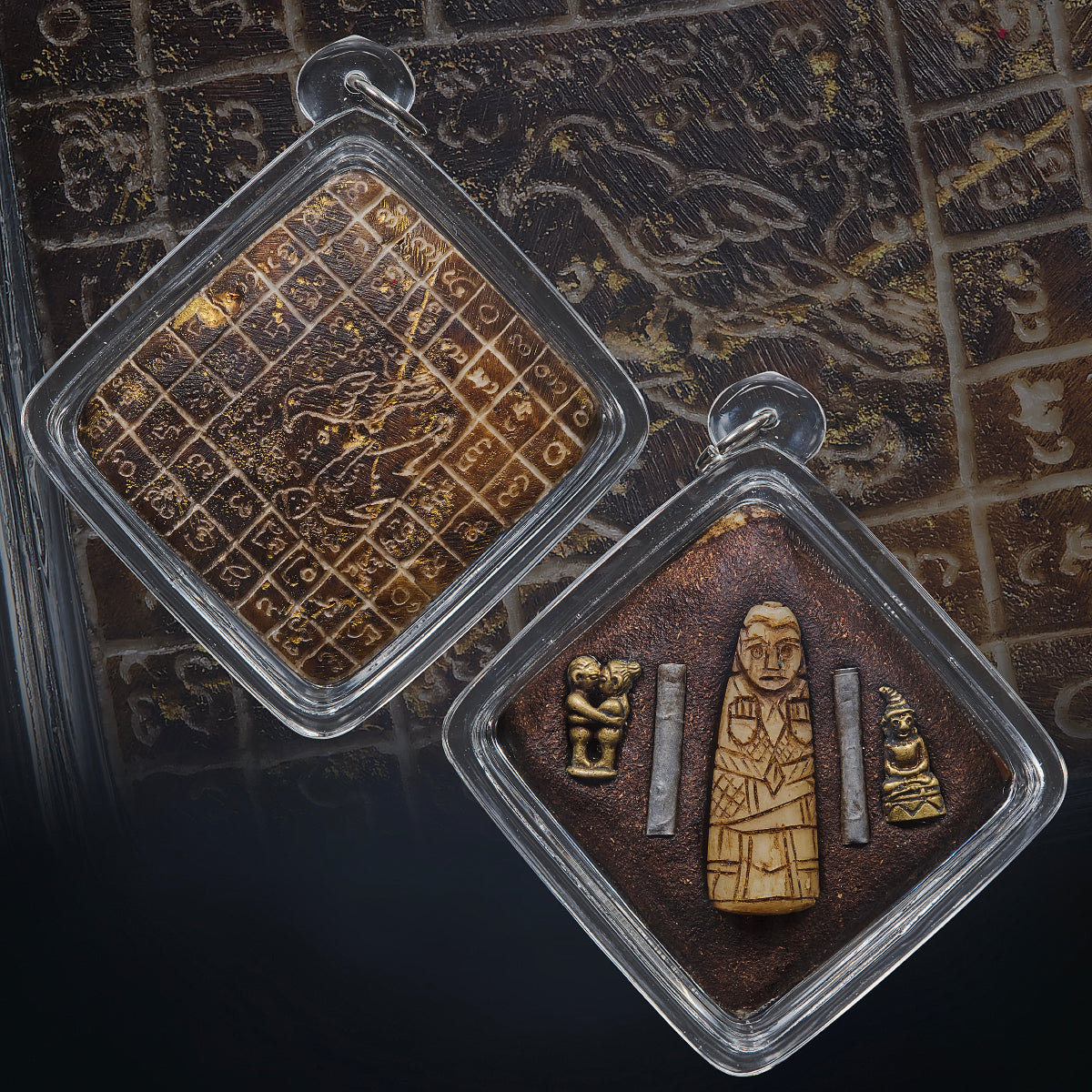
The Paneang front was personally inscribed with a complete yantra grid, sacred characters and the central Salika-and-man design. The grid creates a structured ritual field around the principal image rather than leaving the yantra as a single isolated symbol.
The reverse was then prepared with Maha Saneh herbs associated particularly with opposite-sex attraction. Takruts were installed alongside a Yin Tong and Ngan, while the central Mae image was carved directly from the old relic material.
Por Sala Tan subsequently performed the appropriate rites and invited the associated spirit presence to reside with the artefact and assist its user.
This makes the Salika Saneh Rang different in character from a purely mantra-charged metta piece. Its tradition combines written wicha, prepared herbs, symbolic male-female imagery and an intentionally invited spiritual presence.
Blessings and Effects
The principal emphasis of the Salika Saneh Rang is Maha Saneh — strong personal attraction.
Its opposite-sex herbs and male-female ritual imagery traditionally direct this towards attraction between individuals. Users seek it for greater personal magnetism, increased notice from others and a stronger response when meeting potential partners or new people.
The Salika component adds a softer quality of speech and communication. Attraction may create initial interest, but communication determines whether that interest develops further. Salika is therefore intended to support pleasant conversation, confidence and receptiveness to the user's words.
The piece is also associated with Metta Maha Niyom and popularity, particularly in social environments where being approachable, memorable and well received can create opportunities.
The spirit-assisted aspect is regarded within Por Sala Tan's tradition as an additional supporting force behind these qualities rather than merely a symbolic component.
Modern Application
Although its construction comes from older forms of wicha, the underlying purpose translates easily into contemporary social life.
The Salika aspect is relevant whenever communication and first impressions matter — meeting new people, networking, customer-facing work, presentations or situations where confidence in conversation is important.
The stronger Saneh aspect is traditionally directed towards romantic and opposite-sex attraction, particularly for someone wishing to become more noticeable or approachable.
For business or professional use, the metta side may be equally useful symbolically. Being remembered favourably, having strangers comfortable enough to initiate conversation and establishing rapport quickly can all create opportunities beyond romantic matters.
The character of this piece, however, remains unmistakably Saneh Rang. Attraction rather than wealth or authority is its central purpose.
Physical Details
The Salika Saneh Rang is a diamond-shaped, two-sided artefact assembled entirely around the original sacred materials prepared by Por Sala Tan.
The front consists of a piece of Paneang personally hand-yanted by Por Sala Tan. Its surface is divided into a detailed grid of individual sacred characters. At the centre is the principal Salika composition together with the figure of a man, while traces of gold remain across portions of the inscriptions and central design.
The reverse reveals the layered construction of the Saneh work. A Mae figure carved from the old relic occupies the centre. On either side are handwritten takruts, while small Yin Tong and Ngan images complete the male-female and attraction-oriented arrangement.
Beneath and around these components is the prepared foundation containing Maha Saneh herbs associated particularly with opposite-sex attraction. The reddish-brown surface visible across the reverse forms part of this ritual preparation and provides the base into which the individual components were installed.
The complete artefact is protected within a clear fitted casing, allowing the detailed hand-yanted front and the full ritual composition at the rear to remain visible.
Recommended Pairing
Because the Salika Saneh Rang is already heavily concentrated upon Maha Saneh, Salika and interpersonal attraction, it requires little additional support for that purpose.
For commercial use, it can be paired with Nang Kwak where customer attraction is important. A Phra Sivali may provide a complementary emphasis upon livelihood and opportunity, while a mainstream Buddhist amulet such as Phra Somdej can provide a calmer devotional foundation for everyday wear.
Personal Notes
The most compelling aspect of this artefact is the history behind its materials.
The relics were not originally collected with the intention of making a Salika. They were found inside an abandoned mountain hut whose occupants were initially unknown.
Only after the materials reached Por Sala Tan did he meditate upon them and attempt to understand their history. What emerged, according to his account, was the story of an elderly couple who had withdrawn into the mountains and spent their final years there together.
Por Sala Tan then asked permission to transform part of their remaining material into a work devoted to metta and saneh.
The symbolism is unusually coherent. A couple who remained together in seclusion became connected with an artefact concerned with human attraction and companionship. Salika was used for communication; Yin Tong and the male-female imagery represented attraction and union; Maha Saneh herbs strengthened the same intention.
Finally, Por Sala Tan invited the associated spiritual presence to remain with the finished work and assist its future keeper.
Among his more specialised Barang pieces, the Salika Saneh Rang therefore represents a particularly concentrated meeting of relic, spirit, attraction wicha and the story of two people whose connection endured into the final period of their lives.
-
Free Shipping for Singapore| $15 Worldwide | $60 USA For Items Below $350