
OOBThaiAmulets
Por Sala Tan
Por Sala Tan
Couldn't load pickup availability
PST08
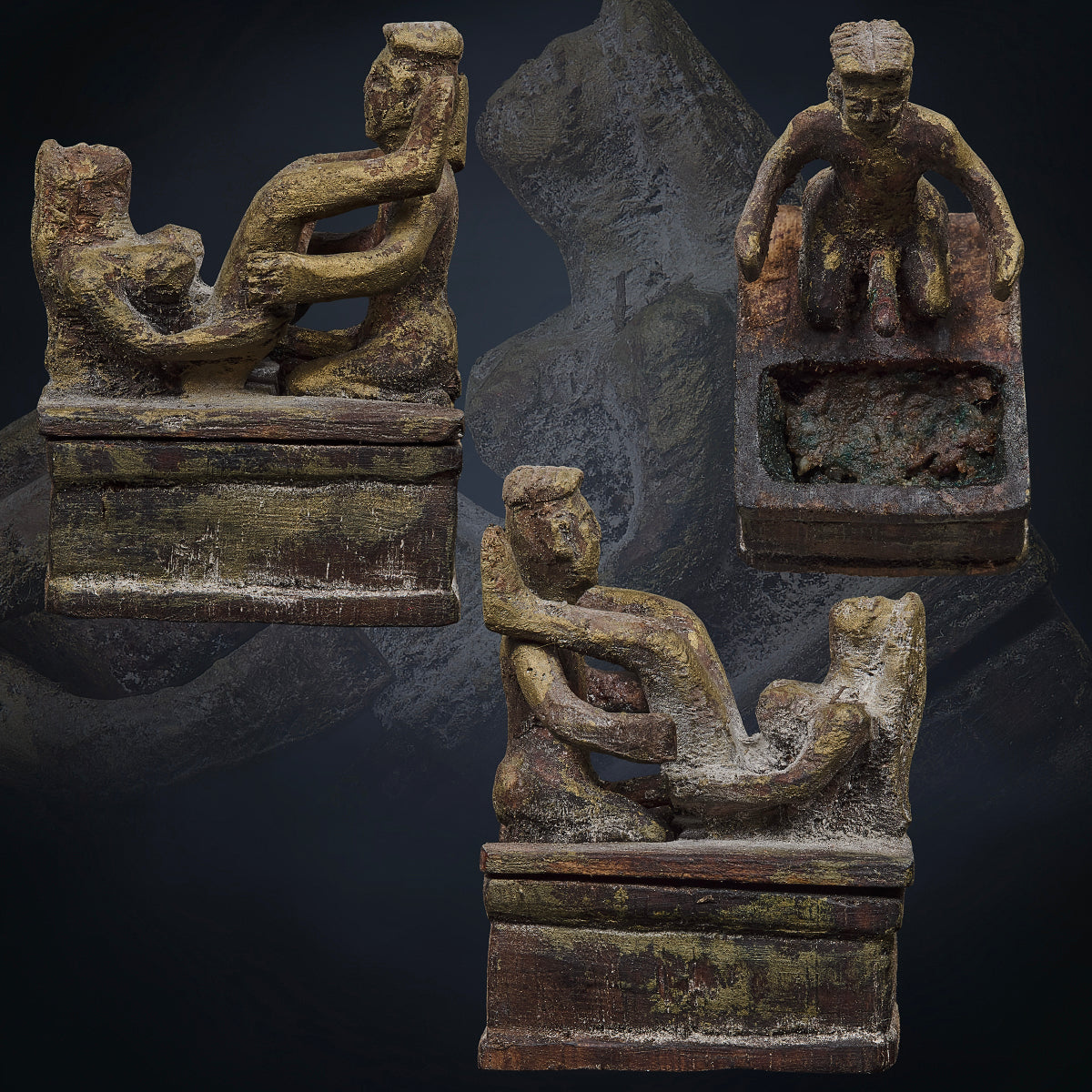
Si Peng Maha Saneh
Por Sala Tan
3cm x 5cm
Mainstream Artifact
Sacred Craftsmanship
Each artifact was individually carved from naturally selected Mai Rak and prepared by hand. Variations in grain, colour, carving, surface patina and form are therefore part of its traditional workmanship, making every surviving example individually distinct.
Personal Experiences Shared by Luksits
Feedback surrounding these pieces has largely concerned the atmosphere of businesses and homes rather than sudden or dramatic events.
Luksits who placed the artifact in their shops or businesses frequently described customers as becoming more receptive and comfortable. Some felt that conversations became easier, customers appeared more willing to remain in the premises, and dealings took place with less unnecessary friction.
Business owners particularly associated the piece with good customer relationships and improved business activity. Rather than describing the effect simply as attracting money, they spoke more often about people responding positively to the business — being more welcoming towards offers, communicating more easily and returning with a favourable impression.
Within the home, owners have described a softer atmosphere after keeping the artifact in an appropriate location. Arguments appeared easier to settle and communication between family members became less confrontational.
Couples have likewise associated the Si Peng Maha Saneh with greater affection and harmony within a relationship, particularly during periods when communication had become distant or strained.
Summary
The Si Peng Maha Saneh is an unusual household and business artifact centred upon attraction, goodwill and harmonious human relationships.
Its foundation is Mai Rak taken specifically from the highest upward-growing branch selected according to Por Sala Tan's instructions. The carved container holds Si Peng prepared from sacred herbs and Nam Man associated with Metta Maha Niyom and Maha Saneh, including Wahn Dokthong and Wahn Sao Long.
Traditionally placed within a home or business, its purpose is to create a favourable environment around the people who enter that space.
For business, the emphasis is upon customer goodwill, approachability, favourable dealings and commercial harmony.
For the home, the emphasis moves towards affection, peaceful relationships and harmony between couples and family members.
Historical Background
Mai Rak occupies a particularly appropriate place within Thai sacred craft because the word Rak carries the meaning of love, affection or fondness.
For this reason, the wood became naturally associated in traditional practice with Metta Mahaniyom — goodwill, mercy, popularity and the quality of being favourably regarded by others.
Por Sala Tan's method added another layer to this association.
The tree itself was not treated as a uniform source of material. The particular direction and position of the branch mattered. By selecting the highest branch that continued growing upwards, the material carried the idea of affection and attraction together with upward movement and favourable development.
This made it particularly suitable for a vessel intended to remain within a business or household rather than being carried temporarily from place to place.
The carved container subsequently became the permanent housing for the Si Peng preparation held within.
Origins of the Materials
The principal structural material is Mai Rak, deliberately selected from an upward-growing branch at the highest suitable point of the tree.
Inside is Por Sala Tan's preparation of Si Peng.
The mixture combines different sacred herbs traditionally directed towards three closely connected qualities:
Metta — kindness, compassion and favourable treatment.
Maha Niyom — popularity, acceptance and goodwill among people.
Maha Saneh — attraction, affection and personal magnetism.
These herbal ingredients were combined with Nam Man prepared from various flowers and plants, including Wahn Dokthong and Wahn Sao Long.
The significance lies in the combination. The Mai Rak provides the vessel associated with affection, while the Si Peng held inside concentrates the Metta and Saneh workings within the artifact.
Ritual
The preparation began with the selection of the Mai Rak itself.
Por Sala Tan instructed his luksits to identify the correct upward-growing branch rather than collecting arbitrary wood from the tree. Once brought back, the selected material was carved into the container.
The prepared Si Peng was then kept within its internal chamber.
Its herbal and floral ingredients were directed towards Metta Maha Niyom and Maha Saneh, making the finished artifact less concerned with force or domination and more concerned with changing the quality of interaction surrounding its location.
The container therefore performs an important role. It does not merely store the Si Peng physically; within the traditional logic of the piece, the Mai Rak forms the outer foundation through which the attraction and goodwill work is established.
Blessings and Effects
The central blessing is Metta Maha Niyom — encouraging people to respond with greater goodwill, patience and receptiveness.
Maha Saneh adds attraction and warmth, making the surrounding environment traditionally regarded as more inviting and socially favourable.
For businesses, these qualities are directed towards customer attraction, positive customer response, smoother communication and favourable commercial relationships.
The artifact is also associated with maintaining good relationships between owners, staff, clients and people entering the premises.
Within a household, the emphasis changes from commerce to domestic harmony. It is traditionally kept for a more peaceful atmosphere, easier communication and stronger affection between those living together.
For couples, the Mai Rak and Si Peng combination is particularly associated with maintaining fondness, closeness and mutual attraction.
Modern Application
This artifact is particularly suited to shops, offices, studios, reception areas and customer-facing businesses.
It may be placed in an auspicious and respectful position where it remains within the environment rather than being constantly moved.
For a shop or business, its traditional purpose is to make the premises feel welcoming and to support positive interaction between the business and its customers.
It may equally be kept within a home. In this setting, its role is less about attracting outsiders and more about maintaining warmth, understanding and harmony among those already within the household.
For couples, it may be kept as a traditional Maha Saneh and Mai Rak piece concerned with sustaining affection rather than simply attracting a new relationship.
Its character is therefore distinctly environmental: the Si Peng Maha Saneh works around a place and the relationships formed within that place.
Physical Details
A hand-carved figural container made from specially selected Mai Rak, with an internal compartment holding Por Sala Tan's prepared Si Peng mixture. The preparation incorporates sacred herbs and floral Nam Man associated with Metta Maha Niyom and Maha Saneh, including Wahn Dokthong and Wahn Sao Long. As each example is individually carved from natural wood and traditionally prepared, differences in carving, dimensions, surface wear, patina and ritual finish are expected.
Recommended Pairing
The Si Peng Maha Saneh is already structured as a place-based Metta and Saneh artifact and can be kept independently.
For a business, it may be complemented by a Baramee or wealth-oriented sacred object. The Si Peng supports the human side of commerce — attraction, goodwill, customer response and relationships — while the accompanying piece may be directed towards authority, stability or wealth.
Within the home, no additional pairing is necessary. Its Mai Rak foundation and Si Peng preparation already centre upon affection and harmony, making it particularly appropriate for maintaining a favourable atmosphere between partners and family members.
-
Free Shipping for Singapore| $15 Worldwide | $100 USA All products