
OOBThaiAmulets
Por Sala Tan
Por Sala Tan
Couldn't load pickup availability
PST03
Mae Per
Por Sala Tan
3 Inches
Barang Artifact
Sacred Craftsmanship
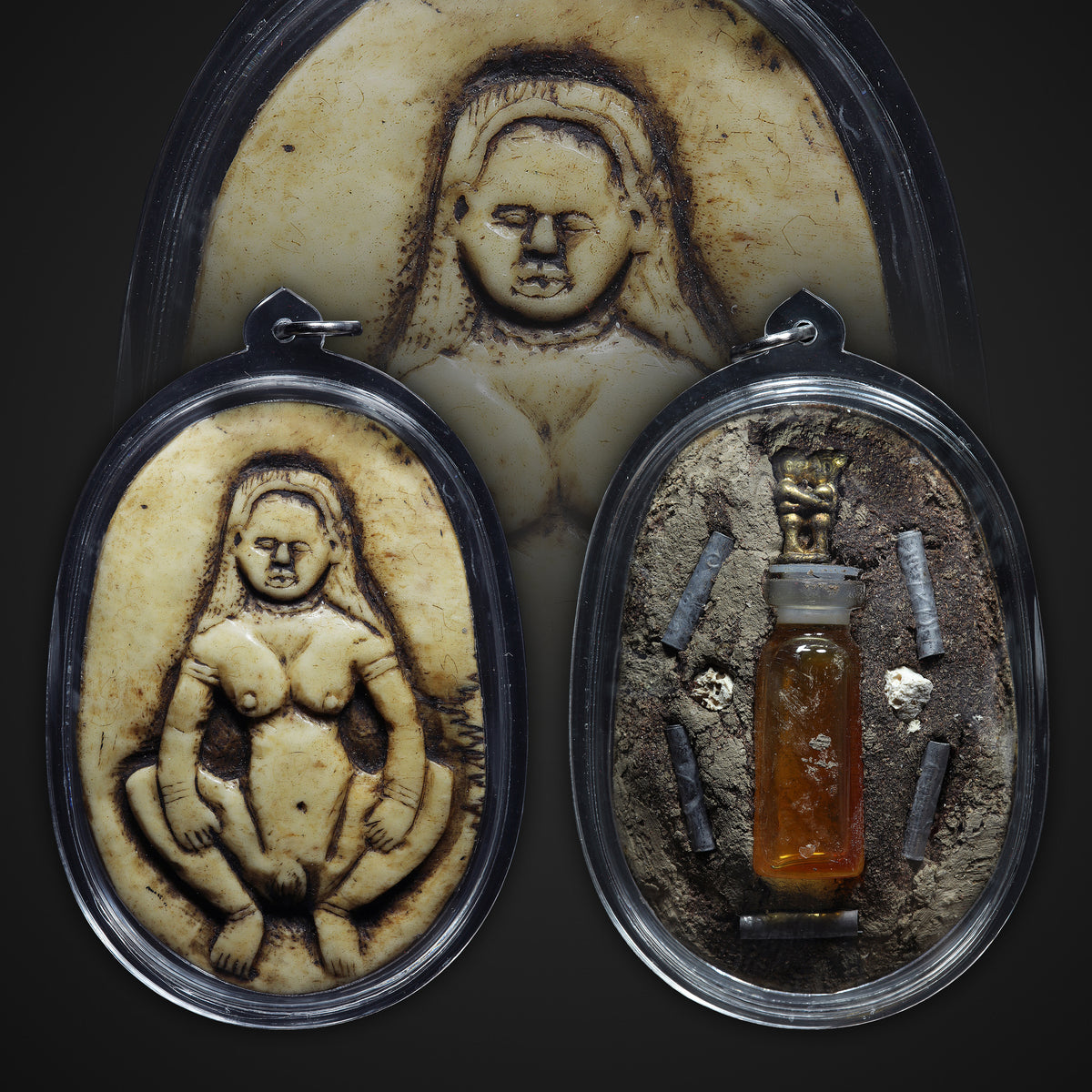
This Mae Per is a distinctive Barang artifact originally carved from Graduk Chang Boran, an old elephant relic traditionally associated with strength, endurance and Baramee.
Each artifact is individually handmade from carefully selected sacred materials. Natural variations in carving, colour, texture and the arrangement of ritual components form part of its individual character.
Exact piece as per photo will be given.
Personal Experiences Shared by Luksits
The history of this Mae Per is closely connected with the luksit who originally obtained the old carving.
According to his account, he had spent several months attempting to work with the artifact but experienced no noticeable response.
Although he believed the Graduk Chang Boran possessed considerable Baramee, he eventually concluded that its spiritual presence had become dormant.
He subsequently brought the piece to Por Sala Tan.
After examining the carving, Por Sala Tan reportedly explained that the original presence had not disappeared but had become inactive following its prolonged isolation within the cave.
Por Sala Tan then incorporated additional sacred materials and performed a chanting ceremony intended to reactivate the piece.
The luksit's subsequent experience became one of the more interesting accounts associated with this Mae Per.
Within the following months, he reportedly encountered three new romantic partners, describing the relationships as developing unexpectedly and with relatively little pursuit on his part.
He attributed this sudden change to the period following Por Sala Tan's ritual intervention.
The Mae Per was later returned to Por Sala Tan during a Wai Kru mass blessing, where it was placed among other sacred objects for consecration.
However, the original owner never collected it afterwards.
Because of geographical distance and personal commitments, the artifact remained with Por Sala Tan for several years.
During this period, it was kept within his personal altar environment and was reportedly present during subsequent prayers and ritual ceremonies until his passing.
Summary
This Mae Per combines an old Graduk Chang Boran carving with Por Sala Tan's specialised Saneh-related ritual preparation.
Originally regarded as spiritually dormant, the artifact was reactivated through the addition of sacred materials, Takruts and a brass embracing couple.
Its most distinctive feature is the bottle of Nam Man Prai mixed with Nam Man Wahn Dok Thong, positioned centrally on the reverse.
These oils are traditionally associated with attraction, romantic interest, Saneh and personal magnetism.
Following its reactivation, the artifact was returned for a Wai Kru blessing but remained uncollected, subsequently spending several years within Por Sala Tan's personal ritual environment.
It is particularly appreciated for its traditional associations with Saneh, Metta Maha Niyom, romantic attraction and interpersonal influence.
Historical Background
Mae Per belongs to a branch of Southeast Asian folk spirituality associated with fertility, feminine energy, sensual attraction and the generative forces of nature.
Unlike conventional Buddhist devotional images, Mae Per figures often emphasise feminine characteristics as direct symbols of fertility and attraction.
Within traditional Barang Wicha, such imagery is associated with Saneh and the ability to attract attention, affection and favourable interpersonal relationships.
Por Sala Tan's approach to this particular piece reflects another aspect of traditional animist practice: an old sacred object was not necessarily considered spiritually active simply because its material possessed Baramee.
According to the accompanying account, the prolonged isolation of the carving within a cave had left its original presence dormant.
Por Sala Tan's intervention was therefore intended to awaken and redirect the existing spiritual qualities towards Saneh-related purposes.
Origins of the Materials
Graduk Chang Boran
The principal carving material is an old elephant relic reportedly recovered from a remote cave. Traditionally associated with endurance, strength and Baramee.
Nam Man Prai
A spirit-related sacred oil used in certain traditional Barang practices, particularly those concerning attraction, Saneh and interpersonal influence.
Nam Man Wahn Dok Thong
An herbal oil preparation associated with Wahn Dok Thong, a plant traditionally valued in Thai attraction-related Wicha for its associations with charm, affection and romantic magnetism.
Five Takruts
Sacred scrolls incorporated into the reverse to complement the intended qualities of Metta Maha Niyom, Saneh and spiritual influence.
Brass Embracing Couple
A symbolic representation of romantic attraction, intimacy and the union of two individuals.
Sacred Powders and Relic Fragments
Additional ritual substances incorporated into the reverse to support the completed sacred composition.
Ritual
According to the lineage account, Por Sala Tan's original task was to reactivate the dormant presence within the old Graduk Chang Boran carving.
The reverse was prepared with sacred powders, Takruts and additional ritual materials intended to establish the artifact's Saneh orientation.
The brass embracing couple reinforced the symbolism of romantic attraction.
A bottle containing Nam Man Prai mixed with Nam Man Wahn Dok Thong formed the central component of the completed arrangement.
Por Sala Tan subsequently performed chanting and activation rites intended to awaken and harmonise the original presence with the newly incorporated materials.
The Mae Per later underwent an additional Wai Kru mass blessing.
After remaining uncollected, it continued to be kept within Por Sala Tan's personal ritual environment for several years, reportedly receiving further exposure to prayers and ceremonial activities.
Blessings and Effects
1. Saneh – Romantic Attraction
Traditionally associated with increasing personal magnetism, romantic attention and attraction from potential partners.
2. Metta Maha Niyom – Popularity and Goodwill
Believed to encourage favourable impressions, social acceptance and positive interactions.
3. Maha Saneh – Sensual Magnetism
The combination of Mae Per imagery, Nam Man Prai and Nam Man Wahn Dok Thong is particularly associated with sensual attraction and personal charm.
4. Chok Larp – Favourable Opportunities
Traditionally associated with attracting unexpected opportunities and helpful circumstances.
5. Personal Confidence
Devotees may regard the artifact as a source of confidence when approaching others or navigating social relationships.
6. Interpersonal Influence
Associated with strengthening personal presence, communication and the ability to leave favourable impressions.
Modern Application
Mae Per is traditionally appreciated by individuals seeking greater confidence, attraction and favourable interpersonal relationships.
Romance and Relationships: Associated with personal magnetism, romantic attention and opportunities to establish new relationships.
Sales and Customer Relations: Traditionally valued for Saneh and Metta Maha Niyom, particularly where personal interaction is important.
Hospitality and Entertainment: Associated with charm, approachability and positive social impressions.
Public-Facing Professionals: May appeal to individuals seeking greater confidence and personal presence.
Collectors of Traditional Barang: The old carving, specialised sacred oils and prolonged association with Por Sala Tan's personal altar make this an interesting piece of his ritual history.
The artifact may be worn or kept respectfully upon a personal altar.
Physical Details
An oval-shaped Mae Per individually carved from Graduk Chang Boran, depicting a seated female figure with pronounced feminine characteristics. The reverse contains a small bottle of amber-coloured sacred oil, described as a mixture of Nam Man Prai and Nam Man Wahn Dok Thong, accompanied by five Takruts, a miniature brass embracing couple and sacred powder backing with embedded relic fragments. The artifact is housed within a clear protective casing.
Recommended Pairing
Phra Khun Paen – Complements Mae Per through traditional associations with Saneh, Metta Maha Niyom and romantic attraction.
Lersi Artifacts – Complements the traditional Wicha associated with attraction, spiritual knowledge and personal influence.
Personal Notes
What makes this Mae Per particularly interesting is its history of reactivation and subsequent prolonged association with Por Sala Tan's personal altar.
The original Graduk Chang Boran carving was reportedly regarded as dormant despite its age and the Baramee attributed to its material.
Por Sala Tan's intervention transformed the piece through additional sacred materials and specialised Saneh-related ritual work.
The inclusion of Nam Man Prai mixed with Nam Man Wahn Dok Thong is especially noteworthy.
Rather than relying solely upon the old carving, the completed artifact combines the traditional associations of spirit-related oil, herbal attraction preparations, Takruts and the symbolism of the embracing couple.
The original luksit's account of unexpectedly entering three romantic relationships following the reactivation remains an interesting part of the artifact's history.
However, its subsequent journey is equally significant.
After being returned for a Wai Kru blessing, the Mae Per remained uncollected and was kept within Por Sala Tan's personal ritual environment for several years.
For collectors, this establishes a meaningful connection with the master's later ceremonial activities.
The significance of this Mae Per lies in the relationship between its old Graduk Chang Boran carving, Por Sala Tan's reactivation rites, the specially prepared Saneh oils and its years within his personal altar environment.
Together, these elements distinguish it from more conventional Mae Per artifacts and preserve an interesting account of Por Sala Tan's traditional Barang practice.
-
Free Shipping for Singapore| $15 Worldwide | $100 USA All products