Stockbox: PST01
Summary
Na Hua Chamut is an old Northern-Burmese wealth wiccha that travelled through the mountain trade routes linking Burma, North East India, Yunnan, and the Lanna regions of Thailand during the early B.E. 2500s. The practice survives quietly today among certain tribal shamans and village ritual specialists, particularly within Yao communities where similar ritual headpieces and spirit-linked charms are still worn during ceremonies and wealth rites.
This piece follows the older mountain format associated with wealth attraction, trade success, and the calling of side income through spirit-assisted commerce. The spirit force connected to the chamut was traditionally believed to possess a natural instinct for locating food, movement, and opportunity within harsh terrain. In occult practice, this instinct became symbolic of “finding wealth pathways” for the wearer.
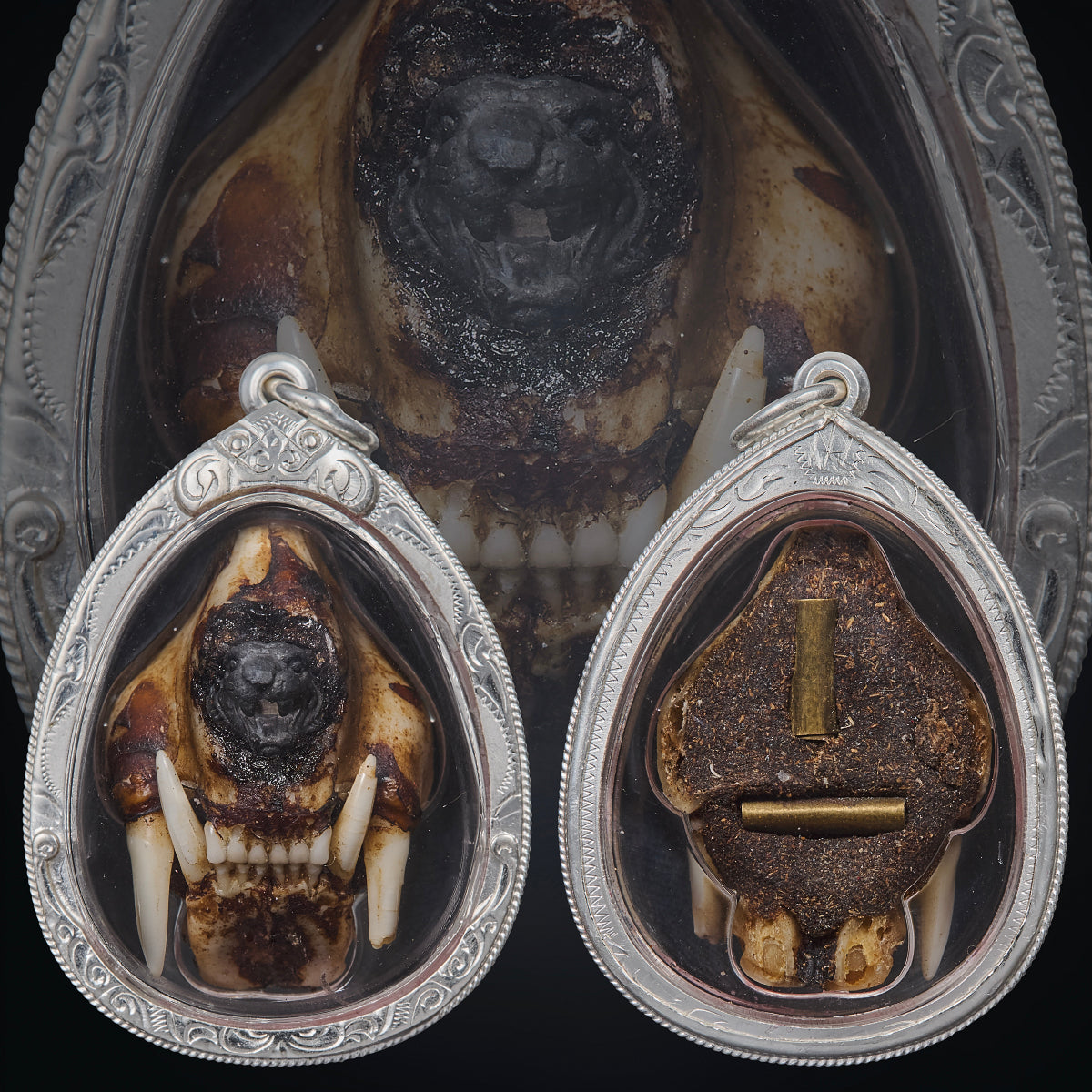
The present piece is housed in a custom silver frame and measures approximately 1.5 inches, suitable for daily carry or altar placement.
Historical Background
Na Hua Chamut became especially popular in the Northern provinces during the early to mid B.E. 2500s, particularly among traders, traveling merchants, plantation owners, and individuals involved in barter economies near the Thai-Burmese borders. The wiccha itself is not purely Thai in origin. Its roots trace further westward through Burmese occult traditions and into the tribal shamanic systems of North East India.
Among older collectors and practitioners, the lineage is associated with mountain shamans who specialized in spirit negotiation rites, fire offerings, and commerce-related blessings. Even today, in isolated regions of Yunnan, Burma, and the hills bordering India, village ritual elders still wear ceremonial forms of these spirit-linked charms during communal rites.
This same current later influenced several Thai masters. Luang Phor Pinak himself was known to practice related Hua Chamut methods and adapted elements of the wiccha into some of his famous Palad Khik Hua Chamut creations. Older Northern practitioners often viewed this lineage as highly practical — not ceremonial for display alone, but directly connected to survival, trade, influence, and prosperity.
Origins of the Material
The chamut materials used for pieces such as these were traditionally sourced from remote coffee-growing regions high in the Northern mountains where civet populations naturally thrived. Farmers occasionally encountered remains deep within plantation terrain and would preserve them carefully before passing them to local ritual masters.
Por Sala Tan was known among villagers and plantation workers for accepting such materials and transforming them into usable spiritual implements through consecration and liberation rites. In return, charms would often be made for the farming families themselves, particularly for wealth fetching, crop prosperity, gambling luck, and trade-related blessings.
Within older mountain belief systems, the chamut carried strong associations with movement, instinct, hidden pathways, and resource gathering. These symbolic traits became integrated into wealth-oriented ritual systems throughout the Northern border regions.
Inside the piece are additional sacred inserts and wealth-related substances intended to stabilize and direct the energy toward business, income, and baramee. Wealth takruts were added during ritual sealing to strengthen the commerce aspect of the wiccha.
Ritual
These pieces underwent a fire ritual connected to teachings associated with Lersi Ser Ming Pai, a mountain ascetic lineage remembered for wealth rites and merchant blessings. Fire plays an important role within this system as a medium of activation, transformation, and spirit liberation.
During consecration, the materials are exposed to sustained chanting alongside fire offerings and takrut empowerment rites. The process is intended to awaken the commercial and wealth-fetching aspects residing within the material while redirecting the spirit force toward beneficial outcomes for the owner.
Older masters believed that certain spirits naturally possess tendencies linked to gathering, locating, attracting, or guarding resources. The ritual purpose was not merely invocation, but disciplined redirection through mantra, elemental control, and offering.
Some of the older Northern collectors specifically sought these pieces for business counters, cash drawers, gambling dens, transport companies, and trading houses.
Blessings & Effects
Na Hua Chamut is traditionally associated with side wealth, business attraction, trade success, and gathering opportunities through unseen pathways. In older times, owners often carried them during travel, negotiations, or while opening new business ventures.
The wealth aspect is only one part of the wiccha. Many practitioners valued the ability of the piece to “pull movement” toward the owner — customers, conversations, unexpected introductions, repeat business, and profitable encounters.
For individuals in sales, entrepreneurship, livestream commerce, property, retail, or commission-based industries, this type of piece has long been appreciated for helping maintain business momentum and attracting opportunities from unexpected directions.
I have personally found Northern wealth pieces of this category especially interesting because the effects often appear through human interaction rather than sudden windfalls alone. Increased inquiries, smoother deal flow, stronger customer retention, and unexpected introductions are commonly reported patterns among long-term users.
Collectors are also drawn to these pieces because authentic examples tied to older mountain wiccha are becoming increasingly difficult to encounter today, particularly those still retaining their original ritual inserts and intact condition.
Modern Application
In modern settings, Na Hua Chamut is highly suited for business owners, salespeople, traders, property agents, livestream sellers, and individuals whose income depends heavily on public interaction and transactional movement.
Many owners keep these near cash registers, office desks, sales counters, or carry them during negotiations and meetings. Others pair them with metta or seneh-oriented pieces to strengthen persuasion, social affinity, and customer comfort.
Beyond practical usage, these also appeal strongly to collectors interested in Northern Thai, Burmese, and tribal occult traditions. Pieces connected to cross-border mountain wiccha carry a very different atmosphere from mainstream temple amulets and reflect an older layer of Southeast Asian ritual culture that is increasingly difficult to document today.
Physical Details
This piece is housed in a custom silver frame with a traditional engraved border. The internal structure retains its older ritual format with inserted wealth takruts sealed into the rear section.
The size measures approximately 1.5 inches, making it practical for daily wear, altar placement, or business display.
The aged surface, ritual sealing compounds, and preserved structure remain consistent with older Northern mountain-style consecrated pieces associated with wealth and commerce rites.
Recommended Pairing
Na Hua Chamut pairs particularly well with seneh and metta items, especially pieces focused on customer attraction, negotiation, speech influence, and social warmth.
Many older users combined wealth-fetching pieces such as these with salika, metta powders, or merchant takruts to create a more balanced influence between opportunity gathering and interpersonal attraction.