Stockbox: PST01
Summary
This is one of the earliest surviving Seneh Duang Setthi charms attributed to Por Sala Tan, originally created for his own son when he came of age. At the time, his son was known to be quiet, reserved, and naturally withdrawn around women despite coming from a respected family lineage. Por Sala Tan understood that some people are born with strong destiny in wealth or intelligence, while others struggle with what old masters called “duang seneh” — the natural human magnetism that draws affection, opportunities, support, and romantic attention into one’s life.
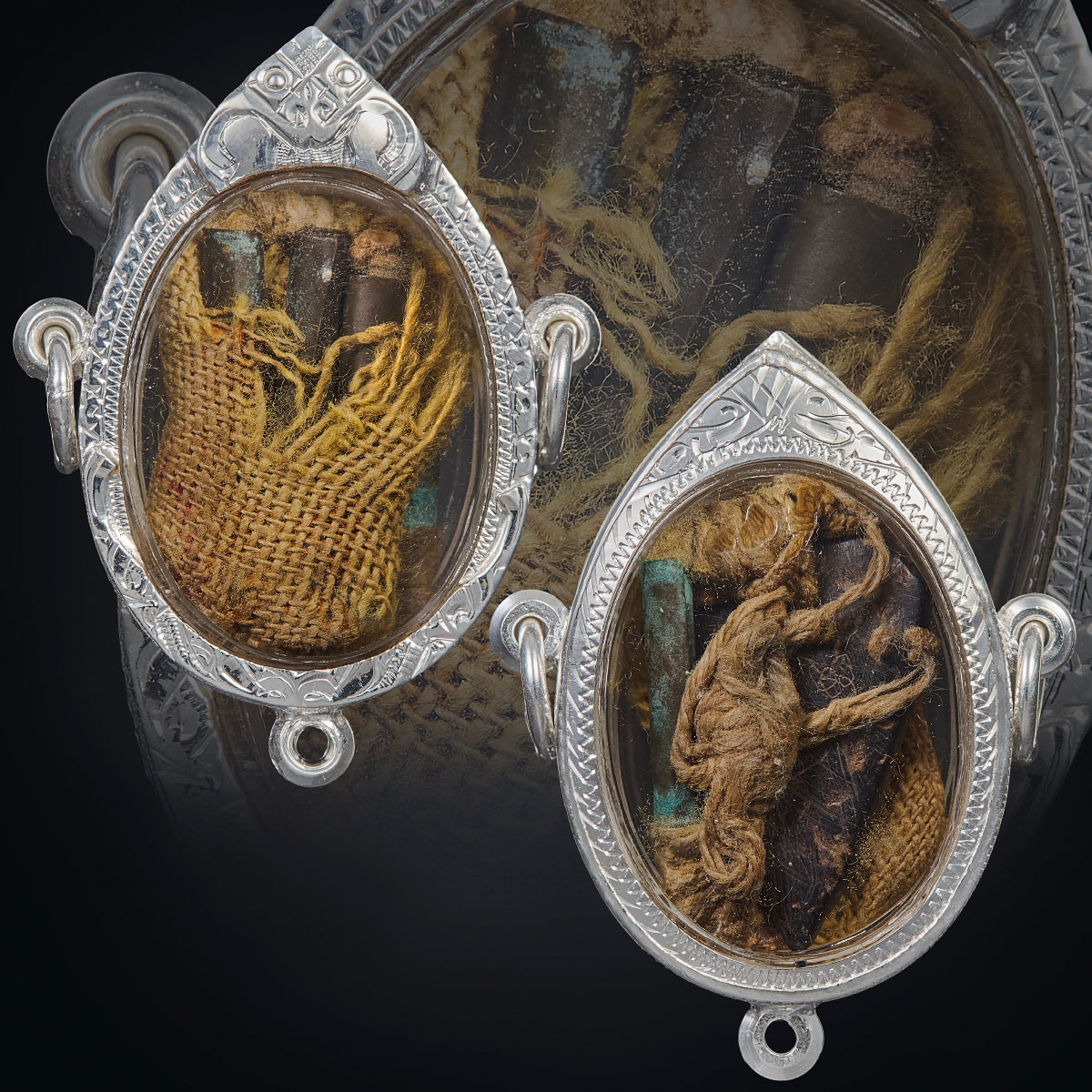
To address this imbalance, Por Sala Tan created this personal-use charm using a preserved section of old coffin wood associated with a former female ritual practitioner, wrapped carefully within original corpse cloth and bound together with hand-inscribed takruts he meditated upon over many months. The purpose was not merely attraction in the superficial sense, but the awakening of social presence, warmth, desirability, and emotional pull.
The story surrounding this piece became well known among older luksits. After receiving the charm, Por Sala Tan’s son reportedly encountered multiple serious suitors within a short period of time and eventually married all five women. Por Sala Tan later reclaimed the charm personally, believing the task had already been fulfilled and that continued use would create excessive romantic entanglements beyond what was healthy for daily life.
For decades afterward, the piece remained on Por Sala Tan’s altar where it continued receiving smoke offerings, nightly prayers, and repeated empowerment rites together with other personal lineage items.
Historical Background
Among the older generation of Northern Thai masters, there existed a category of wiccha dedicated specifically to correcting deficiencies within one’s destiny. Some individuals possessed natural authority. Some carried wealth luck. Others carried educational fortune or strong protection. Yet there were also those whose lives consistently lacked attraction, affection, social ease, or the ability to create emotional connection with others despite having good character.
Por Sala Tan considered this to be an imbalance of stars and karmic temperament rather than simply personality.
The Seneh Duang Setthi lineage was therefore not made casually for public release. It was traditionally prepared for close disciples, family members, traders, travelling businessmen, or individuals whose personal charts repeatedly showed weak relationship luck, weak benefactor luck, or loneliness despite stable careers.
In older Lanna and Burmese-influenced occult traditions, attraction was never viewed purely as romance alone. A person with strong seneh naturally receives softer negotiations, easier introductions, more forgiveness from others, better customer retention, stronger social alliances, and smoother movement through society.
This was why many old merchants, caravan traders, gambling den owners, performers, and travelling salesmen secretly carried forms of seneh wiccha despite already being financially successful.
Origins of the Materials
The core material inside this charm comes from aged coffin wood associated with a former female ritual practitioner whose remains were handled under ceremonial conditions. Over time, the wood had naturally hardened and darkened into an extremely dense form believed to retain powerful emotional and spiritual resonance.
Por Sala Tan wrapped the material within original corpse cloth before sealing it together with takruts individually inscribed and empowered through prolonged meditation. The takruts themselves were not merely inserted as additions. They acted as controlling and directing elements within the charm, guiding the awakened energy toward attraction, affection, financial pull, and human attachment.
The use of cloth, thread, burial-associated woods, and feminine ritual remnants has long existed within old Northern seneh systems because such materials were believed to retain emotional memory and relational imprint exceptionally well.
What makes this particular piece important is that it was never made as a commercial amulet. It began as a deeply personal family piece tied directly to Por Sala Tan’s own bloodline.
Ritual
Por Sala Tan reportedly spent many months meditating upon the takruts before sealing the charm completely. During this process, the materials were repeatedly exposed to incense smoke, oils, nightly chanting, and concentrated samathi intended to gradually liberate and redirect dormant energies into a controlled form of seneh influence.
Older disciples described the process less as “creating attraction” and more as “warming the fate of a person.”
The completed charm was then entrusted directly to his son upon turning eighteen years old.
Following the widely repeated events surrounding his son’s romantic life, the charm was eventually reclaimed by Por Sala Tan and returned permanently to the altar. From that point onward, it became an altar-kept object receiving continuous empowerment over decades alongside other personal ritual items and family lineage pieces.
Blessings and Effects
The Seneh Duang Setthi wiccha is traditionally associated with attraction, romantic opportunities, social confidence, affection from others, smoother communication, and emotional warmth in daily interactions.
Older practitioners also linked this style of charm to wealth attraction because human favour itself often becomes the gateway to financial opportunity. Deals become easier. Introductions happen naturally. People become more willing to support, assist, trust, or continue relationships.
This is especially valued by individuals whose lives feel emotionally “cold” despite outward success.
Over the years, I have noticed that older Northern seneh pieces often do not operate in an aggressive or dramatic way. The effect tends to appear through coincidence, repeated invitations, unexpected conversations, people opening up more easily, or stronger attention during ordinary daily encounters.
For business owners and salespeople, this can become extremely useful because attraction in old occult understanding was never limited only to romance. It also governs customer retention, negotiation tone, popularity, favour, and how strongly people remember your presence after leaving the room.
Modern Application
In modern life, this type of charm is particularly suited for professionals who spend most of their time working yet struggle to naturally expand their social or romantic circles.
Executives, entrepreneurs, consultants, property agents, luxury salespeople, and business owners often operate within environments where first impressions and emotional presence matter greatly. Many have financial success yet repeatedly encounter stagnant relationships, weak dating opportunities, or difficulty creating meaningful connections due to work-heavy lifestyles.
Among Chinese metaphysical practitioners, it is common for certain BaZi charts to repeatedly show weak peach blossom energy or weak relationship stars. Individuals who have visited multiple fortune tellers often hear recurring comments about lacking charm luck despite possessing good career destiny.
This style of old Northern seneh wiccha was traditionally prescribed specifically for such situations.
Physical Details
The charm contains aged ritual wood wrapped within original corpse cloth together with hand-inscribed takruts empowered personally by Por Sala Tan. The entire piece has since matured naturally through decades of altar keeping, smoke exposure, chanting, and ceremonial handling.
The custom silver casing protects the structure while preserving visibility of the internal materials, allowing the charm’s age and ritual layering to remain fully visible.
The internal cloth fibres, darkened surfaces, and aged takruts clearly show the long passage of time and continued altar consecration.
Recommended Pairing
This style of seneh charm is traditionally best paired with baramee-oriented pieces such as Pra Krings, old Buddha images, or authority-based amulets.
The reason is simple. Seneh creates attraction and human pull. Baramee stabilises respect, leadership, and long-term influence.
Together, the combination creates a more balanced presence — attraction supported by dignity, warmth supported by authority, and opportunity supported by personal gravitas.