
OOBThaiAmulets
Por Sala Tan
Por Sala Tan
Couldn't load pickup availability
PST07
Phra Ngan
Por Sala Tan
4.5cm
Barang Artifact
Individual Craftsmanship
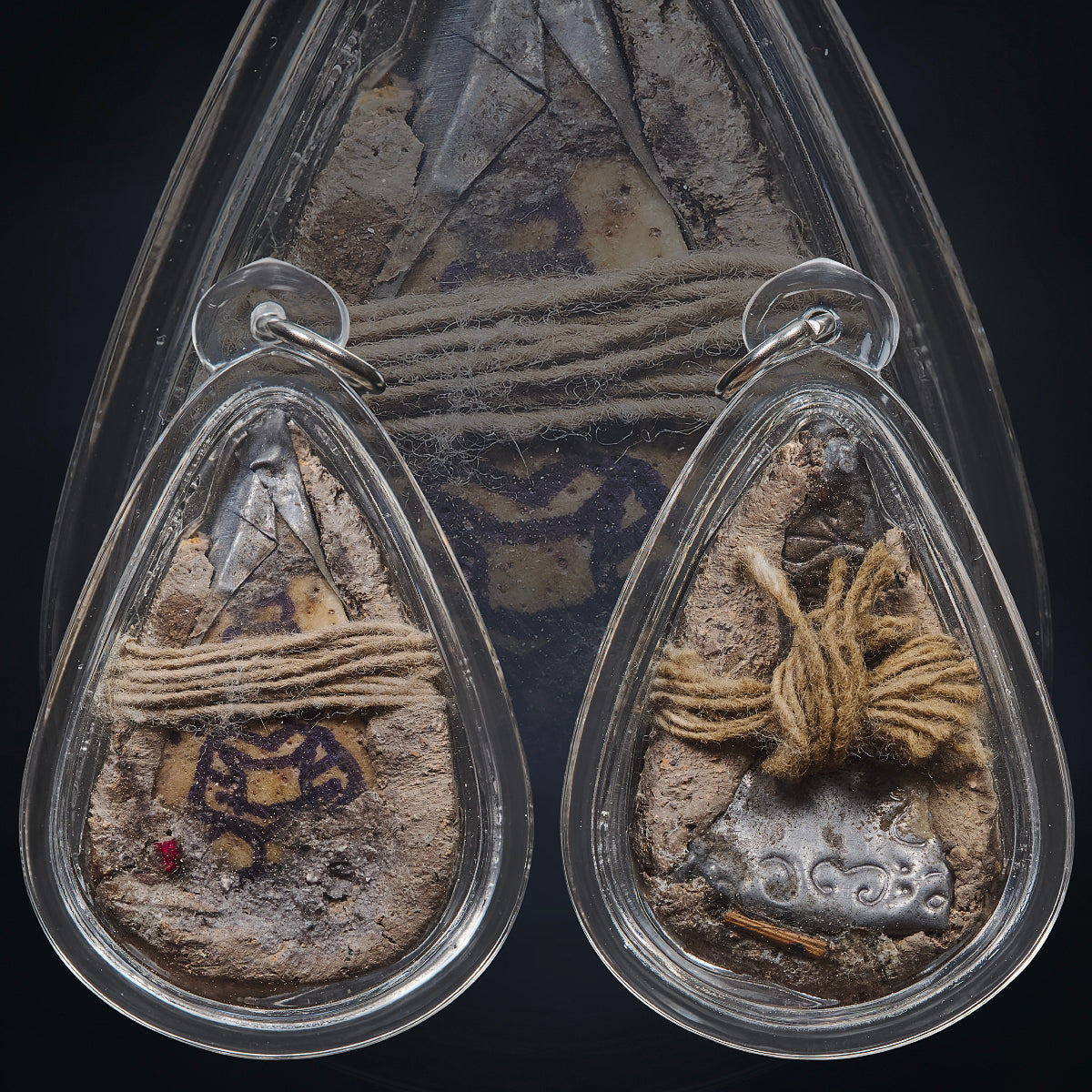
This Phra Ngan was individually created by hand rather than produced from a mould. Because the relic, lead sheet, soil and binding were individually prepared and assembled by hand, differences in drawing, surface, texture and form are natural. Each surviving piece therefore has its own character.
Personal Experiences Shared by Luksits
Luksits who have carried artifacts made from materials recovered during these old grave rites have shared experiences particularly connected with business, customer relations and dealings with other people.
Shopkeepers have spoken of noticeably better business after keeping such pieces with them or at their premises. Some described more customers entering the shop, easier conversations and transactions moving more smoothly than before.
Those working in sales have similarly spoken of people appearing more approachable and understanding. Discussions that might previously have been difficult were sometimes described as becoming easier, with customers more willing to listen, negotiate or return.
Within Por Sala Tan's tradition, these experiences are generally associated with the combined qualities of Metta Maha Niyom, Maha Saneh and wealth-drawing wicha rather than wealth appearing without effort.
Summary
This is an unusual Phra Ngan by Por Sala Tan, created upon a piece of old human relic recovered after an unmarked coffin was accidentally uncovered in agricultural land.
According to the account preserved with the piece, a villager discovered the coffin while ploughing his field in preparation for planting. Rather than disturb or dispose of the remains himself, he approached Por Sala Tan and asked him to conduct the appropriate rites.
Por Sala Tan subsequently performed funeral and cremation rites for the deceased. Before doing so, he communicated with the spirit associated with the coffin and requested permission to retain a small portion of the relic and related grave materials for the creation of sacred artifacts.
The intention, according to the tradition, was that their continued sacred use and the good actions subsequently performed around them could become a means through which merit was dedicated to the deceased.
From these materials, Por Sala Tan created this hand-drawn Phra Ngan.
Historical Background
Phra Ngan—also encountered under spellings such as Phra Ngang—belongs to the wider folk-occult traditions found across parts of Thailand, Laos and the Khmer cultural region.
It should not be understood simply as another form of Buddha image. Phra Ngan traditions contain a mixture of regional spirit belief, protective magic, attraction wicha and older Khmer-influenced symbolism. Its precise historical origin is not represented consistently across different lineages, and explanations vary considerably among practitioners.
Within contemporary Thai occult practice, Phra Ngan is especially associated with Metta Maha Niyom, Maha Saneh, commerce, opportunity, protection and personal influence.
Por Sala Tan's interpretation follows his own Barang and spirit-related practice, in which the figure may be combined with relics, grave materials, yantras and other spiritually significant substances.
Origins of the Materials
The story of this artifact begins not in a temple workshop, but in a cultivated field.
While preparing his land for a new planting season, a villager's plough encountered what proved to be an old, unmarked coffin buried beneath the field. There was no surviving marker identifying the deceased, and the burial had apparently been forgotten as the surrounding land changed over time.
Concerned about disturbing the remains improperly, the villager contacted Por Sala Tan.
Por Sala Tan attended the location and carried out the necessary rites for the deceased. According to the account passed down with the artifact, communication was first made with the spirit before anything was retained.
Permission was requested to preserve a small quantity of the relic and soil lying beneath the coffin. These materials would later be incorporated into sacred objects, with merit dedicated back to the deceased.
This provenance explains why the cemetery soil was important. It was not simply soil collected somewhere within a graveyard; it was specifically earth from beneath the coffin itself, directly associated with the original burial.
Ritual
After the funeral rites and cremation had been properly carried out, Por Sala Tan prepared the retained materials for sacred use.
The Phra Ngan was drawn by hand directly onto the relic.
A corresponding wealth formula was then prepared separately. Its yantra was inscribed onto a lead sheet, which was folded around the reverse and edges of the relic. The metal therefore serves both as a physical covering and as the carrier of the inscribed wicha.
Soil recovered from beneath the coffin was applied around the sides, bringing the original burial material back into direct contact with the relic.
Finally, Sai Sin was wound around the artifact, physically binding its different components together before the completed piece was consecrated according to Por Sala Tan's practice.
Blessings and Effects
The different components give this Phra Ngan a deliberately layered purpose.
The Phra Ngan represents the central Metta and Maha Saneh element: attraction, favourable reception, persuasive presence and smoother dealings with people.
The wealth yantra on lead sheet adds the commercial aspect of the piece, traditionally directed towards opportunity, income, customers and movement of wealth.
The cemetery soil from beneath the coffin carries a different symbolic role. Within folk-occult practice, grave earth may be connected with spirit-associated protection, boundary symbolism and the concentrated earth-energy of a particular place.
Together, the artifact is traditionally associated with:
- Metta Maha Niyom — goodwill and favourable treatment.
- Maha Saneh — personal attraction and magnetism.
- Kha Khai — support for commerce and selling.
- Choke Lap — opportunities and unexpected fortune.
- Riak Sap — drawing and retaining wealth.
- Protection — particularly through its spirit-associated materials.
- Negotiation and communication — smoother interactions with customers and other people.
Modern Application
For a modern wearer, this Phra Ngan is particularly suited to situations where success depends upon people responding positively to one another.
It may therefore be relevant to shopkeepers, business owners, salespeople, agents and those whose work involves negotiation, contracts or regular customer contact.
Its traditional emphasis is not simply on attracting money. The broader idea is to create favourable circumstances around the wearer—being noticed, receiving cooperation, meeting helpful people and finding discussions easier to move forward.
This corresponds closely with the experiences shared by Por Sala Tan's luksits.
Physical Details
The artifact is formed around an irregular piece of old relic upon which Por Sala Tan hand-drew the Phra Ngan and associated sacred markings. A hand-inscribed lead wealth yantra covers portions of the reverse and sides, while cemetery soil recovered from beneath the original coffin remains incorporated around the body. Sai Sin is visibly wound around the piece, binding the different materials together. The artifact is now preserved within a clear protective casing, allowing the construction and original materials to remain visible.
Recommended Pairing
This Phra Ngan may be paired with a Phra Somdej or another mainstream Buddhist amulet when worn.
The Phra Ngan can then serve as the more specialised piece for Metta, Maha Saneh, commerce and interpersonal dealings, while the Buddhist image provides the principal devotional focus.
Personal Notes
What makes this particular Phra Ngan especially interesting is the relationship between its materials and its origin.
The relic, coffin soil, lead yantra and Sai Sin were not assembled merely because they were regarded as powerful materials individually. They belong to a single story beginning with the accidental discovery of a forgotten burial and Por Sala Tan being asked to give the deceased proper rites.
The retained materials were subsequently transformed into an artifact with the stated intention that merit could continue to be dedicated to the spirit from whom they originated.
The hand-drawn Phra Ngan, rather than a cast or moulded image, also preserves Por Sala Tan's direct workmanship on the original relic. It is this combination of provenance, ritual and individual construction that gives the piece its distinctive place among his spirit-associated works.
-
Free Shipping for Singapore| $15 Worldwide | $60 USA For Items Below $350