
OOBThaiAmulets
Por Sala Tan
Por Sala Tan
Couldn't load pickup availability
PST06
Phra Phaya Khao Kham
Por Sala Tan
1.5 Inches
Barang Artifact
Sacred Craftsmanship.
Because each stage was individually carved, coated, tied and assembled by hand, natural differences in texture, lacquer, gold application, Tid Jai treatment and binding make every artifact unique.
Personal Experiences Shared by Luksits
Artifacts of this type are traditionally sought by devotees who place particular importance upon Maha Saneh, Metta Maha Niyom and personal magnetism.
Phaya Khao Kham already carries a strong northern reputation for charm and favourable social presence. In this example, Por Sala Tan strengthened that character further through Tid Jai, together with the attached takrut and ritual binding.
Users of similar Phaya Khao Kham artifacts often describe greater confidence in social situations, more attention from others and easier interaction with people they have just met.
For those involved in sales or customer-facing work, the same qualities may be experienced as customers being more receptive, conversations becoming smoother, or people remembering the wearer more readily afterwards.
The artifact is therefore not limited to romantic attraction. Its traditional intention extends equally into business rapport, favourable speech, social confidence and the ability to leave a strong impression.
Summary
This Phra Phaya Khao Kham was created by Por Sala Tan from an old piece of Graduk Chang Graden given to him by a wandering practitioner who had travelled through Cambodia seeking deeper occult knowledge.
During that journey, the practitioner was directed to travel north and seek out Por Sala Tan for further learning.
When they eventually met, he presented the old Graduk Chang Graden to Por Sala Tan as a mark of respect.
Por Sala Tan later used the material to carve several distinctive artifacts for devotees.
This particular example was finished with red lacquer mixed with Burmese wax, gold foil and Tid Jai, then bound with wire and completed with a takrut secured together with chanting rope.
Its traditional emphasis centres upon Maha Saneh, Metta Maha Niyom, attraction, favourable speech, business rapport, charisma and prosperity through personal influence.
Historical Background
Phaya Khao Kham (พญาเขาคำ) belongs to northern Thai and Lanna charm traditions, with influence commonly associated with Tai Yai or Shan oral culture.
He is sometimes described as the “Khun Phaen of Lanna” because of his reputation for personal magnetism, attraction, prosperity and social popularity.
One commonly related legend tells of a ruler who prayed for an heir and was eventually blessed with an extraordinary prince.
The prince was said to have been born with golden horns, which later became the defining symbol of the tradition.
As he matured, he became known for his handsome appearance, confidence, prosperity and unusual ability to attract admirers.
The golden horn therefore came to symbolise visible merit, dignity, prosperity, authority and exceptional personal magnetism.
In modern northern amulet culture, Phaya Khao Kham is consequently associated with Metta, Maha Saneh, favourable speech, business rapport and social influence.
Origins of the Materials
The foundation of this artifact is an old piece of Graduk Chang Graden.
According to the provenance surrounding the piece, the material belonged to a wandering practitioner who had travelled into Cambodia in search of higher occult knowledge.
During his journey, he was advised to continue north and seek out Por Sala Tan.
When he finally met Por Sala Tan, he presented the old Graduk Chang Graden as a gesture of respect for the master's wicha.
Por Sala Tan retained the material and later carved it into several individual sacred artifacts.
For this Phaya Khao Kham, the carved surface was finished with red lacquer blended with Burmese wax and decorated with gold foil.
The completed carving was then soaked and smeared with Tid Jai, making attraction one of the principal material and ritual themes of the piece.
A takrut was attached through wire binding, while chanting rope was wrapped around the artifact, adding another physical connection with ritual prayer and consecration.
Ritual
The ritual construction began with the selection and carving of the Graduk Chang Graden.
Por Sala Tan shaped the material into Phaya Khao Kham, with the horned central figure and accompanying figures reflecting the traditional symbolism of popularity and attraction.
The carving was then treated with red lacquer and Burmese wax, before gold foil was applied across the raised areas.
Afterwards, the entire artifact was soaked and smeared with Tid Jai.
This is important to the character of the piece. Tid Jai was not merely placed at one small point, but deliberately incorporated as a principal attraction-oriented treatment.
A takrut was then attached through wire binding.
Finally, chanting rope was bound around the figure, reinforcing the ritual connection and completing the physical construction.
The result combines Phaya Khao Kham symbolism, old sacred material, Tid Jai, written takrut wicha, Burmese-influenced finishing and chanting rope within one compact artifact.
Blessings and Effects
The strongest traditional emphasis of this artifact is Maha Saneh and Metta Maha Niyom.
Phaya Khao Kham is associated with charisma, attraction and favourable social presence, while Tid Jai strengthens the idea of being remembered and retaining another person's attention.
The attached takrut adds a further specialised wicha element, while the chanting rope connects the finished artifact with ritual prayer and blessing.
Traditional intentions include:
- Maha Saneh and attraction
- Metta Maha Niyom
- Social confidence and favourable attention
- Persuasive and pleasant speech
- Customer rapport and repeat business
- Greater personal presence
- Prosperity through relationships and opportunity
- Baramee and social influence
The Tid Jai aspect is best understood as supporting attachment, recall and emotional interest, rather than overriding another person's judgement or consent.
Modern Application
This Phaya Khao Kham is particularly relevant for people whose work or lifestyle depends heavily upon personal interaction and presentation.
Salespeople, business owners, hospitality workers, performers and those who frequently network may find its traditional qualities especially suitable.
It may be carried before important meetings, social gatherings, negotiations or situations where confidence and personal presence are important.
For relationship purposes, its healthiest interpretation is to support warmth, confidence, communication and genuine connection.
For business, the same principle applies.
A person who is remembered favourably, speaks well and builds trust is naturally in a stronger position to develop lasting customer and professional relationships.
Physical Details
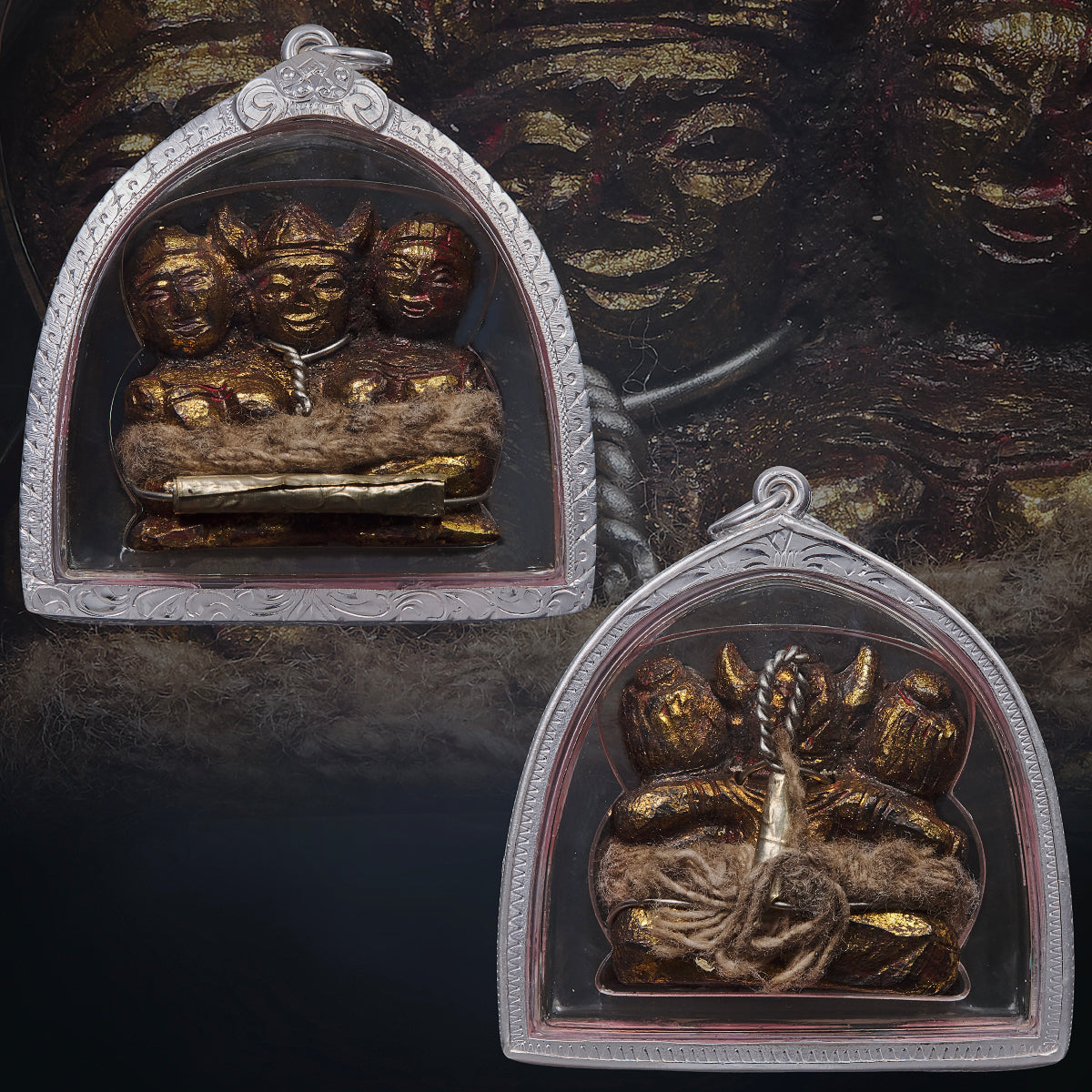
The artifact is a three-dimensional Phaya Khao Kham carving made from old Graduk Chang Graden.
The front presents the horned central figure accompanied by smaller surrounding forms, reinforcing the traditional imagery of attraction and popularity.
The surface has been finished with red lacquer mixed with Burmese wax, with gold foil applied across the raised details.
The carving was then soaked and smeared with Tid Jai, creating a darker aged character beneath the gold.
A takrut is attached by wire, while a length of chanting rope is wrapped and bound around the artifact, creating a visibly layered ritual construction.
The reverse continues the full three-dimensional carving and retains the same red, gold and darkened surface character.
The example shown is protected within a fitted casing for preservation and everyday wear.
Recommended Pairing
Phaya Khao Kham can comfortably be carried alone when the principal intention is Metta, Saneh, attraction and personal confidence.
For business use, it pairs naturally with a wealth-oriented artifact, allowing Phaya Khao Kham to concentrate upon customer relationships, personal influence and favourable interaction, while the accompanying artifact supports financial movement.
For those working late hours or in highly social environments, it may also be balanced with a protective artifact such as Tao Wessuwan.
Personal Notes
What makes this particular Phaya Khao Kham especially interesting is both the origin of the Graduk Chang Gradenand the way Por Sala Tan completed it.
The old material was brought to him by a wandering practitioner who had travelled through Cambodia seeking deeper occult knowledge.
During that journey, the practitioner was directed to travel north and learn from Por Sala Tan.
When they eventually met, the Graduk Chang Graden was offered to Por Sala Tan as a gesture of respect for his wicha.
Por Sala Tan later transformed the material into several individual sacred artifacts.
This version was then strengthened through red lacquer, Burmese wax, gold foil, Tid Jai and a takrut, but its construction went one step further: the piece was also bound with chanting rope, physically tying the ritual work together.
For me, that detail gives this example a particularly complete character.
The old Graduk carries the provenance, Phaya Khao Kham provides the attraction symbolism, Tid Jai strengthens the Saneh aspect, while the takrut and chanting rope complete the ritual structure.
-
Free Shipping for Singapore| $15 Worldwide | $100 USA All products