
OOBThaiAmulets
Por Sala Tan
Por Sala Tan
Couldn't load pickup availability
PSt06
Lersi Serming Pai
Por Sala Tan
2 Inches
Barang Artifact
Sacred Craftsmanship
Because each component was carved, prepared and arranged individually by hand, natural differences in texture, patina, material placement and finishing make every artifact unique.
Personal Experiences Shared by Luksits
The origin of this artifact began when one of Por Sala Tan's followers came across the remains of a forest hermit while travelling near the Burmese border.
The follower felt strongly that the hermit should be given proper final rites and contacted Por Sala Tan.
Por Sala Tan travelled to the location and performed the necessary ceremonies. During the ritual communication surrounding the hermit, it was understood that the deceased had been a practitioner connected with Lersi Serming Pai wicha and lineage.
Por Sala Tan then respectfully sought permission to retain certain relics and remaining materials for future sacred work, with the intention of creating artifacts for people who might benefit from that lineage.
A simple forest burial and open-air wood-fire cremation rite was carried out according to the circumstances.
Only after the rites had been completed were suitable relics and materials collected.
Por Sala Tan preserved them until he felt the appropriate purpose had been found. Selected relic pieces were later carved into Lersi Serming Pai, allowing the finished artifact to retain a direct material connection with the forest practitioner.
Summary
This Lersi Serming Pai by Por Sala Tan is a specialised forest-lineage artifact centred upon authority, courage, protection, spirit control and Baramee Kru.
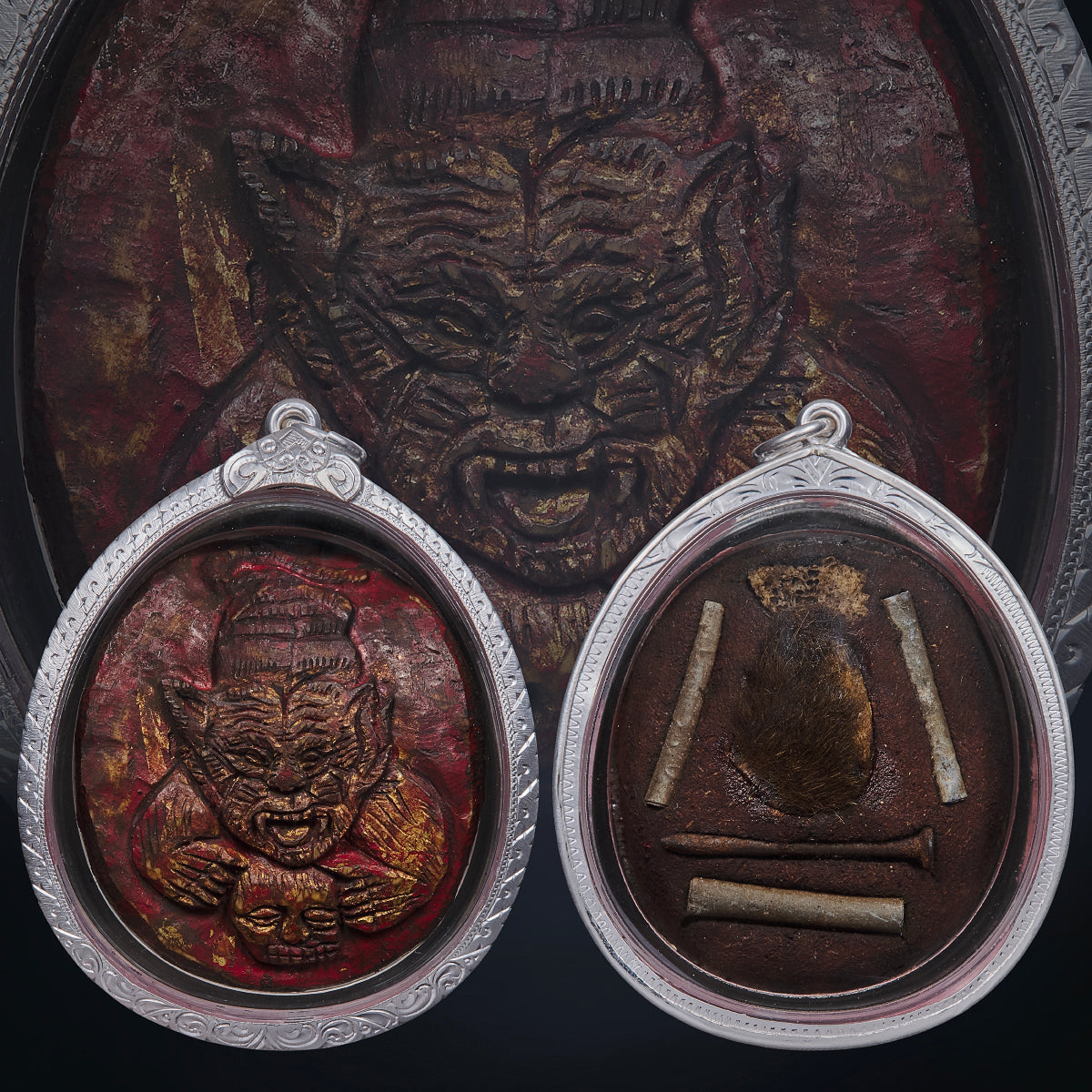
The front was carved directly from relic material associated with a deceased forest hermit linked with the Lersi Serming Pai tradition.
The carving was finished with red lacquer mixed with Burmese wax, giving the figure its distinctive dark red and gold appearance.
The reverse carries a dense ritual composition of soil, sacred herbs, takruts, Chamut Paneang, Chamut fur and a coffin nail.
Together, these elements produce a much more protective and forceful interpretation of Lersi Serming Pai, with particular emphasis upon strong boundaries, dealing with hostile or heavy influences, alertness and disciplined control under pressure.
Historical Background
Lersi Serming Pai, associated with Pu Chao Saming Phrai, belongs to the northern Thai tradition of the powerful forest master.
In older northern literary tradition, Pu Chao Saming Phrai appears as a formidable guardian and ritual adept capable of assuming different forms, including that of a tiger.
This shape-changing character later became expressed through the familiar tiger-faced Lersi image.
The tiger carries several meanings: courage, alertness, survival instinct and authority within dangerous or uncertain surroundings.
The Lersi aspect adds knowledge, discipline, restraint and teacher lineage.
Together, they express the idea of controlled strength.
The figure is therefore better understood not as an uncontrolled tiger spirit, but as a master of the qualities symbolised by the tiger — remaining powerful without becoming reckless, alert without becoming fearful, and firm without losing discipline.
Origins of the Materials
The principal material is the relic associated with the deceased forest hermit encountered near the Thai–Burma border.
After the final rites had been completed, Por Sala Tan retained appropriate relic material for sacred use.
The selected piece was later carved into the image of Lersi Serming Pai and finished with Burmese wax and red lacquer.
The reverse was prepared with soil and sacred herbs, creating the foundation for the other ritual materials.
Several takruts were incorporated as written wicha.
A Paneang fragment from a Chamut and Chamut fur were added to reinforce the artifact's animal-associated and protective character.
The inclusion of a coffin nail gives this particular version an additional cemetery-linked element.
Within traditional occult practice, coffin nails are often treated as materials associated with firmness, binding, protection and the containment of troublesome influences. In this context, it strengthens the more defensive character of the piece.
Ritual
The ritual history of this artifact began with the hermit's final rites rather than with the carving itself.
Por Sala Tan first attended to the deceased properly. Only afterwards were relics and other usable materials retained.
When the artifact was eventually created, the selected relic was carved into Lersi Serming Pai and ritually finished with red lacquer and Burmese wax.
The reverse was then layered with soil and sacred herbs before the takruts, Chamut materials and coffin nail were incorporated.
Each element contributes a different role.
The Lersi represents teacher lineage, knowledge and spiritual discipline.
The tiger-associated form represents courage, authority and strong boundaries.
The Chamut materials reinforce the animal and spirit-oriented character.
The coffin nail introduces a more forceful protective and binding element.
The completed piece therefore combines forest lineage, relic material, written wicha, cemetery material and Por Sala Tan's consecration practice within one artifact.
Blessings and Effects
The strongest traditional emphasis of this version is protection and authority.
Lersi Serming Pai is approached for courage, alertness and the ability to remain steady when confronted by pressure, competition or aggressive people.
Its Baramee and Maha Amnaj aspects are particularly relevant for those who need to establish authority, maintain boundaries or lead others without unnecessary confrontation.
The coffin nail strengthens the symbolism of fixing, binding and stabilising, especially in situations where circumstances feel chaotic or difficult to control.
The Chamut materials add another layer associated with instinct, vigilance and handling more volatile spiritual influences.
Traditional purposes therefore include:
- Protection and avoidance of danger
- Authority and leadership
- Courage under pressure
- Stronger personal boundaries
- Alertness in unfamiliar surroundings
- Control over difficult or disruptive influences
- Baramee Kru and teacher protection
- Metta and personal charisma
- Confidence in negotiation and confrontation
The central theme remains controlled force rather than aggression.
Modern Application
This artifact is especially relevant for those who regularly enter demanding, competitive or unpredictable environments.
Business owners, managers and supervisors may approach it for stronger presence and calm authority.
Those travelling frequently, working late hours or entering unfamiliar places may connect more strongly with its protective and alertness aspects.
It is also particularly suited to people who feel they need stronger boundaries around themselves, especially when dealing with hostile personalities, workplace politics or repeated interference.
For practitioners, the Lersi element also serves as a reminder of discipline, respect for teachers and the importance of controlling one's own reactions before attempting to control external circumstances.
Physical Details
The artifact is an oval carved relic piece depicting Lersi Serming Pai in a fierce tiger-associated form.
The front is finished with red lacquer mixed with Burmese wax, with gold highlighting the raised features.
The figure appears to hold or dominate a smaller head or skull-like form, reinforcing the traditional symbolism of mastery over fear, mortality and unruly spiritual forces.
The reverse is built upon a bed of soil and sacred herbs.
Several takruts are positioned around a central arrangement containing Chamut fur, a Paneang fragment from a Chamut, and a coffin nail.
The artifact is protected within a fitted casing, allowing both the carved front and the ritual construction on the reverse to remain fully visible.
Recommended Pairing
This version of Lersi Serming Pai is already strongly weighted towards protection, authority and spiritual control, so it can comfortably be carried alone.
For those wishing to soften the overall arrangement, it may be paired with a Metta or Salika artifact to add a stronger emphasis upon communication and favourable human relationships.
A recognised Buddhist amulet or image of a respected monk may also provide a balanced devotional foundation alongside the specialised Barang wicha.
Personal Notes
What distinguishes this version from the other Lersi Serming Pai pieces is the addition of the coffin nail together with Chamut fur and Chamut Paneang.
The origin remains the same: a forest hermit was discovered after his passing near the Burmese border, Por Sala Tan travelled to perform the proper rites, and the hermit was understood to have practised a lineage connected with Lersi Serming Pai.
The relics were then preserved and only later used for sacred construction.
This particular reverse gives the piece a more forceful and defensive character.
The coffin nail contributes the symbolism of firmness and containment, while the Chamut materials reinforce the instinctive and protective side of the artifact.
For me, this makes it one of the stronger expressions of the Lersi Serming Pai concept:
the Lersi provides knowledge and discipline, the tiger form provides courage and authority, and the cemetery-linked materials reinforce protection and firm control over difficult circumstances.
-
Free Shipping for Singapore| $15 Worldwide | $100 USA All products