


OOBThaiAmulets
Phra Somdej Suan Tham Sukho B.E. 2566
Phra Somdej Suan Tham Sukho B.E. 2566
Couldn't load pickup availability
MS07
Phra Somdej Suan Tham Sukho
Suan Tham Sukho · Mae Taeng, Chiang Mai
B.E. 2566 (2023)
1.5 Inches
Mainstream Artifact
Individual Craftsmanship
This Phra Somdej belongs to the Suan Tham Sukho B.E. 2566 project, created from a particularly extensive mixture of sacred powders and lineage materials.
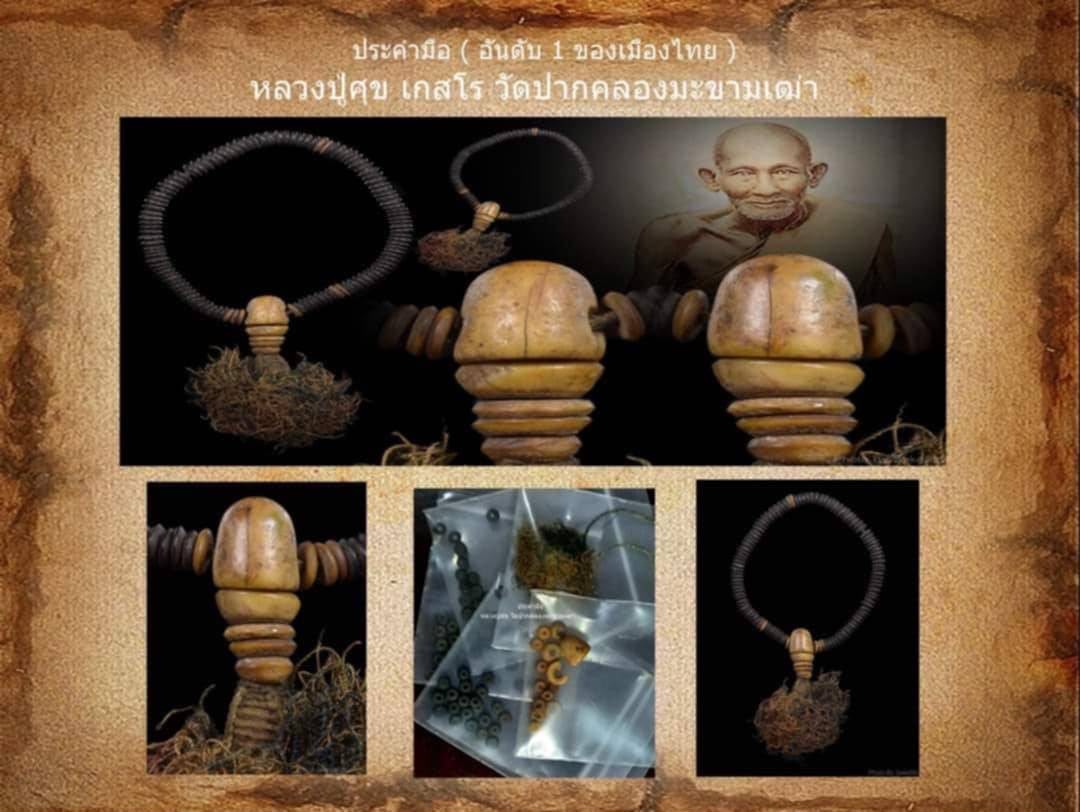
A fragment from an old Prakam associated with LP Suk of Wat Pak Khlong Makham Thao was incorporated into the artifact.
The photographs are representative only. A piece will be selected at random, and the amulet supplied may differ from the exact piece shown in the images.
The photographs also show the strongly handmade nature of the piece. Fibres and fragments of old sacred material remain visible throughout the dark powder body. Such materials were not intended to produce a perfectly uniform finish; differences in texture, colour and visible inclusions form part of the individual character of each artifact.
Personal Experiences Shared by Luksits
What attracted me to this particular Phra Somdej was not simply the B.E. 2566 blessing project, but the piece of LP Suk's Prakam incorporated into it.
LP Suk of Wat Pak Khlong Makham Thao occupies an important place in the history of traditional Thai wicha. Old objects and materials genuinely connected with his lineage are therefore particularly meaningful when they are preserved within a later artifact rather than kept simply as loose fragments.
The Suan Tham Sukho project already brought together materials connected with numerous respected meditation masters. The addition of the LP Suk Prakam gives this particular example another historical connection — linking a modern B.E. 2566 creation with one of the older and highly regarded magical lineages of central Thailand.
Summary
The Phra Somdej Suan Tham Sukho B.E. 2566 was created as part of a merit-making project connected with Suan Tham Sukho in Mae Taeng, Chiang Mai.
The batch is distinguished by its extensive sacred-material mixture and an unusual consecration programme. Rather than receiving only one collective ceremony, the artifacts were taken individually to respected monks and meditation masters across several provinces.
Project records state that 26 masters performed meditative blessings (athitthan chit), with the documented programme extending from 20 May to 3 June B.E. 2566.
This particular example has an additional feature:
an old fragment from the Prakam of LP Suk, Wat Pak Khlong Makham Thao.
It therefore combines the collective Kammatthana character of the Suan Tham Sukho project with a direct material connection to an older Thai wicha lineage.
Historical Background
The B.E. 2566 project was centred upon Suan Tham Sukho, a Buddhist practice centre in Mae Taeng District, Chiang Mai.
According to the accompanying project information, the artifacts were made as a charitable undertaking, with proceeds intended to support the practice centre, including the restoration of monks' accommodation and improvements to access roads.
An important aspect of the project was the preservation and combination of older sacred materials.
The documented mixture included materials associated with meditation masters, old sacred objects and monasteries, together with historic material from Wat Chedi Luang in Chiang Mai. Among these were old brick fragments from the chedi, described by the project as approximately 600 years old, and plaster removed from the principal Buddha image during earlier restoration work.
The material history therefore reaches considerably further back than B.E. 2566 itself.
The LP Suk Connection
LP Suk Kesaro of Wat Pak Khlong Makham Thao, Chai Nat, is remembered as one of the important masters of traditional Thai wicha of the late 19th and early 20th centuries.
Among collectors, his lineage is particularly associated with inscribed sacred objects, protective practices, Takrut and other traditional forms of wicha.
The accompanying project material specifically identifies Prakam associated with LP Suk among the important old lineage materials used.
In this particular Phra Somdej, a piece of that Prakam is preserved within the artifact, making it materially distinct from an ordinary powder example of the batch.
Origins of the Materials
One of the strongest features of the Suan Tham Sukho project is the sheer diversity of its muan sarn.
The documented ingredients include hair relics (sen phom) from numerous monks, robe fragments sacred powders, old amulet material, Takrut-related material, historic temple substances and other consecrated ingredients collected from established lineages.
The records name materials associated with numerous respected masters, including LP Waen Sujinno, LP Dtee Ajalo, LP Khao Analayo, LP Sim Buddhacaro, LP Plian Panyapatipo, LP Prasit Punyamakaro and others.
For this example, the most distinctive inclusion is the LP Suk Prakam fragment.
What is a Prakam?
A Prakam is a Buddhist prayer or meditation rosary, traditionally used for counting recitations, mantras or contemplative repetitions.
When a Prakam has been personally used, handled or blessed by a respected master over a long period, disciples may regard the beads or surviving fragments as sacred lineage material.
In this context, the importance of the fragment is therefore not merely the physical substance from which the old Prakam was made. Its significance lies in its association with LP Suk and his practice lineage.
Rather than allowing such an old fragment to remain separate or eventually become lost, incorporating it into a later sacred object preserves that connection within a new generation of artifacts.
Ritual
The consecration of the B.E. 2566 batch was unusually extensive.
The accompanying records document 26 individual masters, with blessings carried out over a period of approximately two weeks.
Among the recorded dates are:
24 May B.E. 2566 – LP Thongpan Panyasaro and LP Prasert Panyakamo.
25 May – LP Kuang Kosalo, LP Thongdaeng Vannanyo and LP Thera Sumedho.
27–31 May – further blessings by respected monks in Chiang Mai, Udon Thani, Nong Bua Lamphu, Sakon Nakhon, Kalasin and Loei.
The programme continued into June, concluding with masters including Phra Ajarn Chalee Siridhammo, Phra Ajarn Nissai Kantadhiro, Phra Ajarn Jela Kosalo, and LP Maha Srinuan Vimolo, whose blessing is recorded on 3 June B.E. 2566.
This travelling method gave the batch a collective character: many individual meditation traditions were brought together rather than relying upon the name of a single consecrating master.
Blessings and Effects
As a Phra Somdej created principally within a Buddhist and Kammatthana context, its traditional emphasis is broad rather than restricted to one particular purpose.
Devotees commonly associate such artifacts with Metta Maha Niyom, protection, steady fortune, support in work, peaceful relationships and mindfulness in everyday life.
The inclusion of materials from many respected meditation masters further gives the artifact the character of a Kru or lineage piece — something carried not only for traditional blessings but also as a reminder of teachers, practice and accumulated merit.
The LP Suk Prakam component adds another dimension. Within traditional belief, materials connected with LP Suk's lineage are particularly valued in relation to protection, resilience and the older disciplines of Thai wicha.
These qualities should be understood as matters of traditional religious and collector belief rather than scientifically established effects.
Modern Application
This is particularly suitable for someone who appreciates artifacts in which material provenance is as important as the mould itself.
It can be worn as a principal Buddha amulet for everyday use, kept on a home altar, or preserved as a lineage piece within a collection.
The combination is especially interesting: a modern B.E. 2566 merit project, numerous contemporary Kammatthana blessings, centuries-old temple material, relic materials from earlier masters, and an old LP Suk Prakam fragment brought together within one Phra Somdej.
Physical Details
The artifact is a rectangular Phra Somdej sacred-powder amulet with the seated Buddha represented within the traditional raised structure. Its dark body has a deliberately coarse and highly organic appearance, with fibres and pieces of sacred material remaining visibly embedded within the surface.
A fragment of the old Prakam associated with LP Suk of Wat Pak Khlong Makham Thao forms the defining special material of this particular example.
Recommended Pairing
Because the Phra Somdej already incorporates materials from numerous lineages, it works particularly well as a principal piece rather than requiring an elaborate combination.
For a traditional three-piece arrangement, it may be placed centrally as the principal Buddha image, with a Metta-oriented artifact on one side and a protective or authority-oriented artifact on the other.
Its connection with LP Suk also makes it meaningful alongside authenticated artifacts from Wat Pak Khlong Makham Thao or other pieces preserving material from the same lineage.


-
SG: Free | Worldwide except USA: $20 Registered | USA: $25 Registered / $100 Courier (SGD)