
OOBThaiAmulets
Phra Ajarn Anucha Anuchato - Palakid
Phra Ajarn Anucha Anuchato - Palakid
Couldn't load pickup availability
MS6
Palad Khik
Phra Ajarn Anucha Anuchato — Wat Pho Rat Burana, Ratchaburi
Summary
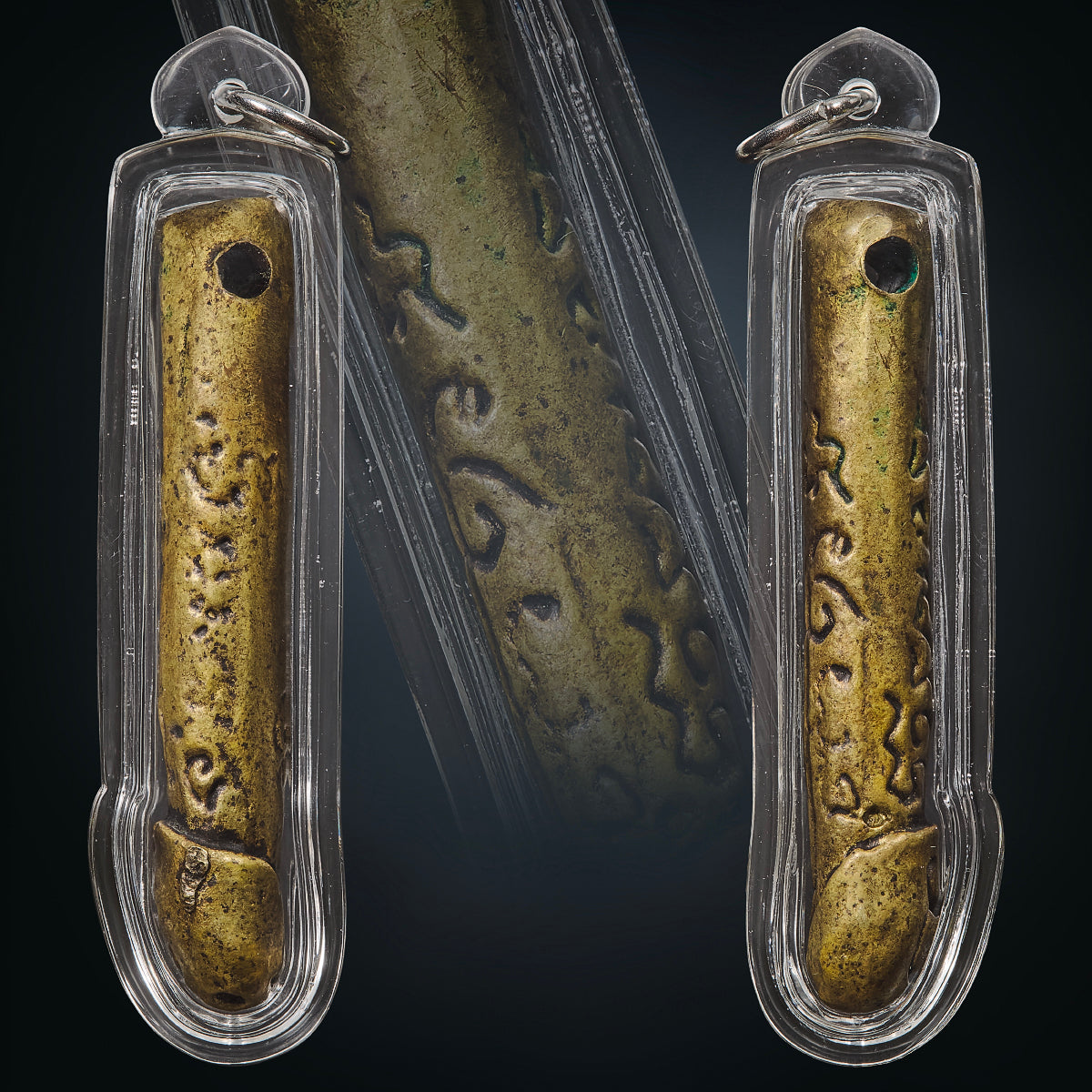
A hand-finished metal Paladkid created and consecrated by Phra Ajarn Anucha Anuchato, a respected monk and ritual practitioner associated with Wat Pho Rat Burana in Ratchaburi.
Its slender body is covered with individually inscribed sacred characters. Unlike an ornamental representation, it was created as a practical protective talisman: compact enough to carry daily and traditionally associated with safety, metta, commercial fortune and the guarding of one’s vital energy.
The amulet belongs to several established lines of Palad Khik knowledge inherited by Phra Ajarn Anucha from senior masters connected with the traditions of Luang Pho Ei, Luang Pho Yid and other celebrated Palad Khik lineages.
Historical Background
Palad Khik is one of Thailand’s oldest and most recognisable protective talismans. Its origins combine the symbolism of the Hindu Shiva lingam with older Tai animist beliefs concerning fertility, life-force and protection from harmful spirits.
Phallic charms were already known in the Ayutthaya period under names including Palad Khik, Khun Phet and Ongkachat. They were worn by villagers, hunters, farmers and warriors, particularly to guard the lower body and preserve the bearer’s vitality. Academic study also connects their continued popularity with older spirit beliefs among Tai-speaking communities.
Over time, Buddhist monks and lay masters transformed the folk talisman into a consecrated sacred object. Different lineages developed distinct formulas for protection, invulnerability, metta, attraction and prosperity in trade.
Phra Ajarn Anucha Anuchato
Phra Ajarn Anucha was born on 23 August 1964 in Kamphaeng Saen district, Nakhon Pathom. He was the eldest of four children.
At eleven, he moved to Ratchaburi and became a temple attendant at Wat Nong Muang. There he served Luang Pho Sanga, who began teaching him traditional ritual knowledge while he was still young.
He first ordained in 1984 and attained the Nak Tham Tri level of Dhamma study before leaving the monkhood to care for his mother. He was ordained again at Wat Pho Rat Burana on 10 August 2009, subsequently completing Nak Tham To and Nak Tham Ek.
His Palad Khik knowledge draws upon several respected lines:
-
Luang Pho Sanga of Wat Nong Muang
-
Luang Pu Non of Wat Khao Phran Thup, connected with the Luang Pho Thongsuk and Luang Pho Yid tradition
-
Luang Pho Boonkham of Wat Chaiyapheri, connected with the lineage of Luang Pho Ei of Wat Sattahip
-
Luang Pho Od of Wat Bang Muang, connected with the Luang Pho Luea tradition
-
Ancient manuals and yantra texts studied throughout his religious life
These transmissions gave Phra Ajarn Anucha a broad foundation in Palad Khik inscription, consecration and traditional applications.
Origins of the Materials
The photographed Palad Khik appears to have been cast from a yellow sacred-metal alloy, likely brass or a copper-rich mixed metal. Its warm golden surface carries areas of dark natural toning and traces of green oxidation associated with aged copper-bearing alloys.
Metal is traditionally chosen for durability and its ability to retain deeply engraved yantras. Unlike wooden examples, a metal Palad Khik can be carried for many years without the inscriptions wearing away through ordinary handling.
Its spiritual identity rests primarily upon three elements:
-
The ritual lineage of the master
-
The sacred characters inscribed over the body
-
The focused consecration through which the talisman was dedicated to protection, metta and prosperity
Ritual
The body was first prepared as a complete metal Palad Khik before being individually inscribed with sacred characters and yantric formulae.
In traditional practice, the master enters meditative concentration while writing or engraving each character. The inscription is treated not merely as decoration but as the physical body of the mantra.
Phra Ajarn Anucha’s ritual inheritance includes formal teacher transmissions relating to the creation and consecration of Palad Khik. These lineages descend through masters associated with some of Thailand’s most respected Palad Khik traditions.
After inscription, the finished talismans are empowered through mantra, meditative intention and recollection of the lineage teachers. The precise ceremony, date and number created for this particular edition remain to be established.
Blessings and Effects
Phra Ajarn Anucha’s Palad Khik is traditionally associated with:
-
Protection from accidents and unexpected danger
-
Guarding the body’s vulnerable and vital areas
-
Deterrence of hostile spirits and harmful occult influences
-
Safety from animals and other sudden threats
-
Metta maha niyom—goodwill, acceptance and popularity
-
Confidence and persuasive speech
-
Attraction of customers and commercial opportunities
-
Support for steady income and successful negotiations
-
Personal vitality, courage and resilience
-
Harmonious relationships with colleagues and patrons
Its symbolism is not limited to sexuality. Within Thai sacred tradition, the phallic form represents the creative force of life: the power to survive hardship, produce abundance and overcome conditions of scarcity.
Personal Experiences Reported by Wearers
Wearers frequently describe a greater sense of confidence when travelling, entering unfamiliar surroundings or working in places where conflict may arise. Some say that aggressive people became less confrontational or that a threatening situation ended before becoming serious.
Shopkeepers and sales professionals report customers appearing more receptive, negotiations moving with less resistance and previous clients returning unexpectedly. Others associate the Palad Khik with delayed payments arriving, additional orders appearing during quiet periods or helpful introductions coming at the right moment.
In matters of personal relationships, devotees describe conversations becoming warmer and social interactions feeling less strained. Rather than compelling affection, the traditional quality of metta is understood as encouraging goodwill, approachability and mutual sympathy.
There are also circulated accounts among followers involving protection from dogs, animals and sudden physical danger. Such stories hold particular meaning in Phra Ajarn Anucha’s biography: his early fear of aggressive dogs reportedly inspired his desire to study protective knowledge.
Modern Application
The Palad Khik remains especially suitable for:
-
Business owners, merchants and sales professionals
-
People who travel frequently or work late hours
-
Security, transport and outdoor workers
-
Individuals working in competitive environments
-
Those seeking confidence in meetings and negotiations
-
People wishing to cultivate metta and stronger social rapport
It may be carried in a pocket, waist pouch or protective casing. Traditionally, Palad Khik may be worn below the waist because it is not itself a Buddha image. When placed in a shop, it may be kept near the entrance or cash counter as a symbol of protection and commercial vitality.
Its metta qualities should be applied ethically. The proper intention is to invite goodwill and honest opportunity—not to override consent, manipulate another person or pursue an improper relationship.
Physical Details
The photographed example is a long, slender Palad Khik cast from a golden-yellow metal alloy.
Its body has a gently rounded profile with a defined lower anatomical form. Both principal faces carry deeply cut sacred characters in an informal, hand-inscribed style, indicating that the ritual markings were applied individually rather than reproduced as a perfectly uniform decorative pattern.
A drilled suspension hole passes through the upper section, allowing the amulet to be worn securely. The surface shows natural darkening, minor wear and isolated green oxidation consistent with a copper-bearing alloy.
The irregular spacing and depth of the inscriptions are characteristic of hand ritual work. They form part of the amulet’s individuality and should not be “cleaned up” or polished away. Abrasive polishing could remove both the original surface and important identifying details.
-
Free Shipping for Singapore| $15 Worldwide | $60 USA For Items Below $350