
OOBThaiAmulets
Wat Suchon - Krabong
Wat Suchon - Krabong
Couldn't load pickup availability
MASS01
Krabong(mace) of Taowessuwan
Wat Suchon • Nakhon Si Thammarat
Roon Ruay Kham Fah
B.E. 2566 (2023)
5 cm
Mainstream Artifact
━━━━━━━━━━━━━━━━━━━━━━━━━━━━
Sacred Craftsmanship
The Krabong Taowessuwan – Ruay Kham Fah (รวยค้ำฟ้า) was created by Wat Suchon, Nakhon Si Thammarat, in B.E. 2566 (2023). This distinctive sacred object combines the protective authority of Taowessuwan, the transformative symbolism of Phra Rahu and the auspicious qualities associated with Hua Namo.
Each artifact was individually produced from carefully prepared materials, and natural variations in casting texture, colour, surface patina and finishing contribute to the individuality of every piece.
The photographs are representative only. A piece will be selected at random, and the item supplied may differ slightly from the exact piece shown in the images.
━━━━━━━━━━━━━━━━━━━━━━━━━━━━
Personal Experiences Shared by Luksits
Among devotees of Taowessuwan, the Krabong is traditionally regarded as a protective object associated with personal security, the preservation of wealth and the removal of obstacles.
Followers who carry Taowessuwan-related artifacts often describe a greater sense of confidence when travelling, dealing with difficult individuals or entering unfamiliar environments.
The inclusion of Phra Rahu gives this particular edition an additional association with changes in fortune. Within Thai devotional traditions, Rahu is frequently invoked during periods of uncertainty, especially when individuals feel that their progress has been affected by unfavourable circumstances.
For merchants and business owners, the combination of Taowessuwan and Rahu is traditionally understood as supporting two complementary intentions: protecting existing fortune while seeking to overcome obstacles that prevent further prosperity.
━━━━━━━━━━━━━━━━━━━━━━━━━━━━
Summary
The Krabong Taowessuwan – Ruay Kham Fah, B.E. 2566, is a miniature sacred mace created by Wat Suchon in Nakhon Si Thammarat.
Its design combines three significant elements of Thai sacred tradition:
-
Taowessuwan: Guardian authority, protection, wealth preservation and spiritual security.
-
Phra Rahu: Transformation of adverse fortune, overcoming obstacles and protection against negative influences.
-
Hua Namo: Auspicious sacred characters associated with protection, spiritual wellbeing and blessings.
━━━━━━━━━━━━━━━━━━━━━━━━━━━━
Historical Background
Taowessuwan – Guardian of the Northern Direction
Taowessuwan, also known as Vaiśravaṇa, is one of the Four Great Heavenly Kings in Buddhist cosmology.
He is traditionally associated with the northern direction and regarded as a guardian possessing authority over yakshas and other supernatural beings.
His association with Kubera, the ancient Indian deity of wealth, also explains his importance in Thai devotional traditions concerning prosperity, financial stability and the protection of accumulated fortune.
The Krabong is one of his most recognisable attributes. It represents the authority to restrain harmful beings, defend sacred boundaries and maintain spiritual order.
Phra Rahu – Transformation of Misfortune
Phra Rahu occupies an important position in Thai astrological and devotional traditions.
Associated with eclipses and the movement of celestial influences, Rahu is often depicted swallowing the sun or moon.
Although sometimes connected with difficult planetary periods, Rahu is also revered by devotees seeking to overcome misfortune and transform unfavourable circumstances.
When incorporated into a protective talisman, his image is traditionally understood as reinforcing the intention to overcome negative influences.
Hua Namo – Sacred Heritage of Southern Thailand
Hua Namo is particularly associated with the sacred traditions of Nakhon Si Thammarat.
These auspicious characters have appeared on traditional southern Thai talismans, sacred metal objects and protective amulets.
Their inclusion in the Krabong connects the edition with the regional religious heritage of southern Thailand, where Hua Namo has long been associated with protection, auspiciousness and spiritual blessings.
━━━━━━━━━━━━━━━━━━━━━━━━━━━━
Origins of the Materials
The Krabong was produced as a cast-metal sacred object, with its design incorporating the image associated with Phra Rahu, Hua Namo characters and the distinctive ceremonial mace of Taowessuwan.
The original release information emphasises the sacred design, consecration and limited production of the edition. The precise composition of the casting alloy has not been established from the supplied details.
In Thai amulet-making traditions, the preparation of materials is regarded as an important part of sacred craftsmanship. The symbolic meaning of the finished object is further reinforced through its inscriptions, imagery and consecration.
For this particular edition, the significance lies especially in the combination of Taowessuwan's Krabong, Phra Rahu and Hua Namo within a single compact form.
━━━━━━━━━━━━━━━━━━━━━━━━━━━━
Ritual
The Ruay Kham Fah edition was created and consecrated under the auspices of Wat Suchon in B.E. 2566.
The name Ruay Kham Fah conveys an aspiration towards abundant wealth and prosperity, reflecting the financial blessings traditionally associated with Taowessuwan.
According to the original release account, the Krabong was prepared through temple consecration rituals intended to invoke protection, prosperity and the removal of harmful influences.
The combination of Taowessuwan and Phra Rahu gives the ritual symbolism two complementary dimensions.
Taowessuwan represents the authority to guard devotees, protect possessions and restrain unwanted spiritual influences. Phra Rahu represents the overcoming of adverse circumstances and the transformation of difficult fortune.
The incorporation of Hua Namo further connects the artifact with the protective sacred traditions of Nakhon Si Thammarat.
━━━━━━━━━━━━━━━━━━━━━━━━━━━━
Blessings and Effects
1. Protection Against Negative Influences
The Krabong is traditionally associated with Taowessuwan's authority to restrain harmful spiritual influences and maintain protective boundaries around the devotee.
2. Protection Against Black Magic and Spiritual Disturbances
Within Thai protective Wicha, Taowessuwan and Phra Rahu are both associated with overcoming hostile supernatural influences, unwanted spiritual disturbances and harmful occult intentions.
3. Wealth and Prosperity – Chok Larp
The name Ruay Kham Fah reflects the edition's principal prosperity intention. Devotees traditionally seek blessings for business opportunities, financial improvement and favourable fortune.
4. Preservation of Wealth – Maha Pokasap
Taowessuwan is not only associated with acquiring wealth but also with protecting accumulated assets, maintaining financial stability and preventing unnecessary losses.
5. Transformation of Adverse Fortune
The inclusion of Phra Rahu is traditionally associated with overcoming difficult circumstances, changing unfavourable situations and moving beyond periods of stagnation.
6. Authority and Personal Confidence – Maha Amnat
The sacred mace symbolises authority, dignity and strength. Devotees associate this quality with maintaining confidence when dealing with difficult people or challenging responsibilities.
7. Household and Workplace Protection
The Krabong may also be kept within a home or workplace as a devotional symbol of protection, stability and the safeguarding of one's livelihood.
8. Auspiciousness and Spiritual Wellbeing
The inclusion of Hua Namo reinforces the traditional intention of attracting blessings, maintaining spiritual balance and supporting peaceful everyday living.
━━━━━━━━━━━━━━━━━━━━━━━━━━━━
Modern Application
The Krabong Taowessuwan is suitable for devotees seeking a compact talisman traditionally associated with protection, prosperity and the overcoming of obstacles.
Business owners and merchants may appreciate its connection with wealth preservation and favourable opportunities, while professionals may value the symbolic qualities of authority and personal confidence.
Those experiencing periods of uncertainty may be drawn to the inclusion of Phra Rahu, whose traditional associations concern the transformation of difficult fortune.
Measuring approximately 5 cm, the artifact can be worn as a pendant or carried discreetly. It may also be kept in a personal devotional space or workplace.
━━━━━━━━━━━━━━━━━━━━━━━━━━━━
Physical Details
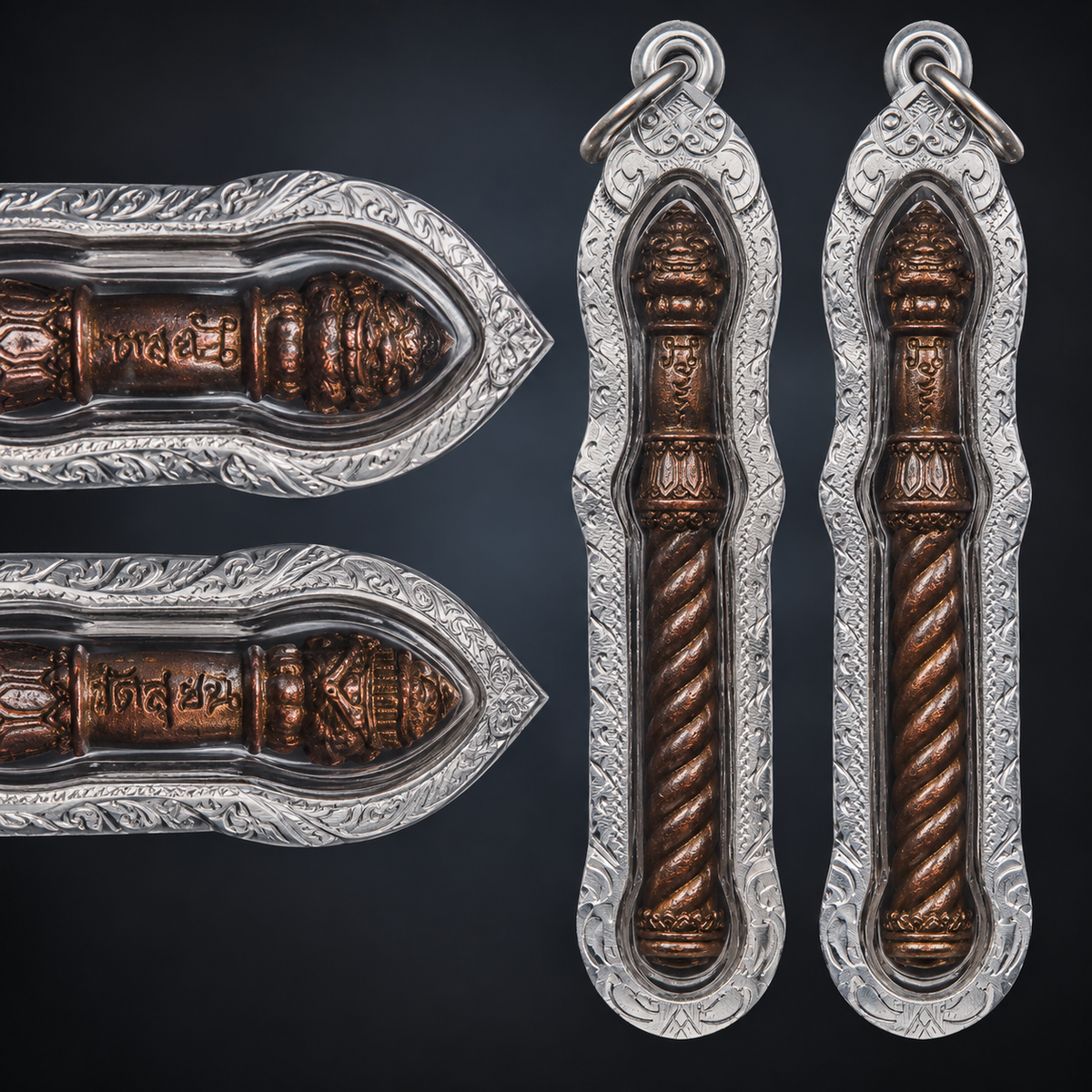
The Krabong measures approximately 5 cm and is fashioned from cast metal with a warm copper-brown patina. Its upper section features a raised image associated with Phra Rahu, followed by a central panel bearing Hua Namo sacred characters. An ornamental collar separates the upper section from the long spiralled shaft, which terminates in a decorated base. The photographed examples are housed in silver protective casings with metal suspension rings, allowing them to be worn as pendants while preserving the original metal surfaces.
━━━━━━━━━━━━━━━━━━━━━━━━━━━━
Recommended Pairing
Taowessuwan Rian – Complements the Krabong with the complete guardian image, traditionally associated with authority, protection and the preservation of wealth.
Phra Rahu – Reinforces the traditional intention of overcoming adverse circumstances, transforming difficult fortune and protecting against negative influences.
Hua Namo Amulet – A particularly meaningful pairing that strengthens the connection with the sacred traditions of Nakhon Si Thammarat.
━━━━━━━━━━━━━━━━━━━━━━━━━━━━
Personal Notes
The Krabong Taowessuwan – Ruay Kham Fah, B.E. 2566, is particularly interesting because it differs from the more familiar Taowessuwan amulets depicting the complete standing guardian.
Instead, the focus is placed upon his sacred weapon, the Krabong, which represents authority, protection and the ability to restrain harmful influences.
The inclusion of Phra Rahu adds another dimension to the artifact. Rather than concentrating exclusively upon protection, this edition also reflects the traditional intention of overcoming unfavourable circumstances and transforming one's fortune.
Equally noteworthy is the incorporation of Hua Namo, an important element of southern Thai sacred heritage. Its presence gives the piece a distinctive regional identity associated with Nakhon Si Thammarat.
The reported production quantity of 2,566 pieces, corresponding with the Buddhist year of issue, is another characteristic of the edition.
Although the artifact measures only 5 cm, its design brings together several meaningful symbols within a relatively small space. The raised imagery, sacred characters, ornamental collar and spiralled shaft demonstrate the attention given to its miniature ceremonial form.
For collectors, this edition offers an interesting combination of contemporary temple craftsmanship and traditional protective symbolism.
The Wat Suchon Krabong Taowessuwan – Ruay Kham Fah B.E. 2566 represents the union of guardian authority, the transformation of adverse fortune and the preservation of prosperity, expressed through a distinctive miniature sacred mace.
-
Free Shipping for Singapore| $15 Worldwide | $60 USA For Items Below $350