
OOBThaiAmulets
Luang Pu Pueak - Wat King Kaew
Luang Pu Pueak - Wat King Kaew
Couldn't load pickup availability
MS06
Phra Phuttha Pim Rasami - Roon Indochina
LP Pueak · Wat King Kaew · Samut Prakan
B.E. 2485
1.5 Inches
Mainstream Artifact
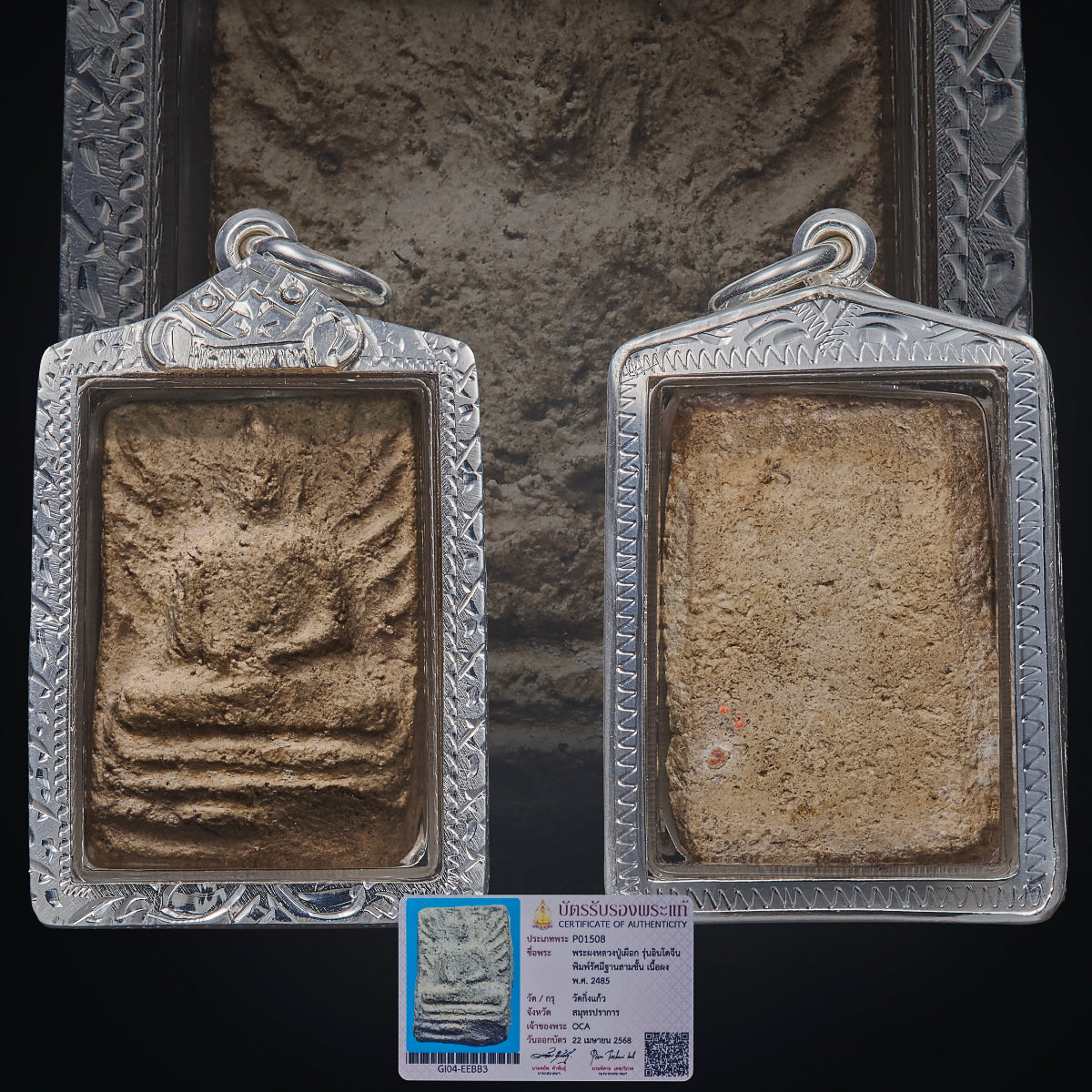
Samakom Certification Card (GI04-EEBB3)
Sacred Craftsmanship
Each artifact was individually pressed from hand-prepared material, resulting in differences in colour, texture, mold definition and surface ageing that give every surviving piece its own character.
Personal Experiences Shared by Luksits
LP Pueak’s amulets have long been associated with an unusual pattern of stories concerning gradual rise in status, improved livelihood and protection through periods of uncertainty.
Older accounts frequently describe people from modest backgrounds who carried his amulets and later advanced into positions of greater responsibility, including government service, business and public office.
The pattern traditionally described is not simply sudden luck.
Owners often speak instead of better decisions, stronger confidence, favourable support from superiors, timely opportunities and greater respect from those around them.
Merchants have also long kept LP Pueak’s amulets in shops and workplaces, particularly for Metta, continued customer support and smoother business.
The wartime Indochina batch adds another layer to this reputation. Pieces from this period were valued for Klaew Klad, Kong Kraphan and protection during unstable conditions, while still retaining LP Pueak’s established Metta and livelihood qualities.
Summary
The Phra Phuttha Roon Indochina B.E. 2485 is an important wartime issue associated with LP Pueak of Wat King Kaew.
The name “Indochina” reflects the historical period surrounding the Franco-Thai conflict and the wider instability of the Second World War.
Within the series, the Pim Rasami Than Sam Chan is recognised by the seated Buddha surrounded by radiating lines and resting upon a three-tiered base.
It represents an important middle period in LP Pueak’s amulet history — later than his early Khut Sa powder tradition, but earlier than the more widely encountered post-war batches.
For collectors, this combination of wartime context, mature powder formula and strong lineage reputation makes the B.E. 2485 issue particularly appealing.
Historical Background
LP Pueak Panyatharo, later known by the ecclesiastical title Phra Khru Karuna Vihari, was born in B.E. 2412 (1869).
He became abbot of Wat King Kaew, in the Bang Phli area of Samut Prakan, and remained closely associated with the temple for decades.
His reputation was built upon Vipassana practice, strict observance of monastic discipline, sacred script, yantra knowledge and traditional consecration methods.
Unlike masters whose fame rested primarily upon commercial amulet production, LP Pueak’s early sacred objects were often connected directly with temple life.
Amulets were given to villagers, labourers, cooks and people who helped with temple works. Over time, these modestly distributed pieces became increasingly respected as stories accumulated around their owners.
By B.E. 2485, LP Pueak was already a senior master with decades of experience behind him.
Origins of the Materials
LP Pueak’s powder tradition is particularly important among collectors because of its distinctive old composition.
The basic body is generally associated with lime and shell-based powders, combined with his own Phong Wises and other ritually prepared ingredients.
Traditional accounts also connect later batches with remnants of earlier sacred powders, including material associated with the Khut Sa period.
Collectors have long noted a resemblance between certain Wat King Kaew powder surfaces and older Phra Somdej material.
This similarity should be understood principally in terms of powder preparation, mineral texture, ageing and traditional binder techniques, rather than as proof that every piece contains material from Wat Rakhang.
LP Pueak’s connection with older Bangkok masters and inherited sacred materials nevertheless remains an important part of Wat King Kaew collecting tradition.
Ritual
The B.E. 2485 series was created during a period of considerable uncertainty.
Thailand had already passed through the Franco-Thai conflict, while the wider war in Asia created anxiety around conscription, travel, bombing and personal safety.
LP Pueak consecrated the batch using his established meditation and Wicha.
The spiritual emphasis was particularly suited to the period:
Klaew Klad for avoiding sudden danger.
Kong Kraphan for resilience and physical protection.
Metta Mahaniyom for receiving goodwill, assistance and favourable treatment.
Livelihood protection for maintaining work, family and financial stability through unstable times.
This balance between physical protection and social support is characteristic of LP Pueak’s reputation.
Blessings and Effects
The Roon Indochina series is especially associated with wartime protection.
Klaew Klad concerns avoidance of accidents, weapons and unexpected danger.
Kong Kraphan concerns endurance and resistance to physical harm.
Metta Mahaniyom supports favourable relationships, trust and assistance from others.
The lineage is also associated with Baramee and advancement, particularly the gradual strengthening of personal standing and opportunity.
For business owners and working professionals, LP Pueak’s amulets are traditionally kept for continued livelihood, smoother dealings and support from influential people.
These qualities are traditional beliefs and collected experiences rather than guaranteed outcomes.
Modern Application
Although produced during wartime, the practical character of this amulet remains relevant today.
For those working in uncertain or competitive environments, it may be carried for personal protection, calm judgment and stability under pressure.
Its Metta and Baramee associations make it equally suitable for career advancement, leadership, business and relationships with superiors or clients.
The idea that LP Pueak’s amulets help “raise” the owner is best understood in this broader sense — improving the conditions through which opportunity can develop, rather than promising effortless wealth.
For collectors, the B.E. 2485 issue also provides a strong historical alternative to LP Pueak’s later and more widely encountered pieces.
Physical Details
This example is the Pim Rasami Than Sam Chan.
The front depicts a seated Buddha with a field of radiating lines, or Rasami, extending outward behind the image.
Below is the characteristic three-tiered base, or Than Sam Chan.
The reverse is plain, allowing the natural powder texture to remain visible.
The material displays a mature cream-grey tone with darker ageing, mineral deposits and surface variation developed over more than eight decades.
The image is softly impressed rather than sharply mechanical, consistent with old hand-pressed powder production.
The artifact is housed within a silver casing and accompanied by Samakom certification, identifying it as LP Pueak’s B.E. 2485 Indochina-period Rasami three-tier-base mold.
Recommended Pairing
This artifact already carries a strong balance of protection, Metta and Baramee.
It pairs naturally with a Phra Somdej where additional spiritual composure and senior support are desired.
Collectors interested specifically in LP Pueak’s development may pair it with an earlier Khut Sa piece or a later B.E. 2496 Wat King Kaew powder amulet, creating a clear progression through his powder tradition.
Personal Notes
What makes LP Pueak particularly interesting to me is that his reputation seems to have grown from the people who carried his amulets rather than from elaborate promotion surrounding their original release.
Many early pieces were distributed among ordinary temple workers and villagers.
Decades later, those same amulets became associated with owners who had advanced considerably in life.
That history gives the lineage a very different character.
The B.E. 2485 Indochina series also sits at an especially meaningful point in his career. By then LP Pueak was already an experienced senior monk, yet the amulet still belongs to the old pre-war and wartime powder tradition before later production became more organised.
The Pim Rasami Than Sam Chan is particularly attractive because its imagery communicates the lineage well: a quiet Buddha surrounded by radiance, resting upon a firm three-tiered foundation.
For me, that is an appropriate symbol for LP Pueak’s reputation itself — protection during difficult periods, followed by gradual stability, respect and advancement.
-
Free Shipping for Singapore| $15 Worldwide | $100 USA All products