
OOBThaiAmulets
LP Pueak - Wat King Kaew
LP Pueak - Wat King Kaew
Couldn't load pickup availability
MS06
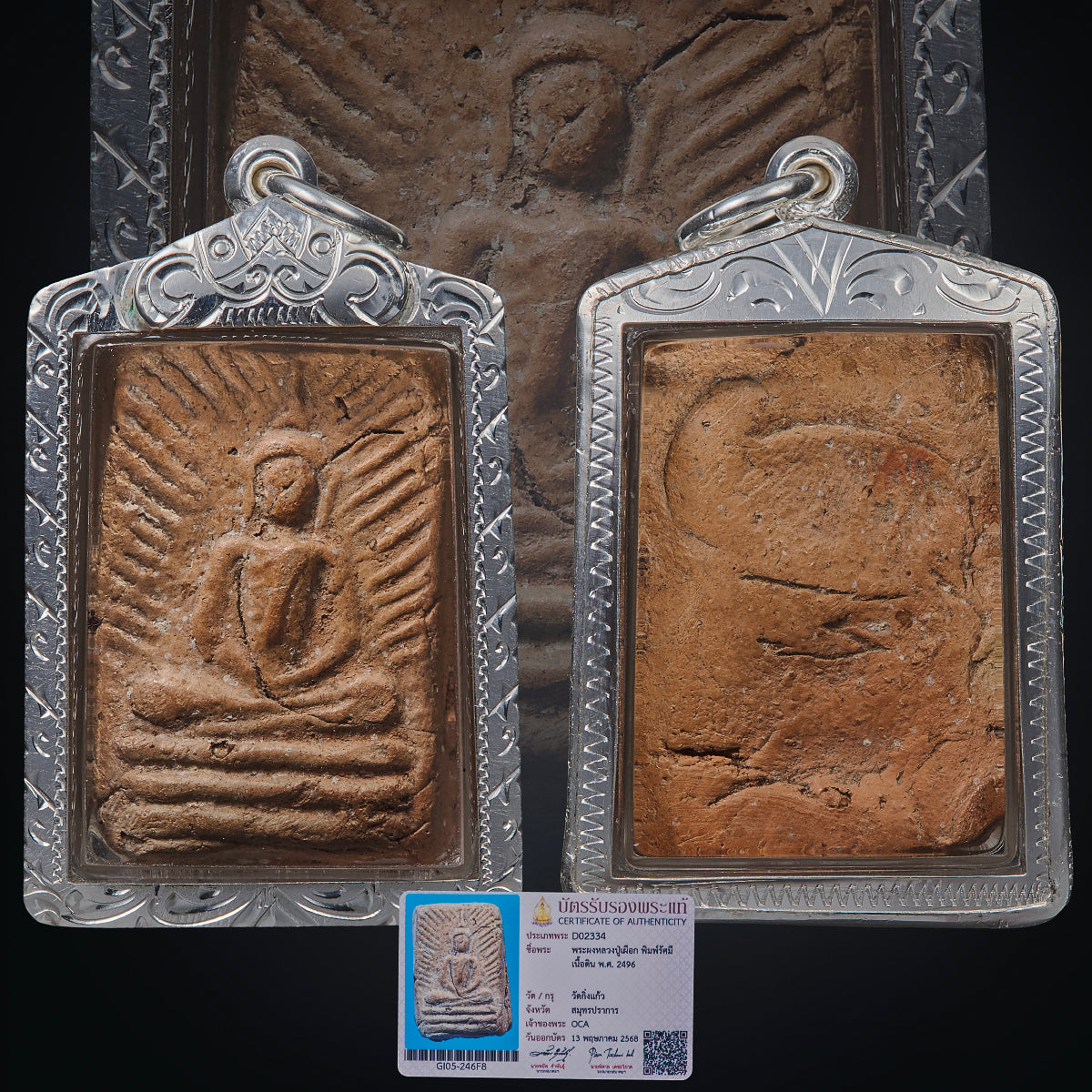
Phra Somdej Pim Rasami
LP Pueak · Wat King Kaew · Samut Prakan
B.E. 2496 (1953)
3cm
Mainstream Artifact
Samakom Certification Card (GI05-246F8)
Sacred Craftsmanship
This example is Nuea Din, an earthen or clay-based composition blended with LP Pueak's sacred powders. Each amulet was individually pressed from naturally variable material, resulting in differences in colour, surface texture, inclusions, mould definition and age characteristics that give every surviving piece its own identity.
Personal Experiences Shared by Luksits
Among collectors of old central Thai amulets, LP Pueak's sacred-powder and clay pieces have long carried a particularly strong reputation for Metta, protection and Klaew Klad.
Owners traditionally speak of receiving greater goodwill from others, smoother dealings with senior figures and greater confidence when facing difficult circumstances.
Another recurring theme is smooth livelihood. Businesspeople and working professionals have associated LP Pueak's amulets with opportunities appearing at important moments, obstacles becoming easier to resolve and receiving assistance from people in positions to help.
The Rasami form is especially appreciated by devotees who seek baramee — not simply authority, but the quiet personal standing that causes others to respect, trust and support the wearer.
Summary
The Phra Phong Phim Rasami B.E. 2496 belongs to one of the important later-life amulet projects of LP Pueak, Wat King Kaew.
Created during the period associated with the construction of the temple's chedi, the series included numerous moulds and material compositions. This example combines the recognised Rasami radiance design with a Nuea Din clay body containing sacred powders.
Traditionally associated with Metta Maha Niyom, baramee, protection, Klaew Klad, Khong Kraphan and support for livelihood, it represents a practical and historically significant example of LP Pueak's sacred work.
Historical Background
LP Pueak Panyatharo, formally titled Phra Khru Karuna Vihari, was one of the important old masters associated with Wat King Kaew in Bang Phli, Samut Prakan.
Born in B.E. 2412 (1869), he entered monastic life at Wat King Kaew and eventually became its abbot following the passing of his teacher, Phra Ajarn Im, in B.E. 2442.
LP Pueak became respected for his strict monastic discipline, Vipassana practice and knowledge of traditional sacred sciences, including yantra, sacred scripts, powder preparation and ritual consecration.
He was equally remembered for developing Wat King Kaew. During his long period of leadership, numerous temple structures were constructed or improved, including the ordination hall, school buildings, pavilions and chedi.
He passed away in B.E. 2501 (1958) at approximately 89 years of age.
Origins of the Materials
The B.E. 2496 series was produced using several material compositions, including Nuea Phong, Nuea Din and herbal Nuea Wahn.
This example is Nuea Din.
The clay served as the principal body while sacred powders associated with LP Pueak's established formulas were incorporated into the mixture.
According to collector tradition surrounding the batch, older sacred powders were also incorporated into the B.E. 2496 material, including remnants associated with earlier generations of LP Pueak's amulet production.
This practice of carrying older sacred material into a later batch created a physical continuity between successive generations of his amulets.
Ritual
The B.E. 2496 series was created as part of the merit-making effort connected with the construction of a chedi at Wat King Kaew.
Production was undertaken within the temple environment, with monks and novices participating in the preparation and pressing of the amulets under LP Pueak's direction.
LP Pueak subsequently consecrated the series according to his established practice.
An interesting characteristic recorded among examples from this period concerns the inclusion of LP Pueak's hairduring production. Attempts were made to incorporate strands into some amulets, and the interaction between the hair and pressed material could produce natural lines or separation in the body.
Such characteristics, where genuinely originating from manufacture, belong to the original construction process rather than necessarily representing later damage.
Blessings and Effects
LP Pueak's amulets are traditionally respected for a particularly balanced combination of blessings.
Metta Maha Niyom is associated with goodwill, popularity and favourable dealings with other people.
Baramee concerns personal standing, credibility and the ability to gain respect or support without unnecessary confrontation.
Klaew Klad represents avoidance of danger and the traditional belief that the wearer may be guided away from harmful situations.
Khong Kraphan concerns resilience and protection against physical harm.
For livelihood, the amulet is traditionally carried for steady work, opportunity, support from superiors and fewer obstacles in business or career.
The Rasami imagery reinforces this broader interpretation: the Buddha's radiance spreads outward, symbolically extending merit, virtue and beneficial influence beyond the individual.
Modern Application
The Phim Rasami is particularly suited to people whose work depends upon reputation, trust and interaction with others.
Business owners, managers and professionals may appreciate its traditional combination of Metta and baramee, while those who travel frequently or work in uncertain environments may place greater emphasis upon its protective reputation.
It is also an appropriate everyday Buddhist amulet for collectors who prefer an old master's work with balanced blessings rather than one narrowly specialised purpose.
Physical Details
This example is an original B.E. 2496 Phim Rasami formed from Nuea Din, displaying the warm earthen colour and naturally granular surface associated with aged clay material.
The front depicts the seated Buddha upon a tiered base, surrounded by the prominent radiating lines responsible for the Rasami name.
The reverse is comparatively plain, retaining the natural pressed texture and ageing of the material.
Recommended Pairing
The Phim Rasami is already a well-balanced daily amulet and can comfortably be worn alone.
For stronger emphasis upon wealth and commercial activity, it may be paired with a Chao Sua.
For leadership and professional authority, a Singha complements the Rasami's baramee qualities.
For general Buddhist protection and Metta, pairing it with a Phra Somdej creates a particularly traditional combination centred upon stability, goodwill and spiritual support.
Personal Notes
LP Pueak's highest and rarest amulets today occupy an entirely different level of collecting, with important examples becoming major pieces within the Thai amulet market.
The B.E. 2496 Phim Rasami is therefore particularly interesting because it retains the essential characteristics collectors seek in LP Pueak's work — his sacred material tradition, distinctive mould design, established wicha and direct consecration — while remaining a more approachable entry into his lineage.
The naturally aged Nuea Din surface is especially appealing. Rather than presenting a highly refined appearance, it preserves the unmistakable character of an old temple-pressed artifact made for merit more than seventy years ago.
For collectors who value history alongside traditional blessings, it is a very representative piece of LP Pueak of Wat King Kaew.
-
Free Shipping for Singapore| $15 Worldwide | $100 USA All products