
OOBThaiAmulets
Lp Song - Wat Chao Fa Sala Loi
Lp Song - Wat Chao Fa Sala Loi
Couldn't load pickup availability
MS06
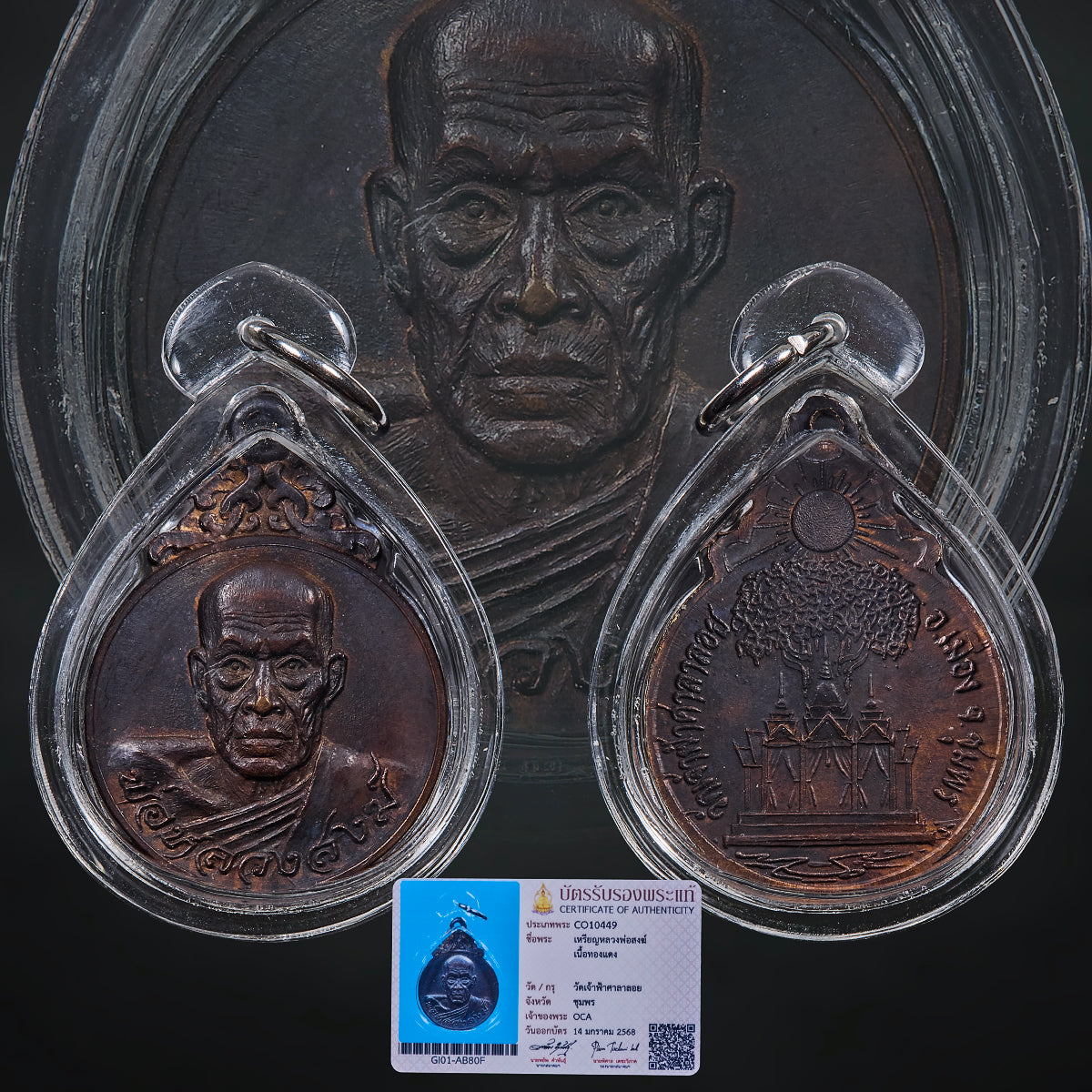
Rian LP Song — Lang Sala Loi
LP Song Chantasaro · Wat Chao Fa Sala Loi · Chumphon
B.E. 2520 (1977)
1.5 Inches
Mainstream Artifact
Samakom Certification Card (GI01-AB80F)
Individual Craftsmanship
Each medal was individually struck and finished in copper. Differences in striking depth, patina, oxidation and handling have naturally developed over almost five decades, giving every surviving artifact its own character.
Personal Experiences Shared by Luksits
Older luksits frequently speak about LP Song's artifacts in connection with Klaew Klaad — escaping danger at the right moment.
Some accounts concern road accidents or journeys where circumstances suddenly changed: a decision to delay departure, an unexpected warning, or an accident from which the wearer emerged with surprisingly little injury.
Others remember LP Song differently.
They speak of Metta — situations where difficult people became easier to deal with, assistance appeared when it was needed, or someone unexpectedly stepped forward to help resolve a problem.
For people in business, sales or positions requiring frequent interaction with others, LP Song's artifacts have therefore traditionally been valued not only for physical protection, but also for goodwill, support and smoother human relationships.
This balance between protection and Metta is an important part of LP Song's enduring reputation.
Summary
The Rian LP Song Lang Sala Loi B.E. 2520 was created through the cooperation of Phra Khru Phisan Thammasophon (Heng), abbot of Wat Chumphon Rangsan, and Phra Khru Palad Sanoe, abbot of Wat Thung Seri in Hua Mak, Bangkok.
The medals were issued through Wat Chumphon Rangsan to raise funds for the construction and improvement of permanent temple structures.
Several moulds were produced, with the overall production traditionally recorded at approximately 85,000 pieces.
What makes the edition particularly meaningful is its consecration. According to the history accompanying the batch, LP Song performed a special solo blessing over the artifacts for nine days and nine nights.
The reverse depiction of the Sala Loi further connects the medal directly with LP Song's spiritual home and the temple he had spent much of his life developing.
Historical Background
LP Song Chantasaro was born in Chumphon in B.E. 2433 (1890) and entered religious life while still young.
After his ordination, he pursued both Buddhist study and meditation. Traditional biographies describe periods of training in kammathan and sacred knowledge, followed by extended thudong, travelling through forests and remote areas as part of the ascetic tradition.
One important period of his training is associated with Phra Ajarn Rod of Wat To Sae in Phuket, from whom LP Song was said to have studied traditional wicha before continuing his wandering practice.
Around B.E. 2462, he eventually came to an old abandoned temple site in Chumphon.
The place was heavily overgrown. Its structures had deteriorated, the old Ubosot was largely ruined and the Buddha images had suffered from years of neglect.
Local villagers invited LP Song to remain there.
With their assistance, he gradually cleared and restored the grounds, rebuilding the religious structures and establishing what became Wat Chao Fa Sala Loi.
He would remain associated with the temple for the rest of his life.
Origins of the Sala Loi
The image on the reverse is especially important because it is not simply decorative.
Sala Loi became part of the identity of LP Song and his temple.
Traditional temple history preserves stories surrounding the older sacred site and its connection with Pu Chao Fa, whom LP Song regarded as the spiritual guardian associated with the place.
LP Song was said to remind devotees that he himself was not the true spiritual owner of the temple, referring instead to Pu Chao Fa. This respect became incorporated into local temple customs and contributed to the name Wat Chao Fa Sala Loi.
By placing the Sala Loi beneath the sacred tree on the reverse, the medal therefore links the wearer not only with LP Song's portrait but also with the place where he practised, taught and rebuilt a religious community over many decades.
Origins of the Materials
The B.E. 2520 edition was produced principally as a traditional struck copper medal.
Unlike powder artifacts whose importance may depend upon elaborate mixtures of herbs and sacred substances, the significance of this piece lies primarily in its direct blessing by LP Song, its temple purpose and its imagery.
Copper also made the edition practical for widespread distribution among devotees contributing towards the temple-building fund.
With age, examples may develop dark brown, reddish-brown and almost black areas, while exposed high points reveal the warmer copper beneath.
These natural differences are part of the character of an old struck medal.
Ritual
The consecration history is one of the strongest features of the B.E. 2520 issue.
According to the traditional account accompanying the edition, LP Song personally performed a special solo consecration for nine days and nine nights.
The symbolism of nine is particularly auspicious in Thai culture. The Thai word for nine, kao, is associated by sound with the idea of moving forward or progressing.
More importantly, however, the extended period meant that the medals remained under LP Song's direct meditative attention rather than merely passing through a short ceremonial blessing.
For devotees, this makes the B.E. 2520 issue an especially meaningful lifetime artifact of LP Song.
The project itself also carried a clear merit-making purpose: funds raised through the issue were directed towards the construction of lasting religious structures.
Blessings and Effects
LP Song's artifacts have traditionally developed a broad reputation, but protection and Klaew Klaad remain among the qualities most closely associated with his lineage.
Klaew Klaad concerns passing safely through dangerous circumstances — accidents avoided, journeys completed safely or situations changing before greater harm occurs.
Maha Ud and Kong Grapan form part of the stronger protective tradition surrounding LP Song, particularly in older accounts concerning physical danger.
Alongside protection is Metta Maha Niyom — goodwill, favourable treatment and being readily accepted by others. In modern circumstances, this is particularly relevant to businesspeople, managers, sales professionals and anyone whose progress depends upon relationships.
Choke Lap concerns favourable opportunities and fortunate circumstances, while Baramee represents dignity, confidence and the respect that develops around a person.
The overall traditional character of the medal can therefore be understood as protection, Metta, favourable opportunity and steady personal Baramee.
Modern Application
The Lang Sala Loi is particularly suitable as an everyday LP Song medal.
For someone who travels frequently, drives long distances or works in environments where physical risk is unavoidable, its traditional protective reputation makes it especially meaningful.
For business owners and professionals, the emphasis can instead be placed upon Metta, Baramee and assistance from others. These qualities concern the human side of progress — earning trust, being heard, maintaining good relationships and meeting people willing to help at the right time.
There is also a quieter meaning in the Sala Loi image.
LP Song encountered an abandoned religious site and spent decades rebuilding it. For someone facing a difficult period, the medal can therefore serve as a reminder of patience, rebuilding and gradual progress rather than immediate results.
Physical Details
An original Rian LP Song Lang Sala Loi, B.E. 2520, struck in copper. The obverse carries a detailed portrait of the elderly LP Song with his name below, while the reverse depicts the distinctive Sala Loi beneath a sacred tree and rising sun, surrounded by identifying inscriptions. This example displays a mature dark brown copper patina with lighter highlights naturally appearing across the raised portrait and reverse details. It is preserved in a clear protective acrylic casing, allowing the original edge, suspension loop and aged surface to remain visible.
Recommended Pairing
Because this medal already carries a balanced tradition of protection, Metta and Baramee, it pairs naturally with a more specialised artifact.
A Phra Somdej provides a classical Buddhist foundation centred upon merit and stability. A Nang Kwak can be added for those wanting greater emphasis on customers, trade and commercial movement.
For stronger authority and protection, Tao Wessuwan is another complementary choice.
Collectors of LP Song may instead pair this B.E. 2520 Lang Sala Loi with his earlier B.E. 2511 Roon 2. The two medals represent different periods and different temple occasions while maintaining the direct connection with LP Song during his lifetime.
Personal Notes
What I find particularly meaningful about this medal is the Sala Loi on the reverse.
Many portrait medals identify a master simply through his face and name. This piece goes further by placing the history of LP Song's temple directly onto the artifact.
LP Song arrived at what was remembered as an old and neglected religious site and, together with the surrounding community, spent decades restoring it into Wat Chao Fa Sala Loi. The Sala Loi therefore represents more than a building. It reflects the place where his later life, practice and service became rooted.
The reported nine-day and nine-night solo consecration also gives the B.E. 2520 issue a particularly direct connection with LP Song himself.
Although approximately 85,000 artifacts across several moulds are traditionally recorded for the project, I do not see the importance of this medal simply through rarity. Its attraction lies in its history: created during LP Song's lifetime, blessed personally by him, made to support temple construction, and carrying the image of Sala Loi on its reverse.
For a collection centred on LP Song, this is a very complete representation of both the master and the place with which his name became inseparable.
-
Free Shipping for Singapore| $15 Worldwide | $60 USA For Items Below $350