
OOBThaiAmulets
Lp Phrom - Wat Chong Kae
Lp Phrom - Wat Chong Kae
Couldn't load pickup availability
MS06
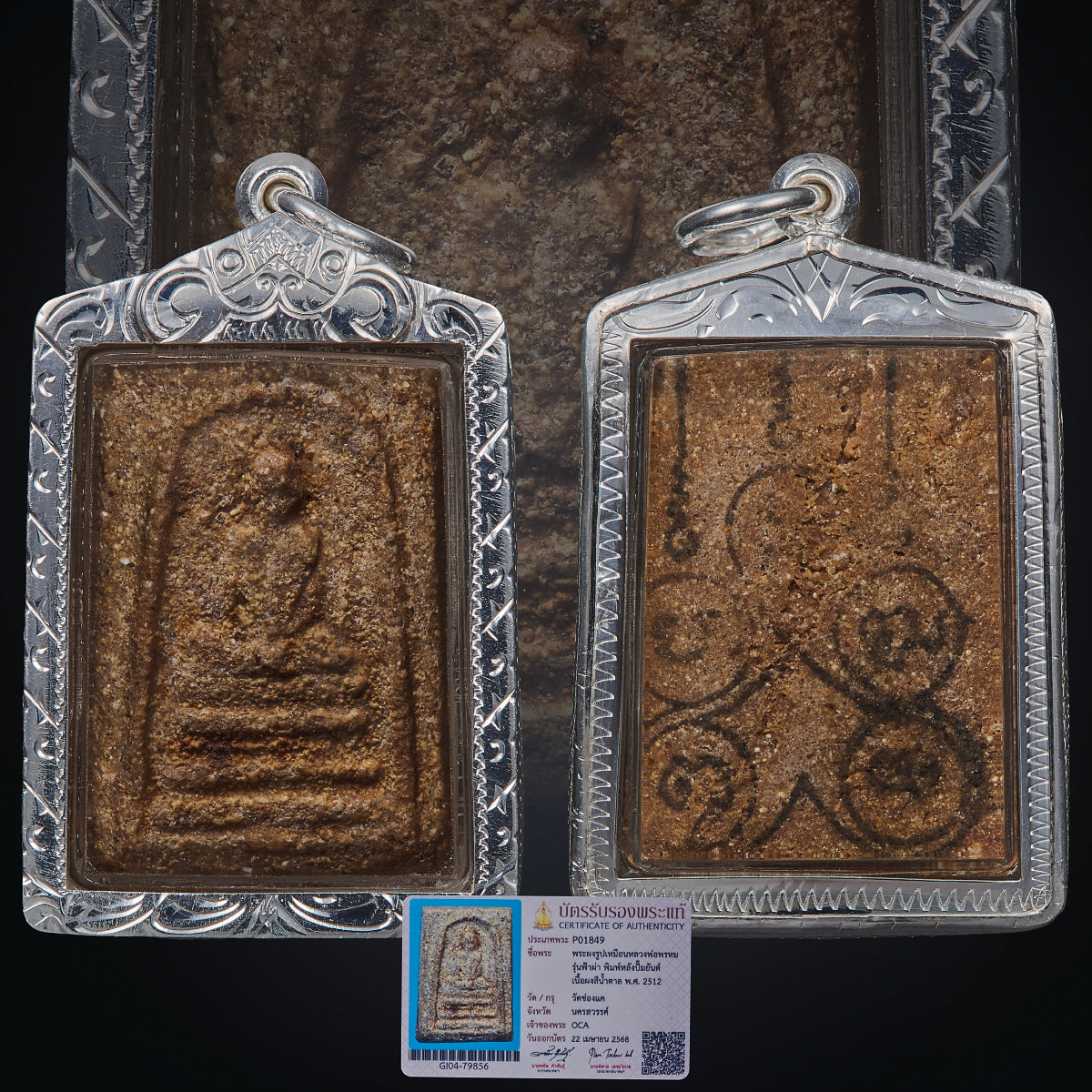
Phra Somdej Fa Pha — Pim Lang Yan Murk
LP Phrom Thawaro · Wat Chong Khae · Nakhon Sawan
B.E. 2512 (1969)
3cm
Mainstream Artifact
Samakom Certification Card (GI04-79856)
Individual Craftsmanship
Each artifact was individually hand-pressed from a mixture containing herbs, organic materials and sacred powders. Differences in colour, texture, density and definition are therefore natural characteristics of the batch rather than defects.
This example is the brown powder version with Yan Murk — an ink yantra applied to the reverse.
Personal Experiences Shared by Luksits
Among LP Phrom's powder amulets, the B.E. 2512 edition developed one of the most memorable reputations for Klaew Klaad — escaping or passing safely through serious danger.
The story from which the Fah Pah name originated concerns Mr Somphong Khumkhet, one of those involved with the temple.
According to the account passed down with the batch, Mr Somphong had respectfully received one of these amulets from LP Phrom. While working outside shortly afterwards during light rain, he was struck by lightning and collapsed.
He was brought back to the sala, where LP Phrom reportedly remained calm and said that he would be all right. After LP Phrom sprinkled him with consecrated water, Mr Somphong regained consciousness.
Those present were particularly astonished by the claim that he had suffered no serious injury and that even his clothing showed no obvious burning.
From this incident came the name:
Fah Pah — ฟ้าผ่า — “Lightning Strike.”
For later luksits, however, the meaning of the amulet extends beyond physical protection. Long-term wearers also speak about Baramee: becoming steadier under pressure, gaining respect from others, receiving support from influential people and finding a way through situations that initially appear difficult.
Business users likewise associate LP Phrom's pieces with greater confidence during negotiations, smoother discussions, contracts progressing and opportunities arriving through people who are willing to help.
These remain personal and devotional experiences, but they explain why the Fah Pah has maintained such a strong reputation among collectors of LP Phrom.
Summary
The Phra Somdej Fah Pah B.E. 2512 is regarded as the first powder portrait edition of LP Phrom of Wat Chong Khae.
It was created by the temple committee for distribution in connection with the raising of the roof finial of the mondop, and the batch received LP Phrom's athitthan jit during an important Sao Ha occasion.
Three principal powder colours are traditionally recorded: green, brown and white.
Collector histories commonly give a combined production of approximately 30,000 pieces for the white and brown materials, while the green material is said to have been far scarcer, at around 200 pieces.
The present artifact is the brown material, with an ink yantra visible on its reverse.
Historical Background
LP Phrom Thawaro of Wat Chong Khae became one of the most respected masters associated with Nakhon Sawan, particularly remembered for disciplined practice, meditation and sacred objects carrying a strong reputation for protection.
The B.E. 2512 Fah Pah is particularly interesting because it belongs to an earlier period before the enormous collector demand that later surrounded his amulets.
The history accompanying the edition says that LP Phrom initially intended the mould to depict a Buddha image. The craftsman from In Buri, Sing Buri, however, produced LP Phrom's portrait instead.
Rather than reject the mould, it became the basis of his first powder portrait amulet.
The uncomplicated workmanship is consequently part of its identity. These were community-made sacred objects produced with the participation of people around Chong Khae, not highly polished factory pieces.
Origins of the Materials
The composition is one of the most interesting aspects of the Fah Pah.
Traditional records of the batch describe a mixture containing dried flowers formerly used for worship in LP Phrom's kuti, together with his chewed mak, or betel nut.
The mixture is also recorded as containing 108 sacred herbs, Kluay Nam Wa banana, white lime, dried fresh betel pulp and remnants from LP Phrom's cigarettes.
More specifically sacred ingredients are said to have included LP Phrom's own prepared powders, including Phong Wiset Kaew Sam Duang, Phong Itthije and consecrated sand.
Holy water was incorporated into the preparation, while Nam Man Tang Iou served as an important binding agent.
The use of materials personally connected with LP Phrom gave the finished amulets a particularly intimate connection with the master in the eyes of his disciples.
Ritual
The Fah Pah was associated with a Sao Ha consecration, an occasion traditionally regarded in Thai sacred-object practice as especially suitable for protective and empowering rites.
Accounts of its manufacture also emphasise LP Phrom's personal involvement.
The earliest pieces are said to have been prepared under his close supervision, with LP Phrom participating in the selection and preparation of materials and watching over the pressing process.
As production continued, villagers and temple supporters assisted with mixing and pressing the amulets.
This helps explain why considerable natural variation can be found across surviving pieces.
The green material is traditionally associated with an early mixture incorporating old lime already available at the temple. As this material became depleted, further sacred lime was added to the remaining mixture, producing progressively lighter shades ranging through brown and eventually towards off-white.
Colour therefore forms an important part of how collectors study this edition.
Blessings and Effects
The defining traditional quality of the Fah Pah is Klaew Klaad — passing safely through danger and avoiding serious harm.
Closely connected are protection against sudden accidents, Kong Grapan, endurance and remaining composed when circumstances become uncertain or dangerous.
Yet LP Phrom's reputation is broader than protection alone.
His devotees also associate his amulets with Metta Maha Niyom, favourable treatment from others, Choke Lap, prosperity and Baramee.
Baramee is particularly appropriate to this portrait form. Rather than representing sudden luck alone, it can be understood as the gradual strengthening of one's presence, credibility and ability to gain the confidence of others.
In practical life, devotees apply this to career advancement, leadership, negotiation, business relationships and receiving assistance from senior or influential people.
The Fah Pah therefore developed a reputation as an artifact for protection when circumstances turn against you, and Baramee to help circumstances move forward again.
Modern Application
For modern wear, this is a particularly suitable LP Phrom piece for someone whose work involves travel, business, negotiation, responsibility or unpredictable situations.
Business owners may appreciate its combination of protection and Metta, while executives and professionals may connect more strongly with its Baramee aspect — remaining composed, gaining trust and carrying greater presence when dealing with others.
It is also an appropriate everyday amulet for someone who travels frequently or simply prefers a single traditional piece with a broad reputation for protection and progress.
Physical Details
A rectangular brown sacred-powder portrait amulet of LP Phrom, B.E. 2512, with the master seated above a stepped base on the obverse. The reverse carries the distinctive aged Yan Murk ink marking. Its coarse powder structure, visible organic inclusions and naturally uneven surface reflect the handmade character of the edition. This example is preserved in a traditional silver casing, with certification accompanying the piece.
Recommended Pairing
The Fah Pah already provides a strong foundation for protection, Baramee and Metta.
For business use, it pairs naturally with Nang Kwak or a Salika artifact where greater emphasis is desired on customers, communication and commercial relationships.
For authority and advancement, it can be worn alongside Tao Wessuwan, Garuda or another Baramee-oriented piece.
It can also stand comfortably beside a Buddha or Somdej amulet, creating a restrained arrangement centred on Buddhist refuge while retaining the distinctive protective tradition associated with LP Phrom.
Personal Notes
What I appreciate about the Fah Pah is that its reputation was not created simply from a name given by later collectors. The name is tied to a specific story that has continued to be passed down with the B.E. 2512 batch.
The lightning incident gave the edition its identity, but I find the Baramee aspect equally meaningful.
Protection can help someone pass through a difficult moment. Baramee is what helps that person continue afterwards — to regain stability, earn respect, meet the right people and gradually turn difficult circumstances into opportunities.
The present brown Pim Lang Yan Murk also retains the unmistakable character of an early handmade LP Phrom powder amulet. The rough portrait, aged powder, organic material and dark yantra on the reverse are not about decorative perfection. They reflect a period when LP Phrom and the Chong Khae community were still personally involved in creating these pieces.
That combination of personal materials, handmade construction, Sao Ha blessing and the famous Fah Pah history is what makes this particular B.E. 2512 edition so distinctive within LP Phrom's lineage.
-
Free Shipping for Singapore| $15 Worldwide | $60 USA For Items Below $350