
OOBThaiAmulets
LP Pong - Wat Jeang
LP Pong - Wat Jeang
Couldn't load pickup availability
MS07
Singha Roon Hua Jai Setthi
LP Pong · Wat Jeang · Phatthalung
B.E. 2561
1 Inch
Mainstream Artifact
Sacred Craftsmanship
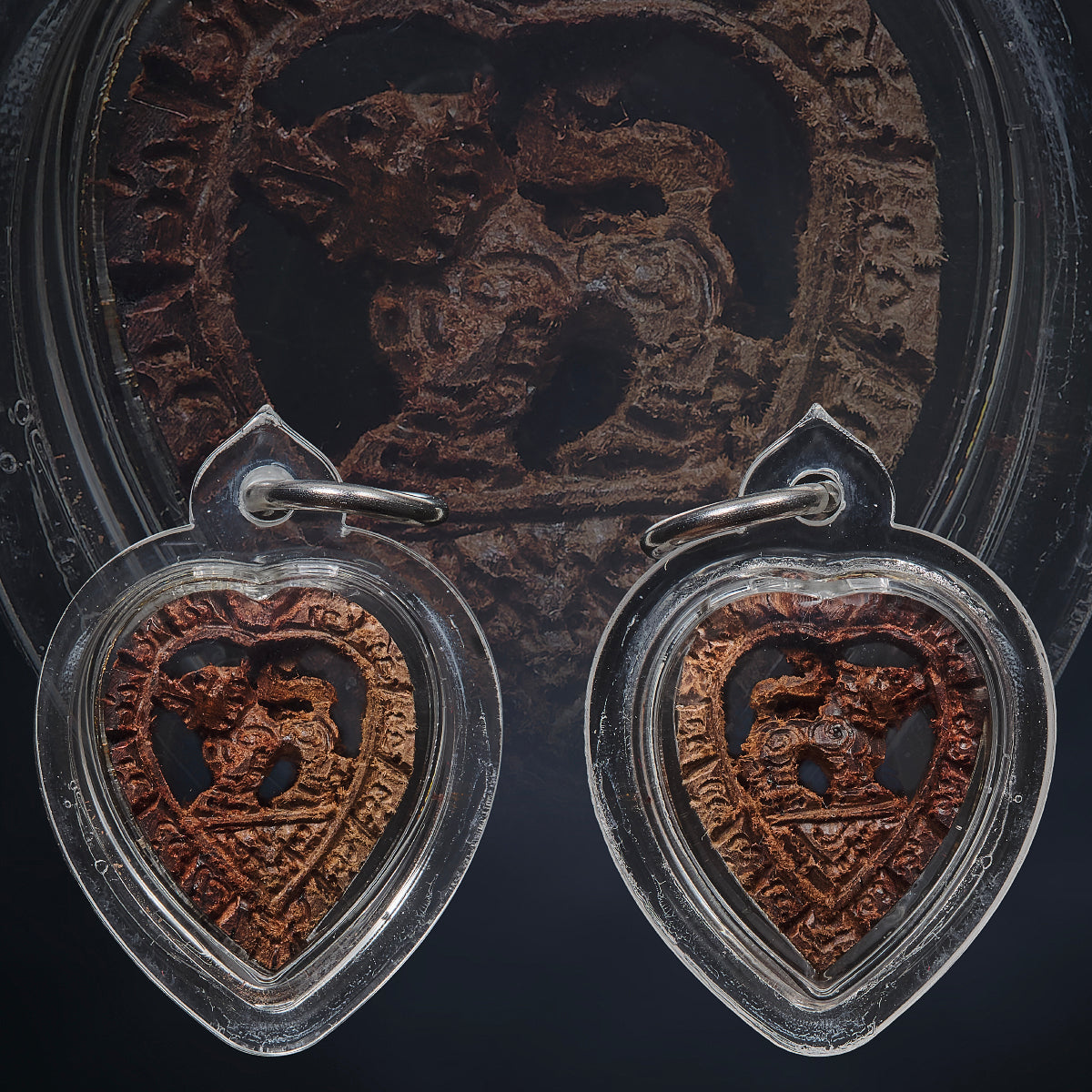
The openwork carving gives the Singha a particularly traditional appearance, while natural differences in the wood grain, carving depth and surface texture ensure that every artifact possesses its own character.
Personal Experiences Shared by Luksits
Among collectors and followers familiar with this batch, experiences are commonly centred upon career progress, business stability and increased personal authority.
Business owners have spoken of periods in which trade gradually became more active, customers returned more consistently and difficult negotiations became easier to manage.
Working professionals similarly describe smoother relationships with colleagues and superiors, greater confidence when taking responsibility and fewer unnecessary obstacles surrounding their work.
The Singha is therefore often regarded not simply as a wealth artifact, but as something particularly suitable for people who must lead, negotiate, make decisions or carry responsibility for others.
Its reputation has contributed to the B.E. 2561 batch remaining closely held by collectors, especially given the original production of only 199 pieces.
Summary
The Singha Roon Hua Jai Setthi is one of the notable limited creations associated with LP Pong of Wat Jeang, Phatthalung.
Created in B.E. 2561, the batch combines the traditional symbolism of the Singha with the auspicious qualities associated with Mai Khanun.
The name Hua Jai Setthi — literally carrying the idea of the “Heart of the Wealthy” or “Heart of the Millionaire”— establishes the principal direction of the batch: prosperity supported by authority, confidence and the ability to maintain one's livelihood.
Only 199 pieces were made.
The batch is also remembered for its substantial consecration ceremony, during which LP Pong was joined by several respected masters, making it one of his better-known ceremonies of the period.
Historical Background
The Singha, or Ratchasi, is the mythical lion encountered throughout Thai Buddhist art, sacred architecture and traditional folklore.
Its symbolism ultimately draws upon the lion as an emblem of courage, sovereignty and spiritual authority. Buddhist tradition itself frequently employs lion imagery to express fearless teaching and noble spiritual presence.
In Thailand, Singha figures consequently became natural guardians of sacred spaces. They can be seen protecting temples, entrances and important structures, particularly in regions influenced by Thai, Lanna and Burmese artistic traditions.
Within amulet culture, these qualities were transferred to portable Singha images.
The Singha came to represent not uncontrolled aggression, but commanding Baramee — the ability to stand firmly, inspire respect and protect what falls under one's responsibility.
This made Singha artifacts particularly attractive to officials, business owners, managers and others whose livelihood depends upon leadership and personal credibility.
Origins of the Materials
This edition was carved from Mai Khanun, the wood of the jackfruit tree.
Mai Khanun occupies an auspicious position in Thai traditional belief because its Thai name, Khanun, carries linguistic associations with support, advancement and being upheld.
For this reason, the wood has long been regarded favourably for objects intended to support progress in livelihood and position.
Combined with the Singha, its symbolism becomes particularly appropriate:
Mai Khanun supports advancement; Singha supports authority.
For an edition named Hua Jai Setthi, the material therefore complements the intended themes of prosperity, career development and stable commercial growth.
Ritual
The B.E. 2561 consecration was regarded as one of the significant ceremonies associated with LP Pong during this period.
In addition to LP Pong of Wat Jeang, several other respected masters were present for the consecration, including:
- Ajarn Uthia of Wat Wikhansoon
- Phra Khru Kachad of Wat Pradoo Hom
- Ajarn Klang Seng of Wat Khao Kut
- Por Than Kaew of Wat Sai Luang
The ceremony was arranged according to an auspicious date and ritual time, bringing together the different masters for the formal consecration of the batch.
For collectors, this collective ceremony forms an important part of the Roon Hua Jai Setthi's provenance, particularly when considered alongside its small production of 199 pieces.
Blessings and Effects
The traditional qualities of the Singha and the intended direction of Hua Jai Setthi place particular emphasis upon:
Maha Amnat — authority, leadership and commanding presence.
Baramee — personal credibility, dignity and the respect of others.
Metta Maha Niyom — goodwill from customers, colleagues, superiors and those encountered through work.
Klaew Klad — protection and avoidance of unnecessary danger.
Career advancement — traditionally associated with greater responsibility, recognition and progress.
Business prosperity — supporting trade, customers, negotiations and continuing livelihood.
Wealth stability — not simply receiving money, but developing the position and judgement required to retain and grow it.
The Singha's character is especially relevant to people whose success depends upon both being liked and being respected.
Modern Application
The Singha Roon Hua Jai Setthi remains particularly suitable for business owners, managers, executives, salespeople, officials and professionals in positions of responsibility.
For business, its symbolism centres upon attracting goodwill while retaining authority — useful where relationships, negotiation and customer confidence are important.
For career use, the emphasis is somewhat different. The Singha represents the confidence to accept responsibility, speak decisively and maintain composure when dealing with difficult situations.
It may also be carried simply as a traditional protective artifact, particularly by those who travel frequently or work in demanding environments.
The underlying principle remains consistent: prosperity is strengthened when opportunity is accompanied by the authority and judgement necessary to manage it.
Physical Details
The artifact is carved from Mai Khanun in an openwork heart-shaped composition.
At its centre is the Singha, surrounded by carved sacred inscriptions and ornamental elements. The open sections around the figure create considerable depth despite the relatively compact form.
The natural reddish-brown colour and visible fibrous grain of the wood remain prominent, giving the artifact an organic appearance characteristic of individually carved sacred wood.
Material: Mai Khanun
Year: B.E. 2561 (2018)
Production: 199 pieces
The example shown is presently protected within a clear pendant casing.
Recommended Pairing
For career and authority, the Singha pairs naturally with Tao Wessuwan, particularly where stronger protection and leadership symbolism are desired.
For commerce, a Nang Kwak can complement the Hua Jai Setthi direction by placing greater emphasis upon customers, trade and incoming opportunities.
A Phra Pikanet is another suitable pairing for entrepreneurs and professionals beginning new ventures, combining the Singha's authority with Phra Pikanet's traditional association with overcoming obstacles and successful completion.
Personal Notes
The B.E. 2561 Roon Hua Jai Setthi deserves particular attention because it brings together several characteristics collectors look for in LP Pong's work: a small documented production of 199 pieces, traditional Mai Khanun construction, distinctive hand-carved Singha imagery and a major multi-master consecration.
It has consequently become increasingly difficult to encounter examples circulating openly. Many of the pieces acquired earlier have remained with followers and collectors who value the batch for its longstanding reputation surrounding business prosperity, career advancement and Baramee.
For a Singha artifact, the name Hua Jai Setthi is especially fitting. The lion represents the strength to command; Mai Khanun represents support and advancement; and the Setthi theme directs those qualities towards building and sustaining prosperity.
-
Free Shipping for Singapore| $15 Worldwide | $100 USA All products